
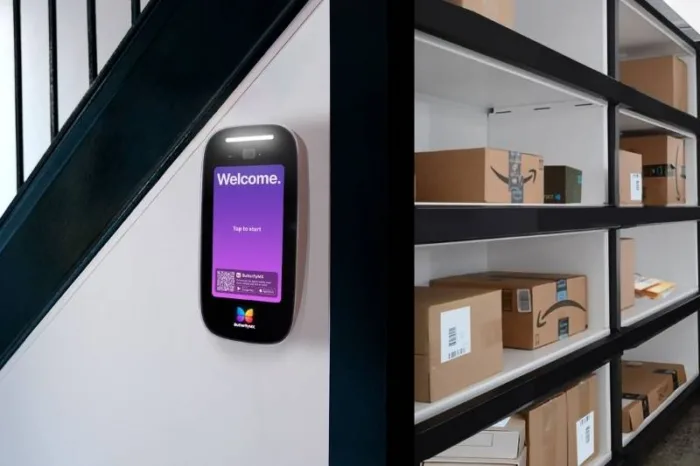





Key takeaways:
- Choose lockers when individual locked compartments suit your parcels and delivery process, with a separate plan for oversized items and overflow.
- Size the locker bank from measured arrivals, parcel sizes, and pickup time, not apartment count alone.
- Compare vendor proposals over the same period and include equipment, site work, software, service, and responsibilities left with your property.
Multifamily package lockers can be a good fit when your parcels fit individual compartments and couriers can load them reliably. If many deliveries would still go to staff or another storage area, a package room, a hybrid, or an improved desk operation may serve you better.
Start with that operating choice before buying equipment. Even a well-sized locker bank needs a plan for bulky parcels, full compartments, and drivers who cannot complete a delivery. Those exceptions affect both your budget and your team’s work.
This guide helps you choose an arrangement, estimate capacity, check access and placement, and request comparable quotes. The goal is to understand the full operation you’re buying, not just the price of the lockers.
This guide will answer:
- When multifamily package lockers fit your building
- Choose lockers, a package room, a hybrid, or the desk
- How many package locker compartments do you need?
- Verify courier access and resident integration
- Assess placement, accessibility, and installation scope
- Compare complete package locker proposals and costs
- Decide whether residents should pay a package fee
- Launch the operation and review the results
Watch how ButterflyMX works:
When multifamily package lockers fit your building
Apartment package lockers are electronic compartments used for delivery and resident pickup. A parcel sits behind an individual locked door rather than on a shared shelf. This separation can suit your building when the parcels fit the compartments and deliveries do not need repeated staff help.
A typical delivery follows this sequence, though the system and loading arrangement determine who completes each step:
- An authorized courier enters the building and reaches the lockers.
- The courier or delivery system identifies the recipient.
- A suitable compartment is selected or assigned, and the parcel is deposited.
- The system notifies the resident and provides pickup access.
- The resident opens the assigned compartment and collects the parcel.
KioskForce describes several loading arrangements, including courier touchscreen use, a connected delivery platform, and staff loading. Automated pickup does not always mean staff-free receipt. A driver who cannot enter, a resident missing from the system, or a staff-loaded setup can leave substantial work with your team.
Fixed compartment sizes and a limited number of doors also restrict what the bank can accept. As Swiftlane explains in its apartment locker guide, parcels that do not fit and deliveries arriving when suitable compartments are occupied need another storage location.
These smart package lockers are separate from USPS-approved centralized mailbox equipment. They do not replace required mailboxes. Before selecting equipment, decide which mix of lockers, shared storage, and staff handling will manage the whole delivery flow.
Choose lockers, a package room, a hybrid, or the desk
Lockers secure individual compartments; a controlled-access package room secures shared storage. A record of someone entering a room does not, by itself, show which parcel they deposited or collected. Room access and parcel tracking are separate functions.
The table compares operating designs described by Swiftlane and Smart Package Room, both commercial providers. It compares how the arrangements work, not independently measured security, cost, or labor results.
Swipe to compare →
If your parcel mix fits and individual-compartment separation is a priority, lockers may be appropriate. If irregular items arrive often, a room may better match your storage needs. If standard parcels make up most deliveries but peaks create overflow, a hybrid lets you use lockers while assigning exceptions to a room or desk.
Neither a room nor a desk has unlimited capacity. Both need enough usable space, clear pickup procedures, and someone responsible for exceptions. Perishable deliveries also need a suitable handling policy; an ordinary room is not refrigerated storage. Keeping or improving the desk is a valid choice if a new system does not justify its cost and remaining workload.
ButterflyMX provides access control and a Package Room, not locker hardware. If a room or hybrid fits your needs, the ButterflyMX Package Room offers delivery PINs, resident notifications, and remote permission management. These features support room access and pickup coordination. They do not create individual locked compartments or establish that every local carrier will participate.
For more detail on shared storage and compartments, see the package locker and package room comparison. Once you have a likely arrangement, measure the demand it must handle. Apartment count alone is not enough to select it.
How many package locker compartments do you need?
The number of package locker compartments you need depends on how many suitable parcels arrive and how long they stay. A compartment, also called a door or cell, holds a delivery. It is not an allocation for one apartment.
Measure arrivals, parcel sizes, and pickup time
Swiftlane recommends collecting 60–90 days of carrier or front-desk records before sizing. Record daily arrivals, parcel dimensions or useful size categories, and the time from deposit to pickup. Obtain holiday records where available, since an ordinary period may not capture peak demand.
Keep parcels that would not fit in those records. Leaving them out of the locker calculation does not remove them from your operation. They still need suitable storage, resident notification, and someone responsible for handling them.
Calculate a planning door count
URBI proposes an editorial sizing model that combines arrivals, pickup time, parcel fit, and spare capacity. It is a planning tool, not an industry standard:
Doors = round upward [(units × parcels per unit per day × peak multiplier × dwell days × eligible share) ÷ (parcels per door × target occupancy)].
- Dwell time is the time from deposit to pickup, expressed here in days.
- Eligible share is the proportion of parcels suitable for the planned locker configuration.
- Peak multiplier scales ordinary daily arrivals for the demand period you want to cover.
- Parcels per door is the assumed number stored in each compartment; this example uses one.
- Target occupancy is the planned share of capacity in use. A value below 100% leaves some capacity unused as a planning allowance.
For illustration, assume 150 apartments, 0.25 parcels per apartment per day, a 1.0 ordinary-day multiplier, 1.5 days of dwell, an 85% eligible share, one parcel per door, and 90% target occupancy:
(150 × 0.25 × 1.0 × 1.5 × 0.85) ÷ (1 × 0.90) = 53.125, rounded upward to 54 doors.
Changing only the multiplier to 1.8 gives 95.625, rounded upward to 96 doors. All of these inputs are illustrative. The 85% eligible share is assumed, and 1.8 is not a universal holiday multiplier. The dwell evidence discussed by URBI concerns public Amazon lockers, not apartment buildings. Replace the inputs with your records and keep the time periods consistent.
Choose ordinary-day capacity or peak capacity
The same model shows why pickup time matters. Holding all other example inputs constant gives these rounded results:
Faster pickup frees doors sooner and reduces the modeled capacity need. But the calculation does not mean residents will achieve that pickup time. Base your purchase on observed behavior and a realistic pickup policy, not the smallest result in the table.
An ordinary-day bank with managed overflow is a different proposal from a peak-sized bank. Neither is automatically cheaper overall. The smaller bank leaves more overflow work; the larger one adds equipment that may be less occupied outside peaks. Both still need a plan for the assumed 15% of parcels excluded from this example.
Ask the vendor to check the proposed compartment sizes against your parcel records and changes in arrivals and pickups. A total of 54 or 96 doors does not guarantee that a suitable compartment will be available. Carry the proposed capacity, size mix, peak policy, overflow location, and responsible person into your quote request. Then verify that couriers can use that setup.
Verify courier access and resident integration
Do not assume every carrier will use every locker system. Before expecting less desk work, check four separate functions: carrier eligibility, building entry, locker loading, and resident records.
Confirm who can enter and load the lockers
KioskForce describes three loading models, each placing different duties on couriers and your team:
- Walk-up loading: a courier uses the touchscreen to identify the recipient and select or open a compartment.
- Integrated-platform loading: a connected delivery platform supports compartment reservation or assignment.
- Staff loading: property staff receive parcels and load them for resident pickup.
Ask the vendor which model the proposed system supports, then confirm delivery practices with your main local carriers. A system may support a carrier without ensuring that its driver can enter your building or complete a deposit.
Request a demonstration of the full route, from building entry through notification and resident pickup. Include a full bank, an unknown recipient, and failed entry. Record who handles each problem and where the parcel goes. If staff must load most deliveries, automated pickup may still leave much of the receipt and sorting work with your property.
Verify resident records and permissions
Property management software, or PMS, synchronization can help keep move-in and move-out permissions current. Access-control integration governs entry. A compatibility logo does not tell you how well either workflow works. Swiftlane identifies integration depth as a selection issue, while Parcel Pending notes that custom integrations can add cost.
Confirm your exact PMS and version, what data syncs, how quickly changes appear, and when departing residents lose access. Ask how staff correct resident-list errors, what happens during outages, and whether the required integration is included in the price.
Put these answers, loading duties, and backup procedures into the proposal. With the delivery route defined, you can assess where the equipment belongs instead of installing it first and trying to solve access later.
Assess placement, accessibility, and installation scope
Your proposed location must work for the equipment, couriers, and residents. Have the vendor and installer assess it before final pricing, and assign accessibility questions to a qualified specialist.
Document the site and project milestones
Parcel Pending identifies placement, specialty equipment, and site preparation as cost drivers. Indoor and outdoor package lockers can have different requirements. Equipment suited to a lobby is not necessarily suitable outdoors.
Request a written site assessment covering:
- Surface suitability, including a dry, flat, level base where required.
- Indoor or outdoor placement and the required weather rating.
- Power, network connections, and work needed to supply them.
- Anchoring, delivery approach, usable access, and clearances.
- Oversized or refrigerated storage needs that ordinary compartments cannot meet.
Ask the supplier to separate manufacturing, site preparation, shipment, physical installation, testing, and resident onboarding in the schedule. Get dates or dependencies for each stage. A short physical installation estimate does not tell you how long the project takes from order to launch, especially if equipment must be made or the site needs work.
Commission accessibility and postal review
Where the locker provisions of the 2010 ADA Standards for Accessible Design apply, at least 5%, and no fewer than one of each type, must comply with §811. That section addresses clear floor space, accessible reach, and operable parts. The unobstructed forward reach range is 15–48 inches above the floor.
These measurements do not establish compliance on their own. Have an architect or accessibility specialist determine which rules and exceptions apply and review the layout. Facility coverage, construction or alteration details, the Fair Housing Act, Section 504, and local requirements may affect the assessment. The ADA locker provision is not a universal determination for every apartment common area.
Postal equipment has a separate rule. USPS Handbook PO-632 §5-1 requires USPS-approved 4C centralized mailbox equipment in new or remodeled apartment houses, with at least one parcel locker per five mailbox compartments. That postal minimum is not a sizing formula for smart lockers handling deliveries from all carriers.
At the end of this assessment, you should have a documented location, access and clearance requirements, identified site work, and a project schedule. Room and hybrid options also need suitable site and access assessments. Include the resulting work in the priced scope so it does not remain hidden outside the equipment total.
Compare complete package locker proposals and costs
Apartment package locker costs include more than hardware and software. To compare proposals fairly, first match the equipment, site work, services, and responsibilities each one covers. A lower headline price may simply leave more work unpriced.
Understand what a published locker price includes
As one dated reference, KioskForce published October 2026 planning figures of about US$8,000–$20,000 for a 50–100-cell system, plus about US$100 per location per month for software. Freight, duties, and installation were extra. At that time, the company was taking reservations for its first production run.
These are one vendor’s planning figures, not a typical installed U.S. price or a current purchasing offer. They are also not a quote for the earlier 150-unit sizing example. A similar door count does not establish a matching configuration.
Parcel Pending explains the main quote drivers, though its guide publishes no prices. More compartments or a different size mix change the equipment cost. Outdoor placement and specialty towers change equipment requirements. Location determines site preparation and installation work, while integrations and support can add upfront or recurring charges.
Ask vendors to price your complete arrangement, including any room or overflow component. Otherwise, you may compare one proposal that covers installation and support with another that covers little more than equipment.
Use one specification for every quote
Give each vendor the same information from your parcel records and site assessment. Ask vendors to identify any changes they propose rather than quietly price a different scope.
A proposal for ordinary-day capacity must include the agreed overflow arrangement, not just the smaller locker bank. A peak-sized proposal still needs to address parcels that cannot fit. This makes your storage decision part of the purchasing scope rather than a separate problem for staff to solve later.
Separate the partial subtotal from unquoted charges
The KioskForce reference supports one limited calculation. At an unchanged US$100 per month, five years of software costs US$100 × 12 × 5 = US$6,000. Added to US$8,000–$20,000 of hardware, that produces a US$14,000–$26,000 hardware-plus-software partial subtotal.
The worksheet below uses only that October 2026 reference for a 50–100-cell product taking first-production-run reservations. Freight, duties, and installation were extra. This is not a real bid, a guaranteed five-year rate, a complete project total, or the price of the 150-unit sizing example. All amounts are in U.S. dollars.
Swipe to compare →
For each offer, record inclusions, exclusions, agreement length, price increases, renewal terms, and who performs each service. If a payment bundles hardware, software, and support, have the vendor show where those costs are included so you do not count them twice. An unreported amount stays “To be quoted,” not zero.
Keep a separate note for work your team retains. Record who loads parcels, handles oversized items and perishables, manages overflow, corrects resident records, and responds to outages. These duties are different from vendor charges. Do not assign them a dollar value without local workload and labor records.
Read the worksheet by checking scope before totals. If one proposal includes installation and service while another lists only hardware and software, ask the second vendor to price the missing work. Get each responsibility in writing alongside its charge. Only then can you judge whether a lower price buys the same operation.
Compare purchase, subscription, and carrier placement
KioskForce distinguishes purchase, lease or subscription, and carrier-placed arrangements. Buying commits capital to hardware ownership, with software and services addressed separately. A lease or subscription changes when you pay and may bundle items that a purchase proposal lists separately. Neither structure is always cheaper.
Use the same five-year period and service scope for all three worksheet columns. Leave unavailable offers marked “To be quoted.” Confirm hardware and resident-data ownership, agreement length, price increases, renewal, support, placement, and removal rights. “No upfront cost” does not mean there are no continuing obligations.
The software charging method also matters. A flat-location fee spreads across more parcels as volume rises. Per-package pricing changes with billable volume. Compare the vendor’s actual schedule against ordinary and peak demand, and confirm what counts as a billable package.
As a carrier-operated example, Amazon markets its Apartment Locker as accepting all carriers and retailers, with modular indoor and outdoor configurations, quote-based pricing, and flexible payment plans. These are Amazon’s marketing descriptions, not confirmation that your local carriers will use it. Do not assume the program is Amazon-only or automatically free; review the written offer and delivery process.
Your comparison is ready when you can identify unknown charges, separate included services from retained staff work, and send every vendor the same request. Once the full cost is clear, you can decide how your property will fund it.
Decide whether residents should pay a package fee
A package locker fee is a property policy choice, not an automatic requirement of installing lockers. Parcel Pending describes resident charging as optional. Funding options include:
- Property-funded service: the property pays without a separate package charge.
- Bundled charges: package service is part of a broader charge.
- Optional participation: participating residents pay for service access.
- Registration charges: residents pay when they enroll.
- Storage fees: a charge applies after a disclosed pickup window or grace period.
These options describe what a policy charges for, not whether it is permitted or well accepted at your property. Start with a complete approved budget before calculating any recovery amount.
A Luxer One reseller proposes a cost-based recovery approach. Adapted to a monthly amount, the calculation is:
Monthly recovery per eligible occupied unit = [(complete upfront project cost ÷ chosen recovery years) + annual operating cost] ÷ (12 × eligible occupied units).
For this comparison, use five recovery years to match the proposal worksheet. This is a chosen comparison period, not a claim about hardware service life. Use the complete upfront project cost, including approved site and installation work. Count recurring software in annual operating costs only once; the partial hardware-plus-software subtotal above is not a complete upfront project-cost input.
If participation is optional, divide by participating eligible occupied units rather than every apartment. The result is a cost-recovery amount, not a prevailing market fee, legal permission to charge, or evidence that residents will accept it.
Before adopting charges, have legal counsel review applicable law and lease disclosure. Resolve the amount, purpose, start date, opt-in and cancellation terms where relevant, pickup grace periods, and exceptions. Include the approved policy in clear, accessible resident instructions so pickup reminders and charges are consistent.
Launch the operation and review the results
Installation completes the equipment work, not the operating plan. Building on the rollout considerations in Swiftlane’s guide, assign a named owner for carrier onboarding, resident instructions, pickup reminders, oversized and perishable handling, outages, and peak overflow.
Match these duties to your loading model. If couriers load the bank, onboarding must cover entry and deposit. If staff load it, document that work rather than treating it as eliminated. For a hybrid, explain which parcels go to each location and how residents receive notice.
To check your results, choose a defined post-launch review period and compare it with your pre-purchase baseline. Track deposit-to-pickup time, full-bank events, bypassed deliveries, staff handling hours, and complaints. Record the dates, whether a peak occurred, and gaps in the logs. An ordinary month cannot tell you how the setup performs during a holiday surge.
Investigate the pattern before buying more doors. Long pickup times may call for clearer reminders or procedures. Bypassed deliveries may point to entry or carrier-onboarding problems. Repeated size mismatches may require a different compartment mix or storage arrangement. These are possible causes to test, not guaranteed fixes.
If you assess financial results, include all relevant operating charges and retained overflow work. Staff time moved to another task is not the same as lower payroll spending. Likewise, individual locked compartments provide separation, but the commercial comparisons cited here do not establish a measured locker-versus-room theft advantage or support a theft-reduction guarantee.
Frequently asked questions
Do package lockers replace apartment mailboxes?
No. Electronic package lockers are separate from required USPS-approved mailbox equipment. USPS Handbook PO-632 §5-1 addresses 4C centralized equipment in new or remodeled apartment houses, including at least one postal parcel locker per five mailbox compartments. That minimum is not an all-carrier smart-locker sizing recommendation.
What happens when a parcel does not fit or the lockers are full?
Your property needs a designated backup location and someone responsible for handling the parcel. A managed room or desk may serve that role, but it also has space limits. The quote and launch plan should explain where the parcel goes, who handles it, and how the resident receives notice.
Can refrigerated deliveries go into ordinary package lockers?
Do not assume ordinary compartments provide refrigerated storage. Confirm the vendor’s supported storage conditions and establish a suitable policy for perishables. Specialty refrigerated equipment has different requirements, and an ordinary overflow room is not a substitute for refrigeration.
How long can residents leave packages in lockers?
There is no universal pickup deadline. Set a disclosed policy with reminders, grace periods, and exceptions that fits your system and approved resident terms. Longer stays keep compartments occupied, so base the policy on measured pickup times and capacity needs rather than an arbitrary deadline.
Do package lockers guarantee fewer stolen packages?
No. Individual locked compartments separate stored parcels, but that design does not guarantee fewer thefts. The supplied comparisons do not establish a measured locker-versus-room theft result. Access logs, entry photos, and manufacturer security descriptions are not proof of theft reduction.
Recommend the arrangement that handles your actual deliveries, including the exceptions. Before seeking approval, record the capacity and compartment sizes, overflow location and owner, verified delivery route, and common scope for vendor quotes.
The right choice may be lockers, a room, a hybrid, or an improved desk. If your analysis supports controlled-access shared storage or overflow, explore the ButterflyMX Package Room as your next evaluation step.
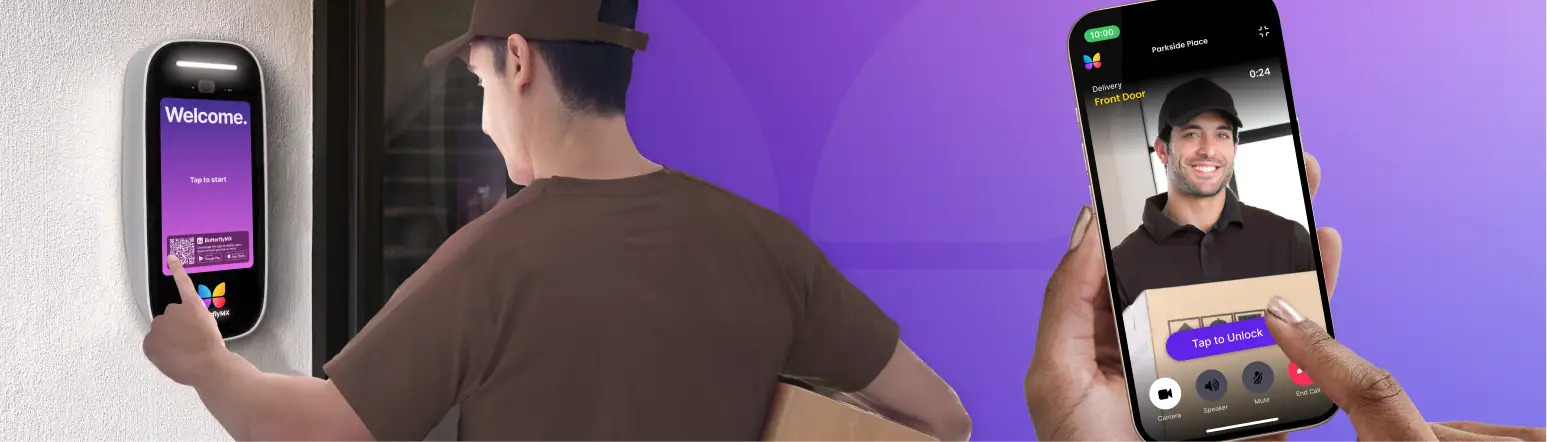
Get your free quote!
Fill in the form below, and we'll email you right back.
Want a free quote?
Fill in the form below, and we'll email you right back.
Redirecting you in 5 seconds.