





Key takeaways:
- A perimeter gate, a package area, a building entrance, and a unit door are separate access layers. A condo without a staffed lobby needs a delivery process that says how far a driver may go and what happens next.
- Permanent shared gate codes are weak long-term tools because they are hard to attribute and revoke after they spread. Expiring credentials, resident approval, or remote review usually give the property more control.
- Delivery access and package placement should be planned together. An inside package area may add gate traffic, while an outside package area needs its own security controls and resident pickup plan.

Delivery access for gated condo without lobby entry can look like a simple gate-code problem. It usually isn’t. When no concierge or front-desk staff member is there to verify a driver, accept a parcel, or handle a missed call, the condo association needs a clear process for entry, package drop-off, and exceptions.
The practical answer is to use a trackable delivery process that fits the condo or HOA property. That may mean resident-approved video entry, an expiring delivery credential, an approved recurring-vehicle process, or remote-attendant review. The right mix depends on gate hardware, delivery volume, package location, staffing, and after-hours coverage.
What the process should not rely on is one permanent delivery code that spreads from driver to driver with no clear owner, time limit, or revocation plan. The first step is to understand which access layer the driver actually needs to pass through.
This guide will answer:
- What a gated condo without a staffed lobby means
- Which delivery access methods are realistic
- What to do when no resident answers
- Where to place the package area
- How to retrofit delivery access without confusing authorization and gate safety
- How condo boards should set delivery policy
- How to choose a workflow for the property
- FAQs
Watch how ButterflyMX works:
What a gated condo without a staffed lobby means
A gated condo has a perimeter access point before a driver reaches a building, package room, locker bank, or unit door. A controlled building entrance is a different layer. A staffed lobby adds something else again: a person who can verify a visitor, receive a parcel, and resolve an exception in real time. As this explanation of controlled access notes, gates and doors can help manage entry, but they do not control every behavior after entry is granted.
That distinction matters because a delivery driver may need access to only one point in the route. The route might include the vehicle gate, a loading area, a package room, a building entrance, and the resident’s unit door. Giving access deeper into the property than the delivery task requires can add risk and complexity without making the delivery more reliable.
A workable delivery process answers four basic questions: who may approve entry, what credential or verification step is used, where the package may be left, and what happens when the normal process fails. It should also be honest about its limits. No access method guarantees zero tailgating, credential misuse, package theft, or unattended parcels.
Which delivery access methods are realistic
A permanent delivery gate code is a weak long-term default. Once many drivers, vendors, residents, and third parties know the same code, the property has little control over who used it and when. If the code must be revoked, the association has to change it, redistribute the new one, and hope the new code does not spread the same way.
Where practical, a gated condo is better served by access that is property-controlled, time-limited, or tied to a specific approval event. The point is not to force every delivery through one method. It is to match the access scope and duration to the delivery task.
The options below are operating models, not a security ranking. Each one still needs a fallback for a missed resident call, an unrecognized vehicle, an outage, an after-hours delivery, or a driver who arrives without the right instructions.
A time-limited PIN or link pass can work when the property wants delivery access without turning every arrival into a live call. A video intercom for deliveries works differently: the driver requests entry, and an authorized person decides in the moment. A remote-attendant model adds live review for exceptions, but it also requires defined hours, verification rules, and clear authority to approve, deny, or escalate access. Guidance on gate access-control workflows makes a similar distinction between standing codes and access that can be managed by event, person, or time window.
License plate recognition, or LPR, can support a recurring-vehicle process when a property has stable, preapproved vehicle identifiers. It is less useful as a blanket plan for every courier because delivery drivers and vehicles often change. Third-party carrier programs, including Amazon Key for Business, may be relevant for some properties, but the association should confirm current eligibility, supported entry types, enrollment terms, and the independent fallback before relying on them.
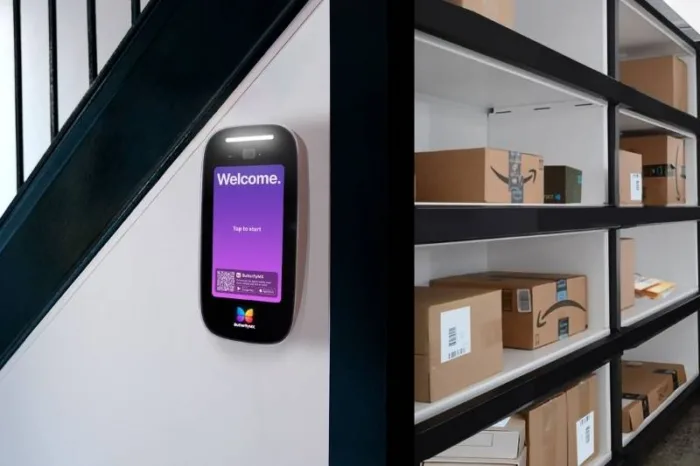
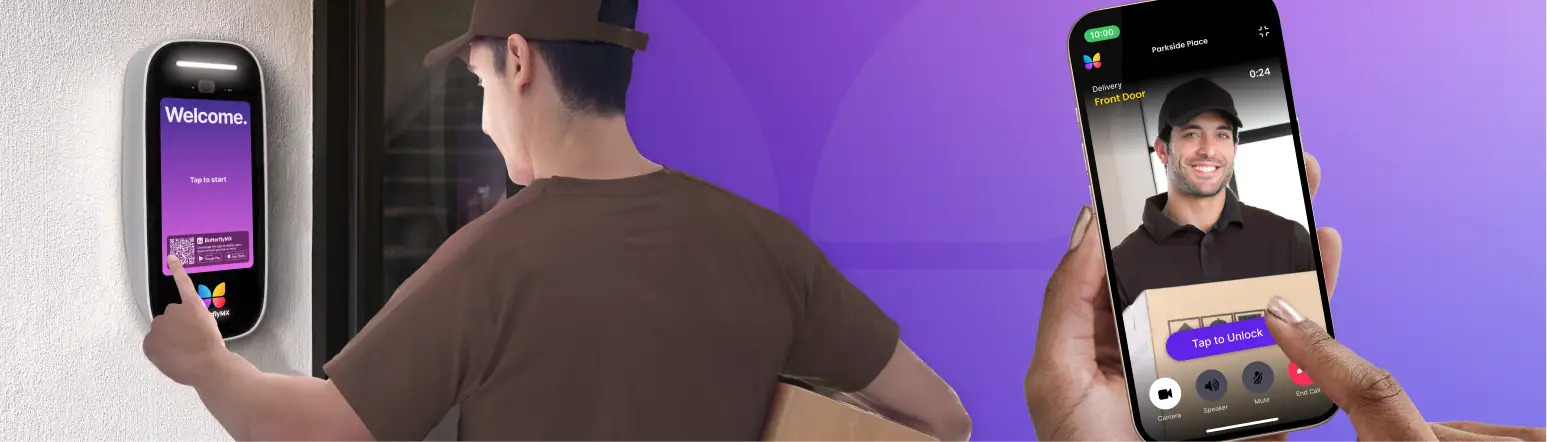
ButterflyMX can fit properties that choose resident-mediated verification or remotely managed visitor access. Its video intercoms allow residents to receive visitor calls and grant access from their smartphones, while property teams can manage residents, visitors, credentials, and access remotely. Those capabilities should support the condo’s written process, not replace the need for one.
What to do when no resident answers
A no-response plan should be written before the first missed delivery. Without one, drivers may try to get a code from an unknown source, follow another vehicle through the gate, or leave the package somewhere the property never approved.
- Attempt the normal resident approval path using the posted delivery instructions.
- If the policy allows it, use a preissued self-service credential that is still valid and limited to the delivery task.
- Route the exception to a remote attendant or designated property contact if that service is part of the process.
- If entry cannot be approved, direct the driver to a secure alternate drop point or have the delivery rescheduled.
- Record the required outcome, such as approved entry, alternate drop-off, denied access, or failed delivery.
The same sequence should apply after hours. The policy should say which carriers qualify, who can approve an exception, when access must be denied, and what residents should expect if a delivery fails. A remote gate guard is not automatically better than automated credentials. It is a different model that can help when missed calls and exceptions are common, provided the attendant has reliable instructions and authority. A virtual gate-guard workflow shows how live review can be organized around verification and escalation rather than a standing open-gate practice.
Logs and credentials can improve accountability, but they cannot stop every case of tailgating or a door being propped open. The Cybersecurity and Infrastructure Security Agency explains physical security as a layered practice, not a single device. Gated condos should pair access rules with clear driver instructions, resident communication, and a documented delivery fallback.
Where to place the package area
A package area inside the gate can reduce exposure on the public side of the property, but it may increase gate cycles and bring more couriers onto the site. A package area outside the gate can make deliveries easier for drivers, but it needs its own security controls and a safe pickup path for residents. Neither option eliminates package theft.
The better location depends on the full parcel path. Review where delivery vehicles can stop without blocking traffic, how a driver reaches the drop point, whether residents can retrieve packages safely, how far the area is from the buildings, and how peak delivery periods affect gate traffic. Package-room access guidance for gated communities describes the central tradeoff: a more protected location can require more access events, while a more convenient location needs its own controls.
Lockers, package notifications, third-party drop-off arrangements, and association-managed package processes can all be part of the policy. They are not automatic fixes. The property still has to decide who may enter the package area, whether a delivery credential also unlocks that area, how long the access lasts, and how permission is revoked when the delivery window ends. Package-area access should stay separate from access to residential buildings and units unless the property has a specific reason to combine them.
How to retrofit delivery access without confusing authorization and gate safety
Access control is the authorization layer. It decides whether a person, credential, vehicle, or remote request is allowed to trigger an entry action. The gate operator is the equipment that physically moves the vehicular gate. Connecting an intercom, credential reader, or remote-release process to the gate does not by itself prove that the gate operator or gate construction is safe or compliant.
Before deciding whether to retrofit or replace components, inventory the existing gate operator, access controller, entry points, communications path, power and network dependencies, package destination, and expected delivery traffic. Then have a qualified access-control and gate professional assess compatibility. That review is especially important when the current system has aging equipment, unclear documentation, several entrances, or a history of unreliable operation.
DASMA technical guidance on UL 325 describes the standard in relation to gate-operator usage classes and independent entrapment-protection means. ASTM F2200-24 covers automated vehicular gate construction and references UL 325 compliance. These standards address physical gate safety considerations; they do not turn a delivery credential into a safety certification. Confirm the current applicable editions and have a qualified installer address the site-specific gate system.
Emergency responder access is also separate from package delivery access. It must follow the requirements of the local authority having jurisdiction and should not be improvised through a courier credential, delivery PIN, or resident visitor pass.
How condo boards should set delivery policy
The board or association should define the authorized outcomes before choosing technology. Start by reviewing governing documents, board authority, vendor contracts, insurance, privacy and records practices, and applicable law. Package-related fees or assessments are not automatic board powers; authority can depend on the documents and jurisdiction.
A useful condo delivery policy identifies eligible carriers, who may issue credentials, approval windows, access-log handling, revocation procedures, package-area rules, resident responsibilities, and who owns each exception. It should also explain how residents, drivers, managers, and vendors will receive updated instructions when the process changes.
Condo associations have considered lockers, third-party drop-off options, notifications, and package-related charges as ways to manage deliveries, but the legal and operational details vary. This discussion of package-management issues for associations is a useful reminder that policy, contracts, and communication matter alongside equipment. Local counsel should review questions about authority, fees, records, privacy, contracts, insurance, and liability for a particular property.
How to choose a workflow for the property
The best delivery access process is the one the condo can operate consistently. Start with the physical layout and the day-to-day reality of the property, then choose the authorization tools that fit.
- Count every entry point and separate vehicle gates from pedestrian gates, building doors, and package-area doors.
- Review delivery volume, carrier mix, peak gate traffic, and how often deliveries happen after hours.
- Decide whether the primary method should be resident verification, self-service expiring access, recurring-vehicle authorization, live exception handling, or a combination.
- Define no-response, outage, denied-entry, and rescheduling procedures separately from the normal delivery path.
- Review existing gate hardware, power and network dependencies, package-area location, available space, budget, and the team capacity needed to manage credentials.
- Test the process with clear instructions before treating it as permanent policy.
For some properties, a resident can verify a driver by video and release the gate remotely. Others may need temporary delivery gate codes or link passes for defined delivery windows, an approved vehicle process for recurring carriers, or a remote-attendant path for exceptions. Many properties will need a primary method plus a backup.
ButterflyMX can be evaluated as an authorization and communication component where remote video verification, smartphone entry, and remotely managed visitor access fit the selected process. It does not replace the gate operator, certify the gate system, or remove the need for qualified safety and compatibility review.
The decision is not simply whether to open the gate for deliveries. It is how the property will make a limited, traceable, and repeatable access decision when nobody is standing at a lobby desk.
Frequently asked questions
Can Amazon Key for Business work at a gated condo?
It may work for some gated condos, but the association should confirm current eligibility, supported entry types, enrollment terms, administration requirements, and fallback procedures before using it. Availability and terms can change, so a specific condo or gate should not be assumed to qualify.
Who is liable if a package is stolen after delivery?
Liability depends on the property documents, carrier terms, contracts, insurance, delivery instructions, package-handling policy, and local law. A condo association should ask qualified local counsel rather than assume one rule applies everywhere.
Can a condo board charge a package room fee?
Possibly, but the authority to create and administer a package-related fee depends on the association’s governing documents and applicable law. The board should get legal review before adopting a fee or assessment.
Can access control stop tailgating and package theft?
No. Access control can improve authorization and accountability, but it cannot by itself prevent tailgating, propped entrances, credential misuse, or theft after a parcel has been left.
A gated condo without a lobby needs more than a delivery code. It needs a process that defines the authorized route, the length of access, the package destination, and the fallback when a resident does not respond. Start with the property layout and operating capacity, then choose the mix of resident approval, expiring credentials, recurring-vehicle access, and live exception handling the association can manage consistently.
When remote video verification and remotely managed visitor access fit that model, ButterflyMX can support the communication and authorization layer. Talk with ButterflyMX about a delivery access workflow for your gated condo.
Get your free quote!
Fill in the form below, and we'll email you right back.
Want a free quote?
Fill in the form below, and we'll email you right back.
You’ll be redirected shortly...