





Key takeaways:
- Contract-free, self-installed ADT Blu monitoring starts at $24.99 per month, while ADT Pro Install starts at $49.99 per month and usually requires a 36-month contract.
- ADT stands out for six company-operated residential monitoring centers, Google Nest integration, and one independent test that recorded text alerts in 5–10 seconds.
- Pro Install buyers should weigh its six-month guarantee against an early termination charge of about 75% of the remaining balance, plus ADT’s disclosed cybersecurity incidents in 2024 and 2026.
Disclaimer: ButterflyMX provides these blog posts to help our customers and potential customers make the right business decisions. Our blog posts are based on the information available to us at the time of writing.
This ADT review covers two very different home-security options sold under one brand: professionally installed ADT Pro Install and do-it-yourself ADT Blu. Both pair sensors, app control, monitoring options, and Google Nest cameras or doorbells, but their prices, setup, and commitments differ sharply.
For most buyers, the key questions are simple: Do you want professional installation or DIY setup? How much will monitoring cost over time? And are you comfortable with a long contract? This guide covers ADT pricing, equipment, monitoring, outages, privacy, customer feedback, alternatives, and where a household alarm system differs from property-wide access control.
This guide will answer:
- ADT review overview
- ADT Pro Install vs. ADT Blu
- How much does ADT cost?
- ADT equipment and standout features
- Installation, connectivity, and outage behavior
- ADT app and smart-home experience
- ADT privacy, ownership, and customer feedback
- ADT pros and cons
- ADT alternatives
- ADT vs. ButterflyMX
- Frequently asked questions
- ADT review verdict
Watch how ButterflyMX works:
ADT review overview
ADT is a monitored household security system available as professionally installed ADT Pro Install or self-installed ADT Blu. Both use a base, security sensors, mobile controls, and optional Google Nest cameras or doorbells, but they follow different pricing and contract models.
ADT focuses on intrusion detection, life-safety monitoring, video, remote control, and smart-home automation. Its current monitoring plans connect supported alarms to company-operated monitoring centers that can contact the household and dispatch emergency services when appropriate.
How ADT works
Entry, motion, glass-break, smoke, carbon monoxide, and other sensors report events to the ADT Base. The base uses Wi-Fi and cellular backup, while the ADT+ app lets users arm or disarm the system, review alerts, and control supported devices.
With professional monitoring, an alarm can trigger SMART Monitoring or Alarm Messenger, which sends a group text so household members can confirm or cancel an alarm before the monitoring team takes the next step. Camera-equipped plans can also support video confirmation.
ADT Pro Install vs. ADT Blu
ADT Pro Install is for buyers who want full-service setup and monitoring. ADT Blu is for buyers who prefer DIY setup, lower monthly costs, and no long-term contract. Choosing between these two lines is the biggest decision in an ADT purchase.
Swipe to compare →
At entry pricing, Blu professional monitoring costs about half as much per month as Pro Install before installation fees and contract exposure. Independent ADT testing and pricing coverage offers further context on those tradeoffs.
Who should choose ADT Pro Install?
ADT Pro Install is the better fit for a homeowner who wants a technician to place equipment and set up the system. It can also suit buyers who value ADT’s full-service monitoring enough to accept a multi-year agreement.
The tradeoff is flexibility. Pro Install generally costs more per month, requires a 36-month term, and can lead to a substantial cancellation charge after the guarantee period.
Who should choose ADT Blu?
ADT Blu is better for renters, cost-conscious households, and buyers who may move or change systems. It has no long-term contract and offers professional or self-monitoring.
Blu shifts setup to the buyer. That can lower upfront costs, but you must place sensors, pair devices, and check coverage throughout the home.
How much does ADT cost?
ADT Pro Install equipment is listed from about $269 to $1,594, and monitoring starts at $49.99 per month. ADT Blu kits run about $89 to $419, with professional monitoring from $24.99 to $39.99 per month or self-monitoring from $9.99.
Your total depends on the product line, equipment, cameras, installation, monitoring tier, promotions, and contract. The ADT package comparison shows why one-time hardware charges and recurring service costs should be considered separately.
Swipe to compare →
Package figures are not guaranteed quotes. Promotions and property-specific recommendations can change what you pay.
What a three-year ADT commitment can cost
A useful comparison adds equipment, installation, and 36 months of monitoring. These examples use starting prices and are illustrations, not like-for-like system quotes.
Swipe to compare →
These systems are not equivalent. A $419 Blu kit may include different hardware than a $269 Pro Install package, and camera buyers may need a higher Pro Install monitoring tier. The examples show why the monthly starting price is not the full cost of ownership.
How ADT’s early termination fee works
After the six-month money-back period, canceling ADT Pro Install can cost about 75% of the remaining contract balance. Your signed agreement and any financed equipment determine the actual amount owed.
Swipe to compare →
This fee can make Pro Install a poor fit if you expect to move, sell the home, or switch providers during the term. Third-party contract coverage explains the cancellation framework in more detail.
ADT equipment and standout features
ADT equipment covers intrusion detection, life safety, video, environmental alerts, and supported smart-home control. The lineup includes an ADT Base, entry and motion sensors, glass-break sensors, smoke and carbon monoxide detectors, water and temperature sensors, panic buttons, keypads, smart locks, and Google Nest cameras.
The current base does not use the touchscreen found in some older ADT systems. Most advanced controls now live in the ADT+ app, which matters if you prefer a wall-mounted control panel.
- Entry sensors: Detect protected doors and windows opening.
- Motion sensors: Cover about 35 by 40 feet and can be adjusted to ignore pets up to about 85 pounds.
- Glass-break sensors: Listen for breaking glass within a stated radius of up to 25 feet.
- Life-safety sensors: Add smoke, carbon monoxide, water, and temperature alerts.
- ADT Base: Includes an 85 dB siren at three feet, cellular backup, and a 24-hour backup battery.
Google Nest cameras and video storage
ADT’s current camera lineup uses Google Nest indoor, outdoor, floodlight, and doorbell models. Depending on the device and plan, they provide live video, two-way audio, person or package detection, facial recognition, and video confirmation during an alarm.
Hands-on ADT equipment coverage details the Nest-focused lineup. Camera support, Trusted Neighbor, and 30 days of cloud video history require the Complete monitoring tier, so camera hardware is only part of the video cost.
First-generation Nest Cam, Nest Hello, and Nest Cam IQ products are not supported by the current ADT system. Check compatibility before assuming older Google hardware can be reused.
Trusted Neighbor and guest access
Trusted Neighbor can use supported Nest facial recognition to identify an approved guest, unlock a compatible smart lock, and disarm the system. It can work for scheduled or event-based access by relatives, pet sitters, and other recurring visitors.
The feature requires the Complete plan and compatible Yale, Schlage, or Kwikset lock hardware. It is a household guest-entry option, not a dedicated multi-tenant intercom or courier credential system.
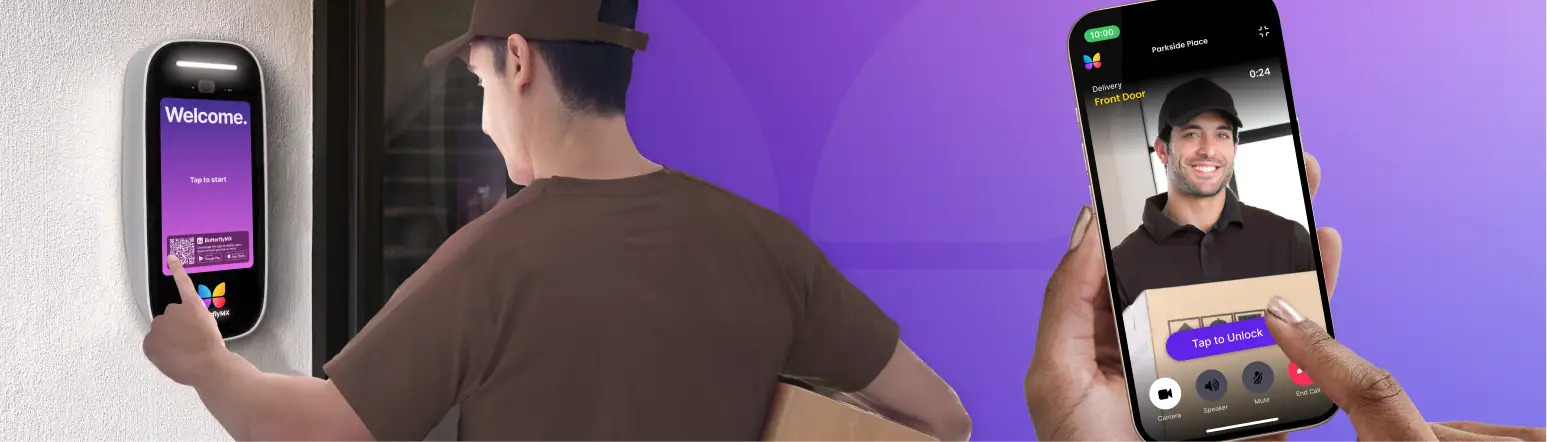
Properties coordinating shared-building visitors and deliveries may instead need a property-access platform. ButterflyMX supports video intercom calls, remote visitor entry, temporary visitor access, and package rooms across supported entrances.
Monitoring centers and response times
ADT states that six company-operated U.S. monitoring centers serve residential customers. That in-house network may appeal to buyers who value redundancy and want ADT personnel handling alarms.
One independent test reported group text alerts in 5–10 seconds and phone calls in 30–45 seconds, faster than other systems in that comparison. Those figures are useful context, not a guarantee for every alarm, location, or network condition.
Installation, connectivity, and outage behavior
ADT Pro Install requires a scheduled technician visit, while ADT Blu is designed for DIY setup in under an hour. Most sensors are wireless, but the Nest Cam with Floodlight requires hardwiring to a junction box.
Professional installation commonly takes about two hours, although property size and equipment can change that. Independent installation coverage also notes that Pro Install must be ordered through ADT rather than completed as a fully online purchase.
Larger or multi-story homes may need an alarm range extender. Test every sensor at its final location and check outdoor-camera connectivity before relying on the system.
Does ADT need Wi-Fi or a landline?
ADT does not require a landline. Current systems use Wi-Fi with built-in cellular backup, and the base can continue transmitting alarm signals over cellular service if Wi-Fi fails. Its battery can support the alarm system for up to 24 hours during a power outage.
Cameras have different limits. Nest cameras may buffer locally for only about 1–3 hours during an outage before live viewing and cloud functions are affected. In short, the alarm can stay connected when the video experience cannot.
This base-and-sensor design serves a household. ButterflyMX serves multifamily, commercial, gated, student-housing, and other properties with access control for pedestrian entrances, vehicle gates, elevators, cameras, and package workflows.
ADT app and smart-home experience
The ADT+ app handles household security tasks such as arming, disarming, live camera views, Face ID login, alerts, and automations. ADT also supports Google Assistant, Amazon Alexa, selected smart locks, and other compatible home devices.
The downside is app fragmentation. Reviewers describe using ADT+ alongside Google Home, and other testing notes that moving among apps can add friction for Nest functions.
That may be manageable for a Google-focused household. Property teams managing many residents and entrances have a different need: ButterflyMX supports mobile access, visitor access, access control, and wallet-based credentials across a broader property-access platform.
ADT privacy, ownership, and customer feedback
ADT has notable monitoring and equipment strengths, but buyers should also consider its cybersecurity history, pending ownership change, and recurring service complaints before signing a long contract. These issues do not describe every customer’s experience.
Cybersecurity incidents and litigation
ADT disclosed cybersecurity incidents in 2024 and April 2026. Coverage of the later incident says exposed information included customer names, phone numbers, addresses, and, in some cases, partial Social Security numbers or tax identification numbers.
The same coverage discusses litigation involving cancellation fees and marketing texts. These events do not mean every customer was affected, but security-conscious buyers may want to use unique passwords, enable available account protections, and monitor account notices.
What the pending ownership change means for buyers
Thrive Holdings announced an agreement to acquire ADT in October 2026 after Apollo exited its ADT stake in May 2026. Ownership reporting identifies State Farm and Google as major strategic shareholders.
The acquisition is pending company context, not a reason to assume immediate changes to products, prices, monitoring, support, or contracts. Evaluate the terms available when you request a quote.
ADT customer feedback
Professional reviewers tend to praise ADT’s monitoring response, installation support, and Google Nest equipment. Public customer feedback is less consistent.
Customer reviews on Trustpilot frequently mention billing, cancellation, support delays, and unclear contract terms. Review platforms can attract people with unusually strong experiences, so use these themes as questions for a sales representative rather than proof that every customer will have the same outcome.
ADT pros and cons
ADT’s strongest points are its monitoring infrastructure, Google Nest integration, and choice of professional or DIY installation. Its main tradeoffs are Pro Install’s price and commitment, app dependence, video-tier requirements, and service or privacy concerns.
Swipe to compare →
ADT alternatives
The best ADT alternative depends on whether you want DIY flexibility, professional installation, a touchscreen interface, lower monitoring costs, or wider smart-home compatibility.
- SimpliSafe Home Security: A no-contract DIY alternative with lower monitoring cost and no early termination exposure.
- Vivint Smart Home: A professionally installed alternative with a touchscreen hub and similar smart-home positioning.
- Ring Alarm: A lower-cost DIY option with inexpensive professional monitoring among the compared systems.
- Access Professional Systems. Access Professional Systems, Inc. (APS) is a security-systems integrator. It assesses a property, recommends third-party equipment, installs the selected system, and provides maintenance and emergency service.
- Frontpoint Home Security: A DIY-first option included in the same independent response-time comparison as ADT.
- Abode Security System: A lower-cost DIY entry point with broad smart-home compatibility.
Residential security comparisons provide added context for SimpliSafe, Ring, and Abode, while ADT testing against Vivint and Frontpoint helps frame installation and monitoring tradeoffs.
ADT vs. ButterflyMX
ADT and ButterflyMX serve different primary needs. ADT centers on household alarms, life safety, Google Nest video, and professional monitoring. ButterflyMX coordinates access and security workflows across multifamily, commercial, gated, student-housing, and other properties.
Swipe to compare →
Neither platform is a universal substitute for the other. ADT may fit a homeowner seeking monitored intrusion protection, while ButterflyMX may fit an operator managing resident, visitor, package, vehicle, and elevator access.
Frequently asked questions
How much does ADT cost per month?
ADT Blu professional monitoring starts at $24.99 per month, while ADT Pro Install starts at $49.99 per month. Equipment, professional installation, cameras, and higher monitoring tiers cost extra.
Does ADT require a contract?
ADT Pro Install typically requires a 36-month contract, or 24 months in California, while ADT Blu has no long-term contract. Promotions and equipment financing can affect the final terms.
Can I install ADT myself?
Yes. ADT Blu is designed for DIY installation and can generally be set up in under an hour; ADT Pro Install requires a scheduled professional installation.
What happens if I cancel ADT early?
After the six-month guarantee period, canceling ADT Pro Install can cost about 75% of the remaining contract balance. The actual charge depends on the signed agreement and any equipment balance.
What cameras does ADT use?
ADT uses Google Nest indoor, outdoor, floodlight, and doorbell cameras in its current lineup. Video history and Trusted Neighbor require the appropriate monitoring plan and compatible hardware.
Does ADT work without Wi-Fi or a landline?
ADT does not require a landline, and alarm signaling can continue through cellular backup if Wi-Fi fails. Camera live views and cloud functions depend more heavily on internet and power availability.
How fast does ADT respond to alarms?
One independent test reported ADT text alerts in 5–10 seconds and calls in 30–45 seconds. Actual response can vary with the alarm, location, network, and event conditions.
Has ADT had data breaches?
Yes. ADT disclosed cybersecurity incidents in 2024 and April 2026. Coverage of the later incident said exposed data included names, contact details, addresses, and partial Social Security numbers or tax IDs in some cases.
Is ADT good for pet owners?
ADT motion sensors can be adjusted to ignore pets weighing up to about 85 pounds. Proper placement and configuration still matter because movement patterns and furniture can affect false alarms.
ADT review verdict
ADT can suit homeowners who value professional monitoring, technician installation, and Google Nest cameras. ADT Blu is the more flexible choice for renters and DIY buyers because it lowers the monthly starting price and removes the long-term contract.
The deciding factor is commitment. Pro Install offers a fuller service model, but its 36-month term, higher monitoring price, and potential cancellation charge deserve close attention. Compare the equipment list, installation charge, monitoring tier, outage behavior, and contract terms in your actual quote.
If your project involves shared entrances, residents, visitors, packages, gates, or elevators rather than one household alarm, compare ADT with a property-access platform. Explore ButterflyMX to see how video intercoms, mobile access, visitor access, package rooms, access control, and other property-entry products can work together.
Get your free quote!
Fill in the form below, and we'll email you right back.
Want a free quote?
Fill in the form below, and we'll email you right back.
Redirecting you in 5 seconds.