
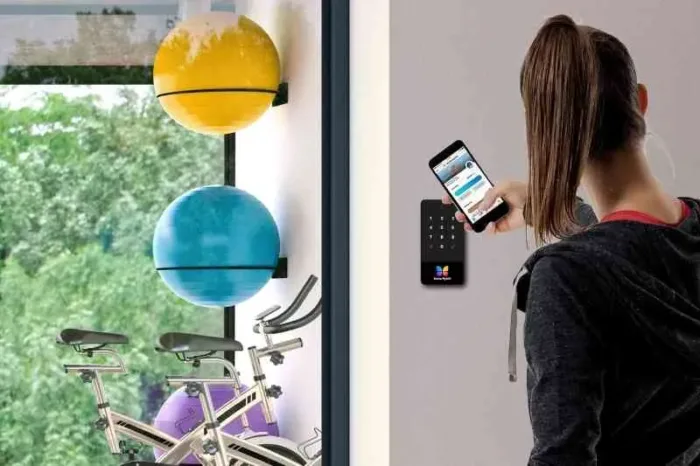





Key takeaways:
- Appointment-only access control helps scheduled clients and instructors enter without leaving doors unlocked or interrupting sessions.
- QR code and mobile access are often a better fit for temporary or scheduled entry, while key fobs can still work well for recurring staff.
- The right setup depends on who needs access, how often they visit, and how much credential management your studio wants to handle.
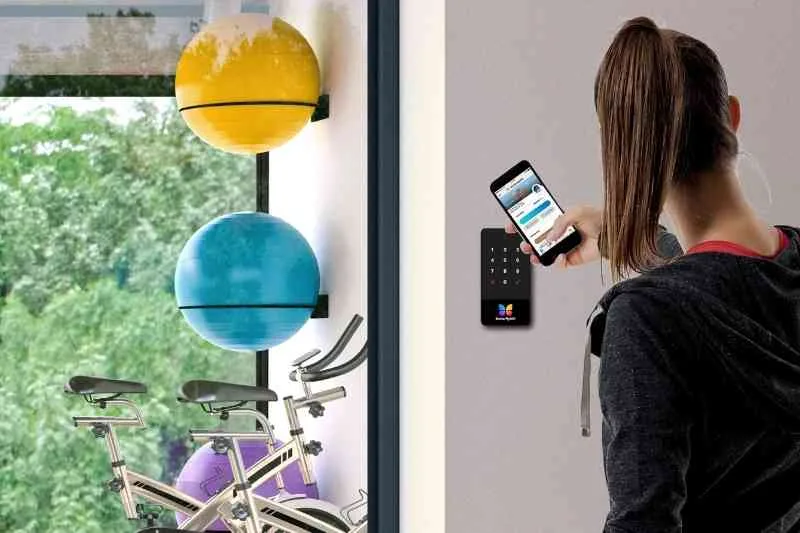
If you run a pilates studio, you have probably dealt with the same frustrating moment more than once: a client arrives while you are finishing a session, teaching a class, or not yet at the front door. You need a way to let the right people in without leaving the entrance unlocked or stopping instruction every time someone shows up.
Appointment-only access control for gyms and pilates studios is a way to manage entry for scheduled clients, instructors, and approved visitors without relying only on physical keys or manually handing out fobs. Common options include QR code entry, mobile access, temporary access codes, and key fobs.
For most appointment-based studios, the goal is simple. You want clients to arrive smoothly, instructors to get in without friction, and staff to keep control over who can enter and when. The best option depends on your workflow, not just the technology itself.
This guide covers:
- What is appointment-only access control for pilates studios?
- QR code entry vs. key fobs for pilates studios
- How temporary QR code entry works for scheduled clients
- How mobile app access supports instructors and private clients
- How ButterflyMX supports appointment-only studio access
- FAQs
What is appointment-only access control for pilates studios?
Appointment-only access control is a setup that helps your studio admit scheduled people without treating every visitor the same. Instead of one shared key or an always-unlocked door, you can give different types of access to different users based on their role and visit.
That matters in a pilates studios and fitness clubs because your day is built around sessions, not around a staffed front desk. A private client may arrive while an instructor is still finishing the previous appointment. A substitute teacher may need entry for one evening. A delivery person may need access to the lobby or entrance, but not to the full studio. Each of those situations calls for a different workflow.
Why appointment-based studios need a different access workflow
Many small studios do not have someone sitting at the entrance all day. The owner may be teaching. An instructor may be moving between reformers and clients. Staff may be handling check-in, cleaning, and scheduling at the same time. In that environment, an access system should reduce interruptions, not create more of them.
A good appointment-based studio entry system helps you control access without forcing someone to walk to the door for every arrival. It also gives you a clearer way to separate recurring users, such as instructors, from one-time or occasional visitors, such as new clients or vendors.
Who needs access at a pilates studio?
Most studios need to plan for several user groups:
- Instructors and staff: People who need recurring access for opening, closing, and teaching.
- Private clients and class participants: People who may need entry only during a scheduled appointment window.
- Vendors and service providers: Cleaning teams, maintenance workers, or deliveries that may need occasional access.
- Owners and managers: People who want visibility into who is arriving and how entry is being granted.
Once you look at access by user type, it becomes easier to decide whether QR codes, mobile credentials, temporary access, or fobs make sense for your studio.
QR code entry vs. key fobs for pilates studios
This is usually the main comparison for small studios. Both QR code entry and key fobs can control access, but they fit different arrival patterns. The better choice depends on whether you are managing mostly scheduled client visits, recurring instructor access, or a mix of both.
When QR code entry makes sense
QR code entry is often a strong fit when the person entering does not need a permanent credential. If a new client is coming for a single private session, it may be more practical to give them a temporary way to enter than to issue a fob that has to be tracked, collected, or replaced later.
It can also support a smoother arrival experience. Instead of texting that they are outside or waiting for someone to open the door between sessions, an approved visitor can use the assigned entry method and get in according to studio rules. For an owner trying to let clients scan to enter a studio without constant staff involvement, that is a meaningful operational advantage.
QR-based access is especially useful when:
- You see many one-time or occasional clients
- You want to avoid handing out physical credentials
- You need a more controlled way to handle appointment-based arrivals
- You want visibility into how visitor entry is being managed
When key fobs may still be useful
Key fobs can still work well for recurring instructors, managers, or staff who need regular entry. If the same few people open the studio each morning, lock up at night, or move in and out throughout the day, a fob may feel familiar and simple.
That said, fobs come with management work. Someone has to issue them, deactivate them if they are lost, and keep track of who still has one. If instructors change schedules, if contractors only need short-term access, or if former staff do not return credentials quickly, physical fobs can create more follow-up than many small studios want.
For many pilates studios, the practical answer is not QR code entry or key fobs alone. It is often a combination. Temporary or scheduled visitors may be better served with QR-based access, while long-term staff may still prefer a credential they use every day.
How temporary QR code entry works for scheduled clients
Many studio owners ask a very practical question: can clients scan a QR code to get temporary access for their appointment? In many access setups, yes, temporary QR code entry can support that type of arrival workflow.
A typical appointment arrival workflow
Imagine a client booked for a private session at 3:00 p.m. They arrive while the instructor is still wrapping up the previous appointment. Instead of waiting outside, pulling the instructor away, or calling repeatedly, the client uses the approved temporary access method at the entrance.
From the studio’s perspective, this creates a more organized workflow. Entry is tied to an expected visit rather than a permanently active credential. The client gets a smoother arrival. The instructor can stay focused on the person already in session. The owner has a clearer process than simply leaving the door open during the day.
This same approach can help with:
- Intro sessions for first-time clients
- Small group classes where participants arrive close together
- Massage, wellness, or movement professionals sharing studio space on specific days
- Vendors who need occasional access without becoming permanent credential holders
Why temporary access can be better than permanent credentials
Temporary access makes sense when someone only needs entry for a specific visit or limited period. That reduces the need to hand out long-term credentials to people who may not return often. It can also reduce confusion about who should still be able to enter your space weeks or months later.
For a small appointment business, this is often the real tradeoff. Permanent credentials can feel simple at first, but they create ongoing management. Temporary access can be more practical for studios that want a tighter workflow around scheduled visits and fewer loose ends after the appointment is over.
How mobile app access supports instructors and private clients
Mobile app-based entry can be a useful middle ground between physical credentials and one-time access methods. It is especially helpful for recurring users who need convenient access but do not want to carry a key or fob.
Mobile access for instructors
If an instructor teaches multiple days a week, opens early, or covers private sessions outside normal class hours, mobile access can make day-to-day entry easier. Instead of carrying a studio key, remembering a separate credential, or coordinating handoffs, they can use an approved mobile method to enter.
That can be useful for studios with several instructors who have different schedules. Rather than manually managing who has a physical key at any given time, managers can keep access more organized through a centralized system. If teaching assignments change, permissions can be reviewed and updated without collecting hardware from each person first.
Mobile visitor access for small studios
Mobile access can also help when staff are busy or not stationed near the entrance. If a client, guest practitioner, or approved visitor arrives while someone is teaching, mobile-based visitor access can support a more controlled entry process than a propped-open door or a shared keypad code.
The benefit is not just convenience. It is a clearer workflow. You can give recurring users one type of access, occasional visitors another, and keep a better handle on who should be able to enter your studio. That matters in small businesses where a few access decisions can quickly affect daily operations.
Discover how ButterflyMX works:
How ButterflyMX supports appointment-only studio access
For pilates studios comparing QR code entry, mobile access, temporary credentials, and key fobs, ButterflyMX can support a flexible setup built around how appointment-based spaces actually operate. The value is not just offering more than one way to unlock a door. It is giving you options that match different users and different visit types.
Access options to consider with ButterflyMX
A small studio may want temporary access options for scheduled visitors, mobile access for recurring instructors, and fobs for team members who prefer a physical credential. ButterflyMX can support these kinds of access workflows with options such as QR code entry, mobile app access, key fob readers, and temporary access methods.
That can help in practical situations like:
- A private client arriving while the instructor is still with another session
- An instructor needing recurring access without carrying a physical key
- A manager wanting better visibility into how people enter the studio
- A studio reducing reliance on shared or permanent credentials for occasional visitors
How to choose the right setup for your studio
If most of your arrivals are scheduled clients or occasional visitors, temporary QR-based access may be the most natural fit. If you have instructors or managers coming and going throughout the week, mobile access may be easier to manage than physical keys. If some staff strongly prefer a physical credential, fobs may still have a place.
The key is to match the credential to the user. Use temporary access for short-term visits, recurring access for instructors and staff, and only keep physical credentials where they truly make daily operations easier. That approach can help your studio stay more controlled without making entry harder for the people you actually want to welcome.
If you are evaluating pilates studio access control and want to compare real setup options, ButterflyMX is worth considering because it supports the practical arrival workflows that matter most in appointment-based spaces.
FAQs
How can I set up appointment-only entry for my pilates studio?
Start by identifying who needs recurring access and who only needs short-term entry. Instructors and managers may need ongoing credentials, while clients and vendors may be better served with temporary access options such as QR-based or mobile entry.
Are QR code intercoms better than key fobs for small fitness studios?
Not in every case. QR code entry is often better for scheduled clients and temporary visitors because you do not need to issue a physical credential. Key fobs can still work well for recurring staff who enter frequently.
Can clients scan a QR code to get temporary access for their appointment?
In many access control setups, yes. Temporary QR code entry can be a practical way to let approved clients enter for a scheduled visit without giving them a permanent credential.
How does mobile app access work for instructors and private clients?
Mobile access gives approved users a way to enter with their phone instead of a physical key or fob. It is often a good fit for certified instructors who need recurring access and for studios that want a simpler way to manage changing schedules.
What access control features matter most for appointment-based studios?
Look for flexible credential options, support for temporary access, visibility into entry activity, and a setup that fits how your studio actually operates. For most pilates studios, the goal is to reduce interruptions while keeping access organized and controlled.
Get your free quote!
Fill in the form below, and we'll email you right back.
Want a free quote?
Fill in the form below, and we'll email you right back.
You’ll be redirected shortly...