





Key takeaways:
- Grata combines Bluetooth digital-key access with amenity booking, work orders, payments, property communications, and marketplace features.
- App feedback differs sharply by platform: Grata has a 4.4/5 rating from 396 iOS ratings and a 1.8/5 rating from 76 Android reviews.
- Grata does not publish pricing, so buyers should request an itemized quote for hardware, installation, software, integrations, support, and fallback credentials.
Disclaimer: ButterflyMX provides these blog posts to help our customers and potential customers make the right business decisions. Our blog posts are based on the information available to us at the time of writing.
This Grata review covers Grata Technologies Inc. and its multifamily property management software product at grata.life—not the unrelated private-markets data company that can appear in search results.
Grata may appeal to multifamily, condominium, and student-housing operators that want mobile access and resident services in one app. Below, we cover its features, quote-based pricing, app reliability, connectivity, fallback access, installation, integrations, and alternatives.
This guide will answer:
- What is Grata Smart Living OS?
- How does Grata digital access work?
- Grata features for residents and property teams
- How much does Grata cost?
- Grata review: app feedback and reliability
- Grata installation and property management integrations
- Grata pros and cons
- Grata alternatives
- Grata vs. ButterflyMX
- Frequently asked questions
- Is Grata a good fit?
Watch how ButterflyMX works:
What is Grata Smart Living OS?
Grata Smart Living OS is a platform for multifamily and student housing that combines smartphone-based access with resident services and property-management tools. The Grata product site describes one app for entry, amenity reservations, maintenance requests, payments, property updates, and resident offers.
Grata is designed for apartments, condominiums, and student housing. Its access layer pairs Bluetooth Low Energy (BLE) smart locks with connections to existing intercom or access-control infrastructure.
Grata apps and product components
Grata separates resident functions, staff management, marketplace offers, and access hardware into distinct parts of its product family.
How does Grata digital access work?
Residents use the Grata mobile app as a Bluetooth digital key for supported unit doors, building entrances, and shared spaces. Property staff use cloud-based tools to issue, manage, and revoke credentials.
Grata works with hardware partners to provide BLE locks and connect its platform to existing intercom or access-control systems. This approach can suit a retrofit, but buyers should map every door, credential type, and existing system before accepting a deployment plan.
Does Grata require WiFi or internet access?
Grata positions its BLE access layer as not requiring managed building WiFi, while the wider platform uses cloud connectivity for backend functions. In a company interview about its platform and installation model, Grata describes Bluetooth-based access as reducing dependence on building WiFi.
That does not mean every app function will work fully offline. Some Google Play reviewers report failed logins, connection problems, or entry trouble in low-signal areas such as garages.
Before rollout, test representative iPhones and Android phones at entrances, unit doors, elevators, garages, basements, and other dead zones. Include initial login, routine unlocking, credential updates, and recovery after a lost connection.
What happens if the Grata app fails?
Fallback access depends on the property deployment, so buyers should define the process before removing an existing credential. Some App Store feedback and Android reviews describe properties removing fobs and residents having access problems when the app, phone, or connection failed.
Ask whether residents keep a physical key, fob, PIN, or another credential; who can grant entry after hours; and how staff handle a dead phone, lost device, app outage, or weak signal. ButterflyMX also supports mobile and wallet-based credentials, which shows why credential choice and outage procedures deserve a direct comparison.
Grata features for residents and property teams
Grata puts access and several resident-service workflows in one app, which may reduce the need to switch between separate property tools. Feature scope can vary by deployment, so buyers should separate core functions from optional modules and integrations.
Access and security capabilities
Grata focuses on BLE mobile entry, cloud-managed credentials, and connections to existing building access equipment. Its public materials do not list a video intercom or security-camera function in the documented product set.
- Mobile digital keys: Residents can use the app at supported unit, entrance, and common-area doors.
- Remote credential management: Property teams can manage or revoke access through administrative tools.
- Existing-system integration: Grata can connect its software and smart-lock layer to existing intercom or access-control infrastructure.
- Access administration: Staff tools support resident and credential management from a central interface.
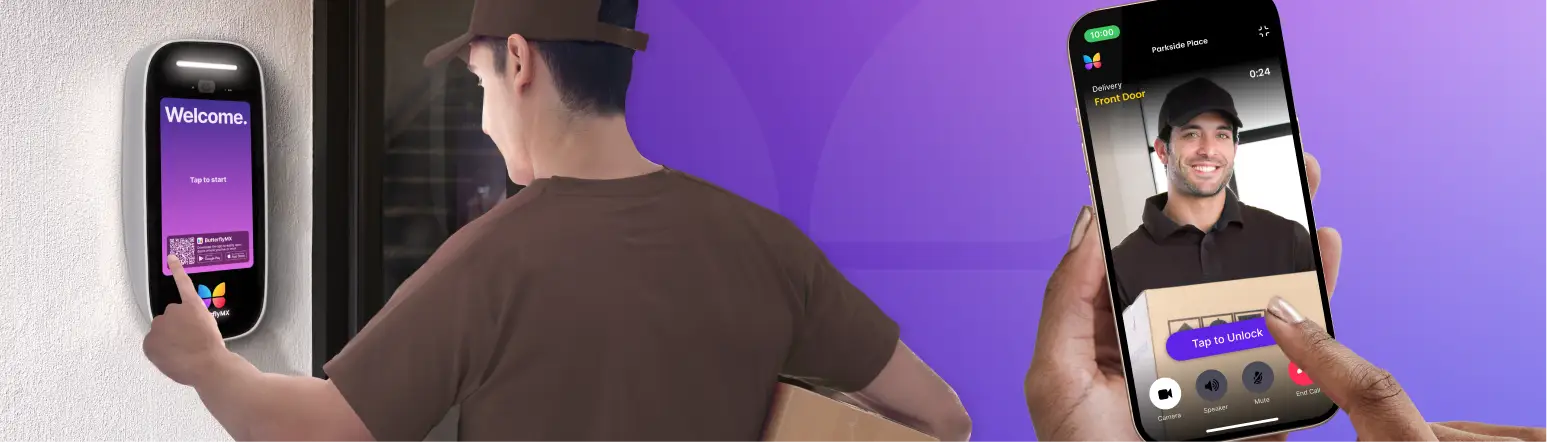
Properties that need visual visitor screening may also compare ButterflyMX, which lets residents see and speak with visitors through a video intercom before granting remote access. That is a different focus from Grata’s documented resident digital keys and in-app property services.
Resident operations and engagement
The Grata Resident App supports amenity booking, photo-enabled maintenance requests, property announcements, alerts, payments, and marketplace functions.
- Amenity booking: Residents can view availability and reserve spaces such as lounges, gyms, and meeting rooms.
- Maintenance requests: Residents can submit requests with photos and track progress while staff communicate and coordinate vendors.
- Payments: Grata describes support for rent and other in-app payments.
- Property communications: News, events, alerts, and other updates can be sent through the resident app.
- Grata Plus: The marketplace layer presents brand offers and can share marketplace revenue with the property owner.
Grata emphasizes resident-service consolidation. ButterflyMX has a different platform focus, with access control, vehicle access, elevator controls, package rooms, video intercoms, security cameras, mobile access, and smart-lock integrations.
How much does Grata cost?
Grata does not publish hardware, subscription, installation, or per-door pricing. Its public buying path directs prospective customers to request a quote or speak with sales.
An itemized proposal is essential because a single total will not show whether two vendors include the same hardware, integrations, services, or ongoing support.
What should a Grata quote include?
A Grata quote should separate one-time hardware and installation costs from recurring software, support, and integration fees.
- BLE locks and other required access hardware by door type
- Intercom or access-control integration equipment
- Installation, configuration, testing, and resident credential migration
- Resident and staff software fees
- Property-management-system integration setup and ongoing charges
- Grata Plus and other optional modules
- Support coverage, response procedures, and after-hours help
- Replacement credentials and physical fallback options
- Training, resident onboarding, and future expansion costs
Give each vendor the same door count, unit count, existing hardware inventory, integration needs, and support expectations. That makes proposals easier to compare without relying on unsupported cost estimates.
Grata review: app feedback and reliability
Grata app feedback differs sharply by platform: the iOS app is rated 4.4/5 from 396 ratings, while the Android app is rated 1.8/5 from 76 reviews. The gap does not explain its cause, but it makes cross-platform testing a key procurement step.
These scores should not be blended into one broad judgment. Properties need a device sample that reflects their resident population, especially because an access-app problem can affect entry rather than just convenience.
Feedback from property-management roles is more favorable about workflows and documentation, though reviewers also ask for stronger reporting and bulk editing. These themes appear in Grata reviews on BOOSTNOI.
Privacy and access-event logging
Some resident discussions raise concerns about access-event logging and how policies were communicated during rollout. A resident discussion of a Grata building notice describes logs containing timestamps and user identifiers, while a separate home-security discussion raises questions about disclosure and digital-only access.
Forum posts reflect individual experiences, not a universal policy. Still, owners should document what access data is collected, who can view it, how long it is retained, when it may be used, and how residents will be informed before launch.
Grata installation and property management integrations
Grata presents installation as a managed retrofit that involves hardware partners, physical smart-lock swaps, and connections to existing building systems. This may reduce the number of vendors a property coordinates, but the proposal should define the exact scope.
In its company interview, Grata cites deployments of 1,000 units in five days and more than 200 units in about 36 hours. These are company-reported examples, not promised schedules for every property.
For property-management software, an independent Grata vendor listing identifies Yardi Voyager connectivity. Grata also states that it connects with AppFolio, RealPage, and MRI. Buyers should ask about available data flows, setup responsibilities, supported fields, sync timing, and fees for their configuration.
Questions to ask before installation
Before installation, document the hardware scope, integration depth, resident transition plan, dead-zone testing, fallback access, and support process.
Grata pros and cons
Grata’s main strengths are resident-service consolidation and a managed retrofit model. Its key tradeoffs are pricing opacity, uneven app feedback, fallback planning, and limited public technical detail.
Pros
- Multiple resident workflows in one app: Access, amenity reservations, work requests, payments, communications, and marketplace features may reduce app switching.
- Retrofit-oriented deployment: Grata coordinates hardware partners, lock replacement, and integration with existing access systems.
- Yardi Voyager connectivity is independently listed: The industry directory gives Yardi users a useful starting point for technical discussions.
- Positive iOS sentiment: A 4.4/5 score from 396 ratings suggests many iOS users have had a favorable experience.
Cons
- No public pricing: Buyers cannot compare costs without entering the sales process and requesting a detailed proposal.
- Android reliability concerns: The 1.8/5 Google Play score and reports of crashes, login trouble, and low-signal problems require careful device testing.
- Fallback access can be unclear: Reports of fob removal at some properties make outage procedures and backup credentials important contract topics.
- Limited public technical documentation: Public materials do not list capacities, detailed wiring requirements, warranty terms, or access-log retention periods.
- Resident privacy concerns: Properties need clear policies for access-event collection, use, retention, and communication.
Grata alternatives
Relevant Grata alternatives include SmartRent, PointCentral, Stratis Smart Building, Rently Smart Home, and iApartments. An independent multifamily smart-home directory places these products in the same broad evaluation category.
- SmartRent: Relevant for operators comparing multifamily access with broader smart-building and IoT management.
- PointCentral by Alarm.com: An option for multifamily smart-home automation and access.
- Stratis Smart Building by RealPage: Relevant to buyers comparing smart-building access and property operations.
- Rently Smart Home: An alternative that combines smart-home, access, and leasing-related functions.
- iApartments: Another multifamily smart-home platform for a broader shortlist.
Use the same requirements for every demonstration and proposal: access methods, resident device support, visitor workflows, PMS integration depth, fallback credentials, installation responsibilities, support, data policies, and total cost.
Grata vs. ButterflyMX
Grata centers on BLE resident access plus resident-service workflows, while ButterflyMX centers on a broader property access and security platform. The better fit depends on whether your priority is resident-app consolidation, access and security coverage, or a combination of both.
Don’t select either platform from a feature checklist alone. Ask each vendor to demonstrate the resident, visitor, staff, outage, and support workflows your property needs.
Frequently asked questions
What is Grata and who is it for?
Grata is a smart-living platform for multifamily, condominium, and student-housing properties. It combines BLE mobile access with amenity booking, maintenance requests, payments, announcements, and marketplace offers.
How much does Grata cost?
Grata uses quote-based pricing and does not publish hardware, subscription, installation, or per-door rates. Buyers should request an itemized proposal that separates one-time and recurring charges.
Does Grata require WiFi?
Grata positions its Bluetooth access layer as not requiring managed building WiFi, but the wider platform uses cloud connectivity. Some Android users report trouble in low-signal areas, so properties should test every important entry point.
What happens if the Grata app or a resident’s phone fails?
Fallback access depends on the property deployment. Buyers should define physical keys, fobs, PINs, after-hours entry, and outage procedures before removing an existing credential.
Is the Grata app reliable?
Grata app feedback varies by platform: the iOS app is rated 4.4/5 from 396 ratings, while the Android app is rated 1.8/5 from 76 reviews. Buyers should test representative devices and low-signal areas rather than rely on one overall impression.
Which property management systems connect with Grata?
Yardi Voyager appears in an independent vendor directory, while Grata also states that it connects with AppFolio, RealPage, and MRI. Buyers should ask which records, fields, and workflows their specific connection supports.
Does Grata include a video intercom or security cameras?
Grata public materials focus on app-based digital access and do not list video intercom or security-camera functionality. Buyers that need visual visitor screening should include that requirement in their platform comparison.
How is Grata installed?
Grata describes a managed retrofit model in which hardware partners provide smart locks, perform physical swaps, and connect the platform with existing building systems. Company-reported rapid installations are examples rather than guaranteed property schedules.
What are the main alternatives to Grata?
Grata alternatives include SmartRent, PointCentral, Stratis Smart Building, Rently Smart Home, and iApartments. ButterflyMX is also relevant for properties comparing mobile access with video intercoms, visitor access, access control, and a broader security platform.
Is Grata a good fit?
Grata may fit multifamily or student-housing operators that want BLE mobile access, resident services, and marketplace functions in one app. Its retrofit model and broad resident workflow make it a practical option for existing buildings.
The biggest buying questions are price, Android performance, low-signal behavior, fallback access, integration depth, support, and access-data policies. Resolve them with an itemized proposal, property-specific testing, and clear contract terms.
Compare Grata with SmartRent, PointCentral, Stratis, Rently, iApartments, and ButterflyMX using the same requirements. If your property also needs video intercoms, visitor workflows, vehicle access, elevator controls, cameras, package rooms, or broader access control, include ButterflyMX on your shortlist and request a tailored demonstration.
Get your free quote!
Fill in the form below, and we'll email you right back.
Want a free quote?
Fill in the form below, and we'll email you right back.
You’ll be redirected shortly...