





Key takeaways:
- Package theft prevention does not require lockers if your property can control delivery access, storage, and resident pickup.
- Access control and video intercoms reduce risk earlier in the delivery process by limiting entry and helping verify carriers before packages are left exposed.
- The best locker-free approach depends on space, package volume, staff capacity, carrier behavior, resident expectations, and whether onsite or offsite handling makes more sense.
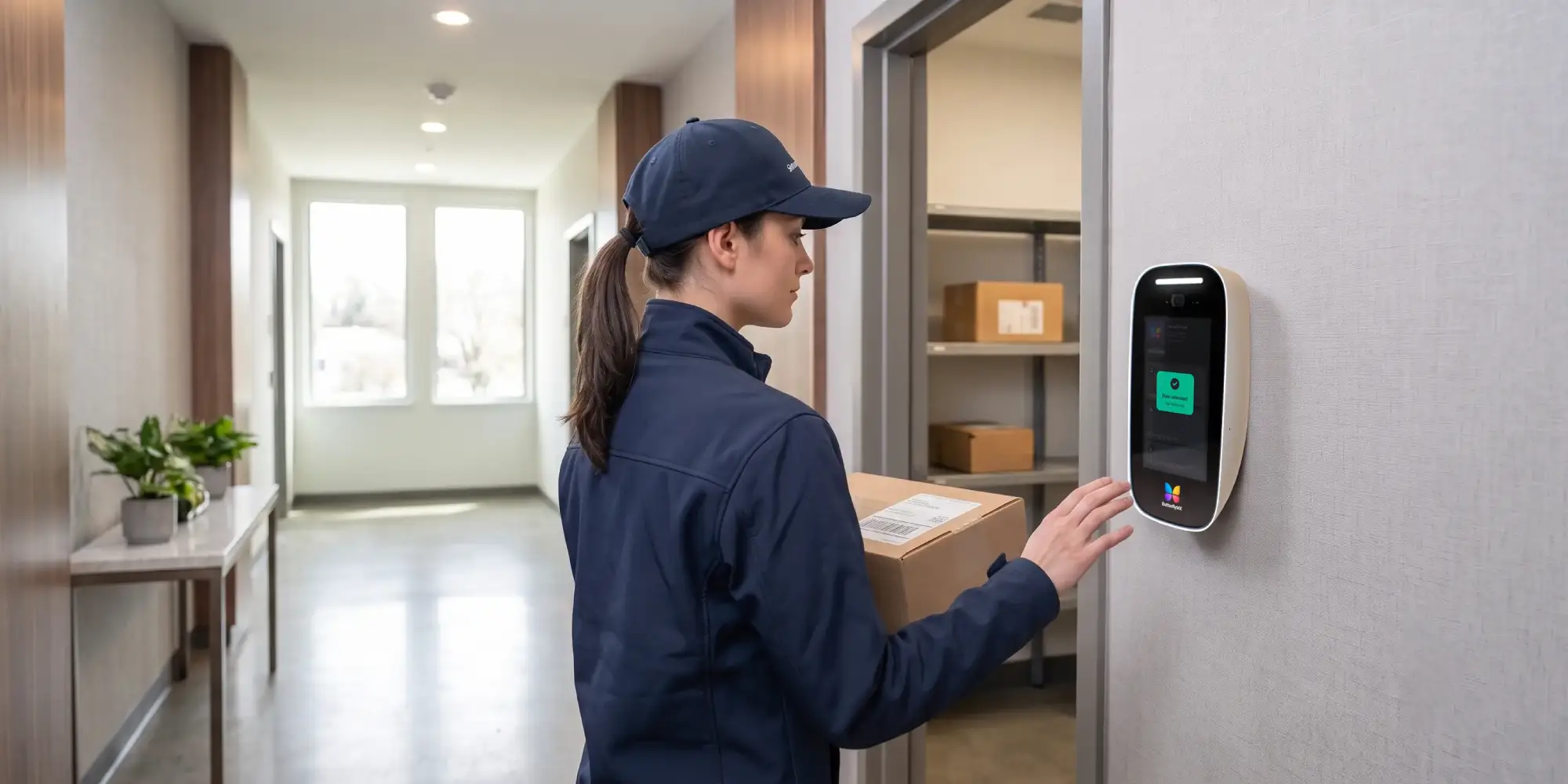
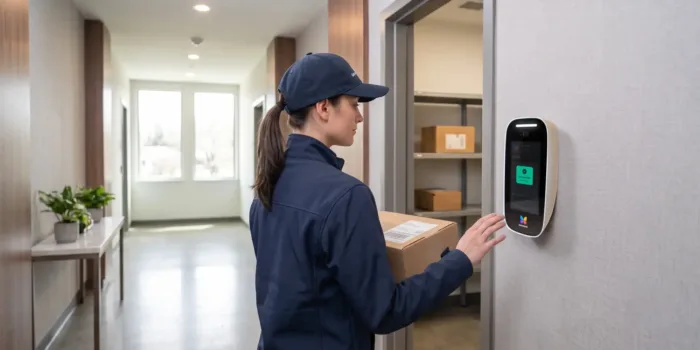
If you need a package theft solution without package lockers, start with the full delivery path, not just the place where boxes pile up. Packages become vulnerable when carriers can’t get to the right drop area, doors are left unlocked for convenience, lobbies become informal storage zones, or residents retrieve items from a shared space with little oversight.
The strongest locker-free options to prevent package theft are access control, video intercoms, secure package rooms, offsite package services, cameras, delivery notifications, and clearer handling rules. Each one solves a different part of the problem. Access control limits who can reach package areas. Video intercoms help verify delivery activity. Package rooms create shared onsite storage. Offsite services move the storage burden away from the building. Policies and cameras add consistency, deterrence, and accountability.
Lockers can still work for some properties, but they aren’t practical everywhere. Existing buildings may lack the lobby space, smaller communities may not want fixed equipment, and high-volume properties may worry about overflow during busy delivery periods. When lockers don’t fit the building, the better question is: Where are packages most exposed, and which locker-free approach fixes that weak point?
This guide will answer:
- Why package lockers are not always the answer
- The best package theft solutions without lockers
- How access control helps prevent package theft
- How video intercoms improve delivery verification
- Offsite package services and secure package rooms
- Where cameras, policies, and workflows fit
- How to choose the right solution for your property
- FAQs
Watch how ButterflyMX works:
Why package lockers are not always the answer
Package lockers solve a real problem for some buildings, but they are not the only way to prevent package theft. They also don’t fit every property’s space, budget, delivery volume, or staffing model.
Many existing multifamily buildings were designed long before today’s delivery habits. A lobby may not have enough room for a locker bank. A mail area may already be crowded. A property may have several entrances, a narrow vestibule, or a layout that makes one centralized locker area inconvenient for residents and carriers.
Even when there is space, fixed compartments can create other issues. Oversized packages may not fit. Seasonal spikes can lead to overflow. Staff may still need to manage exceptions, damaged packages, porch pirates, misdeliveries, and resident questions. So, the choice is not always lockers versus no security. Often, it is lockers versus a more flexible package security plan.
That distinction matters because package theft is not only a storage problem. It is also an access problem, a visibility problem, and a handling problem. If unauthorized people can enter the building, if carriers don’t know where to leave deliveries, or if residents pull packages from a loosely managed area, theft risk can remain even after new equipment is added.
A good locker-free strategy looks at where the failure happens. For one property, the weak point may be an unlocked front door. For another, it may be packages sitting in an open lobby. For another, it may be an unorganized package room where residents can easily take the wrong item. The right alternative depends on that diagnosis.
The best package theft solutions without lockers
The best package theft solutions without lockers are access control, video intercoms, secure package rooms, offsite package services, video surveillance, and stronger delivery procedures. Most managed properties get better protection by combining two or more of these approaches instead of treating one tool as the entire answer.
Here is how each locker-free option helps:
- Access control limits who can enter lobbies, delivery areas, package rooms, and other shared spaces where packages may be exposed.
- Video intercoms let staff or residents see and speak with delivery personnel before granting entry or giving directions.
- Secure package rooms create shared onsite storage without assigning each package to an individual locker compartment.
- Offsite package services route deliveries to another facility before resident pickup or final handoff.
- Video surveillance helps deter theft and document incidents, but it does not physically stop someone from taking a package.
- Delivery notifications and handling policies create clearer pickup expectations, carrier instructions, and chain-of-custody records.
These options are not interchangeable. Access control works before drop-off by reducing unauthorized entry. A package room works after drop-off by creating a more secure place to store items. A video intercom improves the entry decision. Offsite service changes where packages are handled altogether. Cameras and policies make the process easier to monitor and repeat.
The comparison below shows how the main locker-free options differ in practice.
Compare locker-free package theft solutions
The table is a starting point, not a final ranking. A small apartment building with limited package volume may make meaningful progress with controlled entry, a designated drop area, and better carrier instructions. A larger community may need a secure package room, access control, cameras, and resident notifications working together.
Carrier dependence also varies. Offsite services and some delivery procedures rely heavily on carriers following the right route. An access-controlled package room gives the property more direct control, but only if residents, staff, and carriers all understand how the room should be used.
How access control helps prevent package theft
Access control helps prevent package theft by limiting who can enter the building or package area before packages are left exposed. For apartments and other managed residential properties, that makes access control one of the strongest locker-free prevention layers.
Without controlled entry, deliveries often end up in easy-to-reach places: open vestibules, unlocked lobbies, front desks without enough coverage, or hallways near the entrance. An access control system changes the first part of that process. It helps administrators decide which doors stay locked, who can enter, when access is allowed, and which areas a person can reach after entry.
In package security, the most useful version of access control creates a defined delivery path. Instead of leaving a door unlocked during delivery hours, managers can direct carriers to an approved package room, delivery vestibule, or supervised drop area. If the property uses delivery PINs, carrier credentials, or other approved access methods, those permissions can be limited by door or time period.
That approach does not make theft impossible, and it does not solve storage by itself. But it does reduce a common source of risk: too many people being able to reach package-prone areas too easily.
- It keeps casual visitors and unauthorized people out of sensitive delivery areas.
- It helps prevent packages from being left in open lobbies or public hallways.
- It supports controlled carrier access instead of unlocked doors during delivery windows.
- It creates access events that can help managers review incidents.
- It strengthens package rooms by controlling who can enter the room and when.
Access control is different from surveillance. Surveillance records what happened. Access control helps decide who can reach the area in the first place. That difference is important because documenting a theft after it happens is not the same as reducing the chance that someone can reach the package area.
This is where ButterflyMX fits naturally. For properties evaluating access-led package theft prevention, ButterflyMX video intercoms, access control, mobile access, remote management, visitor access, and delivery PINs can help teams create clearer rules for residents, visitors, and carriers. The point is not just to unlock a door. It is to manage delivery access in a way that keeps packages out of unsecured areas whenever possible.
Where access control works best
Access control is especially useful in multifamily buildings, student housing, mixed-use properties, senior living communities, condos, HOAs, and gated communities with repeated delivery traffic through shared entrances. These properties often have more package volume than a single-family home and more people moving through common spaces.
An older apartment building with limited lobby space, for instance, may get more value from securing the front entrance and directing carriers to one approved drop area than from trying to force large storage equipment into a tight common area. A mixed-use property may need controlled delivery routing because residential, retail, and service entrances can easily blur together. A gated community may need to manage access at the perimeter before the carrier ever reaches the final drop location.
Access control also makes package rooms more useful. A package room without controlled entry is only a room with shelves. A package room with managed permissions, camera coverage, organized storage, and clear pickup rules becomes a more secure shared storage area.
How video intercoms improve delivery verification
Video intercoms improve delivery verification by letting staff or residents confirm who is requesting entry, speak with that person, and decide whether to grant access. In a package theft strategy, that matters because the delivery decision happens before the package is ever set down.
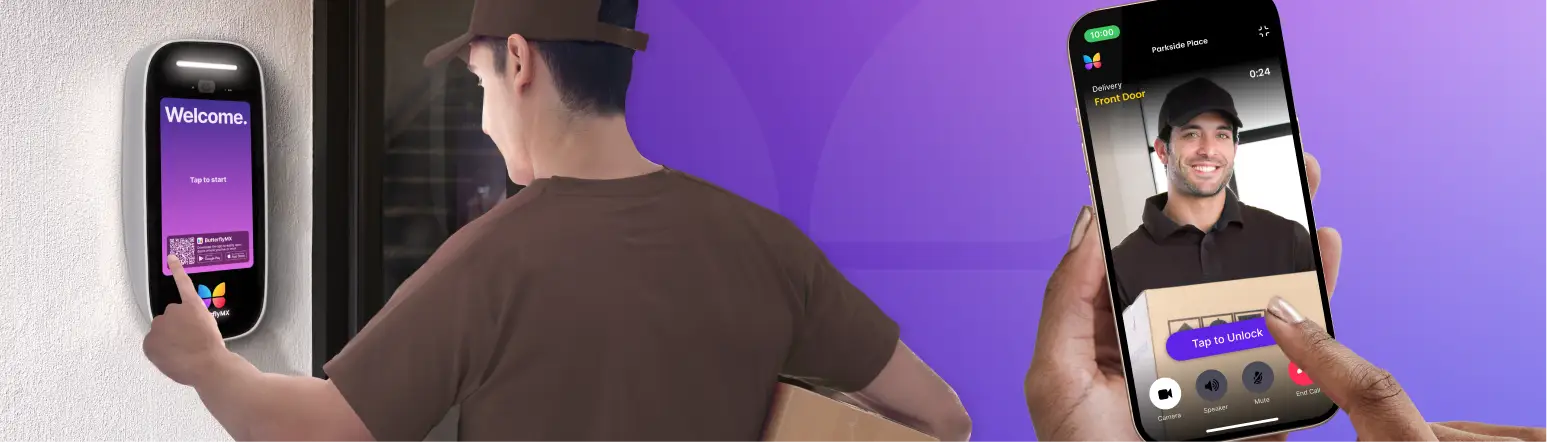
A video intercom gives the property a way to see and talk with delivery personnel at the entrance. That is useful when there is no full-time front desk or when staff manage access from another part of the property. Instead of leaving a door unlocked, a resident or staff member can verify the visitor, confirm the delivery, and direct the carrier to the correct drop area.
Remote access makes that decision more flexible. If the building supports smartphone-based entry, authorized users can respond even when they are not in the lobby. That can help properties avoid the common shortcut of propping open doors or sharing broad access instructions because deliveries are hard to coordinate.
Video intercoms do not physically secure packages after drop-off. Their value is in the entry moment: visual confirmation, two-way communication, and a clearer record of delivery activity. If a resident later reports that a package was not received, the property may have more context about whether a carrier arrived, requested access, and was directed to a certain place.
They are also helpful when carrier behavior varies. Some delivery drivers follow instructions closely. Others are moving quickly and may leave items wherever access is easiest. A two-way video intercom gives the property a chance to guide that moment instead of hoping written instructions are followed every time.
ButterflyMX is relevant here because video intercom systems and mobile access can support delivery access decisions without requiring staff to sit at the entrance all day. For properties that don’t have room for lockers but need more control at the door, video intercoms can be a practical part of a broader package security plan.
What video intercoms add to access control
Access control answers a permission question: Does this person or credential have access? A video intercom adds a human verification step: Who is at the entrance, what do they need, and where should they go?
Together, the two categories can create a stronger process. A building might keep the front door locked, use a video intercom to verify a carrier, and then grant access only to the approved delivery path. That is different from unlocking the entrance for long delivery windows or relying on carriers to choose the right drop location on their own.
Offsite package services and secure package rooms
Offsite package services and secure package rooms are the two main locker-free storage models. Offsite services move package handling away from the property. Package rooms keep deliveries onsite in a shared, controlled space.
How offsite package management works
Offsite package management is a service model where deliveries are routed to a separate facility and then brought to residents later or released through another pickup process. For a property with little or no package storage space, this can reduce lobby clutter and keep boxes from piling up near the entrance.
The tradeoff is control. Offsite handling depends on local service availability, the provider’s process, resident adoption, and carrier cooperation. If carriers do not follow the required delivery route, or if residents find the pickup process inconvenient, the model can become harder to sustain.
That does not make offsite service a bad option. It can be a strong fit for buildings that simply cannot store packages onsite. But it changes the resident experience and adds another handoff, so managers should look closely at convenience, communication, and what happens when a delivery falls outside the standard process.
How package rooms work without lockers
A package room is not the same as a package locker. A locker assigns packages to individual compartments. A package room uses a shared storage area, usually with shelving, controlled entry, cameras, resident notifications, and pickup rules.
That shared format gives package rooms flexibility. They can handle boxes of different sizes and may adapt better when package volume changes. But because residents may be retrieving items from the same space, the room needs clear controls. Managers should decide who can enter, when access is allowed, how residents are notified, where carriers should place deliveries, and how long packages can remain before follow-up.
A secure package room often includes:
- Controlled entry at the package room door
- Shelving or storage zones that keep packages organized
- Resident notifications when packages arrive
- Camera coverage around the entrance and inside the room where appropriate
- Staff oversight or self-service pickup rules
Package rooms can be staff-managed or resident-managed. Staff-managed pickup can create tighter accountability because a team member controls the handoff, but it also takes staff time. Self-service pickup is more convenient and can reduce front-desk involvement, but it only works well when access permissions, package organization, and notifications are clear.
Package rooms versus package lockers
Package rooms and package lockers both aim to protect deliveries, but they do it in different ways.
- Package lockers use individual compartments, while package rooms use a shared controlled space.
- Lockers create a clear package-to-compartment setup, while package rooms offer more flexibility for large items and overflow.
- Package rooms may fit better when a property has a spare room but not the right layout for locker hardware.
- Both options still need clear carrier instructions, resident pickup rules, and a plan for exceptions.
For many multifamily properties, a package room makes sense when onsite convenience matters and there is enough dedicated space. When storage space is extremely limited, offsite handling may be more realistic. When a property has space but weak access rules, a package room should be paired with controlled entry rather than treated as a stand-alone fix.
Where cameras, policies, and workflows fit
Cameras, policies, and daily delivery procedures are supporting layers. They matter because package theft often grows out of inconsistent handling: carriers leaving boxes in different places, residents missing pickup expectations, staff making one-off access decisions, or packages sitting too long in shared areas.
Video surveillance can deter theft and help document incidents. Camera placement matters most around entrances, delivery areas, package room doors, and other places where packages are dropped off or retrieved. But cameras do not physically block someone from taking a box. They work best when paired with controlled access or secure storage.
Policies turn a loose process into a repeatable one. If one carrier leaves deliveries in the lobby, another leaves them at unit doors, and a third drops them outside the leasing office, accountability becomes difficult. A standard delivery location, clear signage, resident pickup expectations, and staff escalation steps make the process easier to follow.
Useful handling practices often include:
- Posted delivery instructions for carriers
- One designated drop location instead of several informal areas
- Resident notifications when packages arrive
- Retrieval windows or reminders for packages that sit too long
- Escalation steps for oversized deliveries, perishables, or misdelivered packages
- Basic chain-of-custody records when staff handle packages directly
Chain of custody simply means there is a clearer record of who handled a package and when. In a staff-managed process, that may mean logging arrival and pickup. In a self-service package room, it may mean using access events, camera coverage, and resident notifications to create more visibility if something goes wrong.
Carrier coordination deserves attention because even a strong plan can break down at the delivery moment. Amazon, UPS, FedEx, USPS, and other carriers may follow different routines, and individual drivers may be under time pressure. Clear entry instructions, intercom communication, and a marked drop area reduce guesswork and make compliance easier.
How to choose the right solution for your property
The right package theft solution depends on your property’s layout, package volume, staff capacity, current access setup, and resident expectations. Start by identifying the weak point in your delivery process, then choose the option that addresses that point most directly.
- Find where packages are most vulnerable. Are outsiders entering too easily? Are packages sitting in an open lobby? Are residents retrieving items from a shared area with too little oversight?
- Be honest about space. If there is no practical room for lockers or a package room, focus on entry control, delivery verification, tighter carrier instructions, or offsite handling.
- Review staff capacity. If your team cannot sort, store, and release packages throughout the day, avoid a process that depends on constant manual handling.
- Check your current access infrastructure. If the property already has controlled entrances or intercom-based entry, you may be able to improve package security by tightening delivery permissions and directing carriers to one approved location.
- Match the process to residents. Some communities may accept offsite pickup. Others will expect onsite convenience. Senior living communities may need simple retrieval and clear communication. Student housing may need a plan for peak delivery periods and resident turnover.
- Consider a hybrid approach. Many properties do better with controlled entry, video verification, a shared package room, cameras, and notifications working together than with one stand-alone tool.
Property-type fit matters
Multifamily apartment buildings often need a balance of convenience, security, and manageable staff effort because package volume is shared across many residents. A secure package room with controlled access may work well when there is space. In a tighter building, stronger front-door access and delivery instructions may be the better starting point.
Student housing may need stronger controls during move-in, holidays, and other peak delivery periods. Senior living communities may place more weight on accessibility, simple pickup steps, and clear resident communication. Condos and HOAs may need a process that fits shared governance and resident expectations.
Mixed-use properties often need tighter delivery routing because residential, retail, and service traffic may use different entrances. Gated communities should think about perimeter access first: how carriers enter, where they go after entry, and whether deliveries are routed to homes, a central area, or another managed drop point.
When ButterflyMX makes sense
ButterflyMX makes the most sense when the package problem is tied to delivery entry, visitor verification, remote access, or access to shared package areas. In those cases, video intercoms, access control, mobile entry tools, visitor access, and delivery PINs can help properties build a more controlled delivery path without relying on lockers alone.
That is especially useful for buildings trying to reduce open-door delivery habits, guide carriers to the right drop area, or support a secure package room with controlled entry. Need help choosing the right package security setup? Talk to ButterflyMX.
Frequently asked questions
What are the best alternatives to package lockers for apartments?
The best alternatives to package lockers are access control, video intercoms, secure package rooms, offsite package services, video surveillance, and stronger delivery procedures. Most apartment buildings should choose based on available space, package volume, staff capacity, and how much control they have over building entry.
How does access control prevent package theft?
Access control helps prevent package theft by limiting who can enter the building or package area before deliveries are exposed. It can also support controlled carrier access, delivery PINs, access events, and secure entry to package rooms or designated drop areas.
What is offsite package management?
Offsite package management is a service model where deliveries are routed to a separate facility before resident pickup or final handoff. It can reduce onsite package buildup, but it depends on service availability, carrier cooperation, and whether residents accept an off-property process.
Can video intercoms help prevent package theft?
Yes, video intercoms can help reduce package theft risk by verifying delivery personnel, supporting remote entry decisions, and creating a clearer record of delivery activity. They work best with controlled access, secure storage, and clear pickup procedures.
A package theft solution without package lockers works best when it protects the full delivery path. That may mean controlling who enters the building, verifying carriers at the door, routing deliveries to a secure package room, using offsite handling, or tightening the rules for pickup and storage.
The best choice is the one that fits your building’s space, staffing, package volume, access points, and resident expectations. If your property needs better delivery entry, video verification, or controlled access to shared package areas, ButterflyMX can help you design a more secure locker-free package strategy. Talk to ButterflyMX to find the right package security approach for your property.
Get your free quote!
Fill in the form below, and we'll email you right back.
Want a free quote?
Fill in the form below, and we'll email you right back.
You’ll be redirected shortly...