





Key takeaways:
- Corporate campuses usually need video intercoms that support multiple entrances, visitor screening, vendor access, and centralized permission management.
- The right option depends on your workflows, including lobby check-ins, after-hours deliveries, parking access, and security desk coverage.
- Cloud-based video intercoms can help facilities teams manage access across buildings without relying only on on-site hardware or manual logs.
If your corporate campus has several buildings, parking areas, lobbies, service entrances, and visitor checkpoints, access can become difficult to manage with a simple doorbell or front-desk phone. Employees, guests, contractors, delivery drivers, and after-hours vendors may all need different access at different times.
The leading commercial video intercom options for corporate campuses are systems that let staff see and speak with visitors, unlock approved entrances remotely, manage permissions centrally, and review access activity when needed. For many campuses, that means comparing cloud-based video intercoms, IP intercoms, mobile-based systems, security desk stations, and access control integrations.
The best fit is the option that supports your daily workflows without adding extra work for your facilities, security, or property management teams.
This guide covers:
- What corporate campus video intercoms need to do
- Leading video intercom options for corporate campuses
- Matching options to campus access workflows
- Buying and implementation considerations
- How ButterflyMX supports corporate campus access
- FAQs
What corporate campus video intercoms need to do
A corporate campus video intercom is not just a camera at the front door. It is part of the access workflow that determines who can enter, which entrance they can use, and who is responsible for approving that entry.
At a single-tenant office, one receptionist may handle most visitor calls. At a larger multi-tenant campus, access may involve a main lobby, employee entrances, parking gates, loading areas, research buildings, amenities, and shared conference spaces. A useful intercom system helps route each visitor to the right person or team instead of sending every request to one desk.
For example, a contractor arriving at a service entrance after normal business hours may need to call a facilities contact, while a client arriving for a meeting may need to reach a tenant, receptionist, or security desk. The intercom should make that difference easy to manage.
Look for systems that support video calling, remote door release, directory management, access activity visibility, and clear administrative controls. These capabilities help your team reduce manual coordination, especially when staff are not stationed at every entrance.
Leading video intercom options for corporate campuses
Most campuses compare a few major types of video intercom options. Each can work well in the right setting, but the tradeoffs matter.
- Cloud-based video intercoms: These systems let authorized users answer video calls, grant access, and manage directories from a web-based or mobile interface. They are well suited for campuses with multiple entrances or teams that need remote management.
- IP video intercoms: IP systems connect over a network and may be managed through on-site infrastructure or connected software. They can be a strong option for campuses with dedicated IT support and existing network planning.
- Security desk intercom stations: These route calls to a staffed desk or control room. They can support campuses with active security personnel, but they may create bottlenecks if every visitor call goes to one team.
- Mobile app-based intercoms: Mobile access lets approved staff, tenants, or employees answer visitor calls and unlock doors from their phones. This can be helpful for distributed teams, hybrid work schedules, and buildings without constant front-desk coverage.
- Intercoms connected to access control: These systems coordinate visitor entry with doors, gates, elevators, or other access points depending on the property setup. The goal is to avoid treating the intercom as a separate device that staff must manage manually.
The leading option is usually the one that fits your campus operations. A highly staffed headquarters may prioritize security desk workflows, while a multi-building business park may benefit more from cloud management and mobile call routing.
Matching options to campus access workflows
Start by mapping how people actually move through the campus. This prevents you from choosing a system based only on hardware features while missing the daily access problems your team needs to solve.
For visitor access, consider how guests are identified, who approves their entry, and whether they need access to one building or multiple areas. A client arriving for a meeting may call from the main entrance, speak with the host on video, and receive access only to the appropriate lobby door.
For vendors and deliveries, think about timing and accountability. A food delivery driver may only need lobby access during business hours, while a maintenance vendor may need scheduled access to a service entrance. Temporary credentials, call routing, and activity logs can help staff avoid leaving doors propped open or relying on informal instructions.
For employees and tenants, the system should support routine movement without making every entry feel like a visitor event. Many campuses use access credentials for daily employee entry and video intercoms for guests, vendors, and exceptions. That separation keeps the workflow practical.
Buying and implementation considerations
Before selecting a video intercom, confirm which entrances need visitor communication and which only need credential-based access. Not every door requires a full video intercom. Shared lobbies, gates, loading areas, and unattended entrances are often the highest-priority locations.
Next, review the campus network, power, mounting locations, and access control hardware. A qualified installer can help determine whether existing doors, gates, wiring, and network connections can support the system. For gates, elevators, fire/life-safety systems, and specialty doors, consult the appropriate access control provider, contractor, and local officials when needed.
Administration is another key decision point. Ask how staff will add or remove users, update directories, assign permissions, and review activity. If every change requires a service ticket or manual update at each entrance, the system may become difficult to maintain as tenants, employees, or vendors change.
Finally, consider the user experience. Visitors should know who to call and what to do at the entrance. Staff should be able to answer calls without being tied to one physical desk. Facilities teams should be able to adjust access rules as campus operations change.
Discover how ButterflyMX works:
How ButterflyMX supports corporate campus access
ButterflyMX helps corporate campuses manage access across buildings, entrances, gates, and shared spaces from one centralized platform. Instead of coordinating every visitor, vendor, or delivery by phone, email, or manual sign-in sheet, property teams can use ButterflyMX to streamline access from the moment someone arrives.
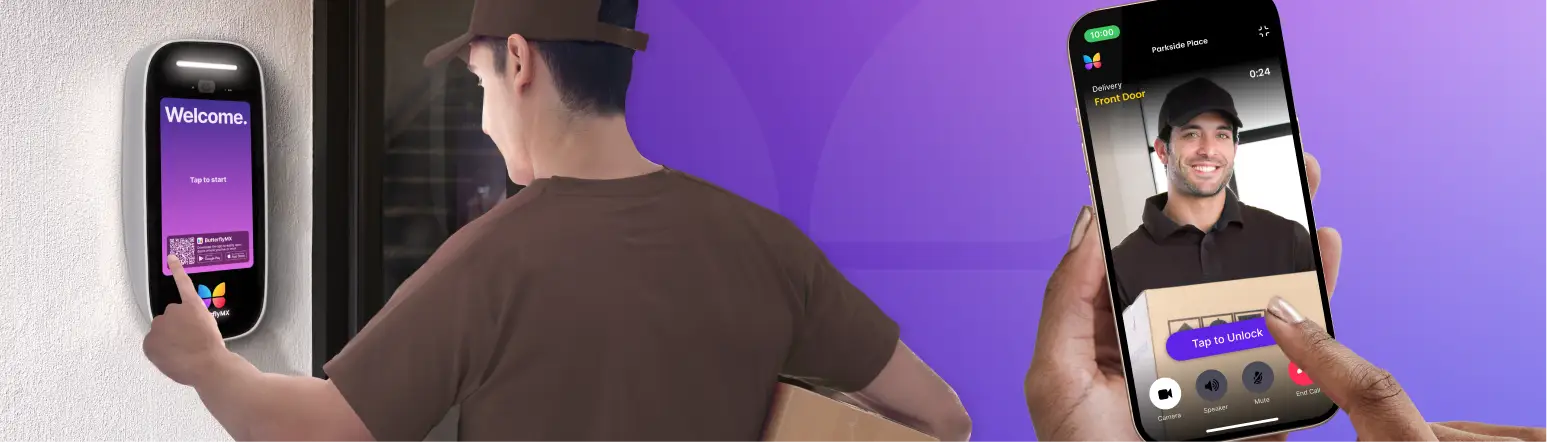
With ButterflyMX Video Intercoms, authorized staff can see and speak with visitors before granting entry. This supports everyday campus workflows such as welcoming clients for meetings, letting vendors in through service entrances, managing delivery access, and handling after-hours entry without requiring staff to be stationed at every door.
ButterflyMX also makes it easier to manage permissions across a campus. Admins can add or remove users, update directories, review access activity, and adjust permissions from one place. For approved guests, Visitor Passes provide temporary access based on the property’s rules, helping reduce one-off access requests and manual coordination.
For campuses with doors, gates, elevators, or shared amenities, ButterflyMX can help connect access workflows across the property when properly planned and installed. That gives facilities, security, and property teams a more practical way to manage who can enter, where they can go, and when access should be allowed.
If your corporate campus needs a clearer way to manage visitors, vendors, staff, and access activity, ButterflyMX gives your team the tools to modernize access without adding unnecessary complexity.
Frequently asked questions
What type of video intercom is best for a corporate campus?
Many corporate campuses benefit from a cloud-based video intercom because it supports remote management, multiple entrances, and mobile call answering. However, the right choice depends on your staffing model, access control setup, network infrastructure, and visitor workflows.
Do corporate campuses need video intercoms at every entrance?
Not usually. Many properties place video intercoms at main visitor entrances, gates, loading areas, or unattended access points. Employee-only doors may be better served by access credentials rather than full visitor communication hardware.
Can a video intercom work with existing access control?
In many cases, yes, but compatibility depends on the systems involved. Review your existing doors, gates, credentials, and access control hardware with your provider and installer before choosing an intercom system.
How do video intercoms help with vendors and deliveries?
Video intercoms let vendors and delivery drivers request access from the correct entrance. Staff can verify the visitor, unlock approved access points remotely, and reduce the need for informal instructions or repeated front-desk interruptions.
What should facilities teams look for in a campus intercom system?
Facilities teams should look for centralized administration, clear call routing, access activity visibility, mobile management, and hardware that fits the property’s entrances. The system should make routine changes easier to handle as people and schedules change.
Get your free quote!
Fill in the form below, and we'll email you right back.
Want a free quote?
Fill in the form below, and we'll email you right back.
You’ll be redirected shortly...