





Key takeaways:
- A video intercom that performs well in direct sunlight needs a readable display and a camera that can handle bright, high-contrast outdoor scenes.
- Display brightness matters, but nits alone are not enough. Reflection control, optical bonding, anti-glare or anti-reflective surfaces, and placement all affect real-world readability.
- Before choosing an outdoor intercom, verify display specs, camera features, IP rating, operating temperature range, touchscreen usability, and outdoor installation guidance.
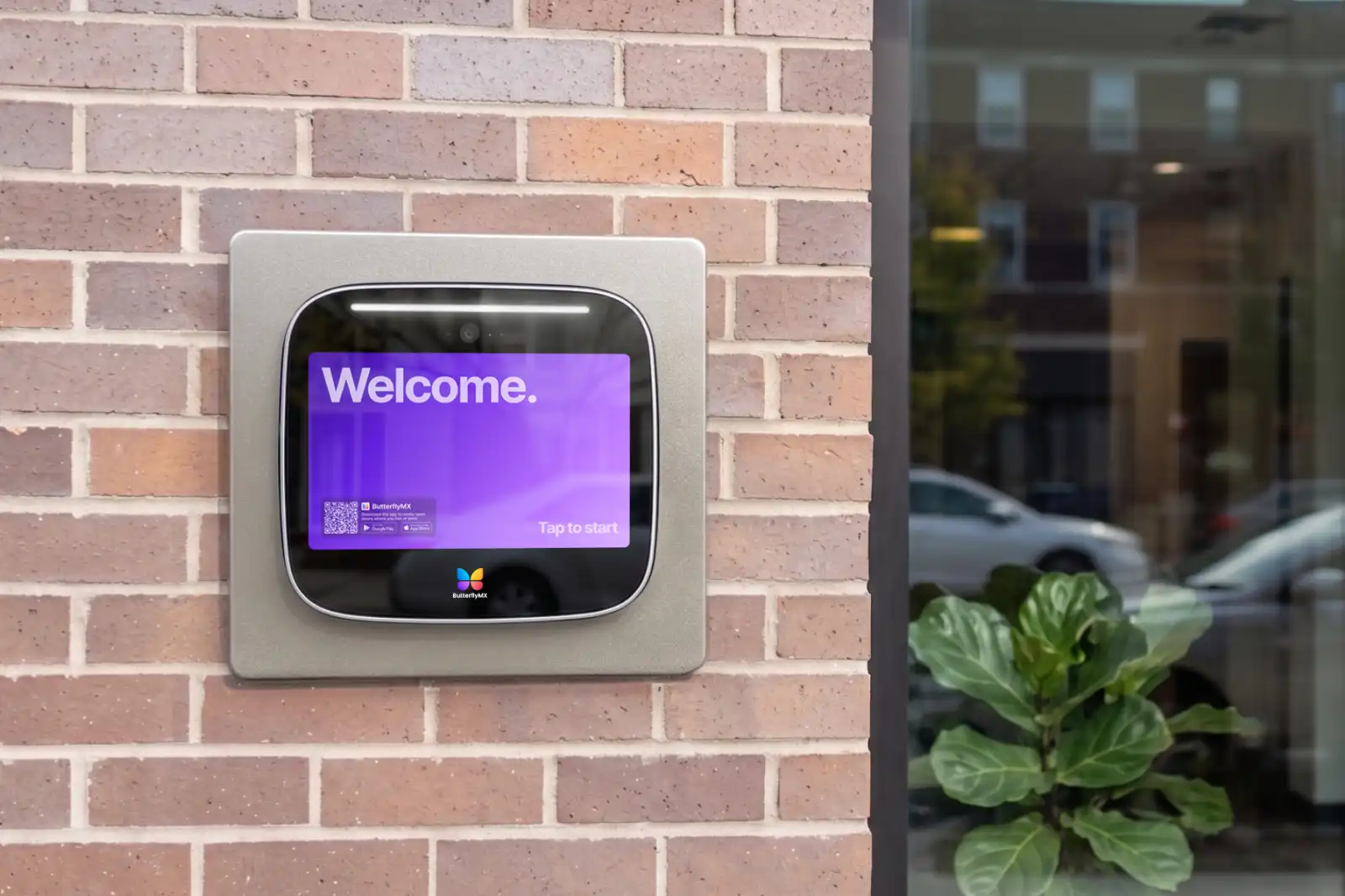
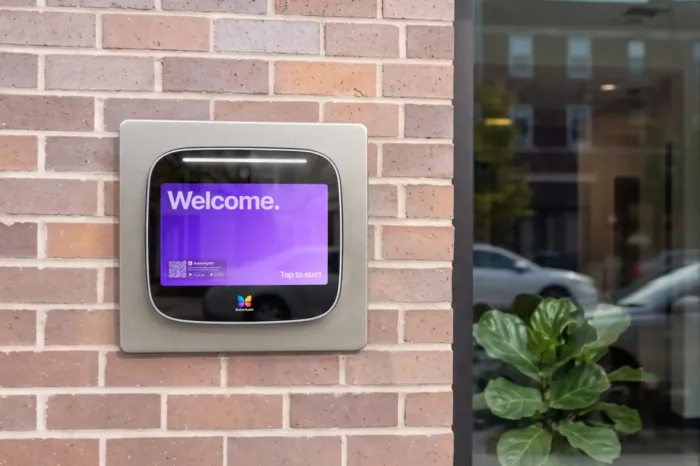
A video intercom can look fine on a product page and still be frustrating at a sunny entrance. Visitors may squint at a washed-out touchscreen, drivers may struggle to read prompts from a gate lane, and residents or staff may see a dark silhouette instead of a clear face on the video feed.
A video intercom is readable in direct sunlight when the screen is bright enough, the display is designed to reduce reflections, and the panel is installed where glare is controlled as much as possible. But that is only half the issue. The camera also has to handle bright sky, reflective pavement, and sharp shadow lines so the person requesting access is visible.
So, when you evaluate an outdoor video intercom, don’t stop at a single sunlight-readable claim. Look at display brightness in nits, reflection control, optical bonding, WDR, backlight compensation, weather rating, operating temperature, touchscreen usability, and the actual conditions at the entrance. A recessed multifamily doorway and an exposed vehicle gate can demand very different performance from the same category of system.
This guide will answer:
- What makes a video intercom readable in direct sunlight
- Display brightness: understanding nits for outdoor intercoms
- Display technologies that matter beyond brightness
- Why camera performance matters in bright outdoor conditions
- How to position an outdoor video intercom to reduce glare
- What to look for when comparing outdoor video intercoms
- When ButterflyMX fits this use case
- FAQs
Watch how ButterflyMX works:
What makes a video intercom readable in direct sunlight
A video intercom readable in direct sunlight needs four things to work together: enough display brightness, a low-reflection screen design, a camera that handles harsh contrast, and a mounting location that avoids the worst glare. If one of those pieces is weak, the entry experience can break down.
It helps to separate the problem into two parts. First, the visitor has to see and use the panel. That depends on screen brightness, contrast, reflections, interface legibility, and touch response. Second, the property has to see the visitor clearly. That depends on camera placement, WDR, backlight handling, and the lighting behind or around the person at the entrance.
Those two issues are related, but they are not the same. A bright display can still be hard to read if the screen reflects the sky like a mirror. A readable screen can still be paired with a camera view that turns a visitor into a silhouette. Buyers should evaluate both the visitor-facing display and the property-facing video feed before deciding whether an intercom is suitable for a sunny outdoor entrance.
Site conditions also matter. A building entry set back under a canopy may get enough shade for most of the day. A gate pedestal in an open driveway may face direct sun, windshield glare, reflective pavement, and longer interaction distances. No single spec can guarantee perfect performance in every lighting condition, which is why hardware selection and installation planning should happen together.
Display brightness: understanding nits for outdoor intercoms
Nits measure screen brightness. For an outdoor video intercom, the nit rating gives buyers a measurable way to compare display brightness instead of relying only on phrases like sunlight readable or outdoor ready.
As a general planning benchmark, standard displays are often far dimmer than displays designed for outdoor viewing. Around 1000-plus nits is a common starting point for outdoor readability, while fully exposed direct-sun locations may call for stronger brightness. In tougher sites, buyers often consider displays in the roughly 1500 to 2000 nit range, but that range should not be treated as a universal requirement. Shade, glare, mounting angle, local sun exposure, and reflected light can all change what works at a specific entrance.
The more useful question is not simply whether the intercom is for indoor or outdoor use. It is whether the panel will be used in shade, mixed light, or full direct sun. A panel under an overhang may have an easier job than a call station facing afternoon sun at a vehicle gate.
Use the table below as a practical benchmark, not a pass-fail rule. Real-world readability still depends on reflection control, display design, and installation conditions.
Brightness is important, but it is not the whole answer. Higher brightness can improve visibility, but it may also bring more heat, greater power demand, and higher hardware cost. If the display surface still reflects the sky, vehicles, or pavement, extra brightness may not translate into a screen visitors can comfortably read.
Display technologies that matter beyond brightness
Two intercoms with similar nit ratings can look different outdoors. That is because readability depends on how much usable contrast reaches the viewer, not just how much light the screen produces.
Optical bonding
Optical bonding is a display construction method that reduces the air gap between display layers. In bright outdoor settings, those internal gaps can create reflections that lower perceived contrast. Reducing those reflections can make text, icons, and directory listings appear clearer in sunlight.
Anti-reflective and anti-glare surfaces
Anti-reflective and anti-glare treatments are related, but they do different jobs. Anti-reflective treatment is meant to reduce reflected light. Anti-glare treatment is meant to spread reflections out so they are less sharp or mirror-like. The label alone does not tell the whole story, so buyers should ask how the display controls reflections and whether the vendor provides outdoor viewing guidance.
Contrast and interface legibility
A screen can be bright on paper and still look washed out if reflections reduce contrast. That matters for video intercoms because visitors are not just looking at a blank screen. They may need to read a directory, find a resident, press a call button, scan instructions, or complete another entry step while standing in bright light.
Touchscreen usability outdoors
Touch usability is different from visual readability. A capacitive touchscreen may respond to input, but the interaction still slows down if visitors cannot see what they are pressing. Heat, moisture, gloves, dust, and residue on the display surface can also affect how comfortable the panel is to use outdoors.
Sun hoods, recesses, and shade accessories can help when the site allows them. They are most useful as part of a broader plan, not as a substitute for a display built for outdoor conditions. A hood that reduces glare but blocks the camera view, creates an awkward reach, or clashes with the visitor approach angle can solve one problem while creating another.
Why camera performance matters in bright outdoor conditions
Sunlight readability is often treated as a screen issue, but a video intercom also has to produce useful video. If the visitor can read the panel but the resident or staff member sees only a dark outline, the access decision becomes harder.
What WDR does
WDR, or wide dynamic range, helps a camera handle scenes with bright and dark areas at the same time. At an entry, that can happen when a visitor stands in shade with bright sky behind them, or when sunlight cuts across only part of the camera view. WDR can help preserve facial detail that would otherwise be lost in high-contrast lighting.
What backlight compensation does
Backlight compensation is designed to improve visibility when strong light behind a subject makes the foreground look too dark. In an intercom setting, that might happen when the camera faces open sky, reflective concrete, a sunlit street, or a gate lane with bright pavement behind the visitor.
Why camera and display specs should be reviewed separately
Display specs tell you whether the visitor can read and use the panel. Camera specs tell you whether the property can see and communicate with the visitor. Both affect the same access event, but they are separate technical questions.
This distinction becomes more important at exposed entries. A building entrance may have a tighter camera view and more shade. A gate entry may include reflective metal, vehicle windshields, bright pavement, and uneven sun across a wider scene. A strong outdoor video intercom evaluation should include both screen visibility and camera performance in the actual lighting conditions the device will face.
How to position an outdoor video intercom to reduce glare
Good placement can make an outdoor intercom easier to use before you change the hardware. It cannot fully rescue a weak display or poor camera, but poor placement can make capable equipment perform worse than expected.
- Study the entrance during peak sunlight. Check when direct sun hits the panel location, when glare is worst, and whether the issue lasts all day or only during certain hours.
- Check the visitor approach angle. A pedestrian standing close to a door may be able to shift position. A driver at a gate usually has less room to adjust and needs prompts to be clear from the lane.
- Compare recessed and exposed mounting options. A panel set back under a canopy or within a facade usually faces less glare than a pedestal in open sun.
- Use shade carefully. A hood, recess, or nearby architectural cover can reduce glare, but it should not block the camera, force an awkward reach, or make the panel harder to see from the natural approach path.
- Test the display and camera before final approval. Morning light, midday sun, and afternoon glare can create very different results at the same entrance.
Gate entries often need extra attention because the user is farther from the panel and has less flexibility. Reflections from windshields, pavement, and nearby vehicles can add to the problem. Pedestrian building entries can still have glare issues, but visitors usually stand closer and can adjust their viewing angle more easily.
Installation planning should also include the practical parts of outdoor use. Confirm power and network requirements for the chosen location, whether the system is hardwired, wireless, IP-based, or PoE-supported. Make sure the proposed mounting location allows cleaning and maintenance, because dust, water spots, and residue can reduce display visibility over time.
What to look for when comparing outdoor video intercoms
Once you understand how sunlight affects both the screen and the camera, vendor comparison gets much clearer. Instead of asking only whether a model is sunlight readable, ask what measurable specs and installation guidance support that claim.
Display and viewing questions
- What is the exact display brightness rating in nits?
- Is the display intended for shaded outdoor use, mixed light, or full direct-sun exposure?
- Does the display use optical bonding, anti-reflective treatment, anti-glare treatment, or another reflection-control method?
- Are directory listings, call buttons, and instructions legible in bright daylight?
- How does the touchscreen perform in bright, hot, damp, dusty, or high-use conditions?
Camera questions
- Does the camera support WDR or a similar high-contrast image feature?
- How does the camera handle backlighting, reflective pavement, bright sky, or uneven shade?
- Can the vendor explain outdoor camera performance separately from display visibility?
- Is the camera placement suitable for both pedestrian and vehicle access points?
Environmental and installation questions
- What is the exact IP rating for dust and water exposure?
- What operating temperature range is supported?
- Does the manufacturer provide outdoor mounting guidance for direct sun, shade, and glare?
- What warranty coverage applies to outdoor deployment?
- What power and network requirements apply at the planned entrance?
IP ratings help indicate resistance to dust and water exposure, but they do not tell you whether a screen will remain readable in sunlight. Operating temperature matters because direct sun and brighter displays can add heat stress to outdoor electronics. These factors should be reviewed together, not treated as substitutes for one another.
The best fit also depends on the property type. A multifamily front entrance may prioritize close-range visitor calling and resident communication. A commercial building may need reliable daytime use for visitors, vendors, and delivery staff. A gated community may need stronger outdoor visibility because drivers have limited time and distance to complete the interaction.
For managed properties evaluating cloud-connected video intercoms, sunlight readability is one part of a larger access decision. The intercom still needs to support the way residents, staff, visitors, and vendors actually use the property, including visitor access, mobile entry, and remote access management when those capabilities are part of the plan.
See how ButterflyMX supports modern visitor and property access management.
When ButterflyMX fits this use case
ButterflyMX is most relevant when a property wants more than a basic call box at the entrance. Multifamily buildings, commercial properties, gated communities, HOAs, and other managed properties often need visitor calling, mobile-based entry, and remote access management alongside the physical intercom hardware.
That context matters for sunny outdoor entrances because display readability is only one part of the access experience. A property may need an intercom that works at the entrance while also fitting into how staff manage access across doors, gates, and visitor interactions. In that kind of evaluation, ButterflyMX belongs on the shortlist for properties that value smartphone-based visitor handling and centralized administration.
It is still important to verify the details for the actual installation. This article does not make unverified claims about specific ButterflyMX outdoor hardware specs or direct-sun performance. If you are evaluating ButterflyMX for an exposed entrance, confirm the applicable hardware characteristics, outdoor-use guidance, and installation recommendations for your site.
Frequently asked questions
How many nits does an outdoor video intercom need?
Around 1000-plus nits is a common starting point for outdoor readability, but fully exposed direct-sun locations may need more. The right target depends on glare, shade, mounting angle, reflection control, and local sun exposure.
What is optical bonding in a video intercom?
Optical bonding is a display construction method that reduces the air gap between display layers. In outdoor conditions, reducing internal reflections can improve perceived contrast and make the screen easier to read.
Can touchscreens work in direct sunlight?
Yes, touchscreens can work in direct sunlight, but touch response and screen readability are different issues. Glare, heat, moisture, dust, or surface residue can still make the interface harder to see and use.
What IP rating should I look for in an outdoor video intercom?
There is no single best IP rating for every outdoor video intercom installation. Verify the exact rating and confirm it fits the site’s dust and water exposure, but remember that an IP rating does not measure sunlight readability.
Choosing a video intercom for a sunny entrance is not just a screen-brightness decision. The right system for the site needs enough display brightness, low-reflection design, usable touch interaction, strong camera handling, and a mounting plan that reduces glare where possible.
That is why buyers should compare nits, WDR, backlight handling, IP rating, operating temperature, installation guidance, and real-world site conditions together. A shaded building entrance and an exposed gate pedestal can require very different planning.
If your property also needs modern visitor entry, mobile access, and remote access management, ButterflyMX is worth evaluating as part of the broader access decision. Talk with ButterflyMX about planning outdoor access for your property.
Get your free quote!
Fill in the form below, and we'll email you right back.
Want a free quote?
Fill in the form below, and we'll email you right back.
You’ll be redirected shortly...