





Key takeaways:
- Legacy video intercoms often create hidden costs through repairs, wiring limitations, outdated directories, and manual staff work.
- Apartment teams spend more time managing visitor, vendor, delivery, and resident access when intercom systems are not cloud-based.
- Modern property access systems can help centralize permissions, improve visibility, and support easier access workflows across entrances.
If your apartment building still relies on an older video intercom, the monthly cost may look manageable at first. But the real expense often shows up in service calls, staff interruptions, resident complaints, missed deliveries, and time spent updating access information by hand.
That is why legacy video intercoms cost apartments more than many owners and managers expect. The issue is not just old hardware. It is the operational drag created when visitor access, resident directories, vendor entry, and delivery workflows depend on equipment that was not designed for centralized, mobile, or cloud-based management.
Below, we will break down where those costs come from, what property teams should evaluate before replacing an older intercom system, and how a modern access control solution can support a clearer workflow for residents, guests, staff, and service providers.
This guide will answer:
- What makes legacy video intercoms expensive?
- The hidden operational costs property teams feel every week
- How outdated intercoms affect residents, visitors, and deliveries
- Why access visibility matters as much as the hardware
- What to consider before replacing a legacy intercom
- How ButterflyMX helps modernize apartment access
- FAQs
What makes legacy video intercoms expensive?
A legacy video intercom is typically an older entry system that lets visitors call residents from a building entrance using fixed hardware. Many of these systems depend on in-unit stations, aging wiring, local servers, analog phone lines, or on-site programming. They may still work, but they often become harder and more expensive to support as the property changes.
The cost problem usually starts when daily access needs outgrow the system. A leasing team may need to add new residents quickly. A maintenance vendor may need after-hours access. A delivery driver may need approved entry to a package room or lobby. If every change requires a technician, a site visit, or manual directory updates, the property pays in both hard costs and staff time.
Older systems can also create planning challenges. Replacement parts may be limited, software updates may no longer be available, and installers may need to troubleshoot wiring that was designed for a different era of building operations. The operational takeaway is simple: a system can be technically functional while still being costly to manage.
The hidden operational costs property teams feel every week
Some intercom costs are easy to see, such as repair invoices and replacement panels. Others are harder to track because they show up as routine interruptions. For example, front desk staff may spend time looking up residents, calling units, escorting vendors, or manually handling delivery access because the intercom cannot support the workflow on its own.
These small tasks add up across a multifamily property. If a resident changes phone numbers, staff may need to update the directory manually. If a vendor should only enter during certain hours, the team may rely on notes, keys, or staff supervision instead of managed access permissions. If a building has several entrances, teams may need to maintain separate access rules in separate places.
Common hidden costs include:
- Service calls: Older hardware and wiring can require more troubleshooting, especially after weather, power issues, or component failures.
- Manual administration: Staff may spend extra time updating directories, managing move-ins and move-outs, or coordinating visitor entry.
- Resident support requests: Missed calls, broken in-unit stations, and directory errors often turn into work orders.
- Access workarounds: Keys, codes, and informal vendor instructions can create extra tracking work for the property team.
For owners and managers, the question is not only what the intercom costs to maintain. It is how much time the property team spends making up for what the system cannot handle.
How outdated intercoms affect residents, visitors, and deliveries
Apartment access is not a single event at the front door. It includes residents coming home, guests arriving for dinner, dog walkers entering during approved hours, delivery drivers dropping off packages, and vendors servicing units or amenities. A legacy video intercom may support basic visitor calls, but it often struggles with the variety and volume of access requests at a busy property.
Consider a resident who is not near an in-unit station when a guest arrives. If the system cannot route calls to a mobile device, that visitor may be left waiting or may call staff for help. Or consider a delivery driver arriving at a secondary entrance that is not tied into the main access workflow. The result may be missed deliveries, lobby congestion, or staff being pulled away from other tasks.
These friction points affect satisfaction because residents notice access problems quickly. They may not care what kind of wiring the intercom uses, but they do care if guests cannot reach them, if deliveries fail, or if staff has to intervene for routine entry. For property teams, better access workflows can reduce repetitive requests and make daily operations feel more organized.
Why access visibility matters as much as the hardware
Older intercom systems often focus on the call itself: a visitor presses a button, a resident answers, and the door unlocks. That workflow is useful, but it may not give property managers enough visibility into who entered, when access was granted, or which credentials are still active.
Access visibility matters because apartment communities change constantly. Residents move in and out. Vendors rotate. Leasing prospects tour the property. Staff responsibilities shift. Without a centralized way to review access activity and adjust permissions, teams may rely on outdated lists, shared codes, or manual processes that are difficult to audit.
A more controlled access workflow helps managers answer practical questions. Which entrances are being used most often? Are old permissions still active after a move-out? Can staff limit vendor access to the right doors and times? Can the team review access activity if there is a complaint or incident? The goal is not to claim that any system removes risk. The goal is to give property teams clearer information and more control.
What to consider before replacing a legacy intercom
Replacing an old video intercom should start with your property’s workflow, not just the front panel. A garden-style apartment community, a high-rise, a mixed-use building, and a gated multifamily property may all need different access points, devices, and permission structures.
Before choosing a replacement, evaluate these practical questions:
- Entrances: Which doors, gates, garages, package areas, elevators, or amenities need controlled access?
- Users: Who needs access, including residents, staff, vendors, visitors, delivery drivers, leasing prospects, and maintenance teams?
- Administration: Can staff update permissions from one place, or will they need to manage separate systems?
- Installation: What existing wiring, network connectivity, door hardware, and gate equipment should a qualified installer review?
- Resident experience: Can residents answer visitor calls, grant access, and share approved temporary access without relying on staff?
Budget should include more than hardware. Ask how the system will affect move-in workflows, vendor access, package delivery, support requests, software management, and long-term service needs. A lower upfront cost may not be the better value if the system keeps creating manual work for your team.
Discover how ButterflyMX works:
How ButterflyMX helps modernize apartment access
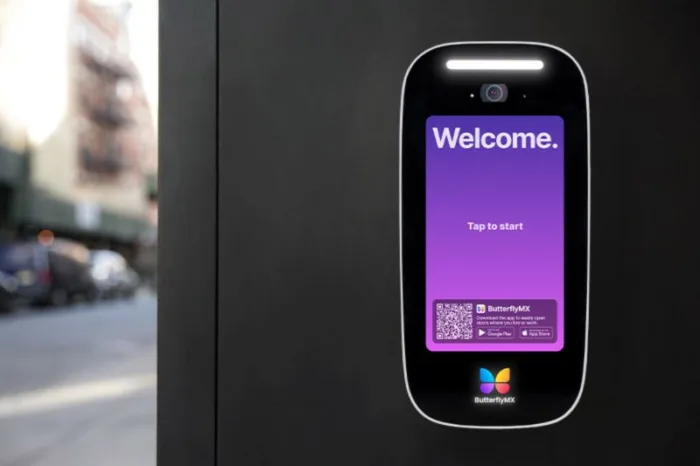
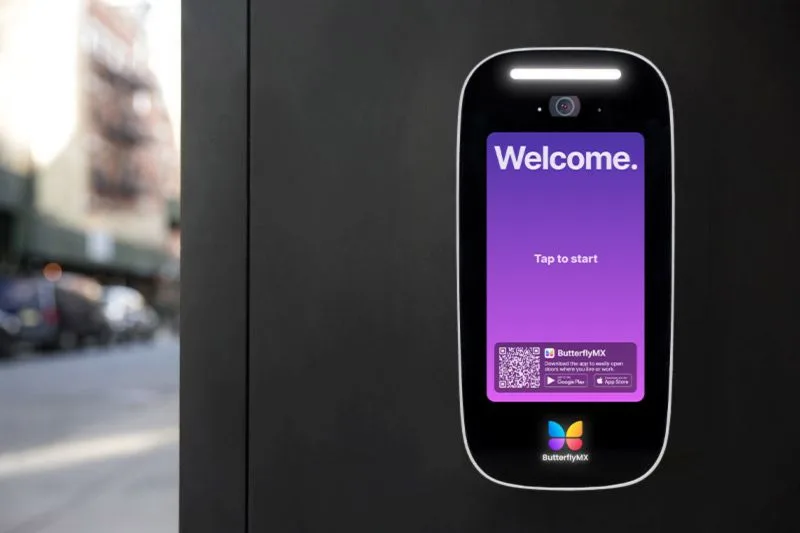
ButterflyMX helps multifamily properties replace outdated entry workflows with a cloud-based property access platform built for modern apartment operations. Instead of relying on fixed in-unit stations, manual directory updates, shared codes, or disconnected systems, property teams can manage access across doors, gates, garages, elevators, package areas, and other shared spaces from one centralized system.
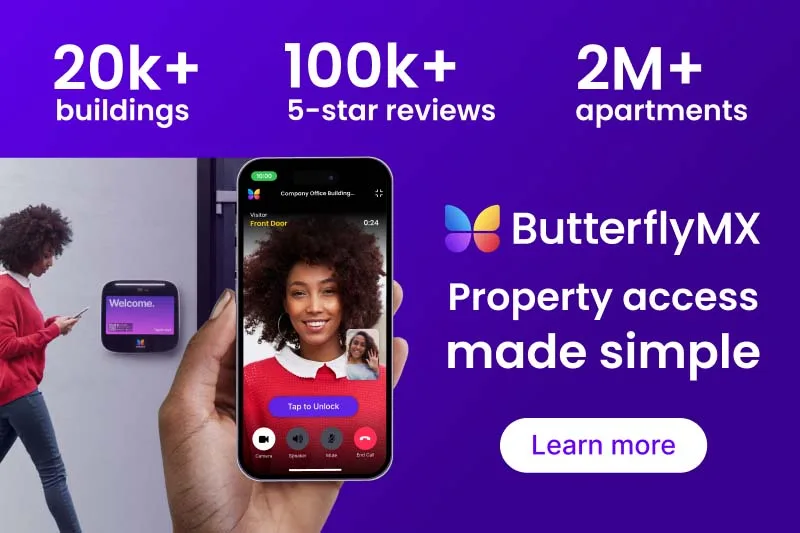
With ButterflyMX Video Intercoms, residents can see and speak with visitors before granting access from their smartphone. That means residents can let in guests, vendors, or service providers whether they are in their unit, at work, or away from the property. This helps reduce missed visitor calls, front desk interruptions, and the need for staff to manage every routine entry request.
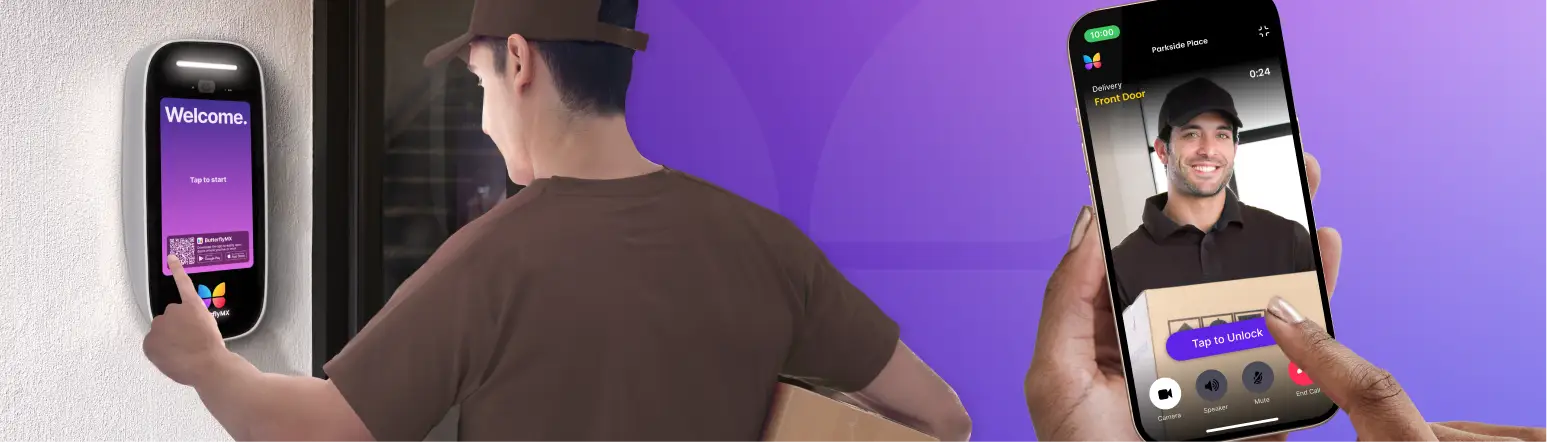
ButterflyMX also supports temporary access for approved guests and deliveries. Residents can issue Visitor Passes to guests based on the property’s rules, while Delivery Pass gives couriers a single-use access code for approved deliveries. These tools help reduce reliance on permanent codes while making access more convenient for residents, visitors, and delivery drivers.
For property staff, ButterflyMX centralizes access management so teams can update resident directories, adjust permissions, revoke access after move-outs, manage vendor access, and review entry activity without relying on separate spreadsheets or repeated on-site programming. This gives managers better visibility into who is accessing the property and helps reduce the manual work often created by legacy intercom systems.
ButterflyMX can also support a broader access control strategy beyond the front entrance. Depending on the property’s needs, teams can connect access workflows across apartment entrances, amenity spaces, package rooms, garages, gates, elevators, and smart locks. The right configuration depends on the building’s doors, hardware, wiring, network, and operational requirements, so installation planning should involve qualified access control professionals.
FAQs
Why do legacy video intercoms become expensive for apartment buildings?
They often become expensive because repairs, manual directory updates, outdated wiring, limited software support, and staff-managed visitor access add recurring costs beyond the original hardware.
Should an apartment building repair or replace an old intercom?
It depends on the system’s condition and how well it supports your current workflows. If repairs are frequent or staff must handle routine access manually, replacement may offer better long-term value.
Can a modern intercom help with deliveries and vendors?
Yes, depending on the system and property setup. Modern access solutions can help property teams create clearer rules for delivery drivers, vendors, and service providers instead of relying only on staff intervention or shared codes.
Does ButterflyMX replace every part of an existing access system?
Not necessarily. ButterflyMX helps modernize the access workflow, but the right setup depends on your existing intercom, doors, locks, gates, garages, elevators, wiring, network, and property goals. In some cases, ButterflyMX may work with parts of an existing system. In others, the property may need new hardware or additional installation work. A qualified installer should review the property before implementation.
What should managers look for in a replacement intercom?
Look for centralized management, mobile visitor calling, access activity visibility, flexible permissions, support for multiple entry points, and workflows that reduce manual work for staff and residents.
Get your free quote!
Fill in the form below, and we'll email you right back.
Want a free quote?
Fill in the form below, and we'll email you right back.
You’ll be redirected shortly...