





Key takeaways:
- Zenitel is best for professionally integrated industrial and commercial sites that need clear audio, durable hardware, and enterprise security integrations.
- Zenitel does not publish MSRP, but third-party seller listings place station hardware at roughly $2,800 to $6,000 or more before mounts, software, cabling, and installation.
- Each station needs wired Ethernet with PoE or local DC power and a SIP or Zenitel backend; it is not centered on a dedicated resident mobile-unlock app.
Disclaimer: ButterflyMX provides these blog posts to help our customers and potential customers make the right business decisions. Our blog posts are based on the information available to us at the time of writing.
Zenitel Video Intercoms are rugged IP and SIP entrance stations for doors, gates, and critical-communication sites. They are most relevant to security integrators, facility teams, and property managers who need strong audio, outdoor durability, or compatibility with an existing security system.
This Zenitel video intercom review covers the model lineup, realistic hardware pricing, wiring, platform choices, integrations, and the tradeoffs that matter before you request a quote for your search for an intercom system for your apartment. It also explains why Zenitel may suit an industrial or enterprise site better than a property that needs resident-first mobile access.
This guide will answer:
- What is the Zenitel video intercom system?
- How does a Zenitel video intercom work?
- Zenitel video intercom models compared
- Zenitel features and performance
- How much does a Zenitel video intercom cost?
- Installation, wiring, and network requirements
- Zenitel integrations and security ecosystem
- Zenitel video intercom pros and cons
- Zenitel alternatives
- Zenitel vs. ButterflyMX
- Frequently asked questions
- Zenitel video intercom review verdict
Watch how ButterflyMX works:
What is the Zenitel video intercom system?
Zenitel Video Intercoms are a family of IP and SIP entrance stations that combine video calling, high-output audio, and door or gate control. The Zenitel video intercom family includes TCIV, TEIV, TMIV, and ZSD models, not one universal intercom.
IP means the stations communicate over a data network. SIP, or Session Initiation Protocol, is a standard for routing voice and video calls between endpoints. That setup lets Zenitel work with a generic SIP server or a Zenitel platform.
The line is built around critical communication and centralized security. Zenitel serves industrial facilities, transportation sites, data centers, healthcare, education, and corporate or public buildings, as reflected in its Security Industry Association profile.
Who is Zenitel designed for?
Zenitel is designed mainly for security integrators and professionally managed sites. It can be a strong fit when an entrance needs to connect to a video management system, access-control platform, security desk, public-address workflow, or critical-communication network.
That focus differs from a resident-first property platform. ButterflyMX serves multifamily, commercial, gated-community, and student-housing properties with video intercoms, mobile access, visitor access, and related access products in one platform. Neither approach is automatically better. The deciding question is whether the property needs enterprise security integration or an occupant-focused access experience.
Who owns Zenitel?
Zenitel traces its history to 1946 and develops critical-communication products under names that include Vingtor-Stentofon. Its company history page provides more background.
Zenitel was taken private in 2021 through an acquisition and delisting by House of Thor, associated with Belgian investor 3d investors. An Oaklins transaction summary documents the deal. Buyers planning a long-term deployment may still want to discuss product roadmaps, support, and local service coverage with their integrator.
How does a Zenitel video intercom work?
A Zenitel station connects to a wired IP network, registers with a SIP or Zenitel backend, and routes a visitor call to the selected endpoint. A user or security operator can see and speak with the visitor, then activate a connected door strike or gate through relay wiring on applicable models.
PoE, or Power over Ethernet, lets one compatible network cable carry both data and electrical power. Zenitel also documents local DC power options. The TCIV technical datasheet covers Ethernet, PoE, video streaming, audio, and relay connections, while the TCIV-6+ support page covers setup and platform modes.
Applicable models support H.264 or MJPEG video streams and standards such as ONVIF and RTSP. ONVIF is a common interoperability standard for IP security products, while RTSP delivers a live media stream. Relay control is the electrical switching signal that can release connected door or gate hardware after access is approved.
Zenitel platform options explained
Zenitel can work with generic SIP infrastructure or with IC-EDGE, ICX-AlphaCom, and Zenitel Connect Pro. The backend affects call routing, device management, available integrations, and the level of integrator expertise a project needs.
- Generic SIP: A fit for sites that already use compatible SIP call-routing infrastructure and want the intercom to act as another network endpoint.
- IC-EDGE: A Zenitel edge-based option for managing communications without treating every station as a stand-alone device.
- ICX-AlphaCom: Zenitel infrastructure for advanced critical-communication and integration needs.
- Zenitel Connect Pro: A cloud-capable unified communication option for supported deployments.
The Zenitel video intercom overview describes this platform-managed approach. Before choosing hardware, ask which backend will manage call routing, configuration, software licensing, event records, and security-system connections.
Does Zenitel offer mobile access?
Zenitel documents call routing through SIP, Connect Pro, and connected security platforms instead of a dedicated resident mobile-unlock app. That does not rule out every third-party mobile workflow, but buyers should not assume the standard experience works like a consumer smart-intercom app.
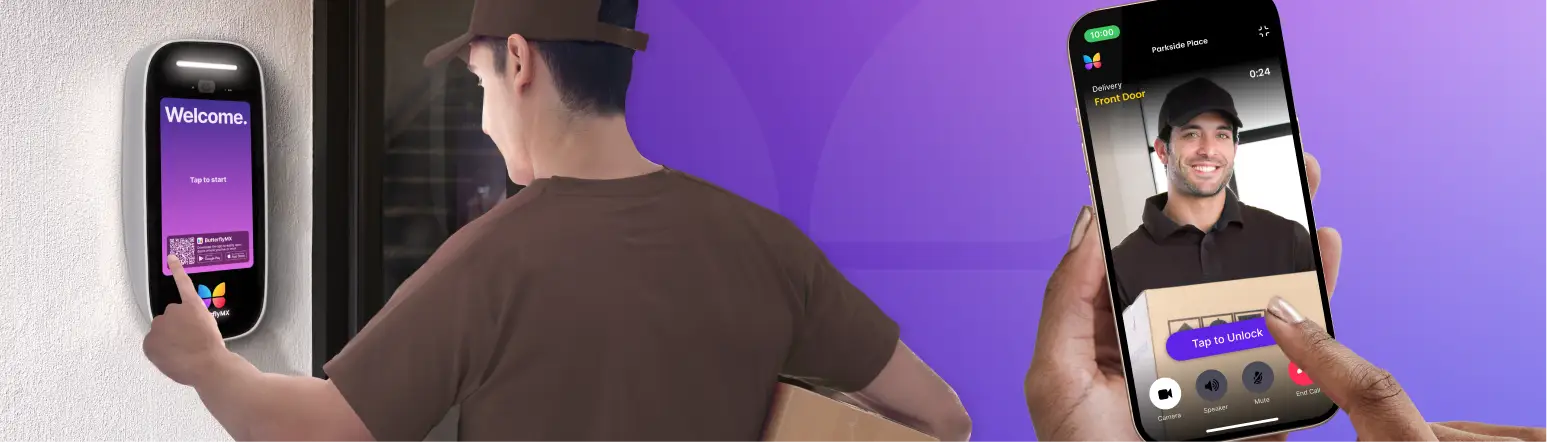
This distinction matters most for multifamily and other occupant-focused properties. ButterflyMX lets residents receive visitor calls in its mobile app, see and speak with visitors, grant access remotely, and use supported smartphones for property access. Zenitel may be a better architectural fit when calls should go to a security desk, enterprise communications system, or existing VMS.
Zenitel video intercom models compared
Start with the entrance workflow: basic calling, a directory, PIN entry, RFID-reader accommodation, compact mounting, or mullion mounting. The Zenitel model catalog covers the wider family, while product pages provide model-specific details.
Zenitel provides additional TEIV-4+ and ZSD-1 details in its door-entry overview. Keep model capabilities separate: the TCIV-6+ directory, TEIV-1+ keypad, and TEIV-4+ reader space do not apply to every station.
Buyers should also separate current plus-series hardware from legacy stock. The current TCIV-6+ page lists IP66 protection, while an older pre-plus TCIV-6 datasheet lists IP65. Check the exact model number and documentation when comparing bids or replacement devices.
Zenitel features and performance
Zenitel’s main strengths are high-output audio, durable housings, standards-based video streaming, and model-specific access methods. Those features matter most at noisy, exposed, or centrally monitored entrances.
Current plus-series information describes IP66 weather protection and IK08 impact resistance. Those ratings suit outdoor and vandal-prone placements, though installers still need the right back box, mounting method, and environmental plan.
Depending on the model, access can involve a one-button call, a 50-entry directory, a six-digit PIN, space for a third-party RFID reader, or an optional touchless gesture sensor. Match the station to the entrance workflow instead of assuming credentials can be added later.
Audio and video capabilities
Zenitel emphasizes audio for loud environments. Its TCIV-6 technical specifications list a 10W Class-D amplifier, open-duplex audio up to 95dB, active noise reduction up to 30dB, and public-address output up to 105dB. Those figures help explain the line’s use in industrial, transportation, and emergency-communication settings.
Applicable stations combine wide-angle video with H.264 or MJPEG streams for live viewing and VMS integration. A TCIV+ product report describes 30fps video and a platform with four Cortex-A53 cores, 512MB of RAM, and 1GB of flash storage. Those details add hardware context, but stream compatibility, camera placement, and the full security workflow will usually matter more to buyers.
What integrators say about Zenitel
Public end-user reviews are limited because Zenitel is commonly sold through security integrators. In one IPVM integrator discussion, a participant rated Stentofon and Zenitel audio and noise cancellation above Axis and 2N systems they had used. That is one practitioner’s view, not a broad measure of customer satisfaction.
A separate access-control discussion described AlphaCom as powerful but noted a learning curve. Backend design and local integrator experience may matter as much as the entrance station.
How much does a Zenitel video intercom cost?
Zenitel does not publish MSRP. Third-party seller listings place station hardware at roughly $2,800 to $6,000 or more per unit, depending on the model and region, but that range is neither manufacturer pricing nor a complete installed-system quote.
One distributor provides TCIV-2+ pricing and specifications, while another seller lists the TCIV-6+ scrolling-directory model. Seller prices can change, so use them for budget context and request a current project quote.
The total project cost can exceed the entrance-station price by a meaningful amount. A useful quote separates station hardware, mounts, software, network work, door hardware, integration labor, training, and ongoing support.
Installation, wiring, and network requirements
A Zenitel deployment typically needs professional installation. Each station requires structured network cabling or local power, secure mounting, backend configuration, and relay wiring when it controls a door or gate. No Wi-Fi, cellular, battery, or landline option is described for these stations.
The manufacturer datasheet documents wired Ethernet, power, I/O, and mounting needs. The Zenitel support guide also shows that commissioning includes platform selection and device configuration.
Wired architecture is not necessarily a drawback for new construction or enterprise sites with structured cabling. It can be a major retrofit issue in older properties, especially when cable paths must reach outdoor gates, detached structures, or finished entrance areas.
Environmental planning also varies by model. A third-party TCIV-2+ listing gives an operating range from -22°F to 158°F and a draw of 3.5 to 12W at 24VDC. These figures can help with power and climate planning, but installers should use documentation for the exact SKU being purchased.
Zenitel integrations and security ecosystem
Zenitel can connect to a wider enterprise security stack through SIP, ONVIF, and platform-specific integrations. Documented connections include major video-management and access-control products, but functions can differ by platform and software version.
The Zenitel integration overview names ONVIF-compatible VMS products such as Milestone XProtect, Hanwha Wave, Nx Witness, and Mobotix. It also describes connections involving AMAG, Software House C-CURE 9000, Siemens, and Microsoft Teams through supported Zenitel architecture.
Honeywell separately documents a Zenitel TCIV integration with LenelS2 OnGuard for linking intercom devices with live and recorded video. Review supported versions and specific workflows rather than assuming every integration works the same way.
The TCIV+ platform also lists IEEE 802.1X network access control, which can help an organization control which devices join its network. Access logs and event history often depend on the connected access-control or VMS platform instead of a resident-facing log centered on the intercom.
ButterflyMX approaches ecosystem breadth from a property-operations perspective. Its platform can bring video intercoms, access control, mobile and visitor access, vehicle access, elevator controls, security cameras, package rooms, and smart lock integrations together. Buyers should compare Zenitel’s compatibility with an existing enterprise stack against the value of managing several property-access workflows in one platform.
Zenitel video intercom pros and cons
Zenitel offers durable hardware, strong audio specifications, and broad enterprise compatibility. Its tradeoffs include quote-based pricing, wired infrastructure, and backend complexity. How much those matter depends on the property and the team operating the system.
Zenitel pros
- Built for demanding environments: Current plus-series products list IP66 weather resistance and IK08 impact resistance for exposed or vandal-prone entrances.
- High-output audio: The listed 95dB open-duplex level, 30dB active noise reduction, and 105dB PA output support communication in loud locations.
- Enterprise integrations: SIP and ONVIF support, plus documented VMS and access-control connections, can help preserve existing security investments.
- Several form factors and access methods: Buyers can choose simple calling, a directory, a keypad, RFID-reader accommodation, compact hardware, or mullion mounting.
- Door and gate control: Applicable stations can use onboard relays to release connected entrance hardware after a call or credential event.
Zenitel cons
- Opaque total pricing: Manufacturer MSRP is not posted, while software, mounts, cabling, door hardware, and professional labor sit outside reseller station prices.
- Wired infrastructure at every entrance: Ethernet and power requirements can add labor and limit retrofit flexibility.
- No documented resident-first mobile-unlock experience: The architecture centers on SIP, Zenitel platforms, and integrated security systems rather than a dedicated consumer app.
- Backend design adds complexity: Buyers must choose among SIP, IC-EDGE, ICX-AlphaCom, and Connect Pro, often with help from an experienced integrator.
- Capabilities vary by model: A directory, keypad, RFID-reader space, and specialized mounting options are not interchangeable across the full family.
Zenitel alternatives
Relevant Zenitel alternatives include 2N, Axis, Aiphone, and Talkaphone. These products belong on the same early shortlist, but buyers should compare the exact models, backends, credentials, VMS support, environmental ratings, and mobile workflows needed for their project.
- 2N IP Verso or IP Force: 2N intercom products, now associated with Axis Communications, are common alternatives for networked video-intercom projects.
- Axis video intercoms: Axis is relevant when camera and VMS workflows are central to the evaluation. Compare audio needs, entrance hardware, and VMS compatibility at the model level.
- Aiphone IX or IS series: Aiphone appears in the same access-control and intercom consideration set, including an integrator discussion comparing Zenitel, Talkaphone, and Aiphone.
- Talkaphone intercoms: Talkaphone is another option for critical-communication and call-box applications where centralized answering and durable field hardware matter.
ButterflyMX is also relevant when a project extends beyond an enterprise intercom to resident mobile access, visitor entry, vehicle access, elevators, smart locks, package rooms, and other property workflows.
Zenitel vs. ButterflyMX
Zenitel and ButterflyMX both address entrance communication and access, but they start from different priorities. Zenitel emphasizes critical communication and enterprise security integration, while ButterflyMX provides video intercoms as part of a broader property access and security platform.
Zenitel may be the stronger fit when a project starts with critical audio, industrial durability, or a specific enterprise security integration. ButterflyMX may be more aligned when residents or occupants need mobile access and the property wants to connect intercom, visitor, vehicle, elevator, and other access workflows through one platform.
Frequently asked questions
How much does a Zenitel video intercom cost?
Third-party sellers list Zenitel station hardware at roughly $2,800 to $6,000 or more per unit, but Zenitel does not publish MSRP. Mounts, software, network work, door hardware, installation, and support may be separate.
Does a Zenitel video intercom require a landline or cellular connection?
No. Zenitel video intercoms use wired Ethernet and PoE or local DC power; no landline, cellular, Wi-Fi, or battery option is described for these stations.
Can residents answer Zenitel calls from a smartphone app?
Zenitel documents calling through SIP, Connect Pro, and integrated security systems instead of a dedicated resident mobile-unlock app. Ask the integrator about supported third-party workflows if mobile answering is required.
What is the difference between TCIV, TEIV, TMIV, and ZSD?
TCIV covers standard compact video stations, TEIV adds access-focused options such as a keypad or RFID-reader space, TMIV is a smaller form factor, and ZSD is designed for slim mullion mounting.
Which security systems integrate with Zenitel?
Documented integrations include ONVIF video platforms such as Milestone XProtect, Hanwha Wave, Nx Witness, and Mobotix, plus access-control products from LenelS2, AMAG, Software House, and Siemens. Functions and supported versions can vary.
How rugged are Zenitel video intercoms?
Current plus-series products are described as IP66 weather resistant and IK08 impact resistant. Older pre-plus TCIV-6 documentation lists IP65, so buyers should check the exact model.
Does Zenitel support PINs or RFID cards?
Yes, on specific models. TEIV-1+ supports PINs up to six digits, while TEIV-4+ provides space for a third-party HID or Elatec RFID reader.
Does Zenitel require professional installation?
Professional installation is typical because the project involves mounting, Ethernet or power cabling, relay connections, network configuration, and backend setup.
Is Zenitel suitable for apartment buildings?
Zenitel can support entrance communication, but its documented focus favors critical-communication and enterprise environments. Apartment buyers should compare its wired, platform-managed workflow with their needs for resident mobile access, visitor entry, and property-wide access management.
Zenitel video intercom review verdict
Zenitel belongs on the shortlist for industrial, transportation, healthcare, education, data-center, and commercial sites that need strong audio, durable entrance hardware, and enterprise security integrations. Its range of basic, directory, keypad, RFID-ready, compact, and mullion models gives integrators several ways to match the hardware to an entrance.
The main tradeoff is complexity. Buyers must plan wired infrastructure, choose a backend, select the correct model, and budget beyond the station price. Properties focused on resident mobile access and connected visitor, vehicle, elevator, and building-access workflows should compare Zenitel with a broader platform such as ButterflyMX.
Compare both options against your property type, existing security systems, entrance workflows, cabling, and users. Explore ButterflyMX to see how its video intercom and property-access platform fit your project.
Get your free quote!
Fill in the form below, and we'll email you right back.
Want a free quote?
Fill in the form below, and we'll email you right back.
You’ll be redirected shortly...