





Key takeaways:
- Limited monthly coworking access is easier to manage when members are assigned to the right schedules, access groups, and temporary credentials.
- Entry tracking and remote permission updates help operators enforce part-time plans without relying on manual fob handoffs.
- Keypads, mobile access, and temporary PINs can reduce admin work while giving members a smoother way to enter.
If you offer part-time coworking plans, access can get messy fast. A member may have 10 days of access this month, another may only need weekday entry, and a trial user may need the door to work for just a few days. Managing that with physical keys or loose spreadsheets creates extra work for your team.
Access control for coworking space with limited monthly access helps you manage part-time memberships with more control. The right system can support access groups, schedules, temporary PINs, and mobile credentials while helping you track who entered, update permissions remotely, and revoke access when a plan changes or ends.
That matters if you want flexible memberships without turning every upgrade, downgrade, or cancellation into a manual access task.
This guide covers:
- How access control helps coworking spaces manage limited monthly access
- Key features to look for in coworking access control
- PINs, fobs, and mobile access for coworking members
- How to remotely manage and revoke coworking member access
- How ButterflyMX supports flexible coworking access
- FAQs
How access control helps coworking spaces manage limited monthly access
Limited-use memberships sound simple until you have to enforce them in real life. One member has full access, one has a part-time plan, one is on a trial, and another just downgraded from unlimited use to a smaller monthly package. Your access system needs to reflect those differences without forcing staff to constantly hand out, track, and recover credentials.
At a practical level, access control for coworking space with limited monthly access gives operators a way to assign the right people to the right doors at the right times. That may include schedules for weekday-only access, temporary credentials for short-term users, and access history that shows individual entry activity. If you are trying to manage coworking member access by days per month, ask vendors exactly how their system handles those limits, because some tools support schedules and logs well but may not automatically stop access after a precise number of visits.
Why limited-use memberships create access challenges
Coworking plans change often. A new member joins mid-month. A trial guest gets converted into a recurring member. Someone pauses their plan. Someone else cancels but still has a fob in their bag.
Without a flexible system, your staff ends up acting as the access control layer. They check membership status, answer door issues, and try to remember who should still be allowed in. That is not a great use of a small team.
The bigger problem is consistency. If one employee updates access right away and another waits until the end of the day, you can end up with former members entering after cancellation or active members getting locked out by mistake.
What limited monthly access can mean in practice
This phrase can mean a few different things, and it is worth defining before you buy anything.
- Scheduled access windows: Members can enter only during approved hours, such as weekdays from 8 a.m. to 6 p.m.
- Plan-based access groups: Full-time members, part-time members, staff, and trial users each get different permissions.
- Temporary credentials: A day pass or short-term member gets access for a limited period.
- Entry monitoring: Staff can review who entered and when to support policy enforcement.
If your membership model depends on exact entry counts or specific day caps each month, treat that as a vendor evaluation question. Some systems are better suited to scheduling and credential control than to strict entry-count automation.
Key features to look for in coworking access control
Small coworking teams usually do not need the most complex system on the market. They need one that fits the way memberships actually work.
That means looking beyond door hardware and focusing on workflows. Can you group members by plan type? Can you adjust permissions without visiting the door? Can you see who entered after hours? Those are the details that shape day-to-day operations.
Access groups and scheduling
Access groups scheduling for coworking facilities is one of the most useful ways to organize limited-use memberships. Instead of managing every user as a one-off case, you can assign members to a group that matches their plan.
For example, you might create one group for unlimited members, another for weekday-only members, another for staff, and another for temporary users. When someone upgrades or downgrades, your team changes the group or schedule instead of rethinking their access from scratch.
That is especially helpful if your space has multiple doors or zones. A part-time member may need entry to the front door and common workspace during staffed hours, while a staff member may also need after-hours access to offices, storage, or back-of-house areas.
Entry tracking and access history
Yes, many access control systems can track individual member entries. That does not automatically mean they enforce every possible membership rule, but it does give you useful visibility.
Access history helps you answer practical questions. Did a canceled member try to enter after access was removed? Is a part-time member entering outside approved hours? Did a vendor arrive when expected? You are not guessing. You are reviewing a record.
For coworking operators, that visibility supports cleaner membership enforcement and fewer front-desk disputes. It can also help identify whether a credential is being shared or misused.
PINs, fobs, and mobile access for coworking members
Credential choice affects both member experience and staff workload. The best option depends on how often memberships change, how many short-term users you handle, and how much physical credential management you want to avoid.
Temporary PINs for coworking members
Temporary PINs for coworking members work well when access is short-term or highly variable. Think day passes, trial memberships, weekend event access, or a consultant who needs entry for only two weeks.
A keypad can reduce the back-and-forth of handing out a fob, waiting for it to come back, and replacing it when it disappears. It also gives staff a faster way to issue time-based access for approved users.
That said, PIN workflows still need clear rules. If multiple people share a code or a code is not updated when it should be, visibility can get weaker than with unique user credentials. If you are evaluating keypad access for coworking spaces, ask how individual PIN management works and how easy it is to change or remove codes.
Mobile app door unlock for coworking spaces
Mobile app door unlock for coworking spaces can be a strong fit for recurring members who want fast, simple entry. Members can use their phones to open the door instead of carrying another item on a keychain.
For operators, mobile credentials can reduce physical handoffs and make remote updates easier. If a member changes plans, your team can update permissions in the system rather than tracking down a fob. If a membership ends, access can be removed without waiting for anything to be returned.
Fobs are still familiar and may suit some properties, but they create extra admin work in flexible coworking settings. Every lost fob, forgotten return, or unreturned credential adds another task for your staff.
How to remotely manage and revoke coworking member access
Memberships in coworking spaces rarely stay static for long. People join, renew, pause, upgrade, downgrade, and leave. If your team has to be onsite to make every access change, routine membership management becomes slower than it needs to be.
Adding, updating, and removing member permissions
The ideal workflow is straightforward. A new member signs up, your staff assigns them to the correct access group or schedule, and they are ready to enter using the approved credential type.
If that member later upgrades from a part-time plan to a full-access membership, you update their permissions rather than issuing a whole new access method. If they cancel, you revoke access promptly. This kind of remote management matters for small teams because it removes unnecessary trips to the door and reduces the chance that old permissions stay active longer than they should.
It also helps when someone calls with an urgent issue. If a member is standing outside and their plan was just renewed, staff can review and adjust access without a long delay.
Reducing admin work from physical credentials
Managing physical credentials is not just a security issue, but an operations issue.
Someone has to issue them, label them, explain them, replace them, collect them, and keep track of which member has which fob. That may be manageable in a static office. It is much harder in a coworking environment built around flexible memberships and frequent changes.
Keypad and mobile-based workflows can simplify that process. They give teams a way to support limited-use coworking membership access without maintaining a growing pile of physical credentials behind the desk.
Discover how ButterflyMX works:
How ButterflyMX supports flexible coworking access
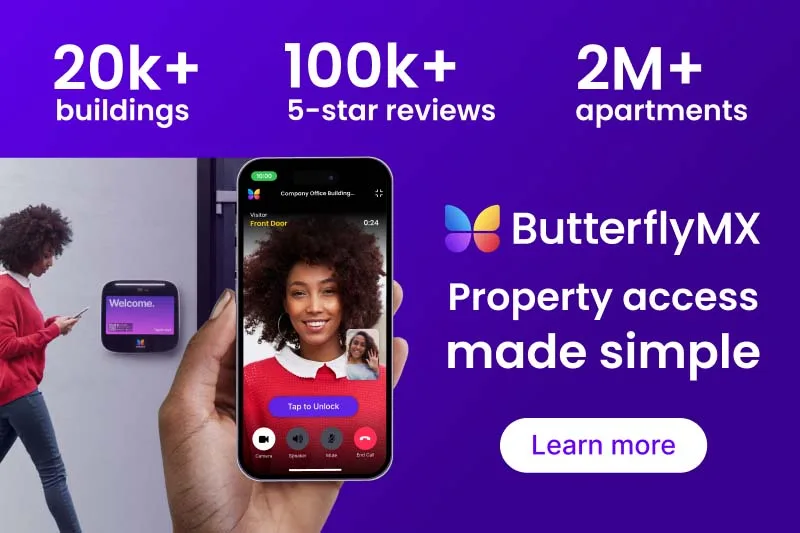
ButterflyMX is well suited for coworking spaces because its cloud-based access control platform supports the flexible workflows that changing membership models require. Operators can manage doors, gates, garages, elevators, and shared spaces from one system while giving members, staff, and visitors an entry experience that fits their needs.
Flexible access methods for members
ButterflyMX supports multiple access methods, including smartphone credentials, PIN codes, key cards, and fobs. Operators can choose from keypad, mullion, and single-gang readers to support different entrances throughout the property.
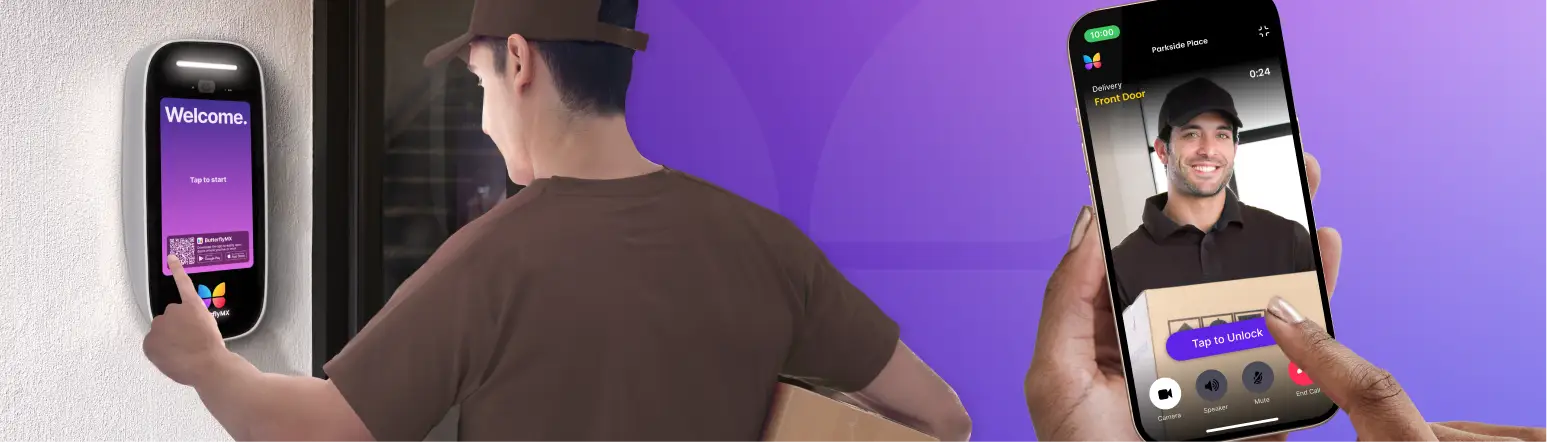
This flexibility makes it easier to accommodate full-time members, part-time members, staff, and visitors. A recurring member might use the ButterflyMX mobile app and Swipe to Open for everyday entry, while a guest or service provider can receive a time-bound Visitor Pass using a QR code or PIN.
Operators can also create access groups that determine which ButterflyMX-controlled doors members and staff can enter and when. For example, one membership tier may include access to private offices and meeting rooms, while another only includes shared workspaces during business hours.
Because permissions, credentials, and entry logs are managed from a centralized, cloud-based platform, staff can make changes remotely instead of relying on physical keys or managing every entry point separately.
ButterflyMX works with doors, gates, and garages controlled by electronic or magnetic locks. When planning a new installation or upgrading an existing system, an experienced access control installer can help determine the right hardware for each entrance and confirm that the setup meets the property’s operational and safety requirements.
A better experience for operators and members
For operators, ButterflyMX reduces the manual work associated with changing memberships. Staff can add or remove users, update permissions, manage access schedules, and review entry activity from a smartphone or computer.
For members, access is simple and convenient. They can enter with the credential that works best for them and grant managed access to clients, guests, or service providers without waiting at the entrance.
ButterflyMX Security Cameras can provide additional visibility into activity around entrances and other shared areas. When paired with access control, cameras help teams connect entry events with recorded footage and manage access and security from one platform. This can be especially valuable in unmanned lobbies, during after-hours access, or across larger shared commercial properties.
The result is an access experience that can adapt as memberships and schedules change. Operators spend less time managing physical credentials and more time delivering a reliable experience for members.
FAQs
How can I limit coworking members to a set number of days per month?
Start by defining whether you need schedule-based access, temporary credentials, entry tracking, or strict visit counting. Many systems can support schedules, access groups, and remote credential changes, but exact day or entry limits should be confirmed with the vendor before you buy.
Can access control systems track individual member entries?
Yes, many systems provide access history that shows who entered and when. That helps coworking operators review activity, support membership enforcement, and investigate misuse or after-hours access attempts.
Should coworking spaces use PINs, fobs, or mobile app access?
It depends on your workflow. Temporary PINs can work well for trial users or short-term access, mobile credentials can be easier for recurring members, and fobs may feel familiar but often create more admin work when memberships change frequently.
How do I remotely manage and revoke member access for a coworking space?
Look for a system that lets staff update permissions from a centralized dashboard or app. That makes it easier to add a new member, change their access level after a plan update, or remove access quickly when a membership ends.
What access control features matter most for part-time coworking memberships?
Focus on access groups, scheduling, entry tracking, remote credential management, keypad access, mobile access, and temporary PIN support. Those features are closely tied to the real work of managing flexible memberships of growing coworking spaces without constant manual oversight.
Get your free quote!
Fill in the form below, and we'll email you right back.
Want a free quote?
Fill in the form below, and we'll email you right back.
You’ll be redirected shortly...