





Key takeaways:
- AMAROK provides commercial electric perimeter security as a managed monthly service, with installation, maintenance, repairs, and liability coverage included in a custom fee.
- Site fit comes first: installation generally needs an existing perimeter barrier, 5–10 feet of clear fence-line space, local approval, and a typical 4–6-week lead time.
- The lineup runs from the lower-voltage Defender to the 7,000-volt Electric Guard Dog Fence, the denser 30 Series, and the FORTIFEYE video-monitoring bundle.
Disclaimer: ButterflyMX provides these blog posts to help our customers and potential customers make the right business decisions. Our blog posts are based on the information available to us at the time of writing.
This AMAROK review covers a managed commercial perimeter-security service built around professionally installed electric fencing. It may appeal to fleet yards, distribution centers, equipment operators, self-storage facilities, dealerships, and properties dealing with theft or vandalism, or considering a gate access control solution.
The key questions go beyond how the fence works: Which model fits the site? What does AMAROK pricing include? Can the property meet local rules and installation requirements? This review covers those tradeoffs, along with customer feedback, alternatives, and how AMAROK compares with ButterflyMX.
This guide will answer:
- AMAROK review: What is the Electric Guard Dog Fence?
- Which AMAROK fence model fits each security need?
- AMAROK features and monitoring capabilities
- How much does AMAROK cost?
- Installation, site requirements, and local permitting
- AMAROK pros and cons
- AMAROK alternatives to consider
- AMAROK vs. ButterflyMX
- Is AMAROK the right fit for your property?
- Frequently asked questions
- Final verdict on AMAROK
Watch how ButterflyMX works:
AMAROK review: What is the Electric Guard Dog Fence?
AMAROK provides professionally installed commercial electric perimeter fencing as a managed monthly service, not a residential or self-install product. Its flagship Electric Guard Dog Fence is a 10-foot barrier installed inside an existing perimeter fence and delivers a 7,000-volt pulse about every 1.3 seconds.
Alarms, bright lights, solar power, battery backup, and app-based controls support the physical barrier. AMAROK describes the pulse as a low-amperage design intended to be medically safe, but that is the manufacturer’s claim; buyers should also review local requirements for their site.
AMAROK serves commercial and industrial properties, not homes. The company reports serving more than 9,000 commercial customers, including trucking yards, construction sites, equipment-rental facilities, dealerships, self-storage sites, data centers, and government facilities.
How AMAROK perimeter security works
AMAROK aims to deter people from crossing the perimeter instead of only recording an incident after it happens. Contact or an attempted climb can trigger a siren and bright lights, while the flagship fence and 30 Series let authorized staff arm, disarm, and check fence status in an app.
Video is not standard with every fence. The FORTIFEYE bundle adds perimeter cameras, 24/7 remote monitoring, visual alarm review, and 30 days of standard video storage. Monitoring staff can review an alarm before contacting police, which may help separate a confirmed event from an unreviewed alert.
AMAROK and the Electric Guard Dog name
The business began in 1973, entered electric fencing under the Electric Guard Dog name in 1991, and adopted the AMAROK name in 2020. Older pages and discussions may still use the Electric Guard Dog name.
Northleaf Capital Partners and AVALT acquired majority ownership in December 2021. That history may matter to national and multi-site buyers assessing vendor scale and long-term service capacity.
Which AMAROK fence model fits each security need?
Defender is AMAROK’s lower-voltage option, the Electric Guard Dog Fence is its standard 7,000-volt system, the 30 Series adds density for higher-risk sites, and FORTIFEYE adds video surveillance and continuous remote monitoring.
The differences matter. Defender is not simply a lower-priced flagship fence with the same controls, and FORTIFEYE is not included with every fence proposal. Ask AMAROK to list the fence tier, monitoring package, enhancements, and included services in writing.
AMAROK features and monitoring capabilities
AMAROK is a physical perimeter deterrent first. Remote administration, alarms, lighting, backup power, optional video, and managed support are built around the fence.
- Solar power and battery backup: AMAROK says its power system can support up to seven days of operation during a grid outage.
- Remote fence controls: The flagship fence and 30 Series support app-based arming, disarming, and status checks. Defender does not include those app controls.
- Alarm and lighting response: Sirens and bright lights add an on-site response to attempted contact or climbing.
- Managed maintenance: Installation, maintenance, repairs, and support are part of the subscription approach.
- Liability support: AMAROK says it carries liability insurance and adds customers as additional insured parties for fence-related claims.
- Optional enhancements: Available additions include Day Mode, anti-dig laydown fencing, gate auto-arming, angled fencing, remote arming, and ground-wire tamper monitoring.
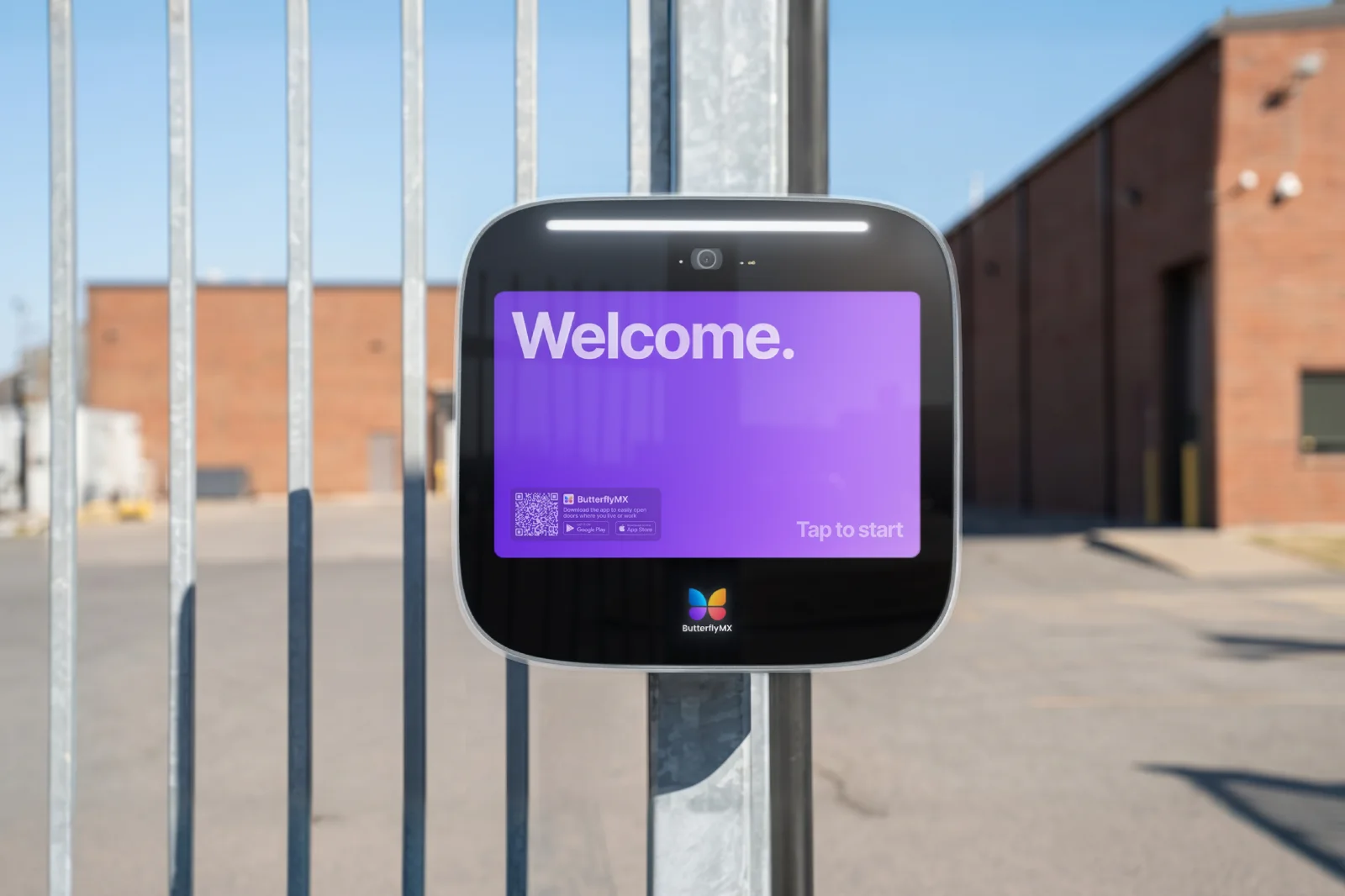
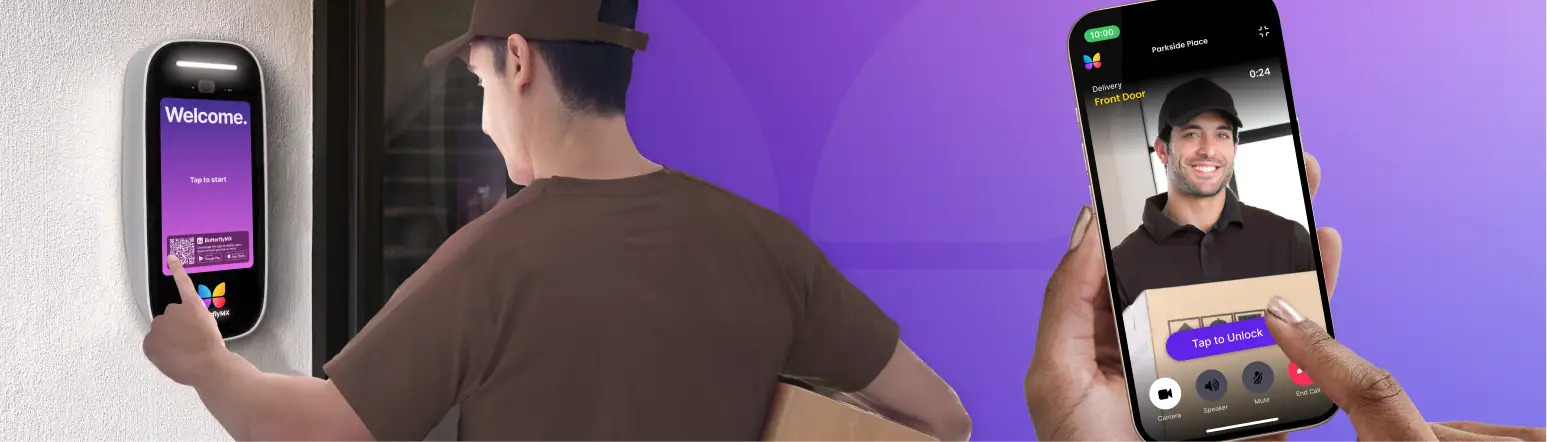
AMAROK’s mobile controls focus on fence administration. ButterflyMX mobile access serves a different workflow: authorized users can use a phone to enter supported doors, gates, and other controlled entrances. A property may need one workflow for perimeter security and another for everyday entry.
Video monitoring and the AMAROK Evolon investment
FORTIFEYE adds commercial video surveillance and live monitoring to the electric barrier. Cameras record the perimeter, monitoring staff can review alarms, and standard footage retention is 30 days.
In April 2026, AMAROK acquired a 45% stake in Evolon Technology to combine electric fencing with AI-enabled video analytics and virtual guarding. The investment signals a broader monitoring direction, but buyers should ask which Evolon functions are included in a proposed deployment, when they will be activated, and whether they affect the monthly fee.
How much does AMAROK cost?
AMAROK does not publish a fixed monthly price or standard price range. Each property receives a custom subscription quote, and AMAROK advertises no upfront installation charge.
The quote can vary by property size, perimeter length, risk level, fence model, and additions such as video surveillance, monitoring, or gate access. Installation, maintenance, repairs, and liability coverage are included in the recurring fee.
This approach can reduce upfront capital needs, but it makes comparison shopping harder before a site assessment. AMAROK describes the offering as a managed service rather than a standard equipment purchase, and its commercial fence cost guidance does not give a universal price.
How to evaluate an AMAROK quote
Compare the full contract, not just the monthly payment. Ask AMAROK to identify:
- The exact fence model and total covered perimeter.
- Every included camera, monitoring, gate, and anti-dig option.
- The initial contract term, renewal process, and cancellation conditions.
- Price adjustments at renewal.
- Response procedures for alarms, equipment faults, and service calls.
- Responsibilities for site preparation, vegetation control, and existing-fence work.
- What happens to the equipment when the agreement ends.
- Which liability protections apply and whether exclusions exist.
AMAROK reports a 5x average return and estimated savings above $120,000 per year compared with a 24/7 guard. It also markets a 99% external theft-prevention rate. These are manufacturer-reported benchmarks, not guaranteed outcomes, so ask for the assumptions, time period, incident definition, and comparable customer profile behind any savings estimate in your proposal.
Installation, site requirements, and local permitting
AMAROK requires professional installation, a compatible existing perimeter barrier, open space along the fence line, and local approval. Those dependencies can determine whether the system is practical before price or model choice enters the picture.
Local rules can be a feasibility gate
Nationwide service does not mean electrified fencing is allowed at every address. For example, California Civil Code Section 835 regulates electrified security fences, while Olympia, Washington, considered where these fences could be permitted.
AMAROK has a compliance team that manages permitting, but the governing authority still decides whether to approve a project. Ask for an ordinance review early, especially for leased sites, sites near public walkways, or properties in tightly regulated districts.
Connectivity and power requirements
AMAROK describes app controls and cloud-accessible video, but it does not publicly state whether every deployment uses cellular, Wi-Fi, Ethernet, or another field connection. Request a site-specific network diagram that explains the primary connection, backup communications, responsibilities, and behavior during an outage.
Gate workflows need separate planning. AMAROK offers gate access as a separate solution alongside the fence. ButterflyMX offers access control and vehicle access control for supported gates, garages, doors, and other controlled entrances, so buyers should map perimeter deterrence and authorized entry as related but distinct needs.
AMAROK pros and cons
AMAROK pairs physical deterrence and managed service with real dependencies on quote terms, site geometry, permitting, and deployment timing.
What customers say about AMAROK
The available independent review sample is small. The AMAROK Yelp listing contained nine public reviews in the supplied material, with positive themes including perceived theft deterrence and satisfaction with maintenance or repair service.
Those comments offer useful examples, but they should not stand in for the experience of more than 9,000 reported customers. Buyers should request references from similar property types, regions, fence lengths, and monitoring configurations.
AMAROK alternatives to consider
AMAROK alternatives fall into three broad approaches: staffed guarding, AI-first video monitoring, and other physical perimeter-security systems. The right comparison depends on whether the priority is stopping a perimeter crossing, detecting an event, controlling authorized entry, or combining all three.
- Traditional security guard providers: Staffed guarding offers an on-site human presence and flexible response. AMAROK positions its subscription against the recurring cost of continuous guard coverage, but guards and electric barriers have different response and liability models.
- Evolon: Evolon focuses on AI-powered video monitoring and virtual guarding. It may suit buyers who prioritize camera analytics over an electrified physical barrier, although it is also AMAROK’s strategic partner.
- Perimeter Security Partners: This provider represents an alternative approach based on physical perimeter and crash-rated barrier systems for commercial, government, and critical-infrastructure sites.
- Sloan Security Group: Sloan combines vehicle barriers, access control, and intrusion detection for campuses, data centers, and critical infrastructure. Both physical-perimeter companies appear among listed AMAROK alternatives.
- Gate Sentry: Cloud-based visitor management product for staffed entrances.
Video use cases differ, too. FORTIFEYE focuses on perimeter surveillance, alarm review, and remote response. ButterflyMX supports security cameras and video intercoms alongside property access, so authorized users can see and speak with visitors before granting entry. A property may need perimeter-event monitoring, entry communication, or both.
AMAROK vs. ButterflyMX
AMAROK and ButterflyMX address different but potentially complementary layers of property security. AMAROK centers on electrified commercial perimeter protection, while ButterflyMX centers on access and security workflows for authorized users, visitors, vehicles, and controlled entrances.
The platforms are not direct replacements in every project. A distribution yard may prioritize AMAROK’s perimeter deterrence, while a multifamily or commercial building may focus on ButterflyMX for resident, tenant, visitor, and vehicle entry. Some properties may benefit from both layers as part of a wider security plan.
Is AMAROK the right fit for your property?
AMAROK is a strong shortlist candidate for commercial sites that need visible physical perimeter deterrence and prefer a managed subscription to purchasing and maintaining fence equipment.
It may fit well when:
- The main threat comes from people crossing an outdoor perimeter.
- The property already has a compatible perimeter fence.
- There is 5–10 feet of clear space along the fence line.
- Local rules permit the proposed electrified installation.
- A multi-week deployment schedule is acceptable.
- The property values bundled maintenance, liability support, and optional monitored video.
AMAROK may be a weaker fit when:
- The site lacks a compatible perimeter barrier or enough clearance.
- The property needs an immediate response to active theft.
- Local rules restrict electrified security fencing.
- The buyer requires public pricing or standard contract terms before speaking with sales.
- The primary need is managing residents, tenants, visitors, deliveries, or interior doors rather than deterring an outdoor perimeter breach.
Before signing, resolve six points in writing: local approval, site clearance, existing-fence suitability, total recurring cost, contract and cancellation terms, and the exact video or monitoring package included.
Frequently asked questions
How much does an AMAROK electric fence cost?
AMAROK does not publish a fixed price or monthly range. Each site receives a custom monthly quote based on property size, perimeter length, risk, fence model, and selected video, monitoring, or gate-access options.
Is the AMAROK electric fence legal everywhere?
No. Electrified security-fence rules vary by state and municipality, and local authorities can restrict, delay, or deny a proposed installation even when AMAROK manages permitting.
What is the difference between Defender, the Electric Guard Dog Fence, and the 30 Series?
Defender is a lower-voltage option without app-based arm or disarm control. The flagship Electric Guard Dog Fence adds a 7,000-volt pulse and app controls, while the 30 Series adds 10 monitored wires and two fiberglass poles per 30 feet for higher-risk sites.
How long does AMAROK installation take?
AMAROK reports a typical 4–6-week lead time and a 1–2-week on-site build after permitting clears. Local approval and property preparation can affect the schedule.
Does AMAROK work during a power outage?
Yes. AMAROK says its solar and battery system can support operation for up to seven days without grid power.
Does AMAROK include video surveillance?
Video surveillance is available through FORTIFEYE rather than as a standard feature of every fence. FORTIFEYE adds perimeter cameras, continuous remote monitoring, visual alarm review, and 30 days of standard video storage.
Does AMAROK require an existing fence?
Yes. The electric system installs inside a compatible existing perimeter barrier, and the site generally needs 5–10 feet of clear space along the fence line.
Does AMAROK serve residential properties?
No. AMAROK serves commercial and industrial properties rather than residential customers.
Final verdict on AMAROK
AMAROK may suit commercial and industrial sites with serious perimeter theft risks, enough outdoor space, and a preference for installation and maintenance bundled into a managed service. Its physical deterrence, backup power, and optional video monitoring are meaningful strengths.
The central tradeoff is feasibility and transparency. Buyers need a custom quote, must review contract terms, and may face site-preparation or local permitting limits. Compare the proposal with guards, camera-first monitoring, other perimeter systems, and any separate access-management needs.
If your property also needs to manage authorized entry for tenants, visitors, vehicles, deliveries, and controlled building areas, consider ButterflyMX as part of your shortlist. Explore ButterflyMX to see how its property access and security platform could support those workflows.
Get your free quote!
Fill in the form below, and we'll email you right back.
Want a free quote?
Fill in the form below, and we'll email you right back.
You’ll be redirected shortly...