




Key takeaways:
- An apartment newsletter should put maintenance, security, deadlines, and clear resident actions ahead of promotional content.
- Choose the most frequent schedule your team can sustain, and keep urgent safety, outage, and access notices separate.
- Measure clicks, replies, RSVPs, completed tasks, and fewer repeat questions rather than relying on open rates alone.
A good apartment newsletter gives residents useful information before they need to call the office. It is a recurring, skimmable community update that combines property news, clear actions, and local information on a schedule your team can maintain.
It should not replace an urgent alert. A water shutoff, security issue, service interruption, or same-day access change needs its own timely notice through the right channels. This guide explains how to build a resident newsletter that is useful, compliant, and boosts resident retention.
This guide will answer:
- What an apartment newsletter is and when to use it
- What to include in every apartment newsletter
- How to choose a sustainable publishing cadence
- Apartment newsletter ideas for different goals and communities
- How to choose print, email, text, portal, app, or lobby delivery
- Compliance and privacy checks before publishing
- How to build each issue with a repeatable workflow
- How to communicate entry and access system changes
- How to measure apartment newsletter performance
- FAQs
Watch how ButterflyMX works:
What an apartment newsletter is and when to use it
An apartment newsletter is a scheduled resident communication, usually delivered monthly, every other month, or quarterly. It gathers updates that residents can read when convenient, such as maintenance progress, package procedures, office hours, amenity reminders, upcoming deadlines, and one clear way to respond or participate.
Use a standalone alert instead when information is urgent, sensitive, or time-bound. Do not wait for the next newsletter to announce an emergency, a safety concern, an outage, a same-day closure, or an immediate change to building entry. The newsletter works best as one part of a wider resident communication plan that may also include email, print, a portal, an app, lobby displays, and direct alerts.
What to include in every apartment newsletter
Put the information that affects daily life at the top. A 2025 vendor-sponsored renter survey summarized by the National Apartment Association identified maintenance response, security, and cleanliness among important living-experience concerns. The available summary does not provide full methodology, so treat the findings as directional rather than a universal ranking.
- Start with a short issue summary. State the most important dates, changes, and required resident actions in plain language.
- Share maintenance, security, and upkeep updates. Include planned work, service windows, cleanliness reminders, weather preparation, and the contact for questions.
- Explain operational procedures. Package-room rules, parking instructions, amenity access, guest access, office hours, and entry troubleshooting can reduce uncertainty and repeat questions.
- Give one primary action. Ask residents to complete a survey, RSVP, update a record, review an access instruction, or register for an event. Several competing calls to action can make all of them easier to ignore.
- Place optional community content later. Local events, staff introductions, resident features, pet photos, and seasonal ideas can add warmth, but they should not hide essential property information.
Before publishing personal details, photos, testimonials, birthdays, or milestones, get documented permission and review the material carefully. The same care applies to content that may later be reused for prospective residents.
How to choose a sustainable publishing cadence
The right newsletter frequency is the most frequent schedule your assigned team can produce consistently with useful local information and adequate review. There is no evidence-based universal answer that monthly is best for every property.
- Monthly: Useful when there are frequent deadlines, events, maintenance updates, or changing operational details. It requires steady contributions and review time.
- Every other month: A practical choice for teams that need more time to gather meaningful updates without creating an overly long issue.
- Quarterly: Can work for stable communities with limited news, but important instructions may become stale before the next issue.
Give the process an owner, a contributor list, a review deadline, and a fixed publication day. Keep urgent notices outside this schedule. A dependable smaller newsletter is more useful than an ambitious format that disappears after two issues.
Apartment newsletter ideas for different goals and communities
Choose ideas based on the job they need to do. Operational content should help residents find answers and complete routine tasks. Action-oriented content should make one next step obvious. Community content should be optional and permission-based.
Ideas that reduce repeat questions
- Planned maintenance calendars and preparation instructions
- Package, delivery, parking, and trash procedures
- Office contacts, hours, and after-hours escalation information
- Amenity rules, reservation reminders, and seasonal operating hours
- Entry, guest access, credential, keypad, or smart-lock troubleshooting instructions that have been confirmed by the property team
Ideas that prompt participation
- Event RSVPs, short polls, surveys, and feedback requests
- Document deadlines, registration dates, and setup reminders
- A contest or community activity with clear rules and one response path
Ideas that reflect the season and community
Useful late-year topics include holiday office schedules, high package-volume reminders, weather preparation, guest access reminders, year-end maintenance, and event RSVPs. Adapt the content to local conditions and do not assume which holidays residents observe.
The core hierarchy stays the same across multifamily, student housing, senior living, HOA, and condo communities: put time-sensitive operations first. The local emphasis can change. A student community may need move-in and guest guidance, while an HOA may need meeting and shared-space reminders. Avoid stereotypes about residents and use the questions your office actually receives to guide each issue.
How to choose print, email, text, portal, app, or lobby delivery
Most properties should evaluate a channel mix rather than assume one method reaches every resident. Consider resident access, staff effort, speed, cost, urgency, ability to measure action, and the review required for the channel.
Swipe to compare →
The table is a decision aid, not a ranking. Choose a primary channel, provide an accessible fallback where needed, and use separate channels for urgent notices. If a property uses an app, this overview of apartment community apps can help teams consider where an app may fit within the wider communication mix.
Email requires special care when a message includes promotional material. The Federal Trade Commission explains that CAN-SPAM treatment depends on an email primary purpose, including its subject line, content, and layout. When the law applies, commercial messages require a valid postal address and a clear opt-out process, and opt-out requests must be honored within 10 business days under the FTC CAN-SPAM compliance guide.
Text messaging also needs a purpose and consent review. An NAA-published legal discussion distinguishes informational and marketing texts and recommends maintaining consent records and opt-out instructions. Because that guidance was published in 2018, confirm current Federal Communications Commission rules, case law, and local requirements before operating a text program.
Compliance and privacy checks before publishing
This section is general information, not legal advice. Have current counsel or a qualified compliance professional review the actual program, particularly when messages are promotional, sent by text, or reused in prospect marketing.
- Classify the email. Decide whether its primary purpose is transactional or relationship content, commercial content, or a mix. Use the appropriate CAN-SPAM review when commercial content is involved.
- Review text consent. Confirm the current consent standard for the message purpose, keep records, and offer the required opt-out process. Do not rely on older guidance as a statement of current law.
- Review fair-housing language and images. Housing-related notices and advertising must not express discriminatory preferences or limitations. 24 CFR 100.75 specifically addresses words, photographs, illustrations, and other housing-related communications.
- Document permission. Obtain written approval before using resident names, photos, pet features, testimonials, milestones, or other personal details.
- Check access and readability. Test links, mobile layout, print readability, translation needs, and the accessibility of the destination pages or forms.
- Review local rules. State and local protected classes, privacy rules, and accessibility obligations may add requirements beyond the federal material discussed here.
How to build each issue with a repeatable workflow
- Set one objective. Decide what the issue needs residents to know or do before collecting material.
- Collect local updates. Ask maintenance, leasing, security, management, and vendors for confirmed information by a shared deadline.
- Rank content. Put urgent operational information, deadlines, and resident actions first. Move optional community items lower.
- Draft for scanning. Use descriptive headings, short blocks of text, plain-language instructions, useful contacts, and one clear primary action.
- Choose the production model. A DIY document offers local control but uses staff time. Design tools can improve consistency but still need review. Vendors and agencies can provide production support, but the property remains responsible for accurate local details, permissions, and approval.
- Run a pre-send review. Check facts, dates, contacts, links, permissions, legal language, mobile display, print version, accessibility, and channel-specific requirements.
- Archive the issue and record results. Keep the approved version, audience, delivery date, and the actions the issue was meant to drive.
An editable template can make this process faster, but only use template language in public materials after the asset exists, is accessible, and has been tested. A useful template should include recurring sections, owners, deadlines, approval fields, a compliance check, and separate digital and print variants.
How to communicate entry and access system changes
Access changes create practical questions: What is changing? When does it happen? What does a resident need to do? How will guests and deliveries enter? Answer those questions in stages, and use an urgent alert for immediate disruptions.
- Before installation, explain the change, key dates, required devices or credentials, accessibility support, and where residents can get help.
- During installation week, put confirmed setup steps, guest access instructions, package procedures, transition details, and support contacts near the top of the newsletter or send them separately when timing is urgent.
- After launch, repeat the most common verified tasks, address confirmed questions, remind residents about incomplete setup, and provide a clear escalation path.
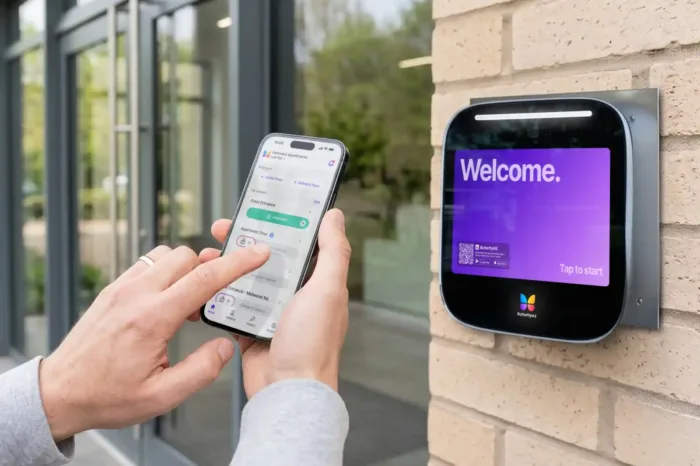
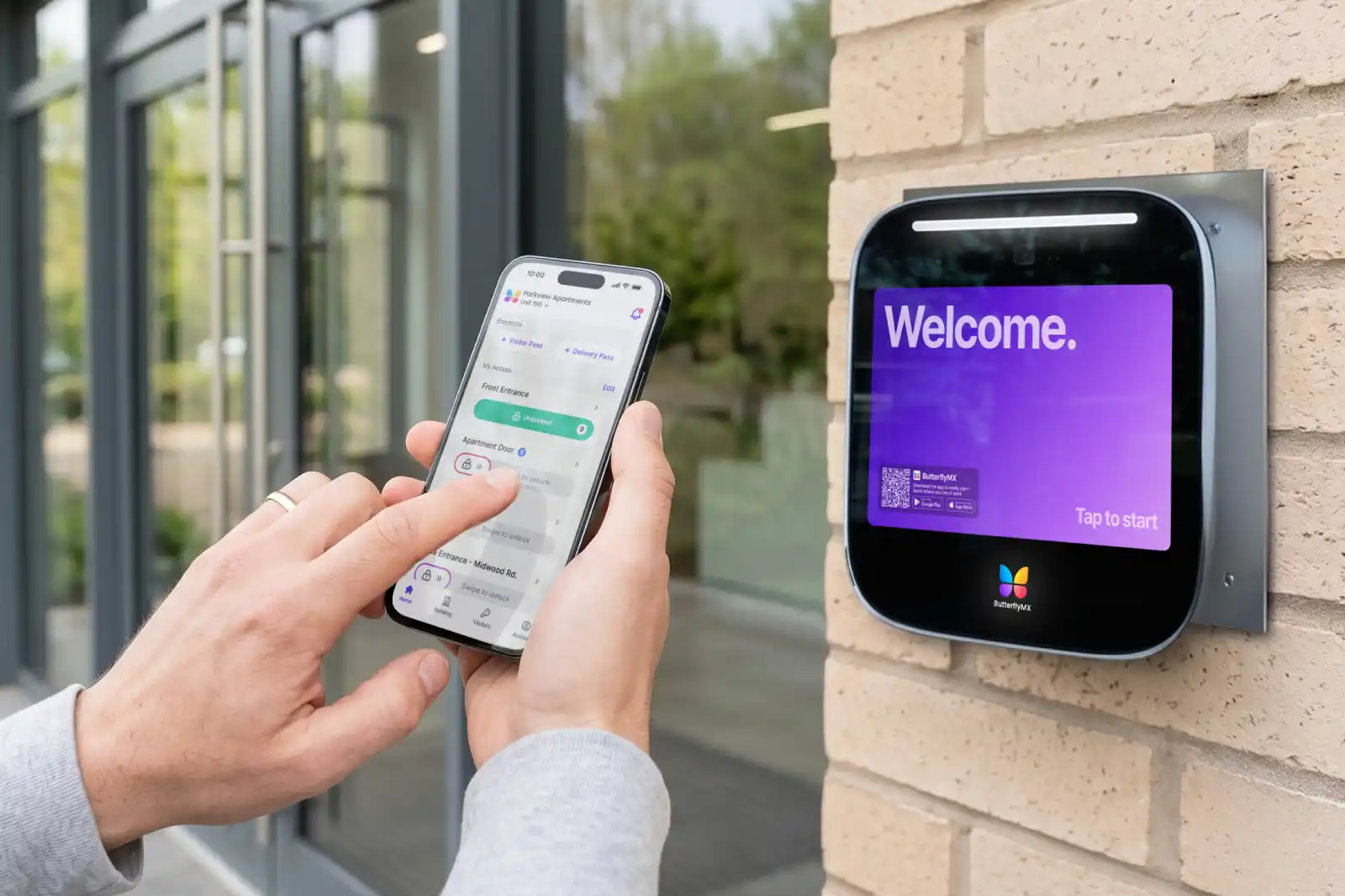
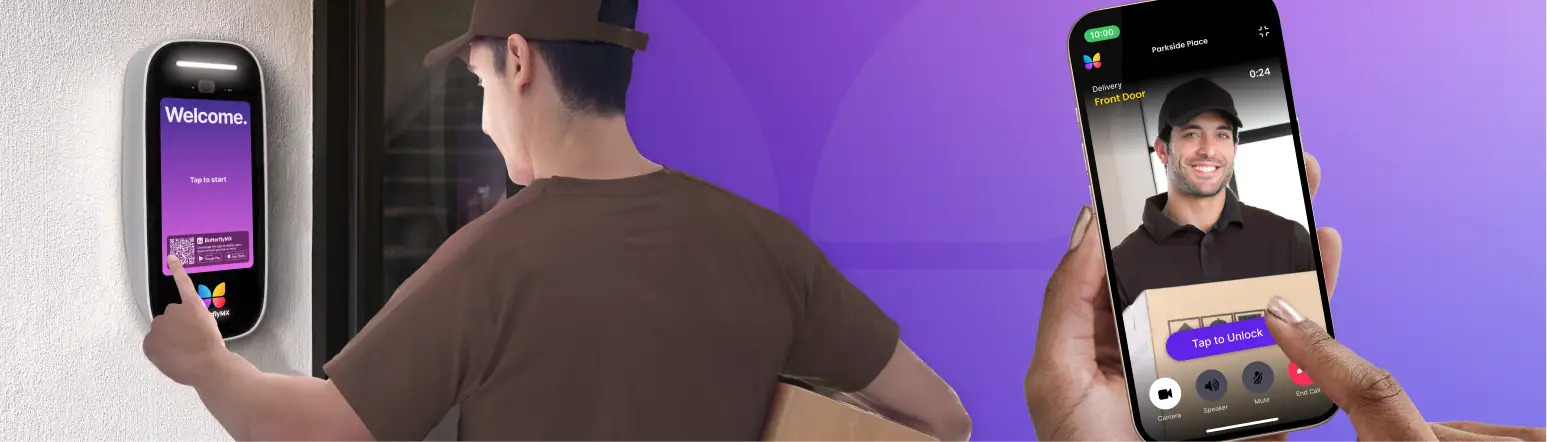
Coordinate every instruction with the implementation and support teams so it matches the property actual configuration. ButterflyMX is one example of property access technology that can support resident, visitor, credential, and delivery access needs. Its video intercoms allow residents to receive visitor calls and grant access through their smartphones, while property teams can remotely manage access-related records. The newsletter should explain the property process, not imply that ButterflyMX distributes newsletters or sends resident broadcasts.
For properties evaluating access technology, see how ButterflyMX supports property access for residents, visitors, and deliveries.
How to measure apartment newsletter performance
A newsletter is working when residents take the intended action or need less help completing it. Put action-based metrics above vanity metrics.
- Track completed actions, such as form submissions, RSVPs, poll responses, setup completion, downloads, and event registrations.
- Track engagement signals that show intent, including clicks, replies, and questions tied to a specific issue.
- Track operational effects, such as fewer repeat calls about package procedures, office hours, guest access, or maintenance preparation.
- Use open rates as a supporting signal only. Apple Mail Privacy Protection can affect open-rate accuracy, as Mailchimp notes in its email marketing benchmark guidance. Broad email data should not be presented as an apartment-newsletter benchmark.
Build a simple value worksheet using staff time, production cost, completed actions, and avoided repeat work. If you discuss retention, keep the claim narrow: newsletters are one communication tactic, not a proven cause of renewals. The NAA article cited earlier attributes an approximately $4,000 non-renewal cost to earlier Zego research, but local turnover costs vary. Use your own property figures and broader resident retention strategies to frame the decision.
Frequently asked questions
How long should an apartment newsletter be?
Use the shortest format that clearly communicates priority updates and actions. Put essential items first, link to detailed instructions where appropriate, and place optional community content later in the issue.
Can a newsletter include resident birthdays, photos, pets, or milestones?
Yes, but use documented permission and limit personal details to what the resident approved. Review the wording and imagery carefully, especially if the content could later be reused in prospect-facing communications.
What are useful November and December apartment newsletter ideas?
Useful ideas include holiday office schedules, package and delivery procedures, weather preparation, event RSVPs, guest access reminders, year-end maintenance, and support contacts. Keep urgent safety information in separate alerts, and avoid assumptions about which holidays residents observe.
Can Facebook or a community blog replace a resident newsletter?
No single channel reliably reaches every resident. Social media and blogs can support a communication mix, but choose channels based on resident access, privacy, urgency, recordkeeping, and the ability to complete required actions.
Can an apartment newsletter improve lease renewals?
A newsletter can support the broader resident experience by clarifying maintenance, security, access, and community information, but it should not be presented as a proven cause of renewals. Measure resident actions and use property-specific retention data when evaluating its value.
Can the same newsletter be handed to prospective residents?
It can be reused only after an additional review of claims, audience signals, photographs, illustrations, event language, and housing-related statements. Housing advertising and notices require careful fair-housing review, along with any relevant state and local requirements.
The best apartment newsletter is not the longest or most decorative one. It is the issue residents can quickly use to understand what changed, what they need to do, and where to get help. Choose a cadence your team can sustain, use a channel mix that fits your community, and review every issue for permissions, fairness, and compliance.
When an access-system change is part of the message, make the resident instructions specific to the property configuration and separate urgent alerts from routine education. ButterflyMX can be a relevant option for teams exploring modern access for residents, visitors, and deliveries.
Get your free quote!
Fill in the form below, and we'll email you right back.
Want a free quote?
Fill in the form below, and we'll email you right back.
Redirecting you in 5 seconds.