





Key takeaways:
- Cellular gate access can be a practical fit for a remote warehouse gate because it lets access-control equipment communicate without wired internet at the gate.
- Before choosing a system, confirm cellular signal, power availability, gate-operator compatibility, credential needs, access logs, and recurring service costs.
- A basic GSM opener may work for simple gate triggering, but warehouses with vendors, deliveries, after-hours access, or audit needs often need fuller access control.

A remote warehouse gate creates a simple but expensive question: how do you control entry when the gate is too far from the building network? Running internet to a perimeter entrance may be possible, but it can also add cost, time, and installation complexity. WiFi may look easier until the signal drops at the exact spot where trucks and vendors need access.
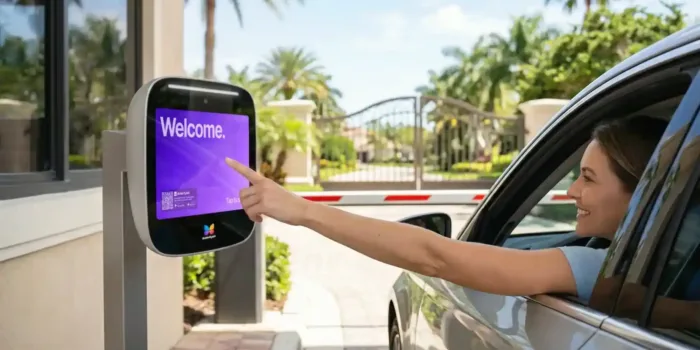
Cellular gate access offers another path. It uses a cellular-connected controller, often with a SIM card and LTE-style connectivity, to send gate commands without wired internet at the gate itself. For a remote warehouse gate, that can make access control more practical, especially when staff need to manage employees, delivery drivers, vendors, or contractors from somewhere else.
Still, cellular is not a shortcut around every site challenge. The gate and gate intercom system still need power. The cellular signal has to be tested at the actual installation point. The access device must work with the existing gate operator. And the buyer has to decide whether the site only needs a basic opener or a system with access logs, scheduled credentials, remote administration, and possibly video verification.
Start with how the technology works. Then compare cellular, wired, and WiFi options against the way your warehouse gate is actually used.
This guide will answer:
- What cellular gate access is
- Why cellular gate access works for remote warehouses
- Cellular vs. wired vs. WiFi: choosing the right connectivity
- Features that matter for warehouse gate security and operations
- Installation requirements and site assessment
- Cost considerations and total ownership
- How to evaluate cellular gate access solutions
- FAQs
Watch how ButterflyMX works:
What cellular gate access is
Cellular gate access is gate access control that uses a cellular network instead of wired internet at the gate. In a common setup, a cellular controller or LTE gate module connects to the gate operator through a relay. When an approved person requests entry, the controller checks the credential and sends a signal that tells the operator to open the gate.
That setup has a few important parts. The gate operator is the mechanical equipment that moves the gate. The cellular controller handles communication and access decisions. A SIM card connects the controller to a carrier network. A dry-contact relay links the controller to the gate operator so an approved access event can trigger the open command. Depending on the system, a keypad, reader, intercom, or mobile app gives users a way to request entry. Cloud-based software may also let administrators manage users, schedules, permissions, and access events from a remote location.
You may see terms such as GSM gate opener, LTE gate controller, 4G gate access, or 5G-connected gate system. Older GSM language is still common, even though many modern systems use LTE, 4G, or other current cellular technologies. The label matters less than the system capabilities. A buyer should look at what the product supports: phone-based entry, app-based access, PINs, QR codes, cards, fobs, access logs, remote management, video verification, and compatibility with the operator already installed at the gate.
How cellular gate access works
- A user requests access by phone call, mobile app, keypad PIN, QR code, card, fob, or intercom call, depending on the system.
- The entry device or cellular controller receives the request.
- The system checks whether the user, phone number, PIN, or credential is authorized.
- If schedules or restrictions apply, the system checks those rules before granting access.
- When access is approved, the controller sends a relay signal to the gate operator.
- The gate operator performs the physical open or close action.
- If cloud management is included, an administrator can review the event, change permissions, or revoke access remotely.
This is why it helps to separate connectivity from system depth. A basic cellular opener may only authorize a small list of phone numbers or simple credentials and trigger the relay. A fuller access-control system may add time-based access, access logs, multiple credential types, remote administration, visitor access, and multi-gate or multi-site management. Both may use cellular connectivity, but they serve different needs.
Why cellular gate access works for remote warehouses
Remote warehouse gates often sit where normal building connectivity does not. The entrance may be at the edge of a yard, across a long drive, behind fencing, or away from the office where the network equipment lives. Extending wired internet to that location can be difficult, and WiFi may not be reliable enough once distance, outdoor conditions, and interference are involved.
Cellular gate access is useful in those cases because the access-control device has its own communication path. It does not need to borrow the building’s WiFi or wait for a network line to be extended to the gate. That can be especially helpful at remote receiving gates, secondary yard entrances, rural or industrial sites, and low-staff facilities where managers still need to control who enters.
Warehouse gate access also has a different rhythm than a residential entrance or a simple parking gate. A delivery driver may arrive after hours. A contractor may need access for one afternoon. A vendor may need repeat entry during a maintenance window but should not keep permanent access. A security manager may need to review who opened the gate overnight. Cellular connectivity can support these situations when it is paired with the right access-control features.
For a lightly used gate, the job may be simple: allow a few approved users to open and close the gate. For a busier warehouse perimeter, the job is broader. The system may need to separate employee access from vendor access, create temporary credentials, support scheduled entry, record access events, and give managers a way to make changes without going to the site. The connectivity choice gets the gate online; the access-control design determines whether the system fits daily operations.
Cellular vs. wired vs. WiFi: choosing the right connectivity
Choosing connectivity for a remote gate is not about naming a universal winner. It is about matching the gate location to the site’s infrastructure and risk. Cellular, wired internet, and WiFi can all work in the right conditions, but each one depends on different things.
Cellular is often strongest when the gate is too far from the building network for an easy wired or WiFi deployment. Instead of extending internet service to the entrance, you install an access device that communicates over a carrier network. That can simplify the infrastructure side of the project, but it also creates a dependency on cellular coverage and ongoing service.
Wired internet can make sense when a reliable network connection already exists near the gate. It can reduce dependence on a carrier connection, but it may require more physical installation work if the gate is far from the nearest network point. For a remote warehouse entrance, that extension work can become the hardest part of the project.
WiFi is usually most practical when the gate is close to strong, stable coverage. At remote gates, the problem is not just whether the site has WiFi. It is whether the signal is dependable at the gate every time a truck, employee, or vendor needs access. Distance, fencing, buildings, terrain, and interference can all make WiFi less consistent at the perimeter than it seems from the office.
The final two rows show another important distinction: connectivity type and system capability are not the same decision. A basic GSM opener and a full access-control platform may both use cellular service, but they solve different problems. One mainly opens the gate for approved users. The other may help manage credentials, schedules, access logs, visitor entry, and remote administration across several gates or sites.
Features that matter for warehouse gate security and operations
A warehouse gate is often more than a vehicle barrier. It is where employees, drivers, contractors, vendors, and security teams meet the property perimeter. If those users all need different levels of access, the system has to do more than trigger the gate.
Access logs and audit visibility
Access logs create a record of entry events. A system that records who entered, when they entered, and which credential or access method was used gives managers more context than a simple open command. That record can help with incident review, after-hours oversight, disputed deliveries, repeated access attempts, and general accountability at sites that are not staffed around the clock.
Not every warehouse needs deep reporting. But when a site has valuable inventory, frequent vendor traffic, or multiple shifts, event visibility becomes part of the operating plan. The question is not only whether the gate opened. It is whether the team can later understand why it opened and who was allowed through.
Credential control and scheduled access
Credential planning starts with the people using the gate. Employees may use mobile access, a keypad PIN, a card, or a fob. Vendors and temporary users may need a short-term PIN, scheduled access window, QR code, or remotely approved entry. The most useful credential is not always the flashiest one. It is the one your team can issue, change, schedule, and revoke without creating extra risk or administrative work.
This is where a basic opener can become limiting. If a property only needs to authorize a few phone numbers, simple cellular gate control may be enough. If different user groups need different hours, different credentials, or fast revocation when a vendor relationship ends, a fuller access-control system gives managers more control over the gate.
Vendor, visitor, and delivery access
Remote warehouse traffic is rarely perfectly predictable. A driver may arrive before staff are on site. A contractor may need access during a limited service window. A vendor may need repeat access, but only during business hours. Systems that support temporary credentials, scheduled permissions, visitor access, or remote approval can reduce the need to share permanent codes or handle every request manually.
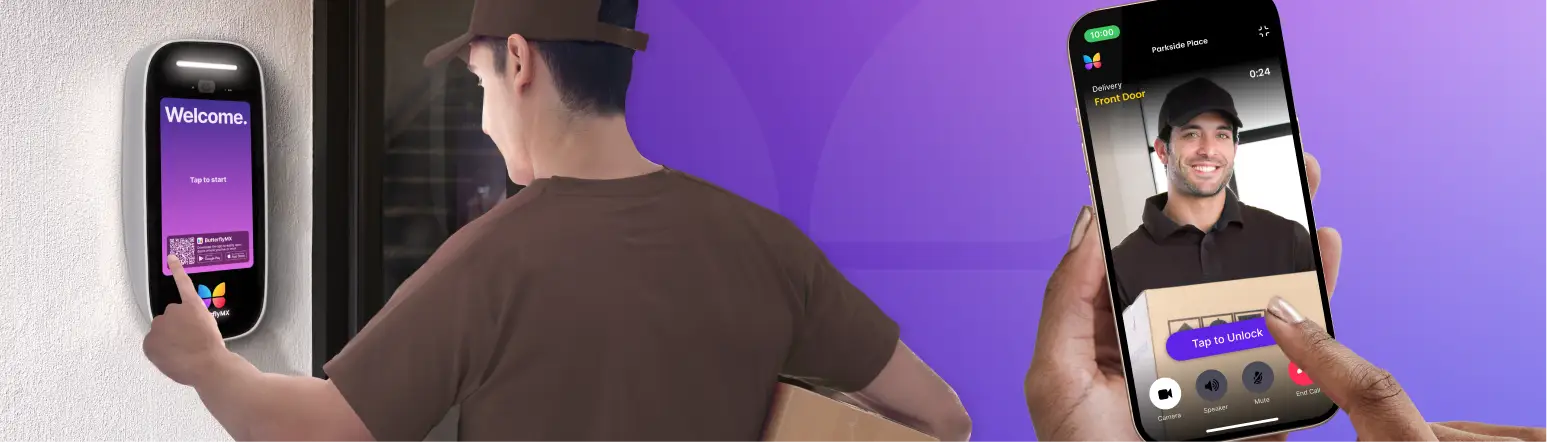
ButterflyMX is relevant in this part of the decision because its access-control approach centers on mobile access, visitor management, remote administration, and video-based entry management. For properties that need more than a simple gate trigger, those capabilities can matter. A warehouse entrance that needs remote access updates, more controlled visitor entry, or video verification should be evaluated differently from a gate that only needs a basic cellular relay.
Video verification and remote management
Video verification is not required at every gate, but it can be useful when the site needs to see who is requesting entry before granting access. That can apply at low-staff entrances, secondary yard gates, delivery points, and locations with frequent visitor or vendor traffic. In those situations, a credential alone may not give the context a manager wants before opening the gate.
Remote management becomes more valuable as complexity grows. One gate with a few employees may be easy to administer on site. Several gates, several user groups, or several properties are harder to manage that way. If staff can update permissions, review events, and respond to access requests from another location, gate access becomes easier to control without sending someone to the property for every change.
The point is to match features to the gate’s risk and traffic. A lightly used remote gate should not be overbuilt. A busy warehouse perimeter with after-hours deliveries, temporary users, and accountability needs should not be treated like a simple open-and-close device.
Installation requirements and site assessment
The best time to find a problem with cellular gate access is before equipment is selected. A gate can have different power, signal, mounting, and wiring conditions than the warehouse building itself, so the site assessment should happen at the exact gate location.
Installation checklist
- Test cellular signal at the gate, not just near the office or parking area.
- Review carrier coverage options for the exact location.
- Confirm power is available where the controller or entry device will be installed.
- Identify the existing gate operator model and relay requirements.
- Confirm whether the access system can retrofit the existing operator or whether other hardware changes are needed.
- Decide whether an external antenna may be needed in a weak-signal area.
- Plan where the keypad, reader, intercom, or other entry device will be mounted.
- Map who needs access, which credentials they need, and how temporary users will be handled.
- Define outage procedures before the system goes live.
Signal, power, and antenna considerations
Signal availability and signal reliability are not the same thing. A phone showing service somewhere on the property does not prove the gate location has dependable coverage for a cellular controller. Fencing, nearby structures, terrain, and distance from better-covered areas can all affect performance. Test at the gate, and evaluate carrier options before assuming cellular will work.
Cellular also solves the network problem, not the power problem. The controller, keypad, reader, intercom, or other endpoint still needs a supported power source. Buyers should confirm power availability and equipment requirements before committing to a product. If the gate is critical for deliveries, after-hours operations, or emergency access procedures, backup power and outage planning deserve attention as well.
If the signal is weak, an external antenna may help, but it should be considered early. Antenna placement can affect the enclosure, mounting location, and technician scope. The same is true for weather exposure, pedestal placement, and where drivers or visitors will actually stop to use a keypad, reader, or intercom.
Retrofit compatibility with existing gate operators
Many cellular controllers can connect to an existing gate operator through a dry-contact relay, which is why retrofits are common. But compatibility is not automatic. Confirm the operator model, wiring expectations, and any vendor-specific requirements before purchase.
This distinction matters because access control does not replace the mechanical gate operator. The access-control system decides who is allowed to send an open command. The gate operator moves the gate. If the operator is aging, damaged, or not suited to the site, the access-control upgrade and the operator decision may need to be evaluated together.
Cost considerations and total ownership
Cost comparisons can get misleading when they only look at the device price. For a remote warehouse gate, the real cost picture includes equipment, installation work, recurring connectivity, maintenance, and the infrastructure alternatives you are avoiding or choosing.
What to include in the cost picture
- Gate access hardware, such as controllers, keypads, readers, or intercom devices
- Installation labor and any site preparation at the gate
- Electrical work or power-related changes, if needed
- Recurring cellular or data service fees
- Maintenance and future service needs
- Infrastructure work required for wired or WiFi alternatives
- The feature difference between a basic opener and a system with logs, remote management, visitor access, or video verification
Cellular can reduce some infrastructure burden because it may avoid extending wired internet to a remote entrance. That does not automatically make it the least expensive option over time. Recurring cellular service fees belong in the comparison, and the right answer depends on the site. At one warehouse, extending a network line may be impractical. At another, existing infrastructure may make wired access a better fit.
It is also important to compare like with like. A basic GSM opener may cost less than a cloud-managed access-control system, but the two products may not provide the same level of credential control, access logs, visitor handling, or multi-site administration. If the warehouse needs those capabilities, the lower-feature device may not be the better fit even if the upfront cost is lower.
A practical way to evaluate total ownership is to separate costs into two groups: what it takes to deploy the system and what it takes to operate it. Then compare those costs against the control, visibility, and administrative flexibility the gate actually requires.
How to evaluate cellular gate access solutions
By the time you compare vendors, you should already know what problem the gate needs to solve. The best cellular gate access system is the one that fits the site’s coverage, power, operator, users, security expectations, and management needs.
Questions to ask before buying
- How strong and stable is cellular coverage at the gate itself?
- Which carrier options are available at that exact location?
- What power is available at the installation point?
- Will the system work with the existing gate operator, and has compatibility been confirmed by model?
- Who needs access: employees, security staff, vendors, drivers, contractors, or visitors?
- Which access methods do those users need, such as app access, PINs, phone-based entry, QR codes, cards, or fobs?
- Do you need access logs, audit trails, remote administration, or video verification?
- Will one gate be managed alone, or do you need oversight across multiple gates or sites?
- How will the property handle outages, revoked access, and temporary users?
When a simple opener may be enough
A basic GSM opener may be enough for a single gate with a small group of approved users and little need for detailed permissions or event review. In that case, the main priority is dependable gate triggering, not layered administration.
When a full access-control system is justified
A fuller access-control system is easier to justify when the warehouse has multiple user groups, frequent vendor or delivery traffic, after-hours activity, audit needs, or several properties to oversee. In those cases, scheduled access, credential revocation, access logs, remote administration, and visitor handling are not extras. They are part of how the site stays controlled and accountable.
That is where ButterflyMX can be worth evaluating. If your property needs gate access tied to mobile credentials, remote administration, visitor entry management, or video-based verification, look beyond simple gate-trigger hardware and compare providers that support those access-control needs.
The best buying decision comes from matching the system to the actual gate. A low-traffic remote entrance with simple needs should not be overbuilt. A busy warehouse gate with deliveries, vendors, and after-hours access should not be underbuilt just because a basic opener is available.
Frequently asked questions
What cellular coverage is needed for reliable gate access?
Reliable cellular gate access requires dependable service at the gate itself. Test the signal at the exact installation point, compare carrier options for that location, and consider whether an external antenna is needed instead of relying on general area coverage.
Can cellular gate access work with my existing gate operator?
Often yes, but compatibility is not automatic. Many cellular controllers connect to existing gate operators through relay-based wiring, but you should confirm the operator model, wiring requirements, and vendor documentation before purchasing equipment.
Is cellular gate access secure?
Cellular gate access can support strong security when it includes managed credentials, scheduled permissions, remote user administration, and access logs. Security depends on the specific product and configuration, so focus on the controls the system provides rather than broad security claims.
What happens if cellular service goes down?
A cellular outage can interrupt remote connectivity. Before deployment, decide how the property will handle access during service disruptions, what on-site backup procedures are needed, and whether the vendor offers failover or contingency options for your use case.
Cellular gate access can be a smart approach for a remote warehouse gate when wired internet is impractical and WiFi is unreliable at the perimeter. But the decision should come after the site checks are clear: signal, power, operator compatibility, user needs, access logs, and ongoing service costs.
For some warehouses, a basic opener is enough. For others, the real need is controlled vendor access, temporary credentials, remote administration, and video verification. If your gate needs more than simple open-and-close control, talk to ButterflyMX about access needs for gates, deliveries, and remote property entry points so you can evaluate the right approach for your site.
Get your free quote!
Fill in the form below, and we'll email you right back.
Want a free quote?
Fill in the form below, and we'll email you right back.
You’ll be redirected shortly...