





Key takeaways:
- Use a per-delivery, time-limited, or resident-approved access method instead of widely sharing one permanent community gate code.
- Match the access workflow to the delivery type, package destination, available hardware, and a documented fallback for failed entry.
- Delivery authorization is separate from locally approved emergency gate operation and physical gate-safety requirements.
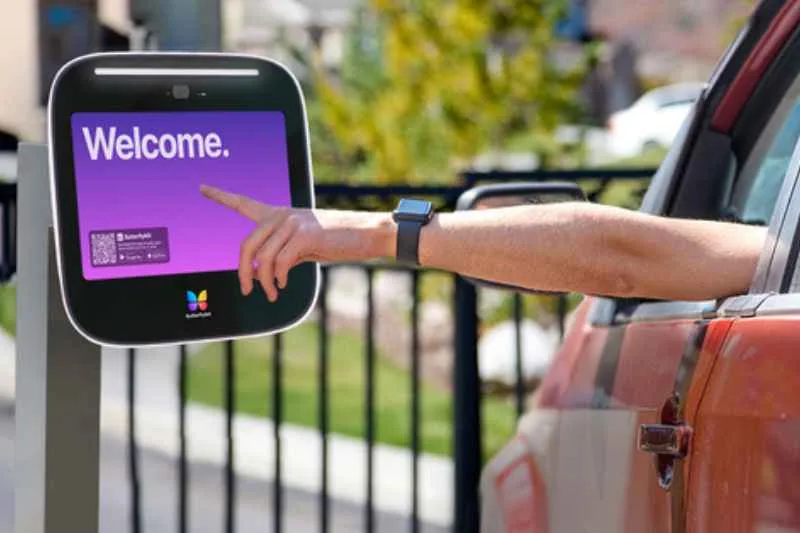
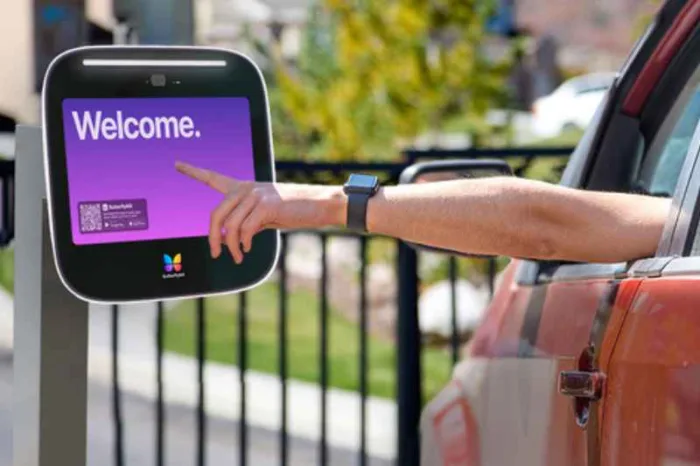
Gated communities have to balance two practical needs: residents want deliveries to arrive, and property teams need a workable way to control entry. A permanent gate code may seem simple, but it can be hard to attribute, rotate, or revoke after it has been shared widely.
The better approach is usually to give delivery drivers a credential or approval method with a clear purpose and limited scope. That might be a temporary PIN, a single-use pass, a scheduled visitor credential, live remote unlock, license plate recognition for known vehicles, or an eligible carrier program. The right choice depends on the delivery, the gate equipment, and what should happen if the first entry method fails.
This guide will answer:
- What delivery access codes mean for gated communities
- Compare alternatives to one shared gate code
- Match access workflows to each delivery type
- Plan for failed entry and package placement
- Check gate hardware and exit behavior before rollout
- Manage the delivery credential lifecycle
- Keep delivery access separate from emergency operation and gate safety
- How ButterflyMX can support a property controlled workflow
- FAQs
Watch how ButterflyMX works:
What delivery access codes mean for gated communities
A delivery access code is any credential or process used to admit a delivery person through a community entrance. It can be a static community code, but it can also be a temporary PIN, a single-use credential, a scheduled pass, or a live request that a resident or staff member approves remotely.
For most communities, delivery access works best as an operating process rather than as one number shared with everyone. A property can use a scoped credential for a known delivery, live approval for an unexpected arrival, license plate recognition for appropriate repeat vehicles, or a carrier-controlled option where available. Each primary method needs a fallback for an expired credential, a missed call, or an after-hours delivery.
Several access-control vendors describe a familiar problem with permanent shared codes: once a code circulates among drivers, vendors, residents, and service providers, the property may not know who still has it. That can make attribution, rotation, and revocation difficult. Access-control guidance for gated communities and delivery-code guidance from another vendor frame this as an operational control issue, not proof that any one method prevents unauthorized entry.
Temporary credentials create specific controls a shared code lacks. They can expire, be limited to one use or a defined window, and in some systems leave an entry record. Those controls still depend on property policy, enabled features, compatible hardware, and clear instructions for residents and delivery personnel.
Credential types to distinguish
- A static community code is one ongoing keypad code used by many people.
- A single-use credential works once, then expires.
- A time-limited credential works during a defined delivery window.
- A recurring credential supports an approved service that needs access on a repeating schedule.
- Remote unlock is live approval, not a preauthorized credential. A resident or staff member decides when the driver calls.
Compare alternatives to one shared gate code
There is no universal best method. Use this comparison as a decision aid, not a ranking. Many properties combine a primary entry method with a fallback that accounts for missed calls, changing delivery vehicles, and equipment limitations.
Swipe to compare →
Temporary credentials may be a PIN, a QR credential, or a pass created through a property access system. The important question is not the format alone. Ask who issues it, how the driver receives it, when it expires, whether it can be revoked, and what happens when the driver cannot use it. Examples of delivery access-control models describe similar options, including QR and one-time credentials, but feature availability varies by installation.
Carrier-controlled programs should remain distinct from property-controlled methods. A carrier program may simplify its own delivery flow, while a property pass, intercom, or keypad process can support other delivery types. Before selecting any option, assess the delivery mix, credential handoff, gate equipment, approver availability, package destination, and fallback process.
Match access workflows to each delivery type
Delivery access should change with the job. Mail, parcels, food orders, and freight do not arrive with the same timing, destination, vehicle pattern, or need for resident interaction.
Swipe to compare →
Mail and centralized delivery
The inspected USPS Postal Operations Manual favors centralized delivery for new residential developments and gives local postal managers authority over mailbox-site approval. It does not prescribe a gate-code process. For a gated property, that makes mail delivery primarily a question of approved delivery location and local coordination, not a reason to assume one gate workflow fits every community. The USPS guidance on modes of delivery should be checked against current local postal direction before a property changes its mail setup.
Amazon deliveries
Amazon says eligible properties can use Amazon Key for Business to provide time-limited, app-based entry without giving drivers a building access code. Amazon also says access expires after the delivery window, so the driver cannot re-enter through that request after expiration. Review Amazon Key for Business program information before relying on it, because eligibility, compatibility, installation details, cost, and third-party delivery terms can change.
Other parcels, food orders, and freight
Do not assume that UPS, FedEx, DoorDash, Uber Eats, or another delivery service follows Amazon procedures. Their gate-entry practices can vary by carrier, driver, market, and property. A durable property workflow gives residents approved instructions without requiring them to post a permanent gate code in every delivery profile.
Freight and large-item deliveries usually need more planning than a small parcel. Confirm the arrival window, correct vehicle and pedestrian route, recipient contact, delivery destination, and no-answer response. If a driver cannot enter or the recipient is unavailable, the procedure should say whether staff can assist, whether the delivery is rescheduled, or whether a designated handoff point is allowed.
For more detail on no-lobby properties, see this ButterflyMX guide to delivery access for gated condos without a lobby.
Plan for failed entry and package placement
A delivery workflow is only dependable if it explains what happens when the normal path breaks. Document the response before rollout, then train staff and residents on the approved options.
- If the resident does not answer, route the driver to a call box, designated staff contact, or another approved property process.
- If a temporary credential is invalid or expired, confirm whether it can be reissued by an authorized user. Do not substitute a broad permanent code.
- If delivery occurs after hours, identify whether there is an approved credential window, on-call process, or designated delivery location.
- If the primary method requires a smartphone, provide an accessible alternative when the installed equipment supports one, such as a keypad, call box, or live staff process.
- If gate hardware is unavailable, follow the property emergency and operations procedures rather than improvising access.
Resident-facing delivery instructions should identify the correct entrance, the approved access method, the package destination, and the contact path when entry fails. They should also make clear that residents should not broadly redistribute a permanent community gate code.
Package placement affects gate traffic and access needs. A package room, locker area, or designated handoff point may reduce the need to route every driver deeper into the property, but it does not guarantee a better security outcome. The property still needs to decide who may enter, how they are admitted, and where a package can be left under its own operating rules. This broader guide to gate access features for visitor and delivery entry can help teams evaluate those choices.
Check gate hardware and exit behavior before rollout
Start with a site inventory. List every vehicle and pedestrian entrance, then record the keypad, call box, gate controller, camera or intercom, credential reader, and current entry process at each location. A method that works at the main vehicle gate may not work at a side pedestrian gate.
- Confirm whether the proposed credential works with the installed controller and enabled access features.
- Identify whether a driver needs a smartphone, QR reader, registered license plate, physical keypad, or live approver.
- Document the intended delivery route and the package destination for each entrance.
- Review entry and exit behavior separately. An entry credential does not automatically address controlled exit, safe egress, or emergency operation.
- Test the workflow at each relevant entrance before a broad rollout, including the fallback process.
Temporary passes, remote unlock, and carrier programs depend on compatible equipment and property configuration. Avoid treating marketing claims or a successful pilot at one gate as proof that every gate on the property will work the same way. Installation, credential administration, training, maintenance, and vendor eligibility all belong in the implementation plan.
Manage the delivery credential lifecycle
A temporary delivery credential needs a lifecycle. Without one, a community can recreate the same confusion it was trying to avoid with a shared code.
- Authorize issuers. Define whether residents, management, concierge staff, or another approved role may create each type of credential. Check governing documents and management authority before adding rules or fees.
- Identify the recipient and purpose. Record whether the credential is for a one-time parcel, food order, scheduled service, or recurring vendor.
- Choose the narrowest practical scope. Use a single-use pass for a one-off delivery, a short window for a scheduled arrival, or a recurring credential only for an approved repeating need.
- Send clear instructions. State the entrance, credential method, destination, contact path, and fallback.
- Expire or revoke access. Use automatic expiration where supported, and provide a procedure for misdirected, compromised, or unused credentials.
- Review available records. Where the system supports entry logs, periodically review stale credentials and unusual process failures.
Do not select a universal expiration period. A food order, a parcel delivery window, and recurring landscaping service have different operational needs. The useful standard is that access should be no broader or longer than the legitimate delivery purpose requires.
Keep delivery access separate from emergency operation and gate safety
Do not assume there is a universal keypad code for delivery drivers or emergency responders. Delivery authorization, emergency access, and gate safety are separate concerns with different approval paths.
The 2024 International Fire Code addresses security gates across fire apparatus access roads in Section 503.6. It requires approval by the fire code official and an approved means of emergency operation that is maintained at all times. The section also references UL 325 for electric gate operators and ASTM F2200 for automatic gates. Read the 2024 IFC Section 503.6 text in context, then confirm the locally adopted code, amendments, and approved emergency method with the authority having jurisdiction and a qualified gate professional.
Some jurisdictions use codeless emergency-access processes. For example, the City of Weston describes a Broward County, Florida requirement for Click2Enter at specified automatic gates. That is a geographically limited example, not a nationwide requirement or a shared emergency keypad code. The City of Weston Click2Enter information should not be generalized beyond its local context.
A delivery credential does not establish code compliance, safe gate operation, or approved emergency access. Keep those reviews separate when selecting a delivery solution.
How ButterflyMX can support a property controlled workflow
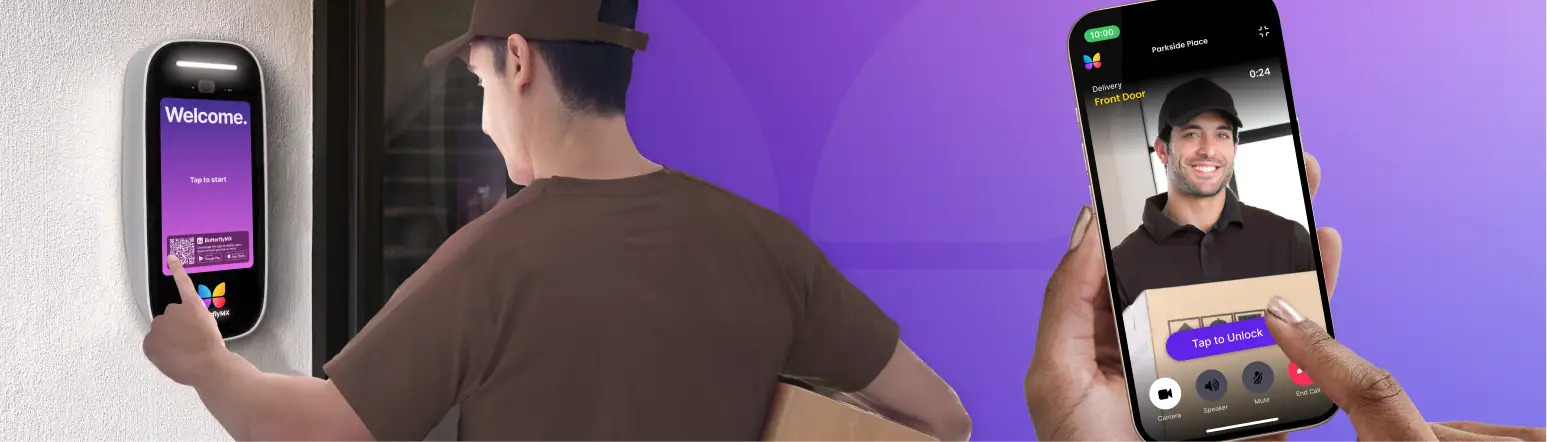
Once a property has defined its delivery categories, fallback procedures, and equipment needs, ButterflyMX can be one property-controlled option to evaluate. When the feature is enabled, residents can create a single-use, six-digit Delivery Pass that expires after use. Enabled Visitor Passes can also use specified hours, expiration dates, or recurring schedules.
For deliveries that need live approval, residents can receive visitor calls and remotely open a connected gate from the ButterflyMX app. Property teams can remotely manage residents, visitors, credentials, and access. These capabilities are most useful when they fit the property workflow already defined, including who issues credentials, what entrance the driver uses, and what happens if no one responds.
Vehicle access control and license plate recognition may fit known or repeat vehicles, while package handling and entry-management tools may support the chosen delivery destination and recordkeeping process. They are not automatic substitutes for a carrier program, an approved emergency system, or a gate-safety review.
Before evaluating a solution, make a short checklist: delivery mix, entrance inventory, existing hardware, credential handoff, resident and staff availability, package destination, required fallback, access records, and local emergency-operation requirements. That gives a property team a clear basis for discussing compatibility rather than starting with a feature list.
Frequently asked questions
Should residents put a permanent community gate code in delivery instructions?
Residents should follow property policy and use an approved per-delivery pass, time-limited credential, or live approval method where available instead of broadly redistributing a permanent code. The appropriate process depends on the community rules and installed equipment.
How long should a temporary delivery code remain active?
It should remain active no longer than needed for the delivery purpose. A one-time delivery may use a single-use credential, while scheduled or recurring services may need a defined window or recurring access under property policy.
Can a driver without a smartphone use temporary gate access?
Possibly. Depending on the property equipment and workflow, alternatives can include a keypad PIN, call box, live staff process, or resident-approved remote entry. Document the fallback in the delivery instructions.
Does Amazon Key for Business work with an existing keypad or call box?
Amazon says Key for Business works with most call boxes, buzzers, and keypads, but a property should verify current compatibility and eligibility with Amazon. Program features, cost, and terms can change.
What if a gate also requires controlled exit?
Include exit behavior in the site inventory and confirm that the selected workflow supports safe, lawful exit for relevant vehicle and pedestrian routes. An entry credential does not by itself address egress, emergency operation, or gate-safety requirements.
Delivery access codes for gated communities work best when they are treated as a controlled workflow, not as a permanent number to distribute. Match the credential or approval method to the delivery type, keep its scope practical, and make the fallback as clear as the primary entry path.
If your community is evaluating delivery passes, remote entry, vehicle access, or access-management tools for an existing gate setup, talk with ButterflyMX about a workflow that fits your entrances, delivery mix, and management needs.
Get your free quote!
Fill in the form below, and we'll email you right back.
Want a free quote?
Fill in the form below, and we'll email you right back.
You’ll be redirected shortly...