





Key takeaways:
- Choose who will answer visitors before choosing equipment. Available staff with an existing way to identify visitors may need only remote door release.
- A suitable calling system does not establish door compatibility. Have your installer document the lock arrangement, exit operation and outage behavior.
- Compare complete installation scopes, not kit prices. Separate release controls, door work, wiring and labor from recurring service and maintenance.
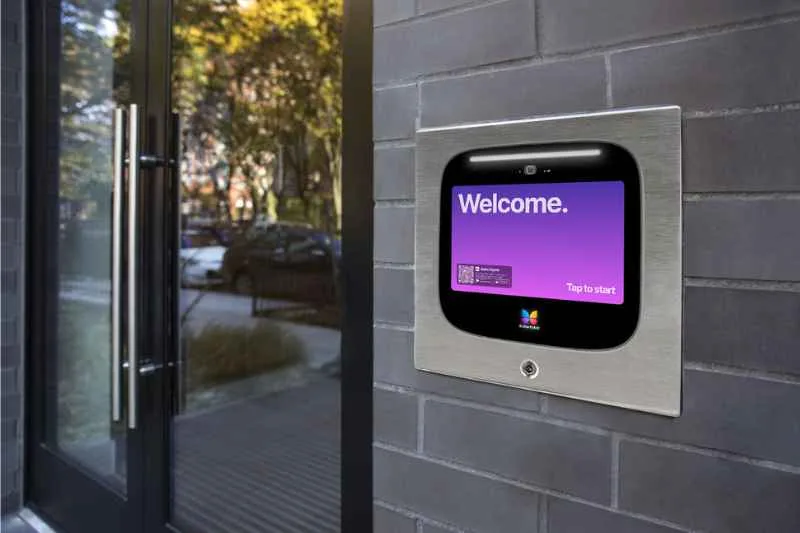
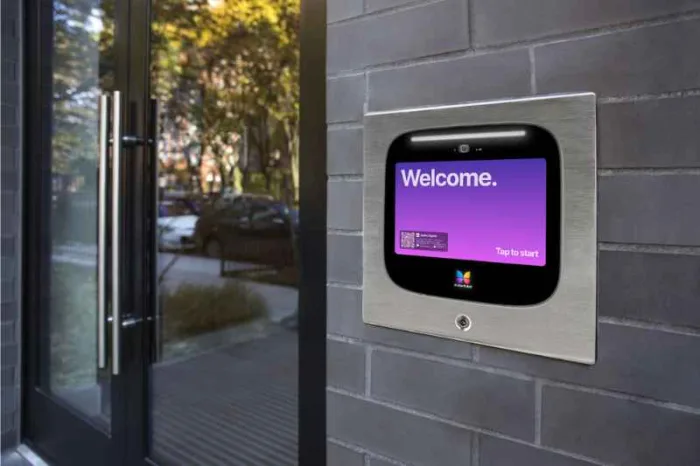
A door buzzer system lets an authorized person remotely release a compatible locked entrance. Some door and apartment buzzer systems also let visitors call and speak with that person; a simple staff-operated buzz-in kit may provide only the release function. A door chime that announces an arrival does not do the same job.
If you manage a small commercial property, start with who will answer visitors. When staff are available and can already identify someone at the entrance, remote release may be enough. If visitors need to reach individual or off-site occupants, you need a suitable calling route too. Then check whether your door can support the proposed hardware and what the complete installation will include.
This guide will answer:
- What a door buzzer system does and how it works
- Choose a system around who answers visitors
- Check whether the door and lock can support the choice
- Plan separately for power loss and communication outages
- Decide what to retain, repair or replace
- Compare door buzzer system quotes by complete scope
- FAQs
Watch how ButterflyMX works:
What a door buzzer system does and how it works
The useful distinction is what the equipment actually does, not whether its listing contains the word buzzer. A door chime or door-open sensor announces an event. A buzz-in kit lets staff release a lock. An intercom provides visitor communication and may also control release. Credential-based access control lets the person entering present an authorized card, fob or PIN. These functions can coexist, but one does not automatically include the others. The distinctions appear in IntercomsOnline’s overview of alert and communication devices and FPC Security’s explanation of staff-operated release versus credential entry.
Before comparing features, look for an explicit description of both visitor communication and lock control. If your staff can already see and identify visitors, a kit without a call station may meet the missing need. If they cannot, a release button alone leaves the admission decision unresolved.
From visitor contact to door release
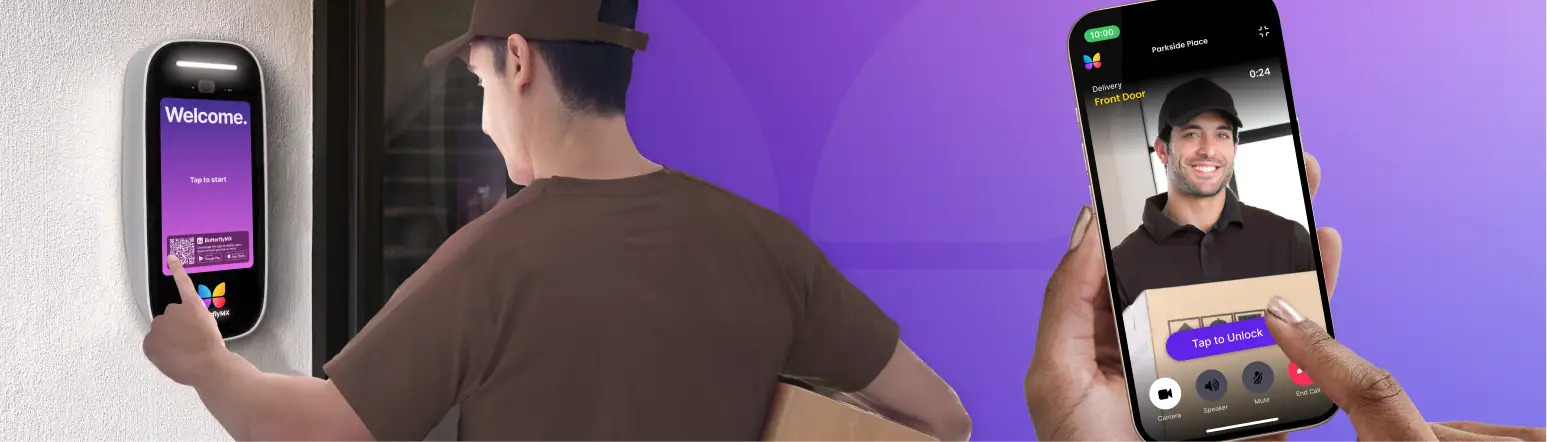
Communication and unlocking are connected but separate functions. The generic sequence described in ButterflyMX’s explanation of the call path and release circuit works like this:
- A visitor makes contact or selects an occupant to call. With a simple staff kit, an existing way of noticing the visitor may replace the intercom call.
- An authorized person answers or otherwise identifies the visitor and decides whether to admit them.
- That person sends the release command supported by the installed system.
- A controller or relay operates the compatible locking hardware. The relay is an electrical control point, not the component that identifies the visitor.
- The release interval ends, allowing the entrance to return to its secured state as designed.
The command in step three is system-specific. A telephone answering route does not imply a universal keypad number for unlocking; staff need the operating instructions for the actual installation.
The sound also needs interpreting. The Maglocks.com single-door kit includes an audio buzzer that sounds when the door releases. That sounder does not establish that the kit announces an arriving visitor or provides two-way conversation.
Separating the two functions also helps you describe a fault without jumping to a replacement decision. If conversation works but the door will not release, the communication path is operating while the release function is not completing its job. That observation does not identify a defective component or prove the whole system needs replacing. Give service personnel the symptom and leave electrical diagnosis to them.
Choose a system around who answers visitors
Your first choice is an answering arrangement, not a camera or lock model. Establish who can make an admission decision whenever visitors are expected, then identify how visitors will reach that person. A release control cannot compensate for an unavailable member of staff.
When staff-operated release is enough
In the RF arrangement described by FPC Security, a staff remote transmits a radio-frequency signal to a receiver. The receiver connects to compatible locking hardware through low-voltage wiring. For this type of wireless door buzzer, wireless describes the remote-to-receiver link, not an entrance without wiring or power.
This can be a reasonable option if staff are available, already have an adequate way to identify visitors and only need to avoid walking to the door to release it. If staff cannot see or communicate with the visitor, adding remote release solves only half the task. If the desk is unattended when visitors arrive, it also leaves them without an available decision-maker.
A remote release may be an addition rather than a replacement. FPC Security describes receivers with dry-contact outputs that can work in parallel with an existing reader so either method can release the door. That is a possibility within the vendor’s described design, not universal compatibility. Have your installer assess the actual receiver, controller and lock combination.
For RF equipment, include a site test in the installation scope. The Maglocks.com kit guidance advises checking operation with the actual obstructions before permanent mounting. A generic distance would not tell you whether the selected remote will work from your staff position.
When visitors need an intercom or phone connection
Visitors who need a particular occupant, or someone away from the property, need a communication route to that person. Telephone or cellular entry can reach a mobile phone, while supported app-based systems offer another route. Hardwiring elsewhere in the installation does not mean answering must happen on site. For individually addressed apartment calling, apartment buzzer systems and upgrade options explains the narrower building-wide decision.
The comparison below uses common architectures described by FPC Security and that apartment guide. These are not exclusive feature bundles: audio, video, telephone calling and remote management can overlap in particular products. The service column identifies items to confirm, not charges that necessarily apply.
Swipe to compare →
Suppose your entrance is staffed during visitor hours and staff can already identify arrivals. Compatible remote release may be all you need to add. If the same entrance must admit visitors while staff are off site, the recommendation changes: now the calling route and the availability of whoever receives the call become part of the purchase. The same applies when visitors must select among individual occupants rather than reach a shared desk.
Video supplies additional context for an admission decision; it does not guarantee that mistaken admission or tailgating will stop. Available records may help with later review, but deciding who is authorized remains an operational responsibility. Similarly, cloud management is useful only if it meets an actual administration need. Neither feature resolves incompatible locking hardware.
If your existing arrangement already meets these needs, keeping it remains a valid option. Whether you retain it or favor a new architecture, the next test is the same: can the physical entrance support the proposed operation?
Check whether the door and lock can support the choice
A calling system can reach the right person and still be paired with unsuitable door hardware. Before ordering, have your installer establish how the door will release for an arriving visitor and how someone inside will leave. Those are related functions, but they are not interchangeable.
Electric strikes and magnetic locks do different work
An electric strike works with the door’s latch and lockset. With an appropriate arrangement, the lockset or panic hardware operates independently for exit. An electromagnetic lock, often called a maglock, holds the door magnetically and releases when its power is removed. As Allegion explains, a maglock does not provide free egress by itself.
Free egress means occupants can leave through the entrance using the appropriate exit arrangement, rather than depending on someone at a desk to admit them in reverse. For a maglock proposal, the release arrangement is therefore part of the installation, not an optional accessory. Request-to-exit equipment serves an occupant’s exit function; a staff admission remote serves a different purpose.
Fail-safe and fail-secure describe the secured side
Neither term is a quality ranking. In Allegion’s explanation of fail modes, fail-safe hardware unlocks when power is removed, while fail-secure hardware remains locked on the secured, or outside, side. Compatible electric-strike installations can preserve mechanical free egress in either mode because the lockset or panic hardware operates independently. Maglocks are fail-safe only.
That distinction gives you two separate questions for the proposal: what happens to entry from outside when lock power disappears, and how do occupants leave? A fail-secure label does not mean occupants are trapped, and a fail-safe label does not establish that the complete exit arrangement is suitable.
Fire-rated doors add a constraint. Allegion states that electric strikes on fire-rated doors must be fail-secure to preserve the positive latching and listing required by NFPA 80. Treat that as a reason for your qualified installer and the authority having jurisdiction to confirm the complete listed assembly and applicable requirements, not as approval to purchase any fail-secure strike.
Product restrictions can rule out a kit even when staff-operated release is the right category. The Maglocks.com single-door kit listing documented on November 6, 2026 specified metal-frame doors with cylindrical locksets and recommended a storeroom-function lockset. It was not recommended for wood or residential frames, double doors, or aluminum-frame glass doors with flip-out or hook deadbolts.
The storeroom-function recommendation matters because controlled entry needs to remain controlled while appropriate inside operation is preserved. Have the installer verify the actual lockset rather than assuming a lock that physically fits will operate as intended. These restrictions belong to this kit, not to every electric strike.
Ask for a written assessment of frame and lockset compatibility, door swing, fire rating and the exit arrangement. That gives you a supported hardware proposal to carry into outage planning, instead of a list of components that have not been checked together.
Plan separately for power loss and communication outages
A lost connection is not the same as lost lock power
Fail-safe and fail-secure describe what happens when power is removed from the locking hardware. Losing internet, cellular or telephone service can interrupt calling or remote management without, by itself, establishing the lock’s power-off state. This follows from the separate communication and release functions in the apartment buzzer explanation and the hardware fail-mode definitions. Your proposal needs to explain each dependency rather than assume all components stop together.
Telephone-network changes are one reason to check those dependencies. In its explanation updated October 14, 2026, the FCC describes voice-network transitions and warns that replacement phone service may need backup power during outages. The guidance concerns telephone services generally, not a buzzer-specific shutdown. For telephone entry, the practical step is to have the carrier and installer confirm compatibility and backup arrangements for the actual equipment and service.
Ask the installer to state which calling, release and management functions remain available during each relevant outage. Backup arrangements should support the intended operation of your entrance; a promise that the system has backup power is incomplete without identifying what it powers and what remains dependent on a connection.
Emergency exit needs more than a desk remote
The 2024 International Building Code provision titled Sensor release of electrically locked egress doors illustrates why occupant exit needs separate design. This model-code pathway includes occupant detection, unlocking under specified sensor or lock power-loss conditions, a manual device that independently interrupts lock power, alarm or sprinkler-related release, emergency lighting and specified lock listing. Its permission excludes Group H occupancies.
This is one release pathway, not a universal checklist for every electrically controlled door. Local adoption, amendments and the selected release method determine applicability. The buyer-facing consequence is straightforward: a desk remote that lets staff admit a visitor does not, by itself, establish an appropriate emergency exit arrangement. Have the installer identify the applicable approach with the local authority.
Hardware choices can also create recurring testing obligations. As a jurisdiction-specific example, the Minnesota State Fire Marshal’s guidance under the 2020 Minnesota State Fire Code describes monthly tests of sensors and manual releases, plus annual tests of alarm and sprinkler interconnections and power-loss unlocking for covered sensor-release doors. It states that the provision does not apply where the egress side is always unlocked and allows free egress. This is not a national testing schedule or a determination of requirements for your project.
Before approving the installation, request a written account of communication-outage behavior, lock-power-loss behavior, backup arrangements, emergency release, required testing and who will maintain the system. You need those obligations defined; you do not need to design the release circuit yourself.
Decide what to retain, repair or replace
Keeping your existing arrangement is a reasonable outcome when it meets the admission task and its suitability is confirmed. Age or the absence of cloud features alone is not a reason to replace it. Separate a new requirement, such as off-site answering, from an isolated fault: the first changes what the system must do, while the second needs assessment before you decide how much to replace.
Existing wiring needs a compatibility assessment
Existing buzzer wiring can sometimes be reused, but having conductors in place does not establish that new equipment can use them. The apartment buzzer guide’s retrofit guidance identifies conductor condition, wiring layout or topology, available wires, voltage, controls and lock compatibility as factors. An installer must assess the proposed combination before promising a straightforward buzzer retrofit.
Ask for an assessment that separates components and conductors that can stay, faults or incompatibilities that need work, and new work required for your chosen answering arrangement. That record connects the functional choice to the price. It also lets you compare a repair proposal with a replacement proposal without assuming they deliver the same capability.
Compare door buzzer system quotes by complete scope
A kit price is useful only after you know what it buys. Once the answering requirement and site assessment are established, use them to request the same scope from each bidder. Otherwise, a lower total may simply leave more of the installation unpriced.
What a kit price actually includes
The Maglocks.com single-door kit listing documented on November 6, 2026 shows the distinction. Its $156.40 base equipment price included a 25-4U electric strike, a release sounder and a 12 VDC 2 A plug-in power supply. The supply rating describes that listed component, not a sizing recommendation for your entrance.
The staff release device was a separate selection: an under-desk button was listed at an additional $39.45, or a two-transmitter wireless release at an additional $75. Wire was excluded, and labor and permits were not included. These are dated terms for one product, not a typical price or an installed project total.
A strike, sounder and supply do not by themselves give staff their chosen release control or provide visitor communication. The frame and lockset restrictions discussed earlier still apply, and a suitable lockset, wiring and installation work remain scope questions. Adding accessory prices together would not resolve those questions.
Ask bidders to price the same installation and service
Use the quote-itemization approach in the apartment buzzer guide to separate installation costs from recurring service costs. Ask each bidder to identify the following, including exclusions and any items still awaiting assessment:
- Upfront equipment: lock hardware, receiver or controller, staff release controls and visitor communication or answering endpoints.
- Door and lock work: frame alterations, lockset work and other work needed for the assessed entrance.
- Wiring: new or reused conductors, concealed cable work and the assumptions behind reuse.
- Power work: supplies, connections and the proposed backup arrangements.
- Installation labor and permits where applicable.
- Recurring services: telephone or cellular service, connectivity, cloud subscriptions and administration.
- Testing and handover: compatibility confirmation, documented outage and exit behavior, and operating instructions.
- Service terms: maintenance responsibilities, required recurring tests, support and exclusions.
If one proposal includes door work and testing while another lists equipment only, their totals do not yet show which offers the lower price for the same installation. Ask for the missing work to be priced or explicitly excluded, then compare like with like. A missing line item is an unresolved inclusion, not evidence of zero cost.
Approve the scope that meets your admission requirement with supported door compatibility and clear ongoing obligations. That may mean keeping, repairing or replacing the system. The useful result is an entrance whose operation and responsibilities are understood, not simply a larger equipment package.
Frequently asked questions
Do all phone-entry buzzers use the same number to unlock the door?
No. Release commands depend on the installed system. Use its operating instructions or the directions supplied by your system administrator. A call reaching a phone tells you the answering route, not which command releases the door.
Can a remote release work alongside an existing card reader?
Sometimes. FPC Security describes receivers whose dry-contact output can work alongside an existing reader so either method can release the door. That possibility does not establish compatibility for every kit. Have your installer assess the specific receiver, controller and locking arrangement.
How far will a wireless buzz-in remote work?
The selected product and site conditions determine usable range. Have operation checked from the intended staff position, with the actual obstructions, before permanent mounting. A distance quoted for another remote or an open-air setting does not establish performance at your entrance.
Does adding video prevent unauthorized entry?
Video adds visual context, and available records may help with later review. It does not guarantee that mistaken admission or tailgating stops. Your staff still need a clear basis for deciding who is authorized to enter.
Before requesting equipment prices, write down who will answer visitors and how they will identify them. Then have your installer document the door arrangement, outage behavior and work required to support that choice. Use those answers as the common scope for proposals. If your existing setup already meets the task and its suitability is confirmed, retaining it is a valid decision.
Get your free quote!
Fill in the form below, and we'll email you right back.
Want a free quote?
Fill in the form below, and we'll email you right back.
Redirecting you in 5 seconds.