





Key takeaways:
- Before you replace an apartment buzzer, separate the calling or talk path from the door-release path. One side can fail while the other still works.
- A targeted repair may solve an isolated handset, relay, transformer, strike, or wiring issue. Repeated failures, obsolete parts, damaged shared wiring, or new access needs can make retrofit or replacement more practical.
- Compare replacement systems by wiring, connectivity, lock compatibility, resident calling method, site conditions, and recurring fees, not by hardware type or headline price alone.
When an apartment buzzer stops working, the broken part is not always the panel at the front door. The issue could be an in-unit handset, a transformer, a relay, shared wiring, an electric strike, or the way the system sends calls to residents.
So, before you replace apartment buzzer hardware, answer two questions: Can visitors reach residents, and can residents release the door? If only one function has failed, a targeted repair may be enough. If failures keep coming back, parts are hard to source, shared wiring is damaged, or the building needs video, mobile calling, or remote access management, it may be time to compare retrofit and full replacement options.
This guide walks through that decision in order: how buzzers for apartments work, how to identify the likely scope of the problem, how replacement systems differ, and what owners, managers, boards, and residents should know before changing shared entry infrastructure.
This guide will answer:
- What an apartment buzzer does
- Decide whether to repair or replace the apartment buzzer
- Choose the right scope of work
- Compare apartment buzzer replacement systems
- Plan the assessment and installation
- Understand apartment buzzer replacement costs
- Match the replacement to the property
- Improve security, visitor access, and package workflows
- Understand legal repair obligations
- Evaluate vendors and modern video intercom fit
- FAQs
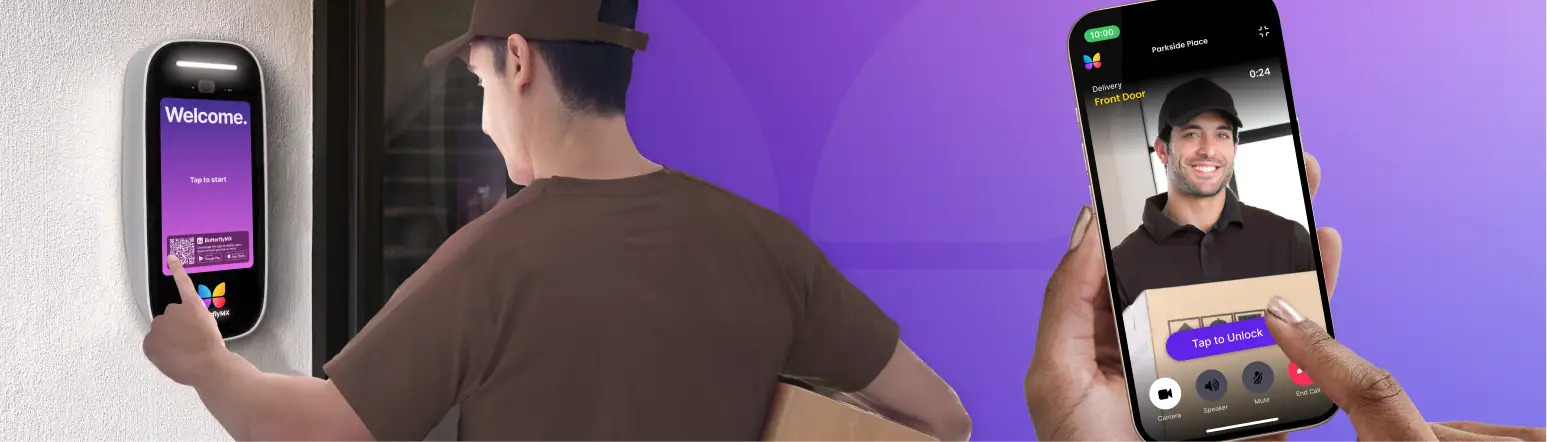
Watch how ButterflyMX works:
What an apartment buzzer does
An apartment buzzer is an entry system that lets a visitor contact a resident and, in many buildings, lets the resident release the door. People often use buzzer and intercom interchangeably, but they are not always the same thing. A basic buzzer may be audio-only. An apartment intercom can include audio, video, mobile calling, and administrative controls. For a deeper definition, see this guide to what an apartment buzzer system is.
The most useful way to understand a broken buzzer is to separate the talk path from the door-release path. The talk path carries the call or conversation between the entry panel and the resident endpoint, such as an in-unit handset or phone. The release path sends the unlock signal to the door hardware. Because those paths are separate, a visitor may be able to call a unit even when the door will not unlock. The reverse can also happen: the release button may work while voice communication does not.
That split matters because the visible symptom rarely tells the whole story. An installer may need to evaluate the entry panel, in-unit handset, transformer, relay, wiring, and lock hardware. An electric strike releases a mechanical latch. A magnetic lock, often called a maglock, holds the door closed with electromagnetism. Each door can have different power, release, and safety requirements, so these parts should be reviewed as one entry system rather than as isolated pieces.
Older apartment buzzer systems often send calls through building wiring to fixed handsets inside each unit. Newer systems may route visitor calls to phones or smartphones through cellular, Wi-Fi, IP, or cloud-connected services. That shift can add video and remote administration, but it also changes what the property has to confirm, including connectivity, power, lock compatibility, resident permissions, and ongoing service terms.
Decide whether to repair or replace the apartment buzzer
Repair an apartment buzzer when a qualified assessment finds a practical, isolated fault. Consider replacement when the system has recurring failures, obsolete shared infrastructure, damaged wiring that is not practical to repair, or security and access needs that the existing architecture cannot reasonably support.
Start with the symptom, then widen the view:
- Identify what failed. Does the visitor call fail, does two-way voice fail, does the door fail to release, or do several functions fail at once?
- Check the scope. Is the problem limited to one apartment handset, or does it affect several units, entrances, or doors?
- Separate release-only issues from calling issues. A release-only problem can involve strike alignment, lock hardware, a relay, a transformer, or wiring. A calling or voice problem can involve the panel, handset, communication path, or related wiring.
- Look at the pattern. One failed part is different from repeated outages, hard-to-find replacement parts, or shared wiring problems across the property.
- Escalate safely. Residents should report shared-system issues instead of altering panels, wiring, relays, power supplies, or door hardware. Electrical, lock, wiring, and building-wide work belongs with qualified access-control or electrical professionals.
A release button that no longer works does not prove that the whole intercom must be replaced. A failed handset in one apartment may be a compatible in-unit repair rather than a building-wide project. But if service calls keep repeating across multiple units or doors, the real problem may be the system architecture, not the latest failed component. For related warning signs, review these signs it may be time to replace an intercom.
Choose the right scope of work
Once you know what is failing, the next question is how much work is actually needed. Four terms are useful here:
- Repair means correcting an isolated compatible component, such as a handset, relay, transformer, section of wiring, or door-release part.
- Re-engineering means correcting an underlying design, power, or capacity problem without necessarily replacing the entire intercom.
- Retrofit means adapting usable infrastructure so the property can add or change technology around it.
- Full replacement means changing the shared entry-system architecture, not just swapping one failed part.
Whether the current entry panel dials a phone number or connects directly to fixed handsets can be a helpful first screen. A phone-dialing panel may offer a path toward a cellular or phone-based retrofit. A direct-to-handset system may point toward broader replacement. Treat that as a rule of thumb, not a final technical answer. The installer still has to verify the panel, wiring topology, power, lock interface, number of entrances, available connectivity, and desired resident experience.
Some buildings also need re-engineering rather than a clean repair-or-replace choice. For example, a converted building may have a transformer that was adequate for the original use but is now undersized or overextended. Correcting that kind of power issue may restore service without replacing every intercom component. By contrast, damaged shared wiring, unavailable parts, repeated outages, or a need for visual visitor verification and remote administration may strengthen the case for replacement.
The decision sequence should stay practical: repair an isolated fault when that is sensible, assess retrofit compatibility next, and move toward full replacement when the infrastructure or the building’s access needs justify it.
Compare apartment buzzer replacement systems
Apartment buzzer replacement is not one category. The main options differ in how they carry calls, what residents use to answer, what has to be installed, and what ongoing service may be required. Use the table as a starting point for better questions, not as a substitute for a site assessment.
Wired audio can make sense when a property wants to preserve fixed endpoints and the shared infrastructure is still serviceable. Cellular systems can move visitor calls to phones or smartphones, but coverage and service terms have to be reviewed. IP, Wi-Fi, and cloud video intercoms may add visual communication and mobile resident interfaces, but their network, power, installation, and fallback behavior vary by product and configuration.
For properties that want smartphone-based visitor calls and remote access management, ButterflyMX is one modern video intercom option to evaluate against documented site requirements. Residents can receive visitor calls and grant access from their smartphones, while property teams can manage resident, visitor, credential, and access information remotely. Learn more about replacing a buzzer with a video intercom and mobile app.
Plan the assessment and installation
A good proposal starts with the building, not the product. Whole-building replacement is not a resident DIY task, and even a retrofit depends on what the installer finds at the panel, doors, wiring, power supply, and resident endpoints.
- Inventory the site. Document the unit count, entrances, current panel, resident endpoints, visible wiring condition, power source, internet or cellular availability, and reported symptoms.
- Identify the door hardware. Ask the installer to confirm whether each opening uses an electric strike or maglock and how the release relay interacts with local life-safety requirements and access-control components.
- Define how access should work. List resident calls, visitor verification, temporary access, delivery access, staff administration, multiple entrances, and any wider access-control needs before selecting equipment.
- Ask what can be reused. Existing wiring or hardware may reduce work only if it is compatible and in good condition. Damaged, undersized, or incompatible infrastructure can expand the project.
- Clarify installation dependencies. Vendors should document door work, wiring assumptions, connectivity needs, resident migration, service interruptions, testing, training, support responsibilities, and recurring charges.
- Confirm authorization. A compatible handset swap may be limited to one unit, but shared panels, power, wiring, relays, and door hardware usually require owner, board, or management approval.
Timeline is another proposal question, not a universal number. Replacement time depends on property size, entrance count, infrastructure reuse, door work, approvals, resident onboarding, testing, and conditions discovered during installation.
Also ask vendors to explain what happens during power, internet, or cellular service loss for the proposed configuration. Calling, credentials, door release, administrative access, and emergency procedures may not behave the same way across systems.
Understand apartment buzzer replacement costs
There is no universal apartment buzzer replacement cost. The budget depends on the system type, number of units, number of entrances, condition of existing wiring, panel and lock hardware, local labor, required door work, and any connectivity, cloud, cellular, support, or subscription charges.
- One-time costs can include panels, resident endpoints, power supplies, door hardware, wiring work, labor, testing, training, and project coordination.
- Recurring costs can include cellular connectivity, cloud services, support, or subscriptions, depending on the system architecture and agreement.
- Reusable wiring or compatible hardware may reduce the amount of work, while damaged, incompatible, or insufficient infrastructure may expand it.
- Proposals should identify included doors and hardware, assumptions, installation, testing, training, support, and recurring fees instead of relying on a headline price.
Do not assume a retrofit will always cost less than replacement, and do not assume a wireless or cellular option eliminates installation work. If a vendor provides price ranges, treat them as dated, property-specific estimates and compare the assumptions behind each number.
Match the replacement to the property
The right replacement question changes by property type and size. Two buildings can have the same number of units but very different entrances, staffing, resident turnover, board approval processes, and access needs. Use the categories below as assessment prompts, not as automatic system recommendations.
Walk-ups and small apartment buildings
For walk-ups and small apartment buildings, focus on the number of entrances, the condition of legacy wiring, the owner’s ability to manage changes, and whether the failure is isolated or building-wide. A small building may still need professional review when the issue involves shared power, lock hardware, or entry panels.
High-rises and mixed-use properties
High-rises and mixed-use properties often require more planning around scale. Multiple entrances, staff procedures, resident onboarding, centralized administration, and access dependencies beyond the main entrance can all affect the scope of work and the proposal.
Gated communities, student housing, and senior living
Gated communities should separate pedestrian entry from vehicle entry and consider how visitor calls connect to broader access control. Student housing and senior living may need closer review of turnover, temporary access, accessibility, staff response, resident communication, and continuity during installation.
Condos, co-ops, and HOAs
Condo, co-op, and HOA properties need governance planning as much as technical planning. Boards should address approval steps, shared-infrastructure responsibility, budgeting, resident communication, and rules for in-unit changes. A technically sound replacement can still create problems if owners and residents are not prepared for the migration.
Improve security, visitor access, and package workflows
A legacy buzzer may give residents very little context about who is requesting entry. Depending on the product and configuration, modern intercom categories can add visual visitor verification, managed credentials, and access records. Those features can support more deliberate visitor, delivery, resident, and staff access, but they do not guarantee that theft or unauthorized entry will never occur.
One common legacy risk is repeated indiscriminate buzzing of multiple apartments until someone grants entry. ButterflyMX discusses this behavior in its guide to buzzer bombing security risk. Visual verification and temporary or single-use visitor credentials can reduce reliance on buzzing in unknown visitors, but they should be treated as risk-mitigation tools, not complete protection.
Package access needs the same care. The 2025 Package Theft Report found that apartment and condo residents experienced package theft about 3.5 times as often as single-family homeowners during the report’s measured three-month window. That finding does not mean an intercom solves package theft. It explains why many properties include controlled delivery access, clearer visitor verification, and auditable entry activity in the broader access discussion.
If a property is evaluating ButterflyMX for these needs, the practical question is fit: whether smartphone visitor calls, remote access management, and broader access support match the building’s doors, residents, staff, delivery patterns, and recurring-cost tolerance.
Understand legal repair obligations
Responsibility for a broken apartment buzzer depends on the jurisdiction, building type, size, construction or conversion date, lease terms, and the nature of the required system. There is no single nationwide rule that every landlord must repair or replace every buzzer in the same way.
New York offers a narrow example. Multiple Dwelling Law Section 50-a addresses entrances, locks, and intercommunication systems for specifically defined Class A multiple dwellings and conditions. Its provisions include buildings erected or converted after January 1, 1968 with eight or more apartments, and it also describes a process affecting certain older buildings through majority-tenant consent.
That example is not a universal landlord rule or legal advice. Before making a property-specific decision, confirm current requirements with local housing authorities, governing documents, or qualified counsel.
Evaluate vendors and modern video intercom fit
By the time you compare vendors, you should know whether the property is dealing with a repair, re-engineering, retrofit, or full replacement. A strong proposal should connect the recommended system to the building conditions, not just list hardware.
- Compare vendors on site-assessment quality, supported architecture, wiring and lock compatibility, entrance coverage, resident interfaces, administrative controls, installation scope, support, and recurring costs.
- Ask for written details about connectivity dependencies, behavior during service interruptions, access permissions, data administration, resident onboarding, upgrade responsibilities, system ownership, and optional integrations.
- Require the proposal to separate included capabilities from future work and to name the assumptions that could change price or scope.
- Confirm who is responsible for installation, testing, resident communication, support, and ongoing administration after the system is live.
Modern video intercoms are worth evaluating when the property needs visual verification, smartphone visitor calls, and remote administration. That does not make them the default answer for every building. The right choice still depends on the existing infrastructure, lock hardware, connectivity, entrances, resident needs, and budget.
If those requirements match your project, evaluate ButterflyMX alongside other options against the documented site assessment. The best next step is to define the building scope clearly, then request a quote based on the doors, residents, access needs, and service expectations that actually apply to the property.
Frequently asked questions
Can a resident replace only the in-unit handset?
Possibly, if the fault is limited to one unit and a compatible replacement handset is available. The handset has to match the shared building system, and building approval may be required. Residents should not alter shared wiring, entry panels, power, relays, or door hardware on their own.
Does a modern apartment intercom require Wi-Fi?
Not always. Modern systems may use cellular, Wi-Fi, IP, or cloud connectivity, so the requirement depends on the chosen system and site conditions. Wireless also does not always mean wire-free, because power, door hardware, and installation work may still be required.
Can old apartment buzzer wiring be reused?
Sometimes, but reuse depends on wiring condition, topology, voltage, panel architecture, lock interface, and the proposed system’s requirements. A phone-dialing panel or fixed-handset setup can help screen retrofit options, but field verification is still necessary.
What should an installer inspect before providing a proposal?
An installer should inspect units, entrances, panel and handset models, wiring condition, power, lock type, current calling route, connectivity, failure symptoms, required access needs, and desired integrations. The final scope may change after the panel, wiring, and door hardware are inspected in person.
Replacing an apartment buzzer should start with diagnosis, not an automatic upgrade. If the problem is an isolated talk-path or release-path failure, a targeted repair may be the right move. If the building has recurring faults, outdated infrastructure, or access needs the current system cannot support, a retrofit or full replacement may make more sense.
A professional assessment of wiring, power, locks, connectivity, entrances, and resident needs gives owners, managers, and boards a stronger basis for comparing options. For properties that need video visitor verification, smartphone calls, and remote access management, ButterflyMX is one option to evaluate against those requirements. Request a quote for your property when you are ready to define the project scope.
Get your free quote!
Fill in the form below, and we'll email you right back.
Want a free quote?
Fill in the form below, and we'll email you right back.
You’ll be redirected shortly...