





Key takeaways:
- LPR uses a camera and optical character recognition to match a license plate with an authorized record, while RFID reads an issued tag or transponder.
- Both systems authenticate a vehicle, not the driver, so apartments still need clear processes for visitors, rentals, borrowed cars, temporary plates, and failed reads.
- There is no universal winner. The better fit depends on turnover, guest traffic, existing infrastructure, staffing, data governance, and whether a hybrid rollout would reduce risk.
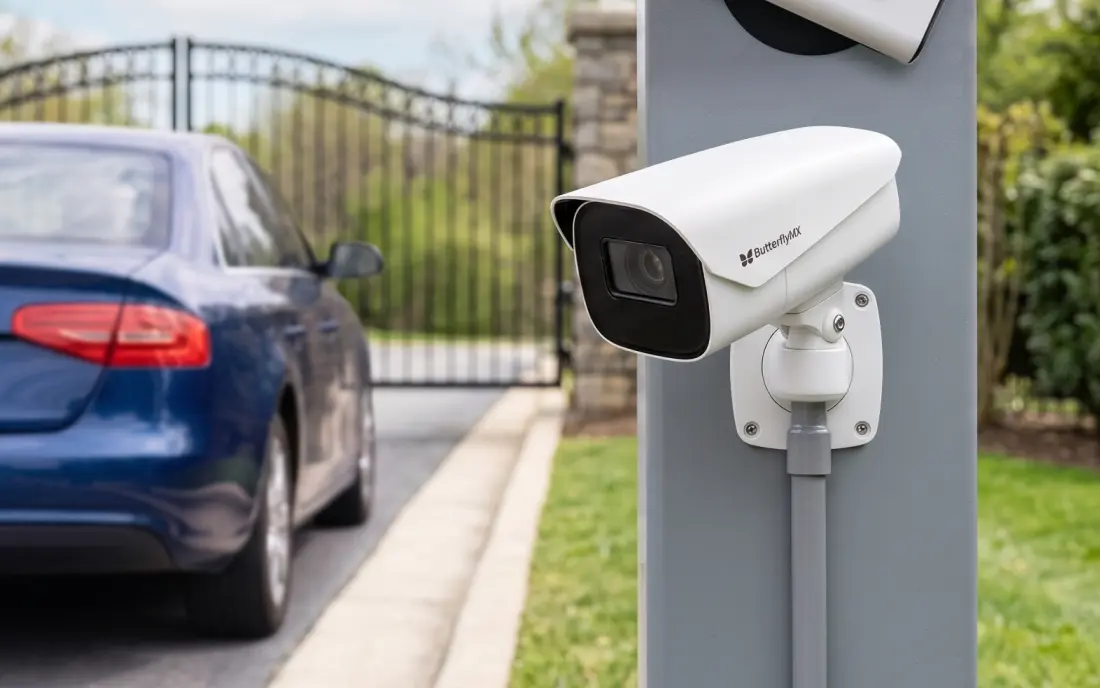
A gate reader that works well for one apartment complex can create daily problems at another. A property with frequent move-ins may struggle to issue, replace, and deactivate RFID tags. A property with heavy guest traffic may care more about temporary access and failed-read handling. And any property considering license plate recognition has to think about plate data, retention, and privacy before cameras go up at the entrance.
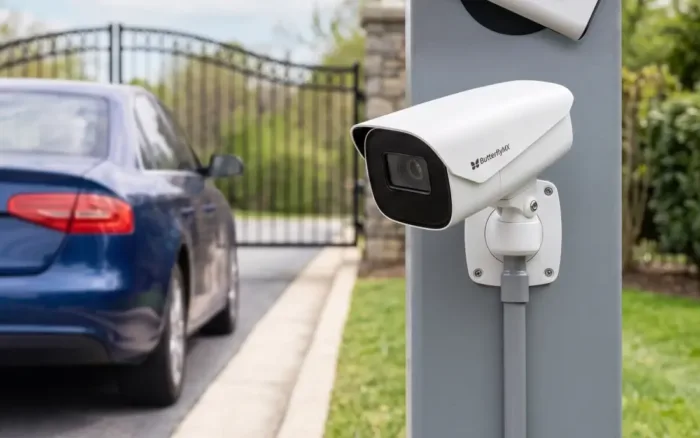
The basic difference is simple. A license plate recognition system, also called LPR or ALPR, uses a camera and optical character recognition to read a vehicle plate and compare it with an authorized record. RFID uses a gate-mounted reader to detect an issued tag or transponder. Both can open a gate for an approved vehicle, but neither one proves who is driving.
So the right question is not whether a license plate reader or RFID gate reader is always better for an apartment complex. The better question is which system your property can operate, govern, and support during everyday exceptions. That answer depends on your entrances, resident turnover, visitor patterns, staff capacity, existing equipment, and data rules.
This guide will answer:
- LPR and RFID gate access in brief
- How each system opens an apartment gate
- LPR versus RFID side by side
- What affects real-world reliability and security
- How total cost and administration differ
- How to handle visitors, temporary vehicles, and failed reads
- Privacy and data governance for apartment properties
- How to choose by property profile and rollout path
- Connecting vehicle access with resident and visitor workflows
- FAQs
Watch how ButterflyMX works:
LPR and RFID gate access in brief
LPR and RFID solve the same gate-access problem in different ways. LPR treats the license plate as the vehicle credential. RFID treats an issued tag or transponder as the credential. In both cases, the access system checks that credential against an approved database and, if the credential is valid, signals the gate controller to open.
That difference matters most when the normal pattern breaks. A resident buys a new car. A roommate borrows a vehicle. A visitor arrives in a rental. A delivery driver has no resident credential at all. LPR may reduce the work of distributing physical tags, but it shifts attention to plate records, camera performance, and data governance. RFID can work well where tags, readers, and staff processes are already reliable, but it requires disciplined issuing, tracking, replacement, and deactivation.
For an apartment complex, the best fit depends on the property more than the technology label. Before choosing LPR vs. RFID for apartments, look at resident turnover, visitor and vendor volume, lane geometry, staffing, existing gate hardware, administrative workload, and privacy requirements.
How each system opens an apartment gate
Both systems involve more than the visible camera or reader at the entrance. A complete vehicle access control setup also needs access-control software, an authorized credential database, and a gate controller that receives the open command.
How LPR works
- A camera captures the approaching vehicle and license plate. Some designs use infrared illumination to support low-light reading.
- Optical character recognition, or OCR, converts the plate image into text the system can compare.
- The access-control system checks that plate against an authorized database, which may be managed locally or through a cloud-connected architecture depending on the system design.
- If the plate record is authorized, the system sends a command to the gate controller.
LPR, ALPR, and ANPR are closely related terms for plate-recognition technology. The name alone does not tell you how the system stores images, how long it keeps read logs, who can access them, or what happens when a read fails. Commercial guides describing apartment LPR camera components can help frame vendor questions, but the final test should happen at your actual entrance.
How RFID works
- A vehicle approaches with an issued RFID tag or transponder.
- A gate-mounted RFID reader detects the credential within its designed read area.
- The system checks that credential against its authorized database.
- If the credential is active, the access-control system signals the gate controller to open.
RFID credentials can be active or passive. Not every tag has a battery, and performance depends on the tag type, placement, reader coverage, credential status, and database accuracy. A comparison of LPR and RFID for community access illustrates the core distinction: LPR recognizes the vehicle plate, while RFID detects a credential assigned through the property access system.
LPR versus RFID side by side
A side-by-side comparison is useful, but only if it stays grounded in property conditions. Use this table to identify the tradeoffs that matter most at your entrance rather than to crown a universal winner.
The most important row is the one that creates the biggest risk or workload for your property. A high-turnover apartment community may focus on credential administration. An unstaffed entrance may put more weight on a safe, auditable fallback plan. A property with strict data rules may make privacy and retention the deciding factors.
What affects real-world reliability and security
No single accuracy percentage tells you whether LPR or RFID will work better at your apartment gate. Results depend on the installation, the environment, credential condition, database quality, and how a vendor defines a successful read. Treat vendor-reported LPR accuracy figures as condition-specific claims, not as proof that the same performance will appear at your lanes.
- LPR performance factors include dirty, bent, temporary, missing, or poorly visible plates; approach angle; camera placement; lighting; weather; and inaccurate plate records.
- RFID performance factors include incorrect tag placement, damaged or lost credentials, transferred tags, depleted active credentials, reader coverage gaps, and credentials that were never deactivated.
- Security depends on the threat model. RFID tags can be shared, transferred, or duplicated. License plates can be obscured, altered, or misread. Neither method turns a vehicle credential into driver identity verification.
- Tailgating is a separate problem. Neither LPR nor RFID stops another vehicle from following an authorized vehicle through an open gate. In ASIS International 2023-24 access-control research, 61% of surveyed organizations identified tailgating or piggybacking as a top issue.
Before committing to either technology, test the proposed design at the actual entrance. Include representative vehicles, different lighting conditions, normal traffic patterns, and the kinds of plates or tags residents actually use. Ask vendors how they measure successful reads, how they handle false matches, and what happens if the database, network, reader, or camera is unavailable.
How total cost and administration differ
The more useful comparison is total cost of ownership, not the price of one camera, reader, or tag. Include hardware, installation, controller compatibility, power, connectivity, software, maintenance, replacement credentials, staff time, and the cost of handling exceptions. Published price ranges from commercial sources should be treated as directional, not universal, so current property-specific quotes matter.
LPR can reduce the need to issue physical vehicle tags, but it does not remove administrative work. Staff still need accurate plate records, a process for vehicle changes, camera and network oversight, and rules for image or log retention. If plate data is wrong or outdated, the system can create the same kind of daily friction that a missing RFID tag would create.
RFID shifts the burden in a different direction. The property needs a reliable credential lifecycle: issuing tags, replacing lost or damaged credentials, deactivating old ones, tracking inventory, and deciding what happens when a credential is transferred or not returned. Existing readers, wiring, gate controllers, and staff habits are also part of the cost picture. If those systems are working, replacing them immediately may not be worth the disruption.
How to handle visitors, temporary vehicles, and failed reads
Resident entry is only the starting point. Visitors, vendors, delivery drivers, rental cars, borrowed cars, new purchases, and temporary plates are where an apartment gate program either feels manageable or becomes a daily source of calls.
Both LPR and RFID need exception rules because both systems authenticate a vehicle credential. They do not know that the person in an unregistered rental is a resident, or that a vendor without a tag is expected at the property. That gap has to be handled by policy, staffing, software, or an alternate credential.
Build the fallback before launch
- Decide which vehicles can be preregistered and who can approve temporary access.
- Define how visitors, vendors, and delivery drivers are authorized when they do not have a resident vehicle credential.
- For a failed LPR read, check the plate record, plate condition, camera view, and controlled alternate entry path.
- For a failed RFID read, check credential status, tag placement, physical damage, reader detection, and whether a replacement or alternate method is needed.
- Set rules for rentals, borrowed vehicles, new cars, and temporary plates before residents start calling from the gate.
Guarded and unguarded entrances need different plans. At a guarded entrance, decide who verifies the exception, what information they can see, and how the event is recorded. At an unguarded entrance, the fallback has to avoid unsafe queues and uncontrolled access. A gate fallback plan is part of the system design, not a convenience feature to figure out later.
Privacy and data governance for apartment properties
LPR can create privacy risk, but the risk depends on the deployment. The main questions are what the property collects, how long it keeps the data, who can access it, whether it is shared externally, and which laws or policies apply. A private, locally controlled deployment is not the same as a networked system that allows broader external or law-enforcement sharing.
State rules for automated license plate readers vary in scope, permitted use, and retention requirements. Many statutes focus on government or law-enforcement use, so private-property obligations and exceptions require jurisdiction-specific review. The National Conference of State Legislatures overview of ALPR statutes is a helpful starting point, but it is not legal advice.
Before implementing LPR, review resident notice, retention limits, deletion procedures, user permissions, audit logs, vendor contract terms, external-sharing practices, and incident response. Also avoid treating LPR as a guaranteed crime-reduction tool. A 2020 Electronic Frontier Foundation analysis of neighborhood ALPR deployments raised concerns about data sharing and the strength of independent neighborhood-level crime-reduction evidence. Consider that analysis in its dated context, alongside current local legal and policy review.
How to choose by property profile and rollout path
Start with the property profile, then work backward to the technology. Count entrances and lanes. Review approach angles, power, lighting, and connectivity. Estimate vehicles per household, move-in and move-out volume, guest and vendor traffic, staff availability, and existing gate-controller infrastructure. Then decide how much privacy, compliance, and data-sharing risk the property is willing to manage.
- Properties with frequent credential turnover may value an approach that reduces physical-tag issuance, as long as plate-record maintenance and failed-read handling are manageable.
- Stable communities with working RFID infrastructure and disciplined credential administration may have less reason to replace readers right away.
- Properties with heavy guest, vendor, or delivery traffic should judge exception handling as seriously as resident entry.
- Properties with sensitive governance requirements should settle data ownership, retention, access, and sharing rules before choosing LPR.
Yes, LPR and RFID can be used together when the components and procedures are compatible. A hybrid access control design can support phased migration, provide redundancy when one credential fails, or separate standard resident entry from specific exception paths. But hybrid deployment is something to validate, not something to assume. Existing readers, controllers, software, and databases may not interoperate with a proposed LPR system.
A practical rollout includes a compatibility review, a representative lane pilot, database cleanup, failed-read procedures, emergency procedures, staff training, resident communication, and post-launch monitoring. Discuss your entrance design, turnover, guest traffic, privacy requirements, and fallback needs with an access-control specialist before finalizing the plan.
Connecting vehicle access with resident and visitor workflows
Vehicle access should not be planned in isolation. LPR and RFID are vehicle-bound credentials, so they need to fit with visitor authorization, mobile credentials, remote administration, guarded entrances, and nonvehicle access points where those apply. Otherwise, the gate may work for registered resident cars while creating confusion for guests, staff, vendors, and residents using temporary vehicles.
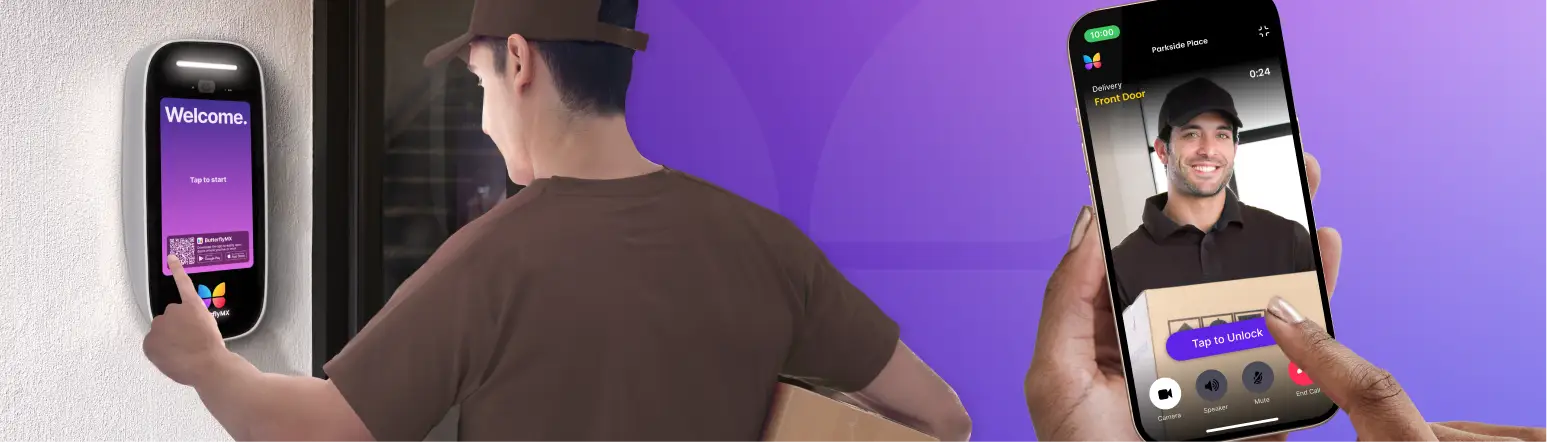
For properties evaluating ButterflyMX, the useful conversation is how vehicle, visitor, mobile, and guarded-entry needs fit together at that specific property. ButterflyMX helps property teams remotely manage residents, visitors, credentials, and access, while residents can receive visitor calls and grant access from their smartphones. Before treating any parts as one integrated deployment, confirm the vehicle-access configuration, gate-controller compatibility, data ownership, user permissions, revocation behavior, fallback process, and support responsibilities.
That planning keeps the gate decision tied to the resident and visitor experience. It also helps prevent a common problem: buying a reader that works in normal conditions but leaves the property with weak procedures for the exceptions that happen every week.
Frequently asked questions
What is the difference between LPR, ALPR, and ANPR?
LPR, ALPR, and ANPR generally refer to license plate recognition technology, though usage varies by market and vendor. For US apartment audiences, LPR is usually the clearest term. The label does not tell you how a system stores data, handles sharing, or automates gate access.
How should a property evaluate vendor accuracy claims?
Ask how the claim was tested before relying on it. Review the lane conditions, plate mix, sample size, definition of a successful read, false-match handling, and results from an on-site pilot. No universal LPR or RFID accuracy rate proves how a specific apartment entrance will perform.
What happens when a resident uses a rental or borrowed car?
The resident needs a temporary authorization or another controlled entry method because the vehicle credential has changed. The exact process depends on the access platform, staffing model, property policy, and whether the system uses plates, tags, or both.
Do apartment properties have to notify residents or offer an LPR opt-out?
There is no universal answer. Notice, consent, disclosure, retention, sharing, and opt-out obligations depend on jurisdiction, data practices, contracts, and property policy. Get current legal or compliance review before implementing or publishing those rules.
LPR may be the better fit when physical credential turnover creates constant work. RFID may remain the better choice when existing readers, controllers, and credential processes are reliable. Neither option is automatically more secure, private, reliable, or cost-effective for every apartment complex.
Choose the system your property can test at its actual lanes, govern responsibly, and support during routine exceptions. If vehicle entry must connect with visitor access, mobile credentials, remote administration, or guarded entrances, ButterflyMX can be part of a property-specific planning conversation.
Get your free quote!
Fill in the form below, and we'll email you right back.
Want a free quote?
Fill in the form below, and we'll email you right back.
You’ll be redirected shortly...