





Key takeaways:
- An older condo may not need a full unit-by-unit rewire, but the board should verify cable condition, wiring layout, door hardware, power, and connectivity before choosing a system.
- Two-wire, IP or cloud, mobile-first, and full-rewire approaches solve different problems; the best fit depends on the building’s infrastructure and resident access needs.
- A realistic budget includes entrance hardware, cabling, door work, permits, resident credentials, training, and recurring services, not just the intercom panel.
If your condo still has an old buzzer or audio intercom, adding video may sound like a construction project that requires opening walls in every unit. Sometimes it does. But many older buildings have less invasive options if the existing wiring, entrance hardware, power, and connectivity can support the right architecture.
The short answer is yes: an older condo building can often retrofit a video intercom system without a full rewire. The usual paths are a compatible two-wire system that reuses tested conductors or a mobile-first design that reduces the need for in-unit hardware. The important word is tested. A board should confirm the building conditions before it approves a product, budget, or installation schedule.
This guide walks through the practical decisions: how to judge wiring feasibility, how the main retrofit paths differ, what fire code and ADA issues can affect the entrance, what older buildings can complicate, and how a condo board can compare proposals fairly.
This guide will answer:
- Can an older condo building add video without a full rewire?
- What a retrofit video intercom system is
- Why existing wiring determines feasibility
- Three retrofit approaches compared
- Fire code and ADA requirements
- Special risks in prewar and historic buildings
- What a condo video intercom retrofit costs
- How a condo board should plan the project
- How to evaluate vendors and resident access
- FAQs
Watch how ButterflyMX works:
Can an older condo building add video without a full rewire?
Yes, many older condo buildings can add video intercom capability without rewiring every unit. A compatible two-wire system may be able to use a tested pair of existing conductors. A mobile-first system may reduce the need for in-unit stations and the cabling that goes with them. Neither path is automatic, so a site assessment should come before product selection.
That first assessment matters because avoiding a full rewire is not the same as needing no new work. The entrance may still need a new panel, controller, power supply, network connection, door-release work, or targeted cabling. In some buildings, old wiring that looks usable at a handset may fail testing because of its layout, age, interference, or run length.
- Wire count alone does not prove compatibility.
- A qualified installer should check cable type, gauge, topology, condition, run length, voltage-drop risk, and interference.
- The entrance also needs suitable power, connectivity, controller space, and door-release hardware.
- A no-full-rewire project may still require limited cabling, door work, repairs, permits, or resident onboarding.
For a condo board, this sequence prevents an expensive mistake: approving the panel first and discovering later that the building cannot support the proposed design. The better order is to verify the infrastructure, compare the feasible retrofit paths, and then evaluate bids on total scope.
What a retrofit video intercom system is
A retrofit video intercom system updates visitor calling, video, and door release while keeping the parts of the building infrastructure that are still useful. In an older condo, that may mean reusing some cable, keeping existing pathways, or avoiding new equipment inside every unit.
Retrofit does not mean wireless, and it does not mean every old component stays in place. A retrofit can still include a new entrance panel, access controller, power supply, network connection, door release, adapters, in-unit monitors, mobile app access, or alternative resident credentials. If the existing wiring or door hardware cannot support the chosen system reliably, the project may become a partial recabling project or a full replacement.
For a broader category overview, see what a retrofit intercom system is. This guide focuses on the older-condo question: what can be reused, what needs to change, and how a board can approve the work with fewer surprises.
Why existing wiring determines feasibility
Most retrofit decisions start in the walls, risers, and entrance cabinet. Many legacy audio intercoms use three-, four-, or five-conductor cabling. That cable does not natively carry IP video, so the building usually needs one of three paths: a compatible digital two-wire approach, a conversion or mixed-infrastructure design, or new cable where reuse is not reliable.
Retrofit guidance for apartment video intercoms explains why the existing pathway and system architecture have to be reviewed together. The board does not need to become a low-voltage contractor, but it should ask for written findings instead of accepting a visual inspection or a general promise that the old wires will work.
What the wiring audit should cover
- Cable type, gauge, continuity, and visible deterioration
- Wiring topology, including whether runs are home-run, daisy-chained, shared, or otherwise difficult to isolate
- Run lengths, voltage-drop risk, electrical interference, and available spare pairs
- Riser access, conduit capacity, and practical paths for any targeted new cable
- Entrance-panel location, controller space, available power, and network connectivity
- Compatibility between the proposed system and the electric strike, maglock, or other door hardware
Older buildings add another layer of risk. Thick plaster, concrete, metal lath, brittle insulation, blocked chases, and obsolete proprietary components can make a simple-looking reuse plan impractical. The audit should separate what the vendor has confirmed from what the vendor is assuming, especially where concealed conditions could trigger a change order.
Three retrofit approaches compared
Once the building conditions are known, the board can compare the realistic retrofit paths. The options below are not a ranking. They are different ways to solve the same problem: how to add video calling and controlled entry without creating more construction, cost, or operating risk than the building can support.
A two-wire video intercom retrofit uses a compatible digital system to carry power, audio, and video over a single pair of conductors. It can reduce wall work where a serviceable pair already exists, but not every pair in an old intercom riser will meet the requirements for a current system.
The terms in this table are easy to blur, so it helps to keep them separate. IP describes network communication. Cloud management describes where certain administration or services are delivered. WiFi and cellular are connectivity methods. They can overlap in a system, but they do not mean the same thing and they do not behave the same way during an outage.
Ask each vendor to explain what continues to work if the building loses power, internet service, cloud service, or cellular service. Also ask whether residents need in-unit hardware, a smartphone, a physical credential, a keypad code, or a staff-supported access process. The answer affects cost, resident adoption, accessibility, and day-to-day administration.
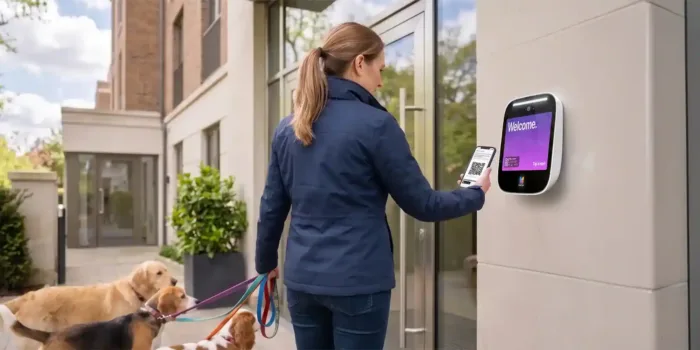
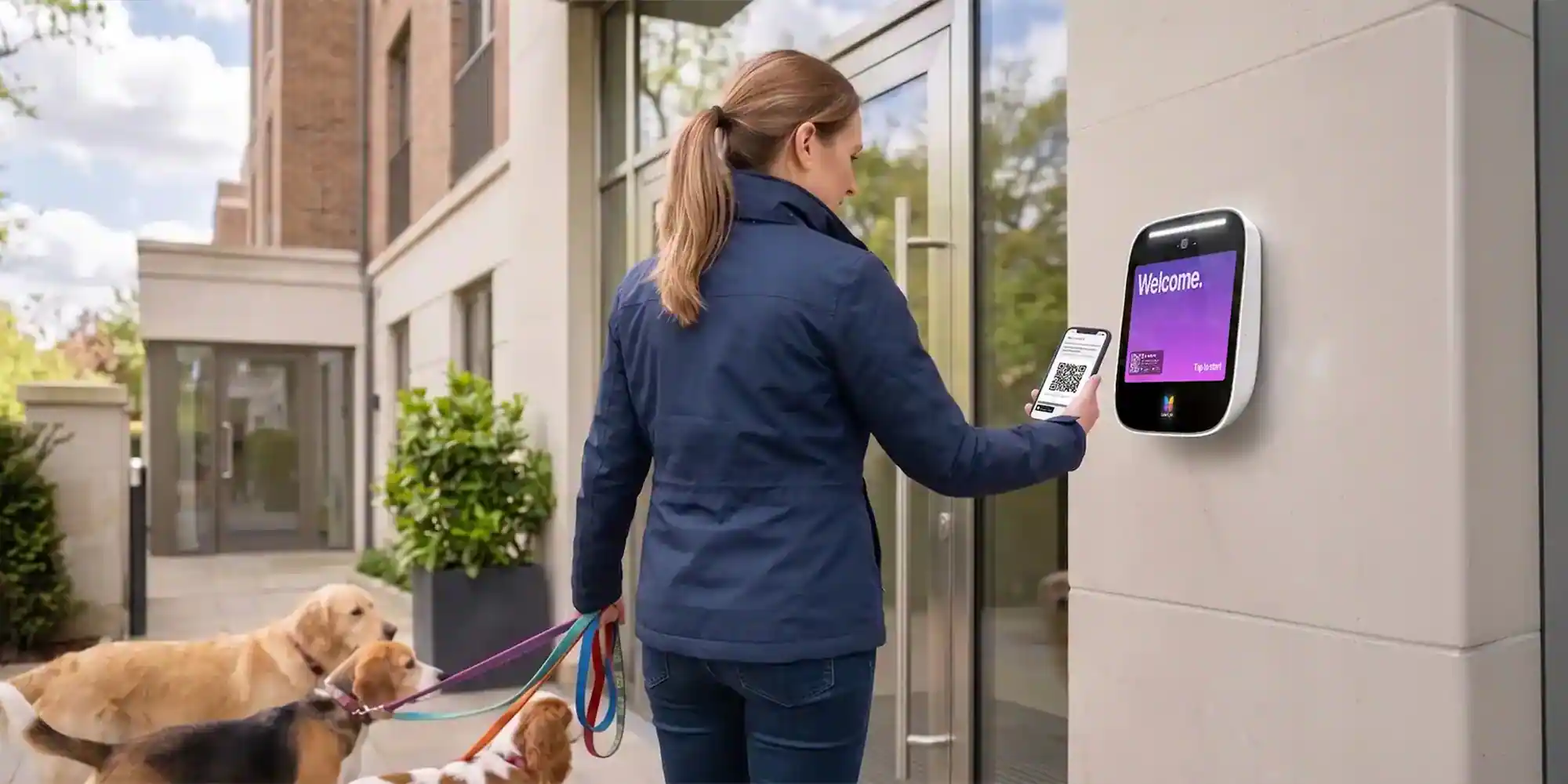
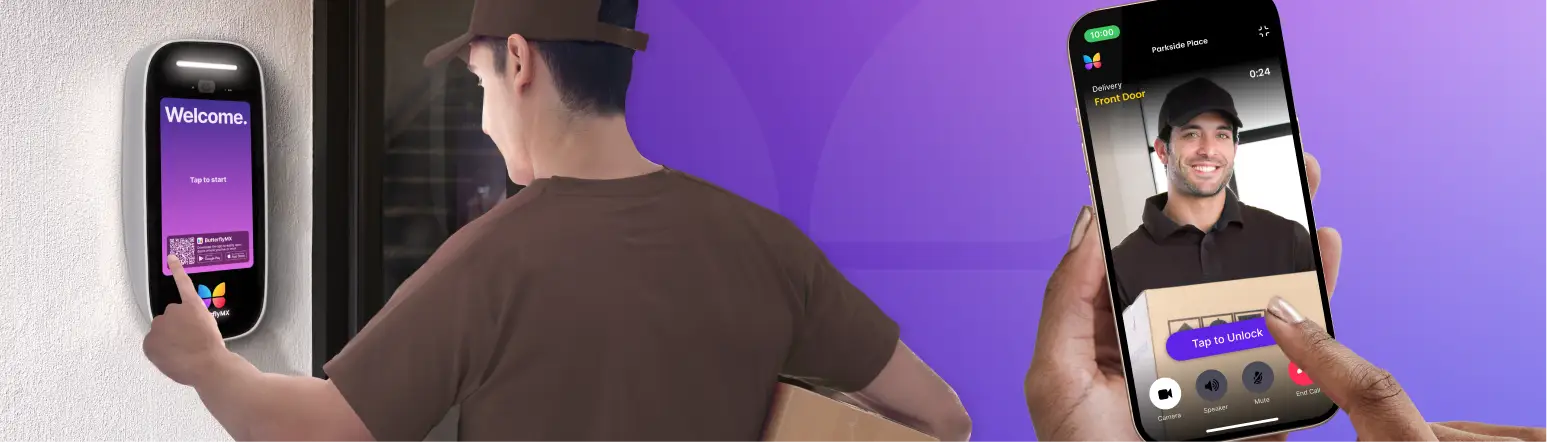
ButterflyMX is one mobile-first option for boards that want to reduce dependence on traditional telephone-entry hardware. ButterflyMX video intercoms do not rely on traditional POTS telephone lines, and residents can receive visitor calls and grant access from their smartphones. As with any retrofit, the building still needs a property-specific review of entrance power, connectivity, door compatibility, fallback access, and total cost.
Not sure which path fits the building? A property assessment can help the board compare infrastructure, entrances, and resident access needs before it commits to a system.
Fire code and ADA requirements
Door locking and panel placement are part of the design, not details to check after installation. A new intercom panel may seem like a low-voltage upgrade, but the door release connects it to the larger entrance system: the lock, request-to-exit device, fire-alarm interface, power-loss behavior, permits, and inspection requirements.
Egress door operation
As a general life-safety principle, an egress door must allow people to open it from the egress side without a key, tool, or special knowledge, subject to defined code exceptions. Review NFPA guidance on permissible egress-door locking arrangements along with the adopted local code and the authority having jurisdiction. Depending on the project, local review may involve life-safety and fire-alarm standards such as NFPA 101 and NFPA 72.
The takeaway for a board is simple: an intercom selection alone does not make an entrance compliant. The entire locking and release arrangement must be reviewed for the actual doorway.
Accessible panel placement
The 2010 ADA Standards generally place operable parts, such as intercom buttons or touchscreen controls, within a 15-to-48-inch reach range above the finished floor. The ADA Standards for Accessible Design are a useful baseline, but local adoption, amendments, existing-building rules, and project scope control the final requirements.
Before approving a bid, confirm the proposed panel height, approach space, controls, door operation, and any required accessibility review. This is especially important in older lobbies where masonry, stairs, railings, vestibules, or preservation limits may affect where equipment can go.
Special risks in prewar and historic buildings
Prewar and landmarked properties can often support a modern intercom, but the building itself may decide how invasive the work becomes. Deteriorated wiring, dense walls, structural barriers, and limited conduit can change the system choice, installation method, schedule, and budget. Guidance on replacing intercoms in older buildings also notes the practical complications that can appear once walls and pathways are investigated.
- Ask whether the entrance panel, visible raceways, penetrations, or conduit routes need preservation approval.
- Determine whether disturbing walls could require asbestos or lead investigation and specialized work practices.
- Request less invasive alternatives where feasible, along with any tradeoffs in cost, reliability, or resident equipment.
- Require bids to state assumptions about inaccessible risers, concealed conditions, restoration, exclusions, and change-order rates.
A mobile-first or minimal-connection design may be worth evaluating where unit wall work is difficult. Still, it should not be treated as a way around every practical constraint. The project may still involve penetrations, permits, door work, hazard review, restoration, and local approval.
What a condo video intercom retrofit costs
There is no reliable universal per-unit price for a condo video intercom retrofit. Published figures can refer to one entrance, one apartment station, a partial modernization, or a whole-building rewire. Those numbers are not useful until the board normalizes the scope, date, geography, entry count, unit count, and recurring fees. Condo intercom buying guidance offers helpful context for why building conditions and system choices can change the budget.
Build the budget around scope
- Entrance panels, access controllers, power supplies, and network equipment
- In-unit monitors or other resident endpoints, where selected
- Cabling, converters, conduit work, and restoration
- Door hardware, electric strikes, maglocks, request-to-exit components, and related interfaces
- Permits, inspections, design work, training, resident enrollment, and support
- Recurring software, connectivity, monitoring, or service fees
- Allowances, exclusions, and change-order rates for concealed conditions
Ask for each proposal in two numbers: installed first-year cost and recurring annual cost. Then separate the base scope from optional items such as added entrances, access-control expansion, unit devices, restoration, or upgraded credentials. This makes proposals easier to compare and helps the board explain the project to owners.
A mobile-first system may eliminate the POTS-line expense tied to a replaced legacy telephone-entry system. That savings is property-specific, and it should be weighed against all new hardware, connectivity, software, and service costs. The goal is not to find a single headline price; it is to understand the true cost of the system the building will actually operate.
How a condo board should plan the project
A condo board has to manage more than installation. It has to decide what the association is allowed to approve, how the work will be funded, how residents will be notified, and how access will work for people with different needs. Treat the retrofit as a governed building project, not just an equipment purchase.
- Document current failures, desired entrances, visitor calling needs, delivery access, integrations, accessibility needs, resident preferences, and success criteria.
- Commission the applicable wiring, door-hardware, connectivity, code, permit, hazardous-material, and preservation assessments.
- Ask vendors for written compatibility findings, scope assumptions, and comparable pricing formats before comparing bids.
- Review board authority, association documents, reserve eligibility, voting requirements, financing, and special-assessment implications with the appropriate advisors.
- Plan resident notices, unit access, phased work, training, enrollment, privacy disclosures, and support before installation begins.
- Test visitor calls, door release, accessible access methods, outage scenarios, administrator tasks, and closeout documentation before accepting the project.
Smartphone calling should not be the only resident-access plan. Require vendors to document alternatives for residents who do not have, cannot use, or do not want to rely on a smartphone. Depending on the selected system and building operations, alternatives may include approved physical credentials, keypad credentials, or a supported staff-assisted process. The plan should also cover enrollment, replacement, accessibility, and resident support.
For broader context on why owner-governed properties consider these upgrades, see why condos and HOAs are upgrading to video intercoms.
How to evaluate vendors and resident access
A strong proposal explains how the system will work after the installers leave. The entrance panel is only one part of the decision. The board also needs to know who manages the system, what residents use every day, what happens during outages, and what support is included.
Infrastructure and compliance
- What cable, power, network, and door-hardware findings support the proposed design?
- Which assumptions, exclusions, permits, inspections, and code responsibilities are included?
- What happens if existing wiring proves unusable after work begins?
Reliability and administration
- What functions continue during internet, cloud, cellular, and building-power outages?
- What backup power, local operation, recovery process, warranty, and support terms apply?
- Who owns the equipment, credentials, data, and administrator access at the end of the contract?
Resident access and privacy
- Which access methods are available for residents without smartphones?
- How are resident turnover, deliveries, visitor access, and lost credentials handled?
- If biometrics are proposed, what jurisdiction-specific notices, consent, retention, security, and deletion procedures apply?
Biometric privacy rules are not uniform. For example, Illinois BIPA imposes notice, consent, retention, and disclosure restrictions around biometric identifiers. Review the Illinois Biometric Information Privacy Act and obtain current jurisdiction-specific legal guidance before adopting biometric credentials.
Remote management can be useful when a condo wants tighter control over resident records, visitor access, credentials, and doors beyond the main entrance. ButterflyMX supports remote management for residents, visitors, credentials, and access, but boards should evaluate that capability alongside fallback access, outage behavior, support obligations, and the building-specific installation scope.
Frequently asked questions
Can old intercom wiring carry video?
Sometimes. A compatible two-wire system may be able to reuse a tested pair of conductors, but legacy multi-conductor audio cable does not natively carry IP video. Cable condition, topology, run length, interference, and the selected system’s requirements determine whether reuse is realistic.
Does an intercom replacement require a permit?
It may. Permit and approval requirements can depend on electrical or low-voltage work, door locking, fire-alarm interfaces, accessibility scope, landmark status, and local rules. Confirm the requirements with the authority having jurisdiction before work begins.
How long does installation take in an occupied condo?
There is no standard timeline. The schedule depends on audit findings, procurement, permits, hazardous-material review, cabling, door work, unit access, phasing, and inspections.
What if a resident cannot use a smartphone?
The association should require an accessible fallback credential or supported access process. The operating plan should explain enrollment, replacement, assistance, and resident support before the system goes live.
An older condo does not automatically need a full rewire to add video intercom capability. The right retrofit starts with verified building conditions: wiring, door hardware, power, connectivity, resident access needs, and local requirements.
Once those facts are clear, the board can compare two-wire, IP or cloud, mobile-first, and full-rewire proposals on the same terms. If your board is considering a mobile-first approach, bring ButterflyMX your entrance requirements, infrastructure constraints, and resident-access needs to discuss a site-specific access plan and quote.
Get your free quote!
Fill in the form below, and we'll email you right back.
Want a free quote?
Fill in the form below, and we'll email you right back.
You’ll be redirected shortly...