





Key takeaways:
- Without a video intercom, the main visitor screening gap is that residents or staff often have to make access decisions without seeing who is at the door.
- Audio-only intercoms, call boxes, buzz-in systems, temporary credentials, and manual sign-ins each leave different openings for impersonation, tailgating, delivery misuse, and weak records.
- The right level of visitor screening depends on property type, visitor volume, staffing, record-keeping needs, and how much visual verification matters at each entrance.
A visitor says they are a delivery driver. Or a contractor. Or a guest of a resident who is not answering. If your property does not have a video intercom, the person making the access decision may have to rely on a voice, a directory call, a claimed identity, or a handwritten log. That is the heart of the problem.
The biggest visitor screening gap without a video intercom system is the lack of visual verification. A resident, tenant, front desk team, or guard may be asked to unlock a door or gate without seeing who is actually requesting access. That gap can make impersonation easier, increase tailgating exposure, weaken visitor records, and put more pressure on staff to make fast decisions with incomplete information.
Those risks are not the same for every property. A small building with low guest traffic may need a simpler process than a busy multifamily property, commercial building, senior living community, student housing site, or gated community. The useful question is not whether every property needs the same technology. It is whether your current screening process gives people enough information to make consistent, defensible access decisions.
This guide will answer:
- What visitor screening is and why it matters
- Common visitor screening methods without video intercoms
- Security gaps created by non-video visitor screening
- How screening gaps change by property type
- Real-world consequences of weak visitor verification
- How video intercoms address visitor screening gaps
- How to evaluate whether your current visitor screening is adequate
- FAQs
Watch how ButterflyMX works:
What visitor screening is and why it matters
Visitor screening is the process a property uses to confirm who is requesting entry and decide whether that person should be allowed in. At a managed property, that may include guests at the front door, delivery drivers at the gate, service providers, contractors, caregivers, and after-hours visitors.
Good screening sits between simple communication and access control. A visitor needs a way to request entry, but the property also needs a way to decide whether that request is legitimate. If the person answering has too little information, the process starts to depend on habit, trust, or guesswork instead of verification.
That difference matters most at properties with frequent visitor traffic. More deliveries, more vendors, more resident turnover, and more after-hours requests all create more chances for a weak process to break down. A property may have a working intercom, call box, or desk log and still have poor visitor verification if no one can confidently confirm who is at the entrance.
Visual verification is not the only part of a strong screening process, but it is often the missing layer. Before deciding whether a video intercom is necessary, it helps to understand how non-video methods work and where they leave gaps.
Common visitor screening methods without video intercoms
Properties without video intercoms usually rely on one or more non-video methods. Some provide basic communication. Some create a record. Some grant access. But not all of them actually verify identity.
Audio-only intercoms
An audio-only intercom lets a resident, tenant, or staff member speak with someone at the entrance before releasing a door or gate. That can be enough for a familiar guest or a low-risk setting. The weakness is clear: the person answering can hear the visitor, but they cannot see them. If someone claims to be a courier, contractor, caregiver, or expected guest, the decision still rests on a voice and a story.
Buzz-in and simple door-release systems
A buzz-in system can be convenient, but convenience is not the same as screening. A visitor presses a button, calls a directory listing, or contacts the front desk, and someone releases the door. In a busy building, this can turn into a reflex. The person answering may unlock the entrance because the request sounds routine, not because the visitor has been checked.
Call boxes and directory-based calling
Call boxes are common at multifamily buildings, gated communities, and other properties where visitors need to reach a resident or tenant from an entrance. They help connect the visitor to the right person, but a completed call does not prove identity. It only proves that someone reached a contact and received permission to enter.
Temporary key, card, or fob-based visitor access
Some properties issue temporary keys, cards, fobs, or other credentials for vendors, approved guests, or recurring service providers. These tools can make repeat access easier, but they answer a different question. A credential can show that someone has access permission. It does not always prove that the person using it is the intended visitor unless the property has other checks in place.
Manual desk, guardhouse, or sign-in processes
Manual screening can add oversight, especially at properties with trained front desk, concierge, security, or gatehouse staff. Staff may check names, call residents, maintain visitor logs, and recognize regular vendors. But manual processes are only as strong as their staffing, training, and consistency. A paper sign-in sheet or quick verbal check may record a name without confirming whether that name is real or whether the visitor belongs there.
No meaningful screening
Some properties have little practical screening at all. A side door may become the unofficial entrance. Residents may routinely hold doors open for strangers. A gate may stay open during peak traffic. In these cases, the issue is not only weak verification. It is unmanaged entry.
These methods often overlap, so the best way to compare them is by asking what each one proves, what it does not prove, and where it tends to fail.
The comparison shows why communication, permission, and verification should not be treated as the same thing. A call box can connect a visitor to a resident. A fob can unlock a door. A sign-in sheet can create a record. But none of those steps, by themselves, gives the same level of confidence as seeing the person requesting access and connecting that request to a clear entry decision.
Security gaps created by non-video visitor screening
The core security gap without a video intercom is simple: the property may have to grant or deny access without seeing the person at the entrance. That does not mean every non-video access decision is unsafe. It means the property has less certainty at the moment the door, gate, or controlled entrance is about to open.
Non-video visitor screening tends to create five practical gaps:
- No visual confirmation of who is requesting access
- More room for impersonation through audio-only claims
- Greater tailgating exposure when entry habits are loose
- More opportunities for social engineering and delivery-related deception
- Weaker audit trails when staff need to review what happened later
Why visual verification matters
Hearing a voice is not the same as confirming identity. A person can say they are a food delivery driver, package courier, contractor, caregiver, or guest. Without video, the resident or staff member answering the request may have no way to compare the claim with what is happening at the door.
Visual verification does not prove everything. A camera does not replace policy, staff training, or good judgment. But it adds a layer of evidence that audio-only and directory-based systems do not provide. That extra context is especially useful when a visitor is unfamiliar, arrives after hours, or creates pressure for a fast decision.
Impersonation becomes easier
Weak screening gives people more room to borrow a believable identity. Someone at the entrance may claim to be a technician responding to an urgent repair, a courier with a time-sensitive delivery, or a visitor expected by a resident. If the property relies on audio only, the person granting access has fewer ways to test whether the story fits the visitor.
This is not about treating every unfamiliar person as suspicious. It is about giving residents and staff enough information to make a reasonable decision. In buildings with constant deliveries and service visits, a lack of visual context can slowly normalize quick approvals.
Tailgating risk can spread beyond the front door
Tailgating happens when an unauthorized person follows an authorized person through an entrance. A video intercom does not eliminate that risk, and a weak non-video system does not cause it by itself. But loose screening habits can make tailgating easier because people become used to holding doors, waving visitors through, or assuming someone belongs.
The risk is not limited to the main lobby. It can show up at package rooms, garage pedestrian doors, side entrances, amenity spaces, turnstiles, and community gates. Any point where people expect quick movement can become a weak spot if the property has no clear screening standard.
Social engineering and delivery misuse are harder to spot
Social engineering works by making an exception feel reasonable. The visitor sounds urgent, familiar, helpful, official, or routine. In property access, that might mean someone claims they need to complete a delivery, inspect equipment, meet a tenant, or perform maintenance right away.
Delivery-heavy properties face a specific challenge because legitimate access requests happen all day. Over time, residents or staff may shorten the screening step just to keep things moving. Without visual verification, a routine-sounding request can carry more weight than it should.
Weak records make incidents harder to review
Many non-video methods leave incomplete records. A buzzer system may show that a door was released but not who requested entry. A paper log may contain a name that was never checked. A resident may answer a directory call and unlock the door without leaving a useful record of the decision.
After an incident, that lack of detail matters. Property teams may need to know when access was granted, who approved it, which entrance was used, and whether the process was followed. Better records do not prevent every problem, but they can make follow-up and policy review more practical.
How screening gaps change by property type
The same screening gap can look very different from one property to another. Visitor volume, staffing, resident population, building layout, and entry points all affect how much risk a non-video process creates.
Multifamily and condo communities
Multifamily and condo properties often manage frequent guests, heavy package traffic, resident turnover, and uneven staffing. Residents may receive entry requests from people they do not personally know, especially couriers and service providers. With audio-only calls or simple buzz-in systems, access can become a habit: the request sounds normal, so the door opens.
The weak points often extend beyond the lobby. Package areas, amenity spaces, secondary doors, and garage entrances can all become part of the visitor screening problem. Residents may also feel stuck between convenience and caution when they are asked to make access decisions without seeing the visitor.
Commercial buildings
Commercial buildings have a different visitor mix. Clients, tenant guests, interview candidates, vendors, contractors, delivery drivers, and service providers may all arrive during the same day. A visitor may be legitimate for one tenant but not for another, which makes a generic entry script hard to apply.
In that setting, weak screening can slow the lobby and put more judgment calls on reception or security staff. A contractor who claims urgency, a vendor who arrives during peak traffic, or an after-hours visitor with incomplete details can expose the limits of audio-only or manual verification.
Senior living communities
Senior living communities often need a more careful access process because the resident population may be more vulnerable. Family members, caregivers, medical transportation providers, delivery drivers, and staff may all need access, often as part of normal daily routines.
That routine is exactly why verification matters. If the property cannot visually check visitors or maintain clear records, an unauthorized person may be harder to distinguish from legitimate traffic. A process that works for a lower-risk setting may feel too loose where safety expectations are higher.
Student housing
Student housing combines frequent guests, late-night activity, turnover, and informal entry habits. Residents may let someone in because the person looks familiar, says they know another resident, or arrives with a group. Social pressure can also make it harder for residents to question someone at the door.
That makes student housing especially sensitive to tailgating and impersonation. A screening process that depends on perfect resident judgment is likely to struggle when the building has constant guest movement and inconsistent attention to entry rules.
Gated communities and HOA-managed properties
Gated communities and HOA-managed properties often need to balance resident convenience with board oversight and visitor control. They may manage vehicle access, pedestrian gates, recurring vendors, one-time guests, service providers, and deliveries through call boxes, gate attendants, or manual lists.
If the process is too loose, unauthorized visitors may get through by sounding routine. If it is too manual, lines, delays, and inconsistent approvals can frustrate residents. These properties often benefit from clear rules about which visitors need live verification, which visitors can be preauthorized, and how access records should be kept.
That property-specific view is important. Not every building needs the same screening rigor, but every property should know where its own process depends too heavily on trust, speed, or memory.
Real-world consequences of weak visitor verification
Poor visitor screening can lead to unauthorized entry, package or service-related misuse, slower investigations, frustrated residents or tenants, and more work for staff. Those problems are connected: a weak decision at the entrance often creates extra work after the fact.
Unauthorized access scenarios
An unauthorized person may gain entry by claiming to be expected, following a legitimate visitor, or taking advantage of a resident or staff member who cannot see enough to challenge the request. Once the person is inside, the issue is no longer just screening. The property may need to review procedures, communicate with residents or tenants, and decide how to prevent the same gap from being used again.
Delivery and service-provider misuse
Delivery and service visits are difficult because they are common and time-sensitive. Properties want to keep packages, food orders, repairs, and vendor visits moving. But speed can weaken screening when staff or residents feel pressure to open the door before they can confirm who is there.
The problem is not delivery access itself. The problem is a process that treats every routine-sounding request as low risk. Better visitor management should help the property keep legitimate traffic moving while giving residents and staff enough information to pause when something does not fit.
Delayed incident reconstruction
Weak records make even small incidents harder to understand. Staff may know that a resident buzzed someone in, that a door was released, or that a name was written in a log. They may not know who the person was, whether the visitor matched the stated purpose, or how the access decision was made.
A useful audit trail supports follow-up. It can help property teams review patterns, compare what happened with policy, and adjust staffing or visitor rules. Record keeping should also be handled with care because compliance expectations can vary by property type and jurisdiction.
Higher staff workload and slower response
Manual verification takes time. Front desk teams may have to answer calls, look up residents, manage logs, contact tenants, and make judgment calls during busy periods. If the process depends on one person at a desk or gate, screening quality can change during shift changes, breaks, peak delivery windows, or after-hours coverage.
That workload can push people toward shortcuts. The more often staff are asked to make fast decisions with limited information, the more likely the process is to drift away from the written policy.
Resident and tenant frustration
Weak screening can frustrate residents and tenants in two directions. If the process is too loose, people may worry that visitors are getting in too easily. If the process is too slow or inconsistent, guests and deliveries may be delayed. Audio-only systems can also create repeated interruptions because residents are asked to answer entry calls without enough context.
These issues are often what prompt a review. A property may not be reacting to one major incident. It may be responding to complaints, near misses, incomplete records, or a pattern of workarounds that shows the current process is no longer reliable.
How video intercoms address visitor screening gaps
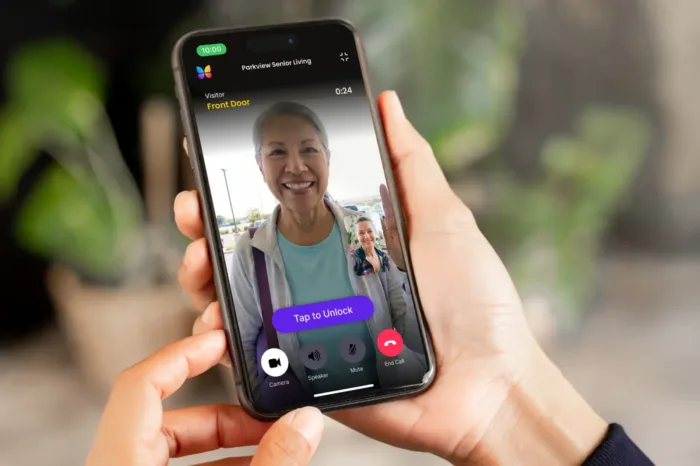
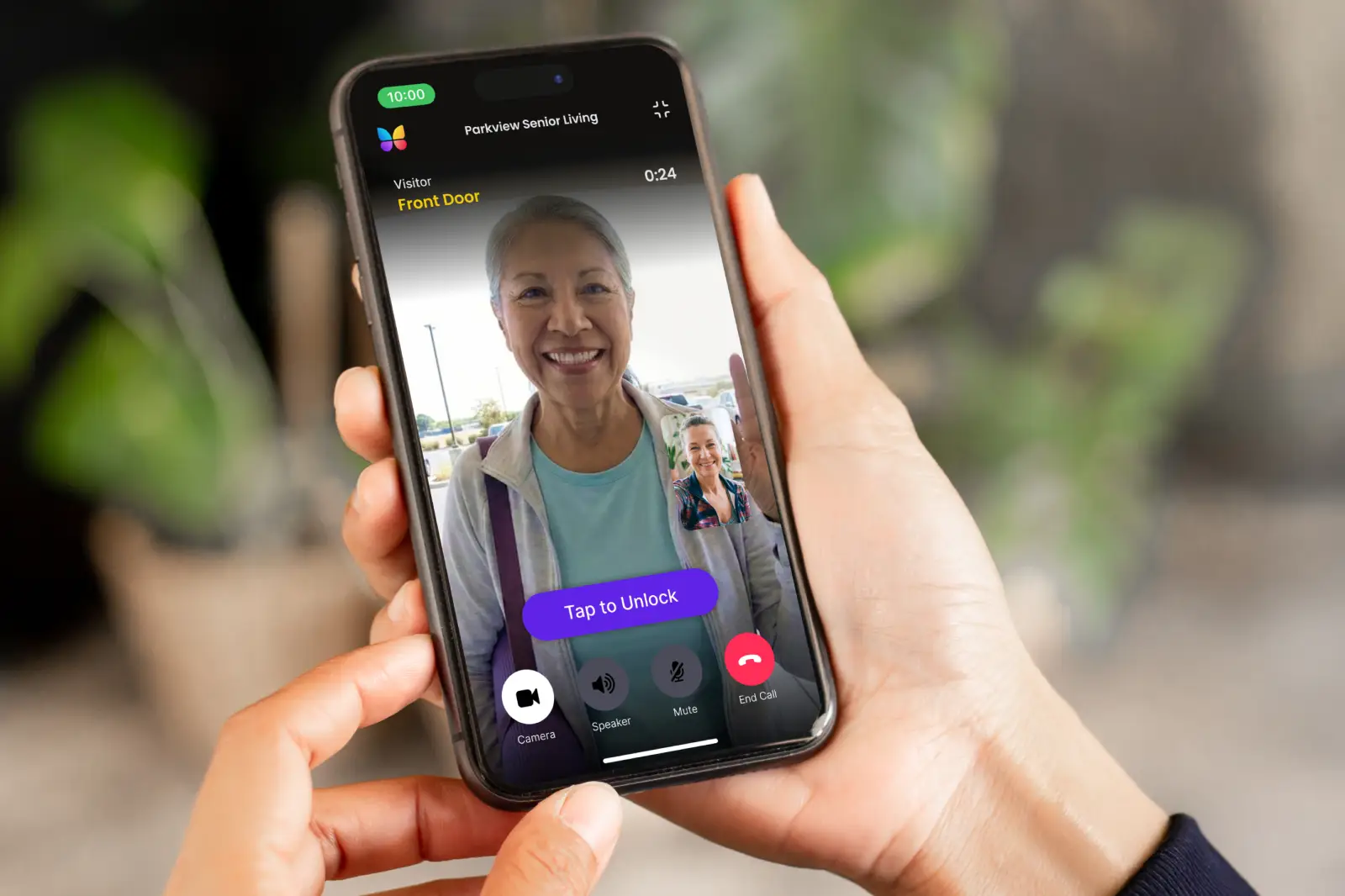
Video intercoms address visitor screening gaps by adding visual verification to the access decision. A camera, two-way audio, an unlock mechanism, mobile app connection, cloud connectivity, and an access log can work together so residents or staff can see, speak with, and decide whether to admit a visitor.
That does not make every entry risk disappear. A video intercom still depends on clear property rules, resident adoption, staff training, and a setup that fits the building. But it directly addresses the weakness that non-video methods share: making access decisions without enough information.
Visual identity confirmation
A video intercom system adds a camera to the entry conversation. Instead of relying only on a voice or directory call, the person answering can see the visitor before releasing the door or gate. That added context can help confirm whether the visitor appears to match the stated purpose of the visit.
This is especially useful for unfamiliar guests, contractors, service calls, caregivers, and delivery requests. Visual verification gives the screener more confidence when the request is legitimate and more reason to pause when something does not look right.
Smartphone-based answering and remote door release
Many cloud-based video intercoms let residents or property teams answer visitor calls from a smartphone and release the door remotely when appropriate. That matters because screening often breaks down when the right person is not standing near the entrance. Remote access management can help with after-hours calls, vendor coordination, and coverage when staff are away from the desk.
The tradeoff is that remote release still needs good judgment. A mobile app makes it easier to review a request from elsewhere, but the property still needs rules for when to grant access, when to deny access, and how to handle uncertain requests.
Access logs and audit trails
Access logs can show when entry events occurred and how visitor access was handled. That record can support later review if there is a complaint, a disputed entry, or a need to understand repeated after-hours access.
Logs are most useful when they are part of a clear visitor management process. They should help staff review what happened, not replace the need for good screening at the door.
Better visitor and delivery handling
Video intercoms can make common visitor requests easier to judge because they combine communication with visual context. A resident can see a guest. Staff can review a service-provider request. A property team can handle visitor access without relying only on a rushed phone call or a handwritten note.
For delivery-heavy properties, the benefit is not adding friction to every package drop-off. It is making fast decisions more informed, especially when the visitor is unfamiliar or the request does not match normal expectations.
Integration with access control and property operations
A video intercom works best when it fits the rest of the property’s access setup. Access control systems manage controlled doors, credentials, readers, permissions, and unlock events. Visitor verification is stronger when the intercom, door release, and access-control process are not treated as separate exceptions.
Implementation matters. Property teams should consider entry infrastructure, connectivity, resident communication, staff training, visitor and delivery procedures, and ongoing management responsibilities. They should also think about the tradeoff between stronger verification and convenience. A system that is too hard to use may lead people back to shortcuts.
This is where ButterflyMX fits naturally for many properties reviewing visitor screening gaps without video intercoms. ButterflyMX offers cloud-based video intercom and access technology that supports visual verification, smartphone-based access, remote management, and clearer visibility into entry activity. For properties trying to move beyond audio-only calls, buzz-in habits, and inconsistent manual screening, those capabilities can help connect the access decision to the person actually standing at the entrance. As with any access upgrade, the value depends on the property, configuration, setup, and adoption.
How to evaluate whether your current visitor screening is adequate
Your visitor screening may be inadequate if the property cannot consistently verify identity, document entry activity, and handle visitors without pushing residents or staff into guesswork. The best test is what happens during normal traffic, not what the written policy says should happen.
Use these questions to assess your current process:
- Can the person granting access see who is at the door, or are they relying on a voice, a claimed identity, or an assumption?
- Are visitor requests handled consistently across shifts, staff members, residents, tenants, and entrances?
- Do deliveries, vendors, contractors, or after-hours guests create pressure to bypass normal screening?
- Can your team review useful records after an incident, including when access was granted and how the request was handled?
- Does your staffing model support the amount of live screening your property needs?
- Do residents or tenants complain about repeated interruptions, unclear visitor handling, or people getting in too easily?
- Would a stronger connection between visitor screening, door release, and access control make entry decisions more reliable?
Warning signs that a process is too weak
Weak screening usually shows up before a serious incident. Staff rely on guesswork. Residents buzz people in just to end the call. Visitor logs are incomplete. Couriers or contractors are admitted without a clear check. Side entrances become the easier path because the main entrance process feels slow or inconsistent.
These are not just inconveniences. They show that the property is asking people to choose between speed and verification too often.
How property type affects the answer
A very small property may not need the same screening setup as a large multifamily tower, senior living community, student housing property, or busy commercial building. A 24/7 staffed entrance may reduce some gaps, but it does not remove all verification issues if staff lack visual context, reliable records, or enough time to follow the process.
The right standard is proportional control. Match the screening method to visitor volume, resident or tenant needs, building layout, staffing, record-keeping expectations, budget, and the consequences of a bad access decision.
What to prioritize in an upgrade
If your current process leaves avoidable gaps, start with the gap rather than the product name. Some properties mainly need visual verification. Others also need remote door release, stronger audit trails, better delivery handling, mobile access, or cleaner access control integration.
Also consider the practical side of implementation. Will residents understand how to answer visitor calls? Will staff know when to grant or deny access? Does the entrance have the infrastructure and connectivity the system requires? Who will manage users, visitor rules, and records over time?
For teams actively comparing options, a modern video intercom such as ButterflyMX can be part of that evaluation. The useful question is not whether video sounds more advanced. It is whether your current visitor screening process leaves gaps that visual verification, remote management, and better access records would help close.
Frequently asked questions
What are the biggest security risks of not having video intercoms?
The biggest risks are weak identity verification, easier impersonation, more tailgating exposure, and poor visitor records. Without video, residents or staff may have to decide whether to unlock an entrance without seeing who is actually there.
Can audio-only intercoms provide adequate visitor screening?
Audio-only intercoms can be adequate for some low-traffic or lower-risk settings, but they are limited because they cannot visually confirm identity. Whether they are enough depends on the property’s visitor volume, staffing, resident needs, and risk tolerance.
How do video intercoms help with tailgating?
Video intercoms do not stop tailgating by themselves, but they can improve entry control before a door or gate is released. They work best alongside clear policies, resident awareness, staff training, and access control measures at vulnerable entrances.
How do video intercoms integrate with access control systems?
Video intercoms can work alongside access control systems by connecting visitor verification with door release and broader entry management. The exact setup depends on the systems in use, but the goal is to make visitor access easier to control and review.
If your property grants access without reliably confirming who is at the door, that is the central weakness to address. The issue is not whether every building needs the same system. It is whether residents, staff, and security teams have enough visibility, consistency, and records to make sound access decisions.
For some properties, a simple process may still be proportionate. For others, especially those with high visitor volume, vulnerable residents, frequent deliveries, or inconsistent manual screening, the lack of visual verification becomes harder to justify. A cloud-based video intercom can help close that gap by supporting visual visitor verification, remote access handling, and clearer audit trails.
If you are reviewing visitor screening gaps at your building, start by identifying where the current process depends on guesswork. Then explore whether ButterflyMX can help your property support stronger visitor screening without adding unnecessary complexity.
Get your free quote!
Fill in the form below, and we'll email you right back.
Want a free quote?
Fill in the form below, and we'll email you right back.
You’ll be redirected shortly...