





Key takeaways:
- Walk In IQ combines self-guided tours, mobile access, turnover automation, and energy management in modules priced per unit per month and billed annually, but it publishes no rate card.
- The platform can often reuse existing access hardware, but keyless entry also depends on third-party locks, network connectivity, and mobile Bluetooth.
- Walk In IQ has operated across 7,000+ units and 26 properties in its originating portfolio, while the limited independent app feedback is mixed.
Disclaimer: ButterflyMX provides these blog posts to help our customers and potential customers make the right business decisions. Our blog posts are based on the information available to us at the time of writing.
Walk In IQ is a smart access and property automation platform for multifamily and related residential properties. It is aimed at owners and operators that want to automate self-guided tours, mobile credentials, unit turnover, or thermostat management from one platform.
This Walk In IQ review explains what the apps and modules do, how quote-based pricing works, whether a property can reuse its existing hardware, and what public app feedback suggests about daily use. It also covers the questions to ask before buying, competing platforms, and how Walk In IQ compares with ButterflyMX.
This guide will answer:
- What is Walk In IQ?
- How does Walk In IQ work?
- How much does Walk In IQ cost?
- Hardware, integrations, and connectivity requirements
- Walk In IQ customer feedback and reliability
- Walk In IQ pros and cons
- Walk In IQ alternatives
- Walk In IQ vs. ButterflyMX
- Walk In IQ review verdict
- Frequently asked questions
- Final thoughts on Walk In IQ
Watch how ButterflyMX works:
What is Walk In IQ?
Walk In IQ is a modular smart access and property automation platform for multifamily, student housing, build-to-rent, and senior living properties. It connects access hardware, property software, and role-specific mobile apps to support self-guided tours, keyless entry, turnover workflows, and energy management.
Walk In Corp. is based in New Rochelle, New York. The platform began as in-house technology for Goldfarb Properties before being offered commercially, according to the Walk In IQ product site and the company’s legacy company history.
Who is Walk In IQ designed for?
Walk In IQ is designed for residential owners, operators, and management companies that want to automate access-related work. Its modules serve several groups:
- Prospects: Schedule and complete self-guided apartment tours.
- Residents: Use mobile credentials and grant temporary access to guests or vendors.
- Property staff: Manage credentials, access activity, tours, and unit changes.
- Operators: Connect property systems and review activity across a portfolio.
- Maintenance and energy teams: Automate access changes and monitor supported thermostats.
This setup may appeal to operators that want to select individual functions instead of deploying every module at once.
How established is Walk In IQ?
Walk In IQ has meaningful operating experience within the portfolio that produced it. Its main case study covers more than 7,000 units across 26 Goldfarb Properties locations, showing use beyond a small pilot.
That record needs context: Goldfarb Properties was also the operator for which the technology was developed, and there is little public performance information from unrelated ownership groups. Walk In IQ reports that Goldfarb Properties saw 25% lower vacancy loss, a 5–7% increase in net operating income, and 35% lower staffing costs. Those figures are from one originating operator’s case study, not typical results.
A third-party company listing places Walk In IQ in the 1–10 employee range. That estimate does not predict service quality, but large portfolios should ask about implementation staffing, support hours, escalation procedures, and backup coverage.
How does Walk In IQ work?
Walk In IQ works as a cloud-based coordination layer between property systems, access-control hardware, and mobile apps. The company says its dashboard connects a property management system, leasing CRM, and access hardware so teams can manage tours, digital credentials, access activity, and related workflows.
Different users interact with different apps. A prospect does not use the same experience as a resident or a property employee, so the app names should not be treated as interchangeable.
Walk In IQ apps and modules
The Walk In Corp. terms and product materials identify SelfTourIQ and resident-access apps as separate parts of the ecosystem. That distinction matters because each module serves a different workflow and may have different implementation needs.
Core Walk In IQ features
Walk In IQ centers on automating leasing and access tasks:
- Self-guided tours: Prospects can schedule tours and complete identity checks without an on-site leasing agent.
- Mobile keyless access: Residents, staff, and approved contractors can use digital credentials instead of relying only on keys or fobs.
- Temporary visitor access: Residents can grant time-limited entry to guests and vendors or remotely unlock a lobby for a one-time visitor.
- Turnover automation: Property teams can change access as units move through vacancy, move-in, and move-out stages.
- Central reporting: Teams can review leads, tours, and access activity across supported properties.
- Energy management: An optional module supports thermostat monitoring, vacant-unit settings, and alerts. Walk In IQ says it may reduce HVAC costs by up to 20%, but that is a vendor claim rather than a broad customer benchmark.
The value is workflow coordination. Rather than handling tour scheduling, credentials, and unit changes as separate processes, teams may be able to manage them through one operating layer.
How much does Walk In IQ cost?
Walk In IQ does not publish exact prices. Its public pricing description says the platform is sold a la carte, charged per unit per month, and billed annually.
Customers can select individual modules instead of automatically buying the full suite. An operator could evaluate self-guided touring and mobile access without assuming that energy management is included. However, Walk In IQ does not publish a starting price, hardware price, installation cost, or complete rate card.
This structure gives buyers flexibility, but total cost will depend on portfolio size, selected modules, integration work, hardware conditions, and contract terms. Public information does not say which implementation or support services are included.
What should you ask for in a Walk In IQ quote?
Ask Walk In IQ to separate recurring and one-time costs so you can compare proposals on the same basis. A useful quote request should cover:
- The per-unit monthly price for each selected module.
- The total annual commitment and any minimum property or unit requirements.
- Which software, support, and updates are included.
- Implementation, configuration, training, and data-migration charges.
- Costs tied to access hardware, thermostats, or other devices.
- Fees for connecting the property management system, CRM, locks, or other systems.
- Renewal terms, price-change provisions, and cancellation conditions.
- Support hours, response targets, and escalation options.
Request separate quotes for the module combinations you are considering. That makes it easier to see whether adding turnover or energy management changes the economics enough to affect the decision.
Hardware, integrations, and connectivity requirements
Walk In IQ says it can reuse installed access-control hardware in most deployments, so a full lock replacement may not be necessary. Fit still depends on the property’s specific lock fleet, software, mobile devices, and connectivity conditions.
Walk In IQ describes integrations with property management systems, CRMs, access-control equipment, and thermostat systems by category. It does not publish a complete list of named compatible products, so buyers should request written compatibility details for every system they plan to connect.
Its official terms state that keyless entry depends partly on third-party hardware, network connectivity, and Bluetooth functionality outside Walk In’s full control. A worn lock, weak connection, mobile Bluetooth issue, or failed third-party component could affect the entry experience even when the platform is available.
ButterflyMX takes another approach to retrofit planning by supporting access control and smart lock integrations. Properties comparing the two should focus on their installed lock environment and desired entrance workflows rather than assume either platform will work with every existing device.
Questions to resolve before deployment
Walk In IQ customer feedback and reliability
Public Walk In IQ customer feedback is mixed and limited in volume. Google Play provides the clearest independent signal, but the two available apps serve different users and should be assessed separately.
The Goldfarb Connect Google Play listing includes complaints about authentication and entry freezing alongside its 4.0 aggregate rating. The SelfTour IQ listing has fewer reviews and a lower aggregate score.
These comments do not mean every Walk In IQ deployment has the same problems. They do show why buyers should test login persistence, door response, support escalation, and recovery procedures before a broad rollout.
The official disclosure about third-party locks, network connectivity, and Bluetooth provides context, but it does not establish the cause of any particular review. During a pilot, teams should track whether an issue begins in the app, mobile device, network, controller, or lock.
Walk In IQ pros and cons
Walk In IQ offers modularity and retrofit potential, but buyers must weigh quote-only pricing, technical dependencies, and limited evidence outside its originating portfolio.
Walk In IQ pros
- Modular purchasing: Operators can choose touring, access, turnover, or energy functions instead of automatically buying every module.
- Potential reuse of installed hardware: Working with existing access equipment may reduce the need for a disruptive property-wide lock replacement.
- Connected workflows: Bringing property software, access hardware, tours, credentials, and reporting into one dashboard may reduce manual handoffs.
- Role-specific apps: Prospects, residents, and staff receive experiences built around their different tasks.
- Meaningful scale in the originating portfolio: The 7,000+ unit, 26-property Goldfarb deployment shows that the platform has operated beyond a limited test site.
Walk In IQ cons
- No public rate card: Buyers cannot compare exact costs or module combinations without entering the sales process.
- Dependence on outside systems: Locks, network connectivity, and Bluetooth can affect entry even though Walk In IQ does not fully control them.
- Mixed app feedback: Reviews of named apps include repeated-login, freezing, glitch, and support concerns, although the sample sizes are limited.
- Limited independent performance evidence: Most public outcome claims come from Goldfarb Properties, which also originated the platform.
- No documented video intercom in public materials: Walk In IQ describes app-based guest access and remote lobby unlocking, but its public product information does not describe video-calling entry hardware.
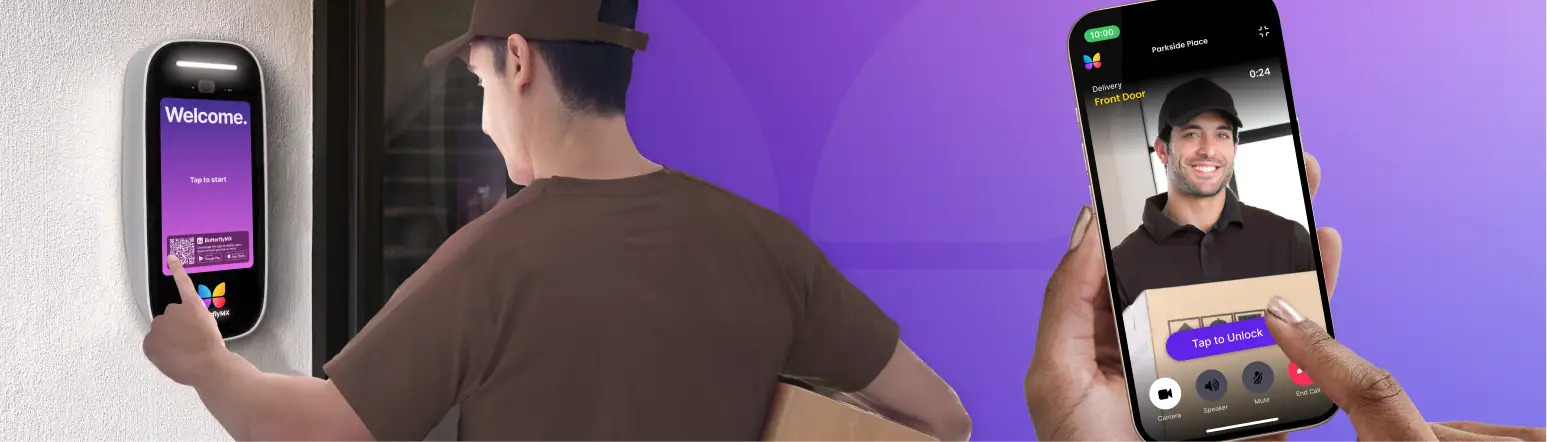
This last point matters for properties that want residents to see and speak with visitors before granting entry. ButterflyMX supports visitor calling through video intercoms as well as temporary visitor access, while Walk In IQ’s public positioning centers on mobile credentials and access automation. Neither approach is right for every property; the deciding factor is whether visual visitor communication is part of the entrance plan.
Walk In IQ alternatives
Relevant Walk In IQ alternatives include Rently and SmartRent, plus PointCentral and iApartments. Each overlaps with at least part of Walk In IQ’s self-guided touring, smart access, or property automation scope.
- Rently: A relevant option for buyers focused on self-guided touring and multifamily access automation.
- SmartRent: A relevant option for operators comparing Walk In IQ with a broader enterprise smart-building and access platform.
- PointCentral: A relevant option for multifamily smart-home, access, and self-guided-tour workflows.
- iApartments: A relevant option for buyers considering an all-in-one multifamily smart-home, access, and touring platform.
Don’t compare alternatives by feature count alone. Ask each vendor to demonstrate the prospect, resident, staff, guest, and turnover workflows that matter at your properties. The shortlist should also account for hardware compatibility, software connections, implementation responsibility, support coverage, and total annual cost.
Walk In IQ vs. ButterflyMX
Walk In IQ and ButterflyMX both support mobile property access, but they organize their platforms around different workflows. Walk In IQ emphasizes self-guided tours, digital access, turnover, and energy management. ButterflyMX combines multiple access and security products in one platform.
Walk In IQ may be more directly aligned with buyers seeking modular leasing and turnover automation around an existing access environment. ButterflyMX may be worth considering when entrances, visitor video, vehicle access, elevators, cameras, packages, and mobile credentials need to be assessed as parts of a broader property access system.
Walk In IQ review verdict
Walk In IQ is worth considering for operators that prioritize self-guided tours, mobile credentials, turnover automation, or thermostat management and want the option to reuse installed access hardware. Its role-specific apps and modular purchasing model let buyers focus on selected workflows.
The main tradeoffs are pricing opacity, dependence on third-party hardware and connectivity, mixed app feedback, and limited public evidence beyond the originating operator. These issues do not rule out the platform, but they make a property-specific demonstration and controlled pilot especially important.
Walk In IQ may fit your shortlist if:
- You want to buy touring, access, turnover, or energy capabilities as separate modules.
- Your existing lock environment is compatible and you want to avoid a complete hardware replacement.
- You can test network and Bluetooth behavior at the entrances and units in scope.
- The proposed PMS and CRM connections are documented for your current systems.
- The annual quote clearly separates recurring software, implementation, devices, integrations, training, and support.
- The support plan fits your portfolio size and operating hours.
Consider a wider comparison if video intercom, transparent public pricing, a larger independent customer record, or a broader access and security product set is central to the project. ButterflyMX is one relevant option for properties evaluating video intercoms, access control, vehicle access, elevator controls, cameras, package rooms, smart lock integrations, and mobile credentials within one platform.
Frequently asked questions
What is Walk In IQ?
Walk In IQ is a modular property automation platform for self-guided tours, mobile keyless access, turnover workflows, reporting, and energy management. It is designed mainly for multifamily and related residential properties.
How much does Walk In IQ cost?
Walk In IQ uses quote-based, a la carte pricing charged per unit per month and billed annually. The company does not publish a rate card, starting price, hardware cost, or installation cost.
Does Walk In IQ require new locks?
Walk In IQ says existing access-control hardware can be reused in most cases. Buyers still need a property-specific compatibility assessment because the result depends on the installed locks, controllers, and other systems.
What apps does Walk In IQ offer?
Walk In IQ offers SelfTourIQ for prospects, ConnectIQ or AccessIQ for resident and staff access, and property-branded resident apps such as GPConnect. Its turnover and energy products are separate workflow modules.
Does Walk In IQ require internet or Bluetooth?
Walk In Corp. states in its terms of service that keyless entry depends partly on network connectivity and mobile Bluetooth, as well as third-party access hardware. Buyers should test these dependencies under actual property conditions.
Is Walk In IQ reliable?
Available app feedback is mixed and limited. Goldfarb Connect has a 4.0/5 Google Play rating from 67 reviews, while SelfTour IQ has a 3.3/5 rating from seven reviews; some reviewers mention logouts, freezing, glitches, or support concerns.
Does Walk In IQ support video intercom?
Public Walk In IQ materials describe app-based access, guest credentials, and remote lobby unlocking, but do not document video-intercom hardware. Ask the vendor directly if visitor video is a project requirement.
What are the main Walk In IQ alternatives?
Relevant alternatives include Rently, SmartRent, PointCentral, and iApartments. ButterflyMX is another option for properties comparing mobile and visitor access with video intercoms and a broader property access and security platform.
Final thoughts on Walk In IQ
Walk In IQ may fit operators that want modular self-touring and mobile-access automation built around existing property hardware. Its strongest public proof comes from a large originating portfolio, while quote-only pricing, technical dependencies, mixed app feedback, and limited evidence from unrelated operators deserve close attention.
Before deciding, compare annual costs, exact integrations, lock compatibility, connectivity conditions, support coverage, and visitor requirements across multiple vendors. If your project also includes video intercoms, vehicle access, elevators, security cameras, package rooms, or wider access control, include ButterflyMX on your shortlist and request a demonstration based on your property’s actual workflows.
Get your free quote!
Fill in the form below, and we'll email you right back.
Want a free quote?
Fill in the form below, and we'll email you right back.
You’ll be redirected shortly...