





Key takeaways:
- Start new construction access control planning with an entry-point map that covers residents, visitors, staff, vendors, deliveries, and vehicles.
- Coordinate video intercoms, door readers, vehicle gate readers, access controllers, credentials, wiring, power, network connectivity, and door hardware before late-stage finishes.
- Verify controller capacity, vehicle gate requirements, and smart lock compatibility with qualified professionals and product providers before choosing hardware.
If you’re planning a new apartment building, access control has to be decided before the building is finished, not after residents are ready to move in. Start by mapping every entrance: the main visitor entrance, resident side doors, service doors, amenity areas, parking entrances, and vehicle gates. Then decide who uses each entry point, how they authenticate, which hardware is required, and what wiring, power, network, door, and gate coordination must happen before walls and finishes are closed.
That order matters because an apartment access control system isn’t just a product purchase. It’s a construction planning decision, a resident access decision, a visitor access decision, and an operations decision at the same time. A main intercom, a side-door reader, and a vehicle gate reader may all belong to one access plan, but each one affects different contractors, credentials, hardware, and daily property management tasks.
This guide explains how to bring those decisions together into one practical plan for a new multifamily property. You’ll learn how to coordinate a main intercom, multiple controlled doors, vehicle gate readers, mobile credentials, access controllers, and possible smart lock integrations without making unsupported assumptions about capacity, compatibility, or installation requirements.
This guide covers:
- Plan the access system before construction finishes
- Map every apartment entry point and user path
- Choose credentials for residents, staff, vendors, and vehicles
- Coordinate wiring, power, network, doors, and gates early
- Confirm controller capacity and smart lock compatibility
- How ButterflyMX fits into a new apartment access plan
- FAQs
Plan the access system before construction finishes
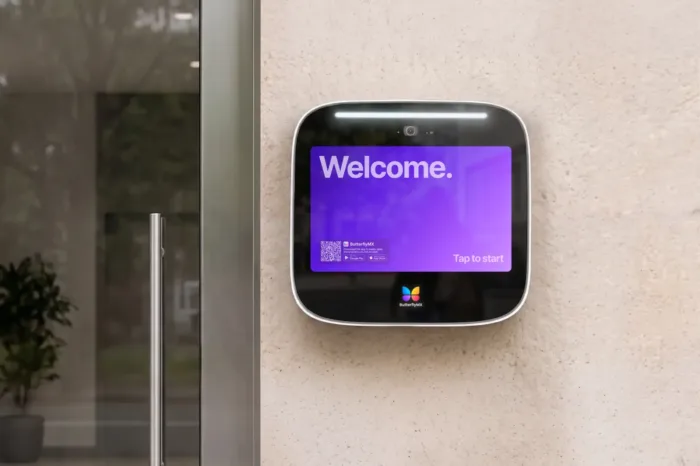
Multifamily access control is the combination of hardware, credentials, and management software used to control who can enter apartment building doors, gates, amenities, and other secured areas. In new construction, that plan should be created early enough to shape intercom placement, reader locations, door hardware, gate equipment, conduit, power, low-voltage wiring, and network connectivity.
The most useful starting point is an access map, not a product list. For example, a 28-unit apartment building might need one main video intercom, five controlled side doors, and four roll-up vehicle gates. Those numbers are simple on paper, but each entry point creates a different set of decisions. Visitors may need to call a resident from the main entrance. Residents may need mobile access or fobs at side doors. Vehicles may need RFID credentials, gate reader placement, and coordination with the gate operator.
What a complete new construction access plan should include
A complete plan should identify the video intercom, access readers, vehicle gate readers, access controllers, credentials, cloud management needs, smart lock considerations, construction responsibilities, and operational handoff. A video intercom is an entry device that enables visitor communication and access requests at a controlled entrance. Access readers read supported credentials such as mobile credentials, fobs, cards, PINs, or vehicle credentials. Access controllers connect readers, locks or gate equipment, and access management software according to the system design.
Those components shouldn’t be selected in isolation because one choice often affects several others. A side door reader affects door hardware and wiring. A vehicle reader affects gate equipment, driver approach, and credential policy. A cloud access management platform affects how staff add users, remove permissions, review access activity, and hand the system over from construction to property operations.
Why new construction is the best time to make access decisions
New construction gives developers an opportunity that existing buildings often don’t have: access control can be coordinated before the building is finished. The project team can confirm where devices will mount, where wiring will run, which doors need electrified hardware, where controllers will live, and how gates will connect to the broader access plan.
Waiting until turnover creates more uncertainty. A device location that looked simple after drywall may require different conduit, additional power, or a door hardware change. A vehicle gate that was left out of the access plan may later need separate coordination with a gate professional. Planning early doesn’t replace qualified electrical, life-safety, gate, door hardware, or code guidance, but it gives those professionals the information they need to make property-specific decisions.
Map every apartment entry point and user path
Once the access plan is part of the construction conversation, the next step is to identify every point where people or vehicles enter. This is where the design becomes specific to the property. A main entrance, rear resident door, leasing office door, package room, maintenance room, and parking gate may all belong to the same access control plan, but they shouldn’t all be treated the same way.
For each entry point, answer five questions: who needs access, why they’re entering, how they should authenticate, who manages their permission, and what should happen when access changes. A resident moving out, a vendor finishing a job, or a staff member changing roles shouldn’t leave outdated access behind.
Main entrance and visitor access
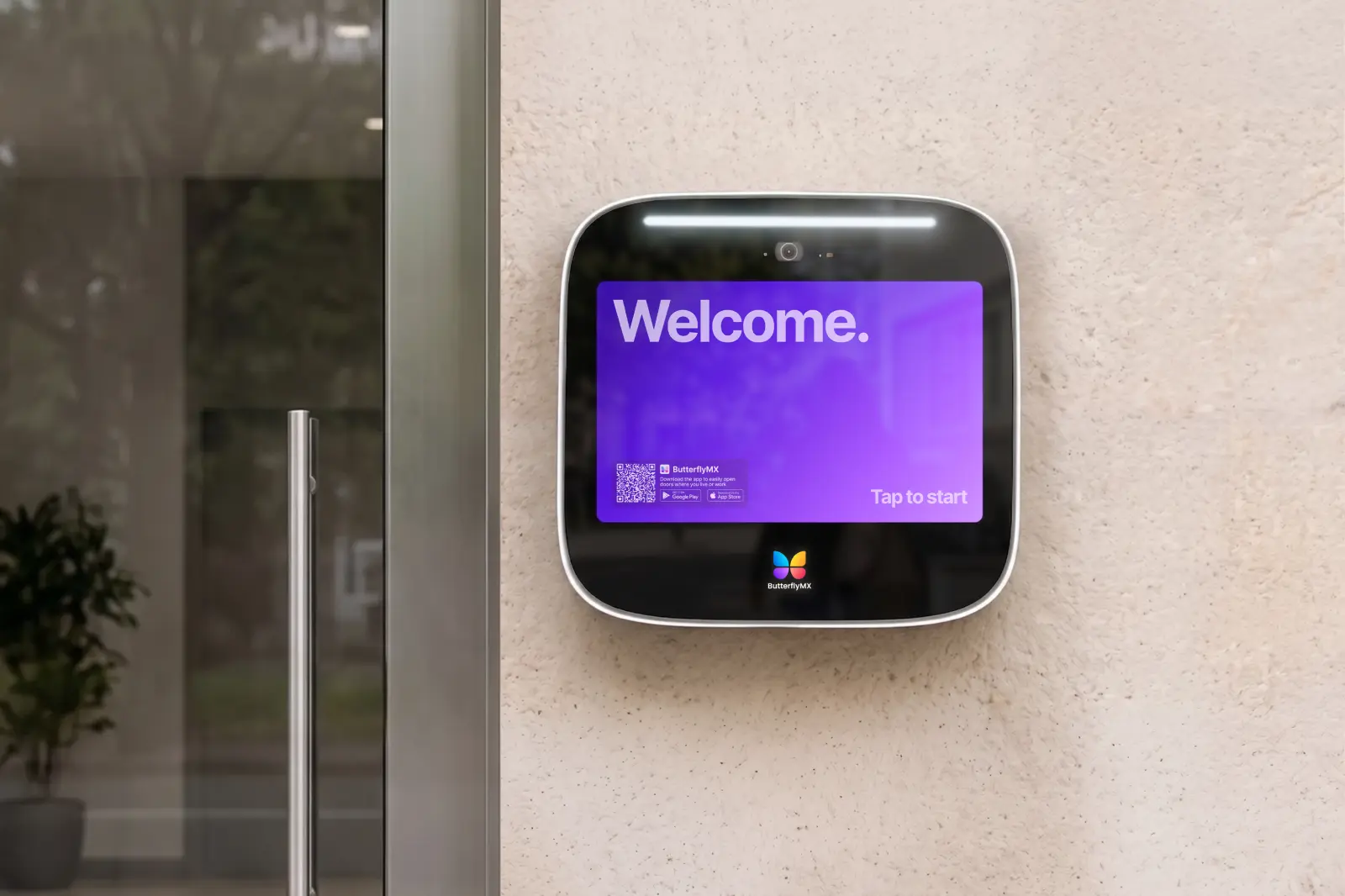
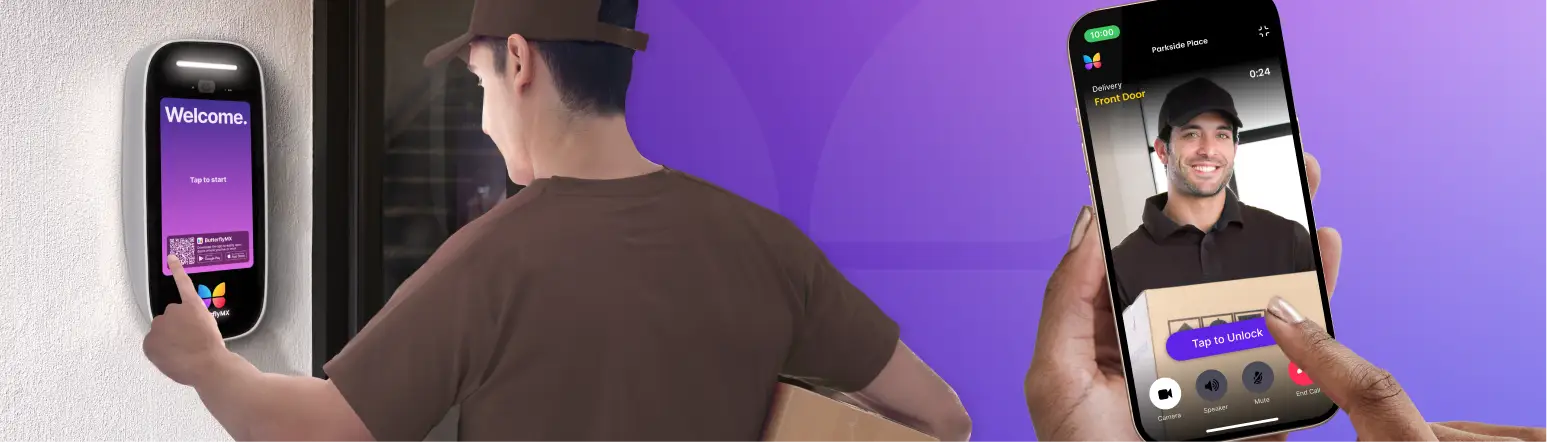
The main entrance usually carries the broadest visitor demand. Guests, delivery drivers, vendors, leasing prospects, maintenance providers, and after-hours visitors may all arrive there first. A video intercom can support this entrance by letting visitors request access and by allowing authorized users or staff to grant entry depending on the system configuration.
The intercom decision also affects how residents and staff handle everyday access. If a guest arrives at the main entrance, the resident may need to see who is there, speak with them, and open the door remotely. That path depends on the intercom, the lock or door release hardware, connectivity, resident directory management, and staff policies for deliveries and vendors.
Side doors and resident access
Side doors usually serve residents, staff, maintenance teams, or service providers who need credentialed access without using the main visitor entrance. These doors often need access readers rather than intercoms because the person entering is expected to have a credential already.
For each side door, confirm whether residents should use mobile access, fobs, cards, PINs, or another supported method. Then connect that credential decision to the door itself. The project team may need to confirm electrified lock hardware, door position, reader placement, conduit path, controller location, and how staff will manage permissions once the building opens.
Vehicle gates and parking access
Vehicle gates require their own planning because a car approaching a roll-up gate is not the same as a person standing at a pedestrian door. A vehicle gate reader is an access reader used at vehicle entrances to identify authorized vehicles or drivers and trigger gate access when approved by the system. Its placement, credential type, expected read behavior, and connection to the gate operator should be coordinated with qualified gate and access control professionals.
For a property with four roll-up gates, the access map should identify which gates residents use, which gates staff or vendors use, whether visitors ever need vehicle access, and how traffic flows through the parking area. Those answers help determine whether the property needs RFID vehicle credentials, mobile access at certain locations, visitor access rules, or separate policies for delivery and service vehicles.
Choose credentials for residents, staff, vendors, and vehicles
After you’ve mapped the entrances, the next question is how each user should prove they’re allowed in. Credentials should match the entry point, the user group, and the amount of management work the property is prepared to handle. A credential plan that makes sense for a pedestrian side door may not work for a vehicle gate, and a credential that’s convenient for residents may not be appropriate for temporary vendors.
Common access methods include mobile credentials, fobs, key cards, PINs, and vehicle credentials. Mobile access lets authorized users unlock supported doors or gates with a smartphone app or mobile credential, depending on the system. Fobs and cards may still be useful for residents who need a physical credential, staff who need reliable daily access, or properties that want backup options. PINs can work in some controlled scenarios, but they require policies around sharing and changes. Vehicle credentials, such as RFID credentials, should be planned around gate equipment, reader placement, and driver behavior.
Fobless mobile unlock for residents
Fobless mobile unlock can reduce reliance on physical credentials when the access control system supports it. For residents, the practical value is straightforward: they may be able to use a phone to enter supported doors instead of carrying an additional fob. For staff, mobile credentials can make it easier to add or remove access without collecting hardware from every user.
That doesn’t mean every entry point should rely on one credential type. A property may choose mobile access for resident side doors, fobs or cards for certain staff groups, and vehicle credentials for parking gates. The right mix depends on resident expectations, backup access policies, gate traffic, property layout, and how the management team wants to administer permissions.
Vehicle RFID readers for roll-up gates
Vehicle RFID readers need more coordination than a typical wall-mounted door reader because the vehicle is moving, the driver may not be close to the reader, and the gate equipment must respond safely and predictably according to its own specifications. Before choosing a vehicle access method, ask about the reader type, intended placement, range expectations, credential format, gate operator compatibility, traffic patterns, and who is responsible for installation and testing.
Those details should be verified with the access control provider, gate professional, installer, and manufacturer documentation as appropriate. Avoid assuming that a credential used at a pedestrian door will automatically work well at a vehicle entrance, or that all gate readers behave the same way in every parking layout.
Coordinate wiring, power, network, doors, and gates early
The access map and credential plan only help if they reach the construction team in time. Access control wiring and electrification should be planned before walls are closed and before final door, frame, gate, conduit, power, and network decisions are locked. Details vary by property, jurisdiction, equipment, and installation design, so qualified professionals should handle electrical, fire, life-safety, gate, elevator, door hardware, and code-related requirements.
In practice, early coordination keeps the access plan from becoming a late-stage scramble. If a reader is planned for a side door, the door hardware provider, electrician, low-voltage contractor, and access control installer may all need aligned information. If a gate reader is planned at a vehicle entrance, the gate vendor and access control provider need to understand how the reader, gate operator, power, mounting, and credential strategy fit together.
Who should be involved before walls close
The right group usually includes the developer, general contractor, electrician, low-voltage contractor, access control installer, door hardware provider, gate vendor, property operator, and any required code or safety professionals. Each party sees a different part of the same system. The developer may focus on scope and budget. The electrician needs power and conduit details. The door hardware provider may be looking at locks, strikes, frames, and egress requirements. The property operator is thinking about move-in, staff permissions, and resident onboarding.
Bringing those perspectives together early helps the access control provider design against the actual building rather than a simplified floor plan. It also gives the property operator a chance to influence decisions that will affect daily management after the construction team leaves.
Construction questions to answer before installation
Before installation begins, the project team should be able to answer these questions:
- Where will each video intercom, door reader, vehicle gate reader, and access controller be located?
- Which doors require electrified hardware, and who is responsible for specifying and installing it?
- What power, conduit, low-voltage wiring, and network connectivity are required for each device?
- How will vehicle gate readers connect with gate operators, and who will test that connection?
- Where will controllers be mounted, and how will they connect to readers, locks, gates, and management software?
- What needs to be tested before turnover, and who signs off on commissioning?
- How will staff, residents, vendors, and vehicles be added before opening?
These questions are intentionally practical. They turn a vague request for the whole access system into a coordinated scope that installers, contractors, and property teams can actually review.
Confirm controller capacity and smart lock compatibility
After the physical access plan is clear, two questions often come up: how many doors and gates can the system support, and can the access control platform connect with apartment smart locks? Both questions matter, but neither should be answered with assumptions. They require product-specific verification.
How many doors and gates can one controller support?
Access controller capacity depends on the access control platform, controller model, reader types, wiring topology, door hardware, gate equipment, and configuration. There is no universal number that applies to every property or every controller. A plan with one intercom, five side doors, and four vehicle gates should be reviewed against verified product specifications and the installer’s design.
Ask vendors how many doors or gates each controller supports, whether vehicle gates count differently than pedestrian doors, what expansion options are available, and how future amenities or additional entrances would be added. Also ask whether the system can manage multiple entry points from one cloud dashboard, because centralized administration may matter as much as physical controller capacity once the property is occupied.
Can apartment access control connect with Kwikset Unite or other smart locks?
Smart lock integration is a connection between an access control platform and smart locks that may allow coordinated management or resident use across access points, depending on verified compatibility. Some multifamily access systems may support smart lock integrations, but compatibility should be confirmed for the exact lock, access platform, software version, hardware configuration, and property setup.
If your team is considering Kwikset Unite or another smart lock product, ask whether the integration is currently supported, what features are available, what residents can do in the app, what staff can manage centrally, what hardware is required, and who supports the integration after installation. This verification should happen before committing to unit-door hardware because a desired resident experience does not guarantee product compatibility.
Discover how ButterflyMX works:
How ButterflyMX fits into a new apartment access plan
ButterflyMX is a property access control company that provides access solutions for multifamily and other commercial properties. In a new apartment construction project, ButterflyMX can help developers and operators think through visitor access, resident access, door and gate access, and cloud-based access administration.
The planning framework still comes first. Once you know which entrances need access control, who uses them, and what construction decisions are still open, ButterflyMX can help validate which configuration may fit the property. That conversation may include video intercom placement, supported access readers, fob or RFID reader use cases, access controllers, mobile app access, cloud management, vehicle gate considerations, and verified smart lock integration options.
What to confirm with ButterflyMX before construction decisions are finalized
Before finalizing construction decisions, ask ButterflyMX product and implementation experts to review the details that affect both installation and long-term management.
Possible questions include:
- Where should the main video intercom be placed for visitors, deliveries, vendors, and residents?
- Which side doors, service doors, amenity areas, and staff spaces should have access readers?
- What vehicle gate reader options are appropriate for the property’s gates and traffic patterns?
- What access controller configuration is required for the number of doors, gates, and future entry points?
- Which mobile access, fob, card, PIN, or vehicle credential options are supported for each user group?
- What power, wiring, network, mounting, and installation details should be coordinated with contractors and qualified professionals?
- Is the desired smart lock integration supported for the exact lock, software, and property configuration?
- How should staff permissions, resident onboarding, vendor access, and system handoff be handled before opening?
The result should be a property-specific access plan that supports the way residents, visitors, staff, vendors, deliveries, and vehicles will actually use the building. For developers, that is the real value of planning early: access control becomes part of the construction strategy instead of a disconnected decision made near turnover.
Frequently asked questions
What is the best access control system for new apartment construction?
The best access control system for new apartment construction is one that supports the property’s actual entry points, user groups, credentials, construction requirements, and long-term management needs. For a building with a main intercom, multiple side doors, and vehicle gates, evaluate video intercom support, door readers, vehicle gate reader options, access controller capacity, mobile credentials, cloud management, installation coordination, and verified integrations.
When should access control be planned during apartment construction?
Access control should be planned before walls are closed and before final door, frame, conduit, power, network, and gate equipment decisions are locked. Early planning gives electricians, low-voltage contractors, door hardware providers, gate professionals, installers, and property operators time to coordinate device locations and installation responsibilities.
Can one apartment access control system manage doors and vehicle gates?
Some apartment access control platforms can manage multiple types of entry points, including pedestrian doors and vehicle gates, but the exact configuration depends on the platform, controllers, readers, gate equipment, wiring, and installation design. Ask vendors to verify supported doors, supported gates, reader types, controller capacity, and cloud management options for your property.
Do residents need fobs if the property offers mobile access?
Not always. Many properties still choose a mix of credentials. Mobile access can reduce reliance on physical fobs when supported, while fobs or cards may still be useful for backup access, specific resident needs, staff access, or property policies. Vehicle gates may also require separate vehicle credentials depending on the gate reader and access design.
Can apartment access control connect with smart locks like Kwikset Unite?
Some multifamily access systems may support smart lock integrations, but compatibility with Kwikset Unite or any other smart lock should be verified before choosing hardware. Confirm the exact lock model, software version, access platform, supported features, resident app experience, staff management capabilities, and support responsibilities with the access provider and smart lock provider.
Get your free quote!
Fill in the form below, and we'll email you right back.
Want a free quote?
Fill in the form below, and we'll email you right back.
You’ll be redirected shortly...