





Key takeaways:
- After-hours access control can help some high-rise condos reduce overnight doorman coverage, but only if resident access, visitors, deliveries, and incident visibility are planned in advance.
- The strongest setup combines resident-managed entry, temporary delivery access, controlled package room workflows, and clear policies for when human support is still needed.
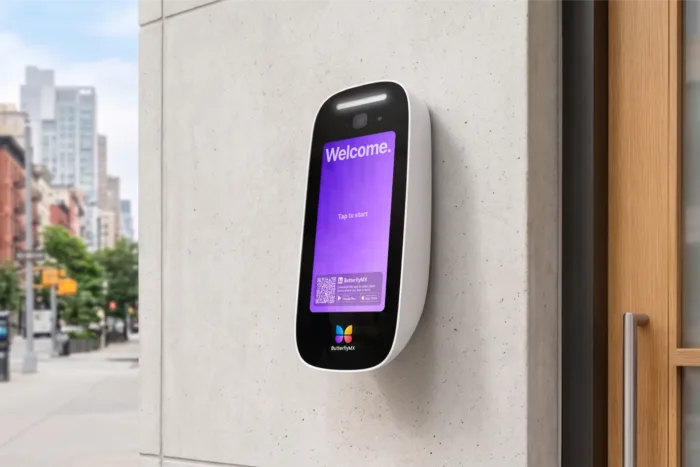
- ButterflyMX can help high-rise condos manage after-hours access with tools for residents, staff, visitors, and deliveries while giving property teams more visibility into building entry activity.
If your high-rise condo is considering reducing overnight doorman coverage, the biggest question is not whether technology looks modern. It is whether residents, guests, delivery drivers, and staff can still move through the building in a controlled way after hours.
That is where after-hours access control for high-rise condos with doorman becomes relevant. In the right building, it can help shift routine nighttime entry tasks away from manual lobby staffing and into a more structured workflow for resident entry, visitor access, deliveries, and package room management.
But it is not a blanket replacement strategy. Some properties can reduce overnight staffing, some may only want to support staff with better tools, and some will decide that overnight coverage should remain in place. The key is to evaluate the actual overnight workflow before making an operational change.
This guide covers:
- Can after-hours access control reduce overnight doorman coverage?
- How the overnight workflow actually works
- Managing late-night deliveries and receiving room access
- What to review before you reduce overnight staff
- How ButterflyMX supports after-hours condo access
- FAQs
Can after-hours access control reduce overnight doorman coverage?
Yes, in some buildings, after-hours access control can support a reduction in overnight doorman coverage. But that answer only holds up if your condo has a realistic plan for who needs access overnight, how they get it, where they are allowed to go, and what happens when something does not go as expected.
A staffed high-rise condo does much more than manage access at the front door. Overnight staff may handle resident entry, admit guests, manage food deliveries, direct couriers, control access to a package room or receiving room, respond to lockouts, and keep an eye on unusual activity. If you remove or reduce that shift, those tasks do not disappear. They need a new workflow.
What changes when the doorman is off duty
Start with the basic scenarios that happen between midnight and early morning. A resident comes home late and needs quick entry. A guest arrives after midnight and calls from the lobby. A food delivery driver needs a way to complete a handoff. A courier may need access to a controlled drop-off point instead of leaving packages in an unsecured area.
Those moments are routine, but they are exactly where a weak after-hours plan breaks down. If the building relies on ad hoc calls, shared codes, or resident workarounds, convenience may go up for a short time while control goes down.
When technology should support staff instead of replacing them
Some high-rise condos are better candidates for reduced overnight coverage than others. A building with predictable resident traffic, strong package room workflows, and clear visitor policies may be able to shift more nighttime access tasks into a digital system. Another property may decide to keep overnight staff because of resident expectations, lobby complexity, security posture, or the volume of late-night activity.
That is why the better question is not simply, Can an intercom replace a doorman? It is, Which overnight tasks can be handled through controlled access workflows, and which still require a person on site? In many properties, technology is most useful when it reduces routine manual entry decisions without removing human judgment where it is still needed.
How the overnight workflow actually works
An effective overnight setup should feel straightforward to residents and structured for staff. People should know how to enter, how to let someone in, and where deliveries belong. Property teams should know what permissions exist, what events are logged, and how exceptions are handled.
Resident and visitor access through a smart video intercom
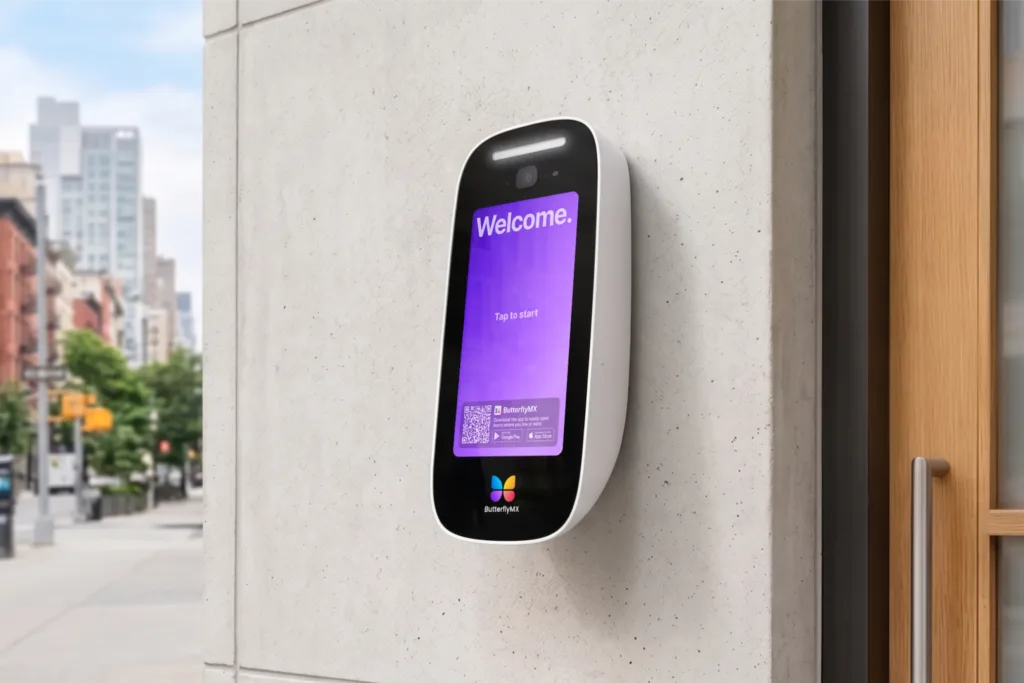
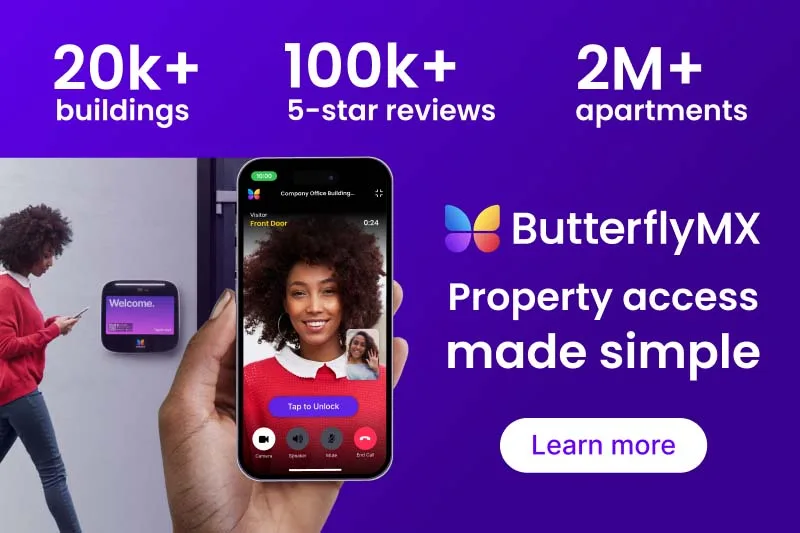
Picture a resident returning home after 1 a.m. Instead of depending on a staffed front desk, they use their approved entry method to access the building. If a guest arrives later, the guest can call the resident from the entrance through a smart video intercom. The resident can see who is there, speak with them, and decide whether to grant access.
That changes the workflow in a practical way. Routine visitor entry no longer depends on an overnight staff member answering every call from the lobby. Residents handle their own approved guests, and the building can keep a more consistent process for how after-hours entry requests are managed.
This does not eliminate risk, and it does not mean every building should remove overnight staff. It does mean the resident is no longer forced into a manual, staff-dependent process for every late-night visitor.
Front desk workflows for buildings that still use daytime or evening staff
Many condos are not trying to operate without staff altogether. They are trying to shift coverage. For example, daytime and evening teams may still manage move-ins, vendors, resident support, and lobby oversight, while after-hours access is handled through resident permissions and temporary access methods.
In that model, a Front Desk Station can help staff manage access during staffed hours from one place rather than juggling separate systems, paper notes, or verbal instructions. Staff can prepare the building for the overnight period by confirming visitor permissions, reviewing delivery procedures, and making sure temporary access workflows are ready before the desk closes for the night.
That handoff matters. A condo usually has fewer after-hours problems when daytime staff have already set up the next shift for success.
Managing late-night deliveries and receiving room access
Deliveries are often the hardest part of reducing overnight lobby staffing. Residents still expect food, grocery, and courier access after hours, but most boards do not want drivers wandering through the building or leaving packages in unsecured common areas.
How temporary access can work for deliveries
A one-time code or temporary delivery credential can give a driver limited access for a specific delivery event instead of giving out a standing credential. That matters because the building keeps tighter control over who can enter and when.
For example, a resident ordering late-night food may be able to share a time-limited access method for the entrance that fits the building’s policy. A courier handling a scheduled drop-off may receive access only to the point needed for that delivery. The building is not handing out broad permissions. It is defining a narrower, more manageable workflow.
This approach works best when the property sets clear rules in advance. Which entrances are available overnight? Can drivers reach upper floors, or only a delivery zone? Are residents expected to meet drivers in the lobby, or can approved deliveries go to a secured room? Policy decisions shape whether the technology actually improves the operation.
Package room and receiving room access
Many high-rise condos will not want every late-night delivery to reach a residential floor. A controlled package room or receiving room can be a better fit, especially when the building wants to separate delivery traffic from resident living areas.
In practice, that might mean a courier receives access only to the delivery destination, not to the rest of the building. A package room intercom or similar controlled entry point can support that workflow without requiring a person at the front desk to intervene each time.
This is also where building layout matters. If your receiving room is hard to access, poorly monitored, or disconnected from the main entry process, the overnight plan may create friction for residents and staff. If the room is easy to route to and access is limited to the correct people, the building has a much stronger case for reduced lobby involvement overnight.
What to review before you reduce overnight staff
Before a condo board changes overnight staffing, it should evaluate the building as an operating environment, not just a line item. The decision affects resident experience, delivery handling, staff workflows, and risk tolerance.
Security, access, and elevator planning considerations
Make a list of every overnight access scenario the building needs to support. Include residents, guests, food deliveries, package deliveries, vendors, cleaners, dog walkers, and emergency service coordination where applicable. Then ask a simple question: who should be able to enter, through which entrance, during which hours, and with access to which areas?
Elevator access deserves special attention in a high-rise condo. ButterflyMX does not replace the elevator system itself, and any connection to elevator workflows should be reviewed carefully. Some buildings may want access controls that help coordinate which floors a visitor or delivery person can reach, but compatibility, installation approach, safety requirements, and local rules should be reviewed by the access control provider, elevator contractor, qualified installer, and local officials when appropriate.
This article is not legal, code, labor, or engineering advice. Those questions need qualified professionals. What matters at the planning stage is making sure the board does not treat elevator access as a minor detail, because in many high-rise buildings it is central to the overnight security model.
Visibility, auditability, and board-level decision points
If you are reducing manual oversight overnight, you need more visibility into what happens at the building entrance, not less. Property teams should be able to review access activity, understand which credentials were used, and investigate exceptions without relying on guesswork.
That is why boards often evaluate features like event logs, camera visibility, controlled credentials, and simpler permission management alongside the intercom itself. The question is not whether software sounds advanced. The question is whether your team can review what happened, adjust access rules, and respond more confidently when a resident raises a concern.
For the business case, avoid jumping straight to savings estimates. Start with the current staffing model and map the actual overnight responsibilities. Then compare that with the investment categories the board would need to consider:
- Overnight staffing costs, overtime, and coverage complexity
- Access control hardware, software, and installation
- Training for staff and residents
- Delivery and package room process changes
- Resident communication and policy updates
- Any professional services needed for planning, integration, or compliance review
Board discussions are usually more productive when they focus on operational questions first:
- Which overnight tasks are repetitive and can be digitized?
- Which tasks still require human judgment or on-site response?
- How much delivery traffic does the building handle after hours?
- What level of change will residents actually accept?
- What mix of labor savings, workflow improvement, and access visibility would justify the investment?
That framework gives the board a more realistic way to evaluate return on investment without inventing payback claims.
Discover how ButterflyMX works:
How ButterflyMX supports after-hours condo access
Once a high-rise condo understands its overnight workflow, ButterflyMX can help turn that plan into a more manageable access system. The value is not just in having an intercom at the door. It is in giving residents, staff, and delivery users access tools that match the building’s actual operating model.
Access tools tied to real condo workflows
For resident and visitor entry, a ButterflyMX smart video intercom can help residents see and speak with visitors before granting access. That supports guest entry after hours without forcing every request through a staffed lobby desk.
For buildings that still use daytime or evening staff, ButterflyMX Front Desk Station can help teams manage access from a central place during staffed hours, then hand off to configured after-hours workflows when the desk closes.
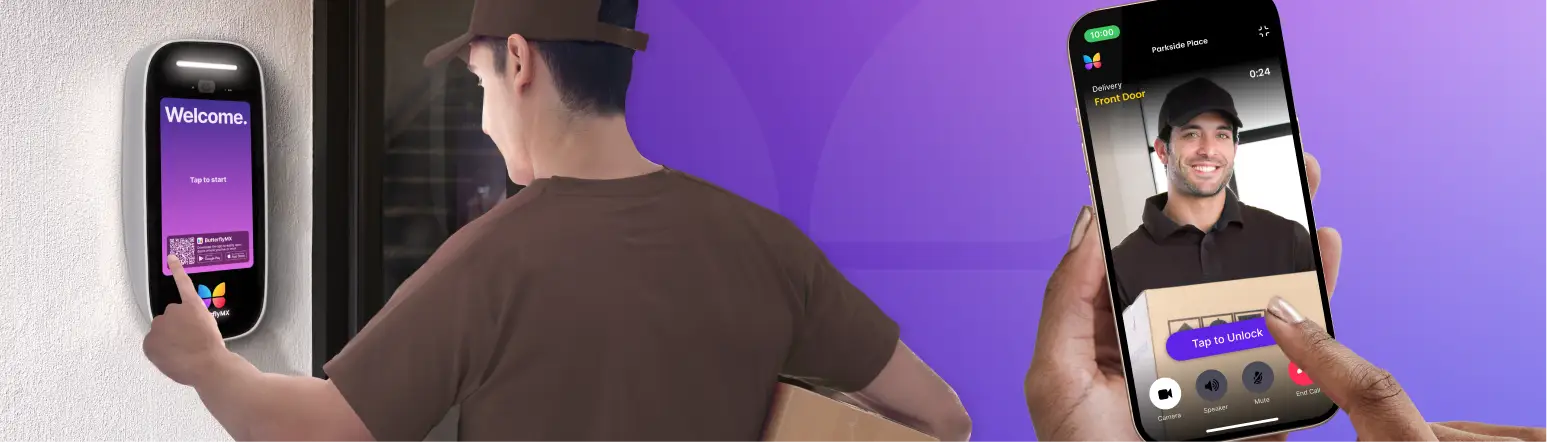
For deliveries, ButterflyMX can support more controlled access through tools such as Delivery Pass, delivery PINs, one-time codes, and package room access workflows. That can make it easier to handle food deliveries, courier drop-offs, and receiving room entry without resorting to shared credentials or inconsistent staff workarounds.
For visibility, ButterflyMX Camera Dashboard and access activity tools can give property teams more context around building entry events. That can help managers review what happened, respond to resident questions, and refine policies over time.
Depending on the property, integrations may also support broader operational workflows. The right configuration depends on the building, the staffing model, and the access scenarios you want to control.
When it makes sense to schedule a demo
A demo is worth considering if your condo board is actively comparing overnight staffing changes, trying to improve late-night delivery handling, planning a lobby update, or looking for a better way to manage resident and visitor access after hours.
The most useful conversations usually start with your real workflow. How do residents enter late at night? How are guests approved? Where do deliveries go? Which tasks still need a person? Those answers will shape whether ButterflyMX is a fit and how the system should be configured for your building.
FAQs
Can a smart video intercom safely replace overnight doorman shifts in every high-rise condo?
No. Some high-rise condos may be able to reduce overnight coverage with the right access workflows, but others will still need on-site staff based on resident expectations, delivery volume, building layout, security needs, and local requirements.
How do one-time delivery codes work in a condo building?
They are typically used to give a driver limited access for a specific delivery instead of permanent access. The exact setup depends on building policy, including which entrance the driver can use, how long the credential stays active, and whether the delivery ends in the lobby, a package room, or another approved area.
What access workflows should a condo plan before reducing overnight lobby staff?
At a minimum, plan for resident entry, guest access, food deliveries, courier drop-offs, package or receiving room access, vendor entry when relevant, and how staff will review access activity or respond to exceptions the next day.
Can after-hours access control work with elevator access?
It may support elevator access workflows depending on the building’s systems and configuration, but ButterflyMX does not replace the elevator itself. Any integration or coordination with elevator controls should be reviewed by the access control provider, elevator contractor, qualified installer, and local officials when appropriate.
How should a condo board estimate savings from reducing overnight staff?
Start by documenting what the overnight team currently handles, then compare those responsibilities with the costs of access control, installation, training, communications, and any related operational changes. A good ROI discussion weighs workflow impact and risk tolerance alongside labor costs instead of relying on assumed savings.
Get your free quote!
Fill in the form below, and we'll email you right back.
Want a free quote?
Fill in the form below, and we'll email you right back.
You’ll be redirected shortly...