
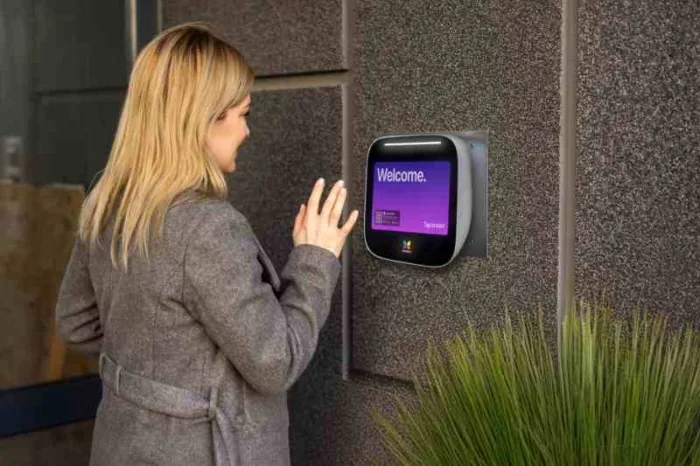





Key takeaways:
- Appointment-only access control for med spas is a physical-entry policy, not the same as appointment-only scheduling, clinical check-in, or ePHI permissions.
- Scheduled clients may enter through live video verification, temporary PINs, or Visitor Passes, while staff and providers need their own role-based credentials.
- Front-door controls do not replace restricted storage, controlled-substance policies, accessible entry, emergency egress, or landlord approvals.
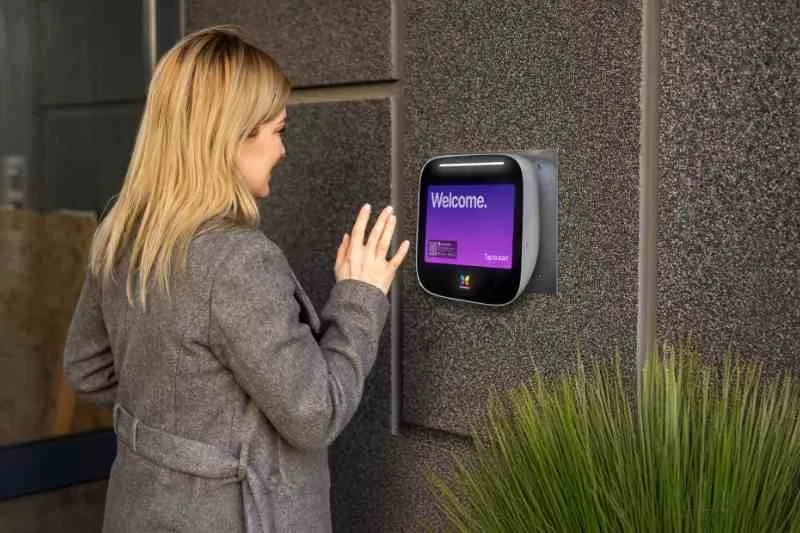
A med spa has a real front-door challenge: clients are expected, treatments are private, and staff may be busy when someone arrives. Leaving the salon suite or spa entrance unmanaged can invite interruptions. Making every visitor feel locked out can hurt the client experience.
Appointment-only access control for med spas is the middle ground. It is a physical-entry policy that admits scheduled clients through live verification or time-bound credentials while limiting who can enter the lobby, suite, treatment rooms, and staff-only areas.
That makes it different from appointment-only scheduling, clinical check-in, and technical access controls for electronic protected health information. A good plan separates those pieces, then accounts for staff credentials, high-value products, leased-building rules, accessible entry, and emergency egress.
This guide will answer:
- What appointment-only access control means for med spas
- Why managed entry matters for med spas
- How appointment-only entry works
- How facility access differs from ePHI access
- How to choose an entry method for scheduled arrivals
- How to secure controlled substances and high-value injectables
- How to manage recurring user access
- How to coordinate access in leased medical buildings
- How to evaluate cost, installation, accessibility, and egress
- How ButterflyMX may support the workflow
- FAQs
Watch how ButterflyMX works:
What appointment-only access control means for med spas
Appointment-only access control is a physical-entry policy that keeps a med spa entrance managed while admitting scheduled clients through an authorized staff decision or a temporary credential. It does not mean every appointment-based practice must keep the front door locked. It means the practice has a clear method for deciding who enters, when they enter, and which areas they can reach.
Appointment-only scheduling answers a business question: does the med spa accept walk-ins or only prebooked clients? Access control answers an entry question: how does a person get into the property, lobby, suite, or nonpublic area? Booking software, clinical check-in, visitor management, door hardware, and ePHI permissions may all support related operations, but they are not the same system.
That distinction matters because med spas sit between hospitality and healthcare-adjacent operations. A salon may use a similar appointment-only entry model, as explained in this related article on appointment-only access control for salons. Med spas, however, often have added concerns around treatment privacy, provider access, medical-suite rules, high-value products, and, in some cases, regulated substances.
Why managed entry matters for med spas
Managed entry helps a med spa control movement without turning the arrival process into a barrier. It can reduce unexpected walk-ins during treatments, keep visitors from wandering into staff or treatment areas, and give clients clearer instructions about what to do when they arrive.
The best version of appointment-only access does not make a scheduled client feel like a trespasser. It tells them where to go, whether to call from an intercom, whether to use a temporary credential, and what to do if something goes wrong. That backup path matters. A client may arrive early, arrive late, bring a companion, have a dead phone, need accessibility assistance, or fail to receive a credential.
Managed entry also supports a broader med spa security system, but it should not be oversold. The American Med Spa Association has reported documented break-ins involving Botox, fillers, and equipment. Those incidents show why valuable products and equipment deserve attention, but they do not prove a national burglary rate. A controlled front entrance is one layer. Locked internal storage, inventory practices, staff authorization, and restricted-room rules serve different purposes.
How appointment-only entry works
A good client arrival process separates scheduling, arrival instructions, entry authorization, door release, and credential expiration. The process can be simple, but each step needs an owner and an exception path.
- Confirm the appointment and choose an entry method. A med spa may use live video verification when someone should review each arrival, or it may use an individual temporary credential when every scheduled visitor does not need a live call.
- Send limited arrival instructions. The message can identify the correct entrance, arrival window, and contact path without including sensitive treatment or health details. When the selected system supports it, a temporary PIN or Visitor Pass can be limited to a set time and door.
- Handle the arrival. The visitor either calls a video intercom and waits for an authorized person to release the door, or presents the assigned credential. Door release and clinical check-in should remain separate unless a verified configuration deliberately connects them.
- Expire or close out visitor access. Temporary access should end after the intended visit window according to the practice policy and system settings. A visitor credential should not become a substitute for a staff credential.
- Use the exception path. Staff should know how to handle early or late arrivals, failed credentials, unexpected companions, visitors without working phones, and visitors who need assistance at the entrance. Public-facing verification should avoid revealing sensitive appointment or treatment details.
Different people also need different access paths. Clients receive short-term visitor access or live verification. Providers and recurring staff receive individual credentials tied to their roles. Vendors, cleaners, and temporary personnel may need limited doors or limited times. Former employees should have access suspended or revoked as part of offboarding. For more on visitor credential mechanics, see temporary PINs for appointment-based businesses.
How facility access differs from ePHI access
No. Physical door access control is not the same as HIPAA technical access control for electronic protected health information, or ePHI. The HIPAA Security Rule distinguishes physical safeguards, including Facility Access Controls, from the technical Access Control standard for electronic systems that contain ePHI. The U.S. Department of Health and Human Services explains technical safeguards in its HIPAA Security Series on technical safeguards.
This distinction keeps the access plan realistic. Locks, intercoms, staff credentials, visitor procedures, workforce policies, and technical safeguards can all be part of a broader risk-based program. None of them, on its own, establishes HIPAA compliance. HIPAA applicability and appropriate safeguards depend on the organization, risks, environment, and current requirements.
For a related healthcare-adjacent discussion, see appointment-only access control for therapy offices. The same core distinction applies: controlling a door is not the same as controlling access to electronic health information.
How to choose an entry method for scheduled arrivals
Start with the operational question, not the device: does each arrival need live human review? If yes, a video intercom may fit when an authorized person is available to answer. If no, an individual time-bound credential may reduce front-desk interruptions. Many med spas use a mix, such as live verification for exceptions and individual credentials for routine scheduled visits.
The tradeoff is usually between verification, convenience, staffing, and attribution. A video intercom gives staff a chance to review an arrival, but it also creates a duty to answer calls. A temporary credential can reduce interruptions, but it requires clear rules for sending, expiring, resending, and troubleshooting access. A shared code is easy to explain, but it weakens individual accountability.
Also separate visitor management from door access. A visitor management tool may track or authorize a visit without controlling the lock. A door access system may unlock the entrance without completing clinical check-in. Before choosing a method, validate the door hardware, building permissions, accessibility needs, staff capacity, and exception process.
How to secure controlled substances and high-value injectables
A high-value injectable is not automatically a federally controlled substance. Before applying DEA-specific guidance, a practice should identify the legal status of each substance it stores or administers and check the federal and state requirements that apply to that substance and setting.
For DEA registrants that handle controlled substances, federal security rules address storage-area access and require access to be limited to the minimum number of specifically authorized employees. Requirements vary based on factors such as substance schedule, quantity, and setting. The governing framework is available in 21 CFR Part 1301 security requirements.
That means front-door access control is not a replacement for controlled-substance storage safeguards. A med spa may need separate decisions for who can enter the facility, who can enter restricted rooms, and who can access controlled-substance storage. Those decisions should be tied to job duties, licensing or authorization, and the substances involved.
- Use separate controls for front-door entry, restricted-room access, storage, inventory, and internal authorization.
- Issue individual credentials where accountability matters, especially for recurring staff and providers.
- Remove or change access promptly when a role changes or employment ends.
- Review applicable federal rules, state rules, pharmacy-board guidance, and practice policies before treating a facility credential as part of a compliance program.
State guidance can add further context. In a December 2025 Ohio-focused example, guidance discussed failure to secure controlled substances from unlicensed staff among common clinic and med spa violations. That is a state-specific example, not a nationwide rule. Compliance-aware legal, pharmacy, or regulatory review is appropriate before finalizing policies.
How to manage recurring user access
Recurring users need a credential lifecycle, not a permanent code passed from person to person. Create separate access groups or policy categories for providers, licensed staff, unlicensed staff, administrators, cleaners, vendors, and temporary personnel based on what each group actually needs to do.
For each group, define who approves access, when access becomes active, which doors and times are permitted, how often permissions are reviewed, and how access is suspended or revoked. Restricted-room permissions should follow documented job duties and applicable licensing or substance-handling rules. A role label inside access-control software does not determine a person’s legal scope of practice.
Individual staff credentials should be different from visitor passes or shared client codes. That way, a former employee can be removed without changing every visitor credential, and a provider’s access can be adjusted without disrupting the front-door process for clients. Access logs can support incident review and follow-up, but logs alone do not prove identity, policy compliance, or every physical event that occurred.
How to coordinate access in leased medical buildings
A leased med spa suite often has two access layers: the building layer and the suite layer. The landlord or property manager may control the exterior entrance, lobby, elevator, or after-hours door. The med spa may control only its own suite door. A good suite plan cannot fix a building entrance the tenant has no authority to change.
Map the full visitor journey before selecting hardware or credentials. Where does the client park? Which door do they use after hours? Can they reach the elevator? Who answers if the building credential fails? Who changes access if the appointment moves? These questions determine whether a client needs two credentials, live assistance at one layer, or a more coordinated process.
Before installation, review the lease, alteration rules, door ownership, network availability, approval process, and responsibility for outages. Accessible entry and emergency egress must work across both layers. The property manager, qualified installer, and appropriate code or accessibility professionals should validate the final design, including what happens during a power, network, or credential failure.
How to evaluate cost, installation, accessibility, and egress
There is no reliable national price for a small med spa access-control deployment because the cost depends on the site and the process the practice wants to run. Compare proposals by looking at the full scope: number of controlled doors, existing locks and wiring, intercom or reader hardware, credential method, connectivity, installation labor, building approvals, and ongoing administration.
- Assess whether staff can answer video calls, resend credentials, and handle exceptions during treatment hours.
- Review appointment volume, arrival patterns, companion policies, and the level of individual accountability needed for each user type.
- Confirm who controls each door and which alterations the lease permits.
- Include credential issuance, code rotation, onboarding, offboarding, training, and incident review in the operating burden.
- Validate accessible entry, emergency egress, fire and life-safety requirements, and failure behavior with qualified professionals.
These checks help a practice compare fit and responsibility instead of choosing only on installation cost. They may also reveal that a simpler process is better, such as live release during limited business hours instead of issuing credentials to every scheduled visitor.
Ready to evaluate a specific process? Discuss an appointment-only entry workflow for your med spa after identifying the doors, staffing model, credential needs, accessibility requirements, and landlord constraints.
How ButterflyMX may support the workflow
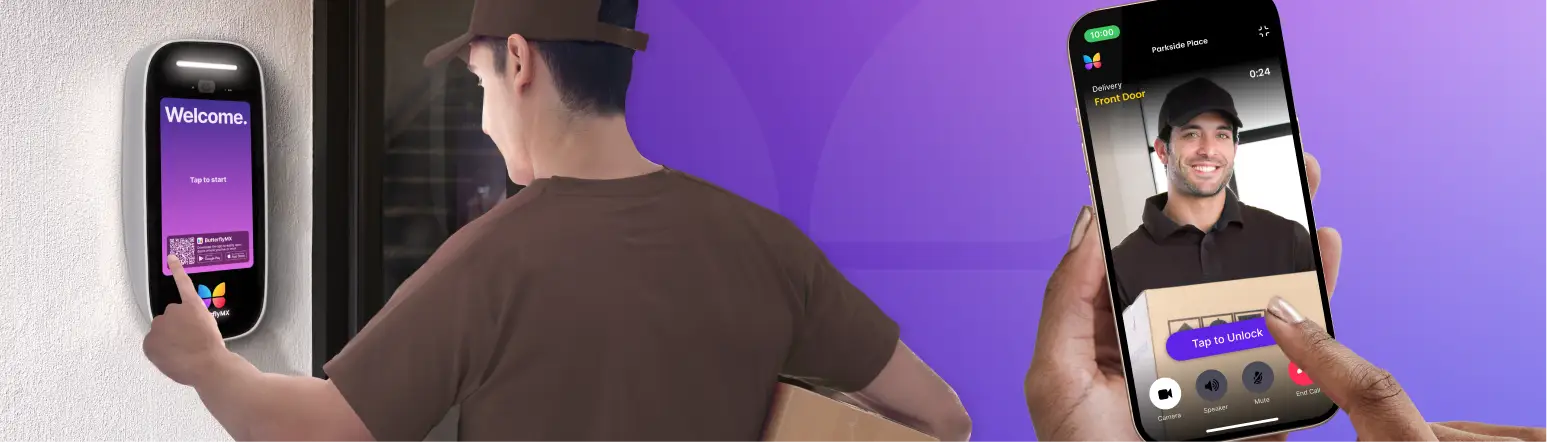
Once a med spa has mapped its doors, visitor path, and staff responsibilities, ButterflyMX may support selected parts of the access plan. A video intercom can support live visitor verification and remote door release when an authorized staff member is available to respond. Temporary PINs and Visitor Passes may support scheduled visitor entry without giving clients permanent staff credentials.
For recurring users, mobile or keypad credentials and access groups may support separate paths for staff and providers, subject to the selected configuration. Administrators can use credential management and access activity as tools for onboarding, offboarding, and incident review.
Those capabilities do not control drug cabinets, determine clinical authorization, guarantee identity verification, or independently establish HIPAA, DEA, or state-law compliance. For a med spa, the fit questions stay practical: Which doors can the practice control? Who handles failed credentials? Is live visitor review needed? Which people need recurring access? What safeguards are separately required for restricted rooms or controlled-substance storage?
Frequently asked questions
Does HIPAA require a med spa to keep its front door locked?
No. HIPAA does not create one universal front-door rule for med spas. Covered organizations should choose reasonable safeguards through a risk-based process, while recognizing that physical Facility Access Controls are different from technical controls for ePHI.
How can a solo med spa provider manage entry without a receptionist?
A solo provider can use live video intercom calls between appointments, individual temporary PINs, Visitor Passes, or a mix of those methods. The process should include clear arrival instructions, a backup contact method, and a plan for visitors whose credential fails or whose phone is not available.
Can a med spa safely use a shared keypad code?
A shared code can be simple, but it provides less individual accountability than a unique, time-bound credential. If a practice uses one, it should define who receives the code, when it is rotated, how suspected sharing is handled, and when it must be replaced.
How does access control relate to DEA controlled-substance security rules?
Facility and role-based entry controls may support a broader security program, but they do not replace DEA-regulated storage safeguards where controlled substances are involved. The practice must evaluate the substances, setting, registrant status, and current federal and state requirements.
Appointment-only access control works best when a med spa treats entry as a planned process, not just a locked door. The practice first decides how scheduled clients should arrive, then separates visitor access from staff credentials, clinical check-in, ePHI permissions, restricted-room access, and any controlled-substance storage safeguards.
ButterflyMX may help med spas evaluate live visitor verification, temporary visitor access, and recurring staff credentials within that larger plan. Request a ButterflyMX demo to explore visitor entry and staff access options for your med spa.
Get your free quote!
Fill in the form below, and we'll email you right back.
Want a free quote?
Fill in the form below, and we'll email you right back.
You’ll be redirected shortly...