




Key takeaways
- Whether you’re marketing, managing, or investing in a commercial property, technology has a solution for you.
- Proptech — or property technology — is tools and digital tech that have evolved in real estate to revolutionize the way we live.
- With the right technology, you can perform tasks faster, minimize errors, and spend more time focusing on establishing a great tenant experience.
- The world is moving at breakneck speeds — and with the help of technology trends in commercial real estate, you can experience all of those benefits for yourself, as well.
The real estate industry isn’t particularly known for technological innovation. But in today’s data-driven, internet-powered world, professionals working in every aspect of real estate could use an upgrade.
Whether you’re a property manager, a realtor, or an investor, property technology will help you streamline your job and improve the tenant experience at your buildings. Read on to learn about five commercial real estate technology trends and their benefits.
In this post:
- What is proptech in commercial real estate?
- 5 commercial real estate technology trends
- Commercial real estate technology FAQ
What is proptech in commercial real estate?
Proptech — or property technology — are tools and digital tech that have evolved in real estate to revolutionize the way we live.
For instance, digital proptech makes it faster and more convenient for people to enter their homes by using their smartphones as credentials instead of traditional keys.
Proptech in commercial real estate includes:
- Digital smart locks enable tenants to open them with a smartphone app.
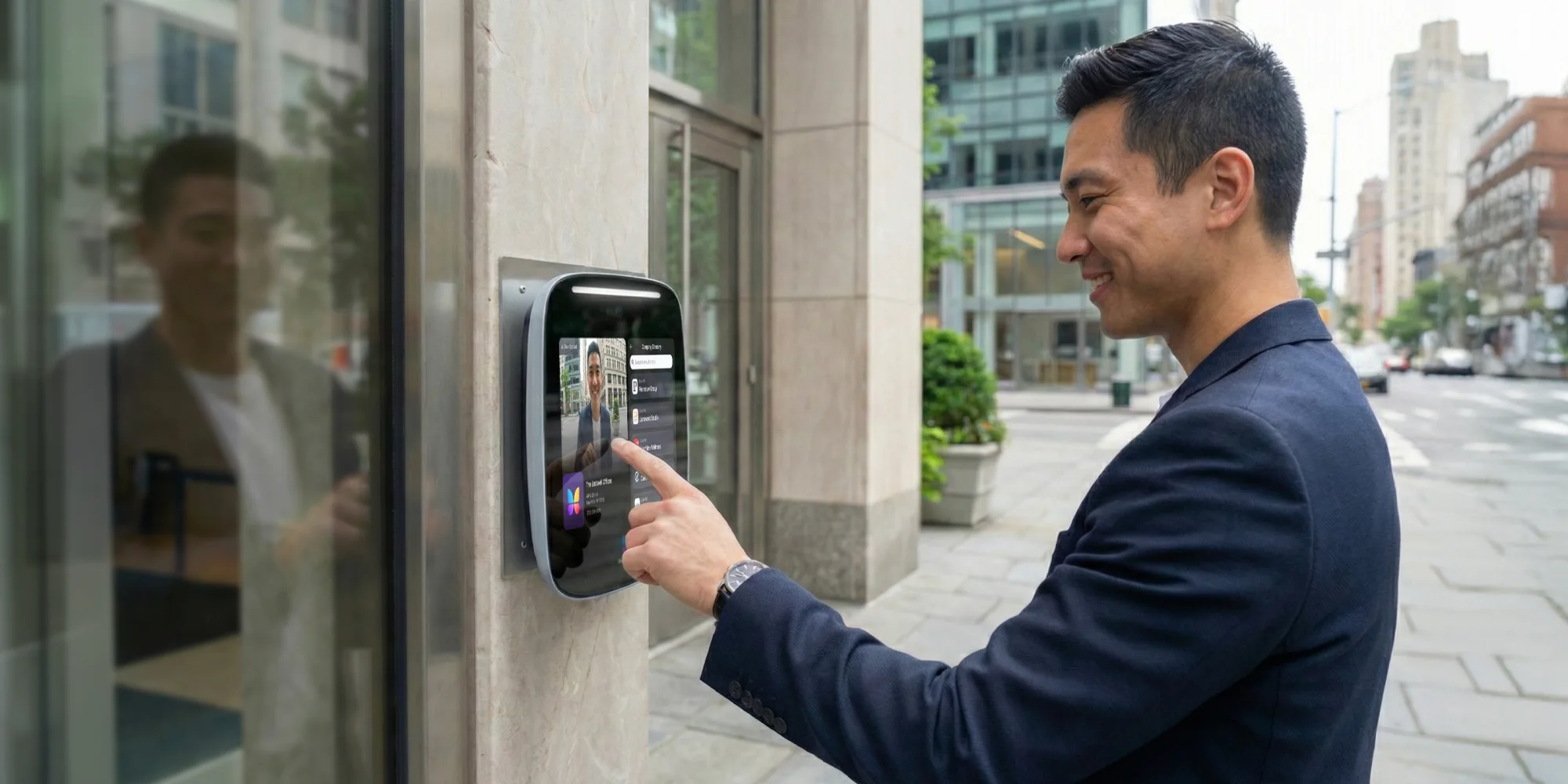
- Video intercoms that allow visitors to request entry via two-way video calls.
- Front desk station software that enables visitors and guests to request information, sign in, or speak with a property manager.
- Vehicle readers empower drivers to enter and exit a parking garage with a swipe-to-open button on their smartphone.
5 Commercial real estate technology trends
Here are five technologies used in the real estate industry:
1. Property intelligence
Property intelligence is the application of next-generation data innovations, such as analytics and artificial intelligence, to the real estate industry.
Many real estate decisions depend on the decision-maker having access to extensive data. For example, you wouldn’t invest in a property unless you had a full picture of attributes like debt history, sales history, a list of modifications, and a variety of other factors. This is where property intelligence can help.
You’ll no longer have to manually review and analyze all of this data. Instead, property intelligence aggregates and organizes data and then distills it to provide useful insights. With these curated insights, you can analyze the property and form an informed opinion on every aspect.
2. Digital twins
A digital twin is a virtual 3D model of a property. These virtual twins are connected to sensors installed throughout a property, using real-time data to give property managers a picture of a building’s overall health and how vital infrastructure components are performing.
The benefits of using a digital twin to manage your property are numerous. A manager can use this data to monitor crucial systems like plumbing or ventilation, deploying fixes months or even years before any major issues occur. In addition, a digital twin can simulate scenarios such as large crowds or weather events. This serves as a virtual stress test for your property and helps you prepare for anything.
3. Smartphone-based access control
Access control is another field being revolutionized by commercial real estate technology. With smartphone-based systems, today’s best providers are solving access control problems that have plagued tenants for decades.
Tenants can use a mobile app to gain more control over property access than ever before. From their phones, tenants can assign Visitor Passes that can be configured to work at specific dates or times, perfect for both one-time and recurring visitors. Tenants also have the power to open the building’s doors from anywhere. Highlighting this feature will also facilitate transformation in your commercial real estate marketing efforts.
Smartphone-based access control systems also benefit building managers by eliminating the need to deal with intercom wiring or in-unit hardware. Also, cloud-based software means that staff can make system changes and update access permissions even when they’re off-site.
Further, the best access control systems offer front desk station software that empowers staff to view live video feed of your entry from any desktop computer. Additionally, staff can speak directly with visitors and tenants via the intercom without needing to be called first.
4. Virtual tours
Virtual tours are one of the next great leaps in property marketing, made possible by proptech. Contactless and touchless tour options have gained popularity in recent years. And now that brokers have discovered their convenience, they’re here to stay.
Some brokers and managers have embraced a touring model, using their smartphones to show prospective tenants a property. This enables prospects to see the building whether they’re across town or across the country.
A virtual tour is a way to vastly increase the number of prospective tenants you can reach while embracing tomorrow’s technology. As augmented and virtual reality gain popularity, virtual tours will only become more immersive.
5. Blockchain
Tired of drowning in seas of paperwork? Blockchain is a commercial real estate technology trend that can help with that. Essentially, the blockchain is a way for you to securely store data. And because blockchains work the way they do, nobody can alter or misrepresent that data.
The blockchain allows you to tokenize properties, so an investor can purchase a token representing fractional ownership. This democratizes real estate by lowering barriers to entry and giving the entire market greater flexibility.
This form of secure data storage is also useful for storing information like titles or deeds. Other blockchain innovations include smart contracts, which use computer code to enforce agreements without a middleman.
Commercial real estate technology FAQ
Here is the answer to your most frequently asked question about proptech in commercial real estate:
How has technology changed commercial real estate?
Property technology has transformed commercial real estate by connecting digital and physical tools. As such, there is less of a disconnect between accessing living spaces and using technology to move about the world more efficiently.