




Key takeaways:
- Otis, Schindler, KONE, TK Elevator, and Mitsubishi Electric are major market participants, but brand recognition does not guarantee the best local service fit.
- Choose a provider based on your equipment, proprietary components, technician coverage, parts access, contract scope, and modernization needs.
- Elevator operation and access control are separate responsibilities. Any visitor or floor-access plan requires compatible equipment, contractor coordination, and local review.
The best-known elevator company is not necessarily the best company for your building. Otis, Schindler, KONE, TK Elevator, and Mitsubishi Electric are major manufacturers, but a strong shortlist depends on more practical questions: Who can service your exact controller? Are parts and diagnostic tools available? How quickly can local technicians respond? What does the contract exclude?
Those questions matter because the term elevator company covers several kinds of businesses. An original equipment manufacturer may install and service its own equipment. An independent may maintain several brands. A regional provider may offer deep local experience, while a home-elevator or LULA specialist serves a different type of project. Understanding those roles is the first step toward comparing elevator access control providers on more than name recognition or price.
This guide will answer:
- What counts as an elevator company?
- Major elevator companies and how to compare them
- OEM, independent, and regional service providers
- What elevator companies do
- How equipment type and proprietary systems affect provider choice
- Maintenance contracts and total cost exposure
- How to choose an elevator company
- Codes, inspections, and fire service
- Where elevator access control fits
- FAQs
Watch how ButterflyMX works:
What counts as an elevator company?
Elevator companies include original equipment manufacturers, independent service companies, regional providers, and specialists in home elevators or limited-use, limited-application lifts, commonly called LULA lifts. These businesses may manufacture equipment, install it, maintain it, repair it, modernize it, or perform several of those roles.
The categories are useful, but they don’t guarantee capability. An OEM may manufacture a system yet have different service coverage from one market to another. An independent elevator company may work across brands but lack the tools, parts, or experience required for a particular proprietary controller. A regional company may know the local market well but serve only a limited territory.
Commercial passenger elevators, home elevators, and accessibility lifts also shouldn’t be treated as interchangeable. They can involve different equipment, contractors, project requirements, and regulatory processes. Before comparing companies, define both the equipment and the work you need: new installation, preventive maintenance, repair, modernization, testing support, or coordination with another building system.
That scope-based approach is more useful than a universal ranking. The question isn’t simply which elevator company is biggest. It’s which qualified provider can support the building, equipment, and contract requirements in front of you.
Major elevator companies and how to compare them
Otis, Schindler, KONE, TK Elevator, and Mitsubishi Electric are widely identified as major elevator market participants. Industry reporting on consolidation in the U.S. elevator market and research on the global elevators sector provides context for their prominence. It does not establish which company offers the best service in a specific city or for a particular building.
Use major-brand status as a starting point, not a verdict. A property-specific comparison should focus on the installed controller and drive, local technician coverage, parts access, response commitments, modernization options, and the actual contract language.
TK Elevator is the current name of the company formerly known as ThyssenKrupp Elevator. Its lineage includes Thyssen’s 1999 acquisition of Dover’s elevator business, which can explain older names found in building records. Current bids should still identify the legal entity, local office, responsible contacts, and exact equipment scope.
Other manufacturers, including Hitachi, Fujitec, and Hyundai Elevator, may be relevant to some projects and markets. Before adding any manufacturer to a shortlist, confirm its current operations, local service presence, and experience with the equipment involved. Ownership, product lines, service territories, and authorization arrangements can change.
OEM, independent, and regional service providers
An OEM elevator company manufactures equipment and may also install, maintain, and modernize it. An independent elevator company doesn’t manufacture the equipment but may service several brands. Neither model is automatically better: the stronger choice depends on the exact equipment, proprietary restrictions, local staffing, parts access, and contract terms.
An OEM may have direct familiarity with its equipment, but that alone doesn’t prove faster response or better contract value. Likewise, an independent may offer flexibility across brands, but it isn’t automatically less expensive or qualified to service every system. Ask each bidder to explain its capabilities and limitations in writing.
Proprietary systems deserve particular attention. An independent may be able to maintain OEM equipment, but access to diagnostic tools, software, replacement parts, and trained technicians can determine what it can actually do. A provider that handles routine maintenance may still need manufacturer participation for certain repairs or modernization work.
Consolidation adds another layer. A company that still uses a familiar local name may now belong to a larger group. That can affect account ownership, dispatch coverage, staffing, escalation, and contract administration. Verify who owns the provider, where technicians are based, and which organization is responsible for the account instead of relying on the brand name alone.
What elevator companies do
Elevator work isn’t one service. New installation, preventive maintenance, repair, modernization, alteration, and testing support are distinct scopes, and a company qualified for one isn’t necessarily responsible for all of them.
- New installation covers the equipment and project work required for a new building or a replacement project.
- Preventive maintenance includes the scheduled examination, lubrication, adjustment, and other tasks named in the service contract.
- Repair addresses a fault, damaged part, or failed component.
- Modernization is the planned replacement or upgrade of aging systems. It is not another term for routine maintenance.
- Alterations and testing support may involve the contractor as well as inspectors, qualified third parties, and local authorities.
Responsibility becomes especially important around permits, acceptance tests, periodic tests, inspection findings, and final approvals. The maintenance contractor may participate without owning every step. The property team should document who applies for permits, schedules tests, completes corrections, maintains records, and confirms approval.
This is specialized work. The U.S. Bureau of Labor Statistics reported 24,700 elevator and escalator installers and repairers in 2025. It projected employment of 26,100 by 2035, representing 6% growth from 2025 to 2035, with about 1,900 openings each year. Those national figures provide workforce context; they don’t indicate how many qualified technicians are available in a particular service territory.
Before work begins, assign every material task in writing. Otherwise, a property may discover too late that its maintenance agreement doesn’t include a needed repair, inspection correction, modernization item, access-control connection, or after-hours call.
How equipment type and proprietary systems affect provider choice
The provider search should begin in the machine room, hoistway, and equipment records—not with a list of company names. Elevator type, manufacturer, age, controller, drive, fixtures, software, service tools, and parts availability all affect which contractors can support the system.
At a high level, a traction elevator moves the car with ropes or belts and a drive system. A hydraulic elevator uses a fluid-driven piston. A machine-room-less elevator places key equipment within the hoistway instead of a separate machine room. These categories help describe the equipment, but none is universally better or more common in every type of building or market.
The manufacturer’s name on the elevator is only one piece of the inventory. Two elevators from the same brand can use different controllers, drives, fixtures, diagnostic tools, or replacement parts. Their service and modernization needs may therefore differ, even when they look similar to passengers.
Before requesting bids, create an equipment inventory that records:
- The manufacturer and elevator type.
- The controller and drive, when known.
- The installation date and any modernization history available in the records.
- Recurring shutdowns, performance concerns, and open repair recommendations.
- Maintenance, testing, and inspection documents available to bidders.
- Known proprietary tools, software, components, or parts constraints.
Ask each provider to identify missing information, assumptions, components approaching obsolescence, and work it cannot perform without another party. The resulting bids will be easier to compare, and the same inventory can support a more credible modernization plan. It will also be useful if the property later evaluates elevator access control.
Maintenance contracts and total cost exposure
A full-maintenance agreement may cover preventive maintenance plus parts and labor for many repairs. An oil-and-grease contract generally focuses on routine lubrication, inspection, and adjustment, leaving more repairs and labor to be billed separately. In either case, the signed scope and exclusions matter more than the contract label.
Industry descriptions of these contracts vary. Guidance on comparing elevator companies and contracts and additional elevator maintenance contract advice can provide general context, but the proposal and final agreement determine what a provider must deliver.
Neither structure is universally better. Full maintenance can shift more repair risk to the provider, but it doesn’t mean every part or service is included. An oil-and-grease agreement may suit a particular property, yet the building assumes more exposure when separately billed work is needed.
Contract terms to examine closely
- Planned visit frequency and the maintenance tasks included in each visit.
- Normal and emergency response commitments, escalation steps, and after-hours coverage.
- Coverage for callbacks, overtime, inspections, required testing, cleanup, and taxes.
- Exclusions for vandalism, misuse, obsolete parts, major components, and work outside normal hours.
- Labor rates, parts markup, renewal language, term length, cancellation rights, and contract exit conditions.
- Obsolescence clauses and responsibility for equipment that can no longer be repaired with readily available parts.
Compare total cost exposure across the full contract term rather than choosing the lowest base fee. Equipment condition, repair history, separately billed rates, exclusions, and the cost of a major uncovered repair can matter more than the monthly price. Because these variables differ by elevator, property, region, and proposal, one universal maintenance-cost benchmark would be misleading.
How to choose an elevator company
Choose an elevator company by matching the provider to the equipment, local service requirements, contract scope, and long-term building plan. A disciplined process makes bids from OEMs, independents, and regional companies easier to compare.
- Build the equipment inventory. Record the manufacturer, elevator type, controller, drive, known proprietary components, service history, current problems, and previous modernization work.
- Define the work. Separate new installation, maintenance, repair, modernization, testing support, and access-control coordination so bidders know which scopes they are pricing.
- Confirm technical fit. Ask each provider to identify the equipment it can support, the diagnostic tools and parts it can access, and any work that requires manufacturer participation.
- Verify local coverage. Request normal and emergency response commitments, technician locations, dispatch territory, after-hours capacity, escalation contacts, and expected parts sources.
- Compare bids line by line. Reconcile visits, labor, parts, testing, callbacks, overtime, exclusions, obsolescence terms, renewal language, and separately billed rates.
- Check qualifications and comparable references. Confirm applicable licenses, credentials, insurance, safety information, and references from properties with similar equipment and service needs.
- Review the modernization plan. Ask which components are aging, which parts may become difficult to obtain, what alternatives exist, and which upgrades should be planned instead of deferred.
- Plan for future access needs. If the building expects floor restrictions, visitor access, delivery access, or credential changes, involve both the elevator contractor and access-control provider before finalizing the project scope.
Give every bidder the same equipment records, service requirements, response expectations, and future plans. That shared baseline exposes assumptions and makes it easier to distinguish a low opening price from a genuinely comparable offer.
Codes, inspections, and fire service
ASME A17.1/CSA B44 is the central North American reference for elevator and escalator design, installation, operation, inspection, testing, maintenance, alteration, and repair. The ASME description of A17.1 and the ANSI overview of the 2025 edition explain its scope.
The applicable edition and local requirements depend on what the jurisdiction has adopted. A property shouldn’t assume that the newest published edition applies automatically. Confirm the adopted code, permit process, inspection requirements, and approval authority with the authority having jurisdiction and qualified project professionals.
A complete project plan should assign responsibility for permits, acceptance testing, periodic testing, inspection scheduling, corrections, documentation, and final approval. These duties may be divided among the elevator contractor, inspectors, other qualified parties, the property team, and local authorities.
Fire service operation and other life-safety functions require particular care when elevator equipment is altered or connected to another building system. A contractor proposal or product description isn’t a declaration of code compliance. Qualified elevator and access-control professionals must review the design, preserve required elevator functions, and follow the local approval process.
Where elevator access control fits
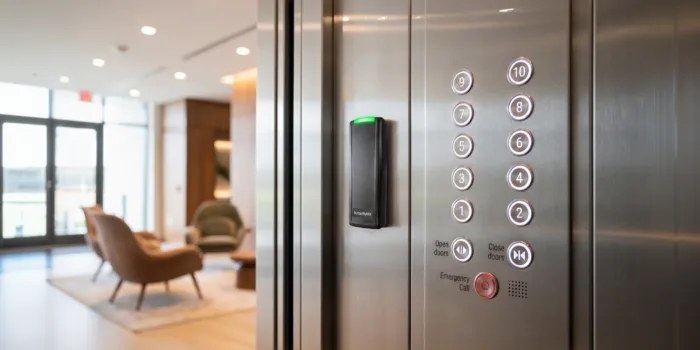
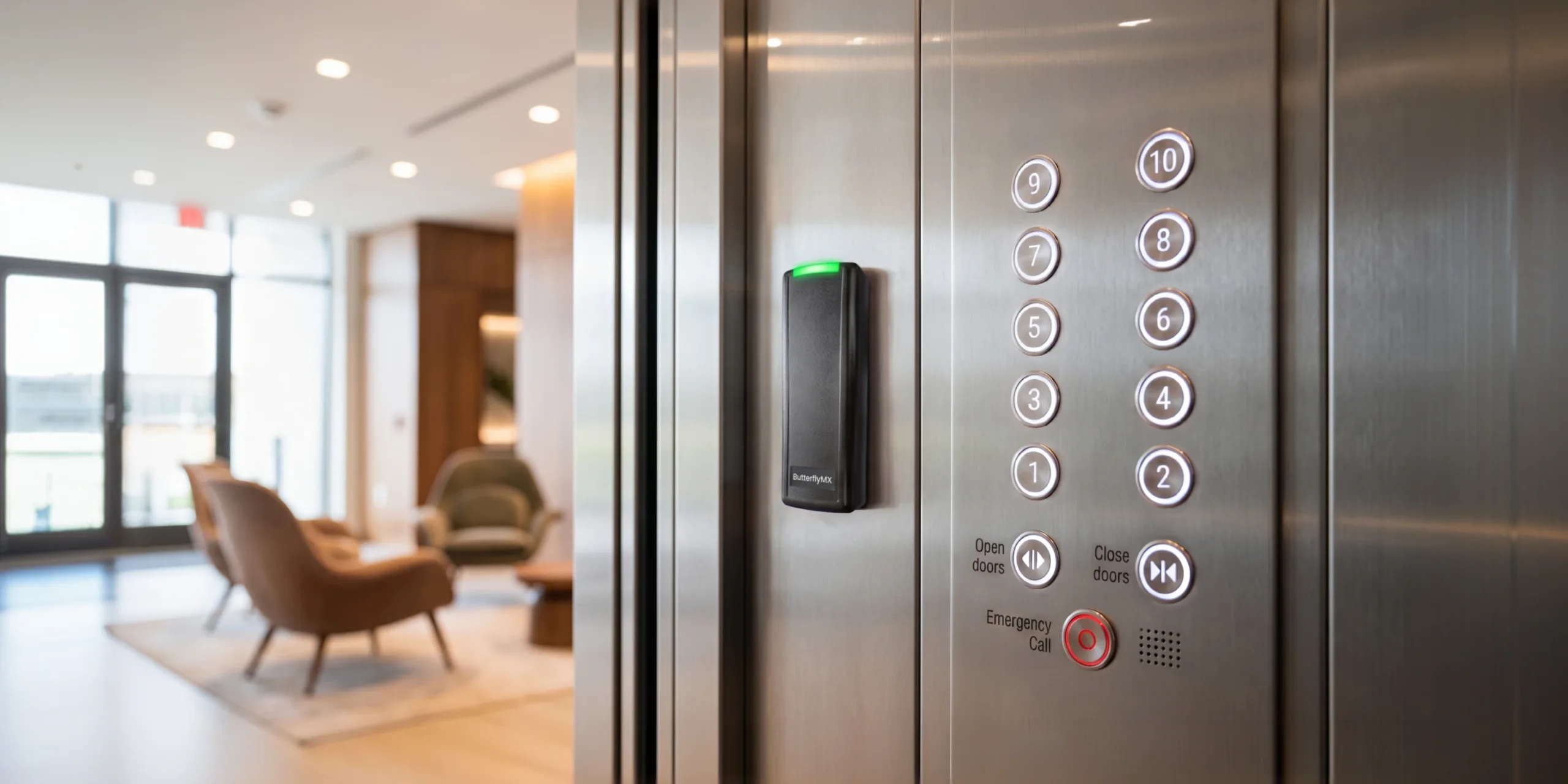
Compatible access-control systems may limit elevator access by floor, but only when the elevator equipment and approved configuration support it. The elevator contractor must remain involved, and the design must account for life-safety functions and local requirements. Access control does not replace the elevator controller or the elevator contractor.
Three concepts are easy to confuse. Elevator mechanical operation concerns how the elevator runs. Floor access control determines whether a person is authorized to use the cab or select a permitted floor. Destination dispatch assigns riders to elevators based on destination requests. An intercom-enabled visitor process is different again: it begins with entry authorization and may coordinate permitted elevator access when the building’s equipment supports the design.
At a conceptual level, an elevator access control visitor journey may follow this sequence:
- A visitor requests entry through the building’s intercom.
- A resident or authorized property user grants access.
- The approved access-control configuration permits the relevant elevator step.
- The visitor proceeds to an authorized destination.
That sequence describes the intended journey, not a universal wiring plan or promise of compatibility. The exact behavior depends on the elevator, existing credential system, access-control design, contractor participation, and approvals. The guide to intercom integration with elevator controls offers additional planning context.
What to document before an access-control project
- The existing elevator type, controller, and relevant modernization history.
- How residents currently use fobs, cards, or other credentials in the cab.
- The desired resident, visitor, staff, and delivery access process.
- Whether access should apply to the cab, selected floors, or another approved step.
- The elevator contractor’s role and the access-control provider’s role.
- Required permits, inspections, tests, and local approvals.
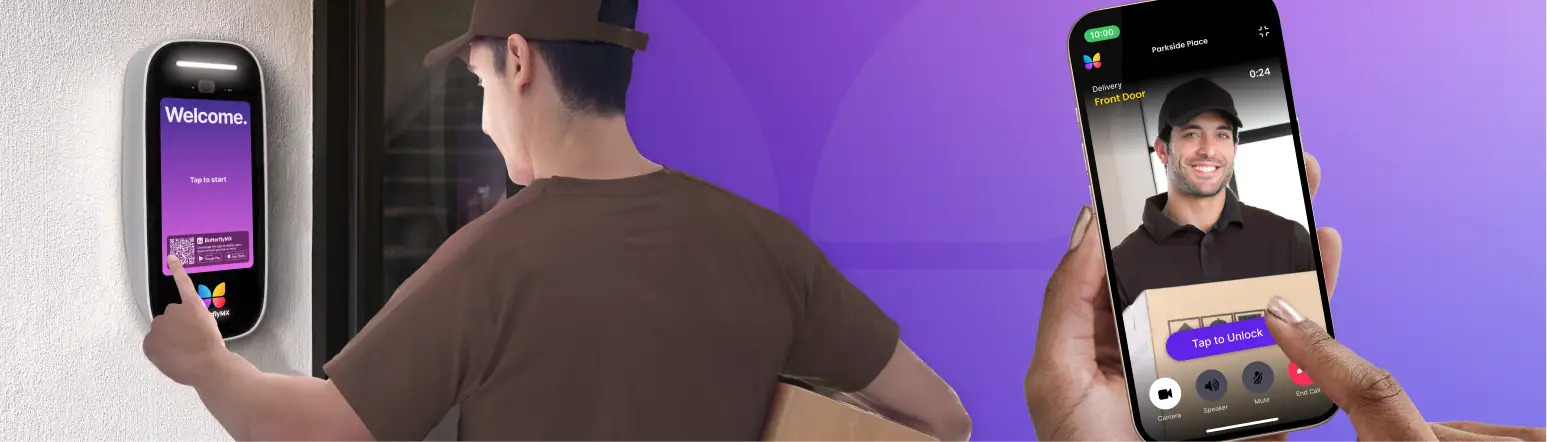
For compatible fobbed elevators, ButterflyMX Elevator Controls can be considered as part of a visitor and delivery access plan. ButterflyMX video intercoms let residents receive visitor calls and grant property access through their smartphones, while property teams can manage residents, visitors, credentials, and access remotely. The overview of how elevator controls work with a video intercom explains the product context.
Compatibility and the final access sequence still require equipment verification and coordination with the elevator contractor. The contractor remains responsible for elevator operation and relevant approvals. Properties evaluating this use case can explore ButterflyMX Elevator Controls and review the proposed design with their elevator and access-control specialists.
Frequently asked questions
Can an independent company service Otis or Schindler equipment?
Some independent companies can service equipment from several OEMs, including Otis or Schindler equipment, but capability is system-specific. Verify the controller, drive, proprietary tools, parts access, technician experience, and local requirements, then ask the bidder to identify any work that requires manufacturer participation.
Is full maintenance worth the additional cost?
Full maintenance may be worthwhile when broader repair coverage and more predictable spending match the building’s condition and risk tolerance. Compare the actual inclusions, exclusions, repair history, major-component coverage, and separately billed work because the contract label alone doesn’t establish value.
How much do elevator maintenance and modernization cost?
There is no reliable universal price because costs vary by location, equipment type, age, condition, parts, labor terms, project scope, and contract exclusions. Request comparable written bids that separate base maintenance, covered repairs, separately billed work, and modernization items.
Can visitors be limited to one elevator floor?
Compatible systems may authorize a visitor for a specific floor or access sequence when the elevator and approved configuration support it. The elevator contractor and access-control provider must coordinate the design, and relevant authorities must review it as required; an access-control product alone doesn’t establish compatibility or compliance.
The right elevator company is the one that can support your actual equipment, provide credible local coverage, and offer contract terms your property understands. Start with a detailed equipment inventory, make every bidder respond to the same scope, and compare total cost exposure rather than the base fee alone.
If compatible fobbed elevators are part of your visitor or delivery access plan, bring ButterflyMX and your elevator contractor into the conversation early. Explore ButterflyMX Elevator Controls, then confirm equipment compatibility, contractor responsibilities, and the local approval path before moving forward.
Get your free quote!
Fill in the form below, and we'll email you right back.
Want a free quote?
Fill in the form below, and we'll email you right back.
You’ll be redirected shortly...