





Key takeaways
- Garden-style apartments are low-rise multifamily communities, usually with landscaped grounds, exterior entrances, and surface parking.
- Garden style describes the overall property layout; garden level describes a specific unit’s position at or partly below ground level.
- The layout can make parking, pets, and outdoor access easier, but safety and convenience depend on how well the property manages entrances, visitors, lighting, and deliveries.
Apartment listings use the phrase garden-style apartment a lot, but the term can be easy to misunderstand. It doesn’t simply mean an apartment with plants nearby. It usually refers to a low-rise multifamily community, often one to four stories, with landscaped grounds, exterior entrances, and surface parking.
That setup changes how the property feels and functions. You may park closer to your building, step outside more easily, and see more green space than you would in a taller building. You may also deal with more weather exposure, more spread-out amenities, and different security needs because entrances, parking areas, and package locations are not always centralized.
So, garden-style apartments are best understood as a property layout, not a guarantee about price, quality, safety, or amenities. Once you understand that layout, it becomes much easier to compare garden-style communities with other commercial real estate developments, including garden-level units, mid-rise apartments, and high-rise buildings.
This guide will answer:
- What is a garden-style apartment?
- Garden style vs garden level: what’s the difference?
- Garden style vs mid-rise vs high-rise apartments
- Pros of garden-style apartments
- Cons of garden-style apartments
- Are garden-style apartments safe?
- Common features and amenities in garden-style communities
- Is a garden-style apartment right for you?
- FAQs
Watch how ButterflyMX works:
What is a garden-style apartment?
A garden-style apartment is a low-rise multifamily community, usually one to four stories, made up of one or more buildings with landscaped grounds, exterior entrances, and surface parking. Many are walk-up buildings, meaning residents reach their units from outdoor stairs, breezeways, or exterior corridors instead of passing through a large enclosed lobby.
The word garden points to the site design more than the landscaping alone. In many communities, residential buildings are arranged around courtyards, lawns, shared green space, sidewalks, or parking areas. The property often covers a wider footprint than a mid-rise or high-rise building because homes are spread across shorter structures.
Garden-style apartments are often associated with suburban apartments, but the label is not a strict rule. Some communities are older and simple, while others are newer and offer upgraded finishes or shared amenities. That’s why the term is most useful as a description of building form and property layout, not as a promise about rent, luxury level, or daily living experience.
Garden style vs garden level: what’s the difference?
Garden style and garden level are easy to confuse, but they describe different things. Garden style refers to the overall design of an apartment community. Garden level refers to the location of one unit, usually at ground level or partly below ground level.
For example, a garden-level apartment could be inside a mid-rise building that is not garden-style at all. And a garden-style community can include first-floor apartments that are not below grade and would not normally be called garden-level units.
The difference matters when you are reading listings. Garden style tells you about the property’s layout, parking, outdoor access, and building type. Garden level tells you about an individual unit’s position, which may affect natural light, privacy, views, and possible moisture or visibility concerns.
Garden style vs mid-rise vs high-rise apartments
Apartment categories are useful shortcuts, not fixed rules. Properties vary by market, age, ownership, renovation history, and local building patterns. Still, the differences below can help you understand what usually changes from one type of apartment community to another.
The biggest difference is how the property is organized. Garden-style apartments usually spread residents across several low-rise buildings or across a broader site. Mid-rise and high-rise properties are more likely to place entrances, hallways, elevators, package areas, and amenity spaces inside one main structure.
That difference shows up in everyday routines. In a garden-style community, you may have a shorter walk from your car to your building, and you may spend more time moving through outdoor paths, stairs, or parking areas. In a taller building, you may have more indoor circulation and a more centralized entrance, but you may also depend more on elevators, garages, and shared interior spaces.
Security and access needs change with the layout, too. A high-rise may focus attention on one lobby and a smaller number of controlled entry points. A garden-style community may need to manage building doors, gates, parking areas, package rooms, and amenity spaces across several locations. Neither format is automatically safer or better. They create different tradeoffs for residents and property teams.
Pros of garden-style apartments
Garden-style apartments often appeal to renters who want easier access to parking, green space, and the outdoors. The biggest advantages tend to be practical:
- Easier parking, often with a shorter walk from your car to your building
- More landscaped grounds, courtyards, or shared green space
- A layout that can make pet routines simpler
- Less dependence on elevators in low-rise walk-up buildings
- Fewer shared indoor corridors than many taller apartment buildings
- Potentially lower rent in some markets, depending on location, age, finishes, and amenities
These benefits matter most when they match your daily routine. A commuter may care more about surface parking near the building than a rooftop lounge. A pet owner may appreciate being able to get outside without crossing a lobby and waiting for an elevator. A family may value green space, easier car access, and a lower-density setting.
Garden-style communities can also feel calmer than taller buildings because residents are spread across multiple structures. That lower-density feel is part of the draw. But it should not be treated as a universal rule about noise, privacy, or safety, because those details still depend on the specific property and how it is managed.
Cons of garden-style apartments
The same features that make garden-style apartments appealing can create real tradeoffs. Before choosing one, think about how the layout will affect errands, bad-weather days, privacy, and access to shared spaces.
- Exterior doors, stairs, breezeways, and sidewalks can mean more exposure to rain, snow, heat, or cold.
- Ground-floor and street-facing units may have more privacy concerns than upper-floor or interior-facing units.
- A spread-out site can mean longer walks to mail, trash areas, amenities, leasing offices, or package pickup.
- Amenity packages are less predictable from one community to another.
- Parking lots, walkways, and shared outdoor areas can feel less secure if lighting, visibility, or maintenance is weak.
These are not dealbreakers for every renter. For some people, outdoor access and easier parking are worth the tradeoff. For others, especially renters who want elevators, interior corridors, a central lobby, or amenities under one roof, a mid-rise or high-rise may feel more convenient.
Amenity expectations deserve special attention. Some garden-style communities have pools, dog areas, picnic spaces, fitness rooms, or updated clubhouses. Others are simpler. The label garden-style tells you how the property is generally laid out, but it does not tell you how many amenities you will get or how well they are maintained.
Security is similar. A well-run garden-style community can feel orderly and carefully managed. A poorly run one may struggle with dark walkways, propped doors, outdated entry hardware, or unclear visitor and delivery practices. In other words, the quality of management often matters more than the building label.
Are garden-style apartments safe?
Garden-style apartments can be safe, but their spread-out layout means safety depends on how well the property manages access, lighting, visibility, visitors, parking areas, and maintenance. Lower density does not automatically make a property safer, and exterior entrances do not automatically make it less safe.
Why security works differently in a spread-out layout
In a centralized apartment building, many access decisions happen at one main entrance. In a garden-style community, those decisions may be spread across shared building doors, perimeter gates, amenity entrances, parking areas, and package rooms. That is what makes the access plan more distributed.
A distributed layout can be harder to manage if the property relies on inconsistent keys, old credentials, shared gate codes, or loosely controlled guest entry. The issue is not simply the number of doors. It is whether the property has a clear, consistent way to decide who can enter each space and when.
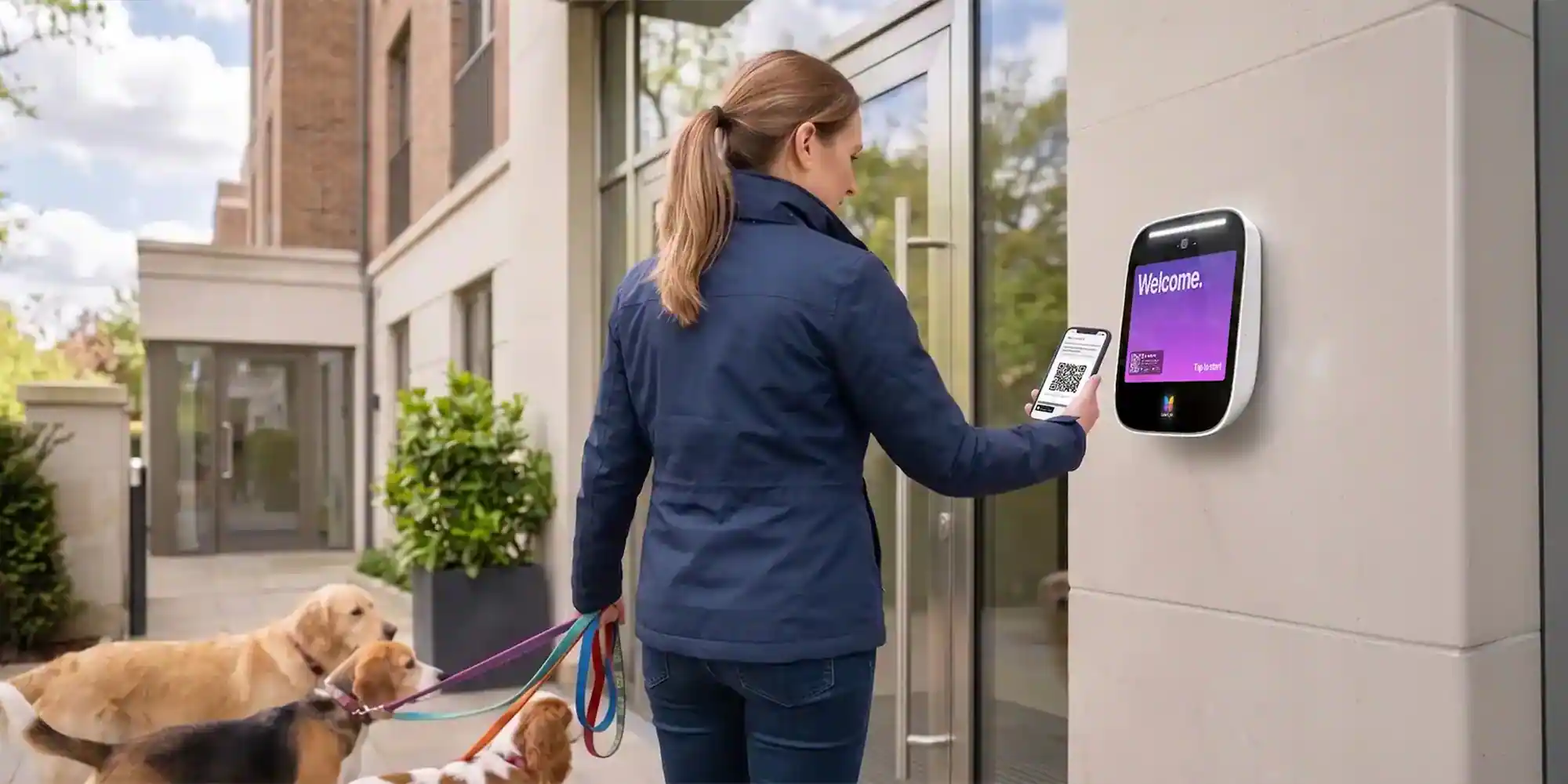
Visitor access is one of the clearest examples. Without a central lobby or front desk, guests, service providers, and delivery drivers may arrive at different buildings or entrances. Residents still need a practical way to let approved visitors in, while property teams need to avoid unmanaged access points becoming the default solution.
What renters should look for on a tour
If you are evaluating a garden-style community, look beyond the model unit and pay attention to the full property. A short walk around the site can tell you a lot about how consistently the community is managed.
- Are parking lots, sidewalks, stairs, breezeways, and entry paths well lit?
- Do shared doors, gates, locks, call systems, or entry devices appear functional?
- Are doors propped open, or does access seem controlled?
- Is landscaping maintained in a way that supports visibility?
- Can the leasing team explain how visitors and deliveries are handled?
- Does maintenance look consistent across all buildings, not just near the leasing office?
These details do not guarantee a perfect safety picture, but they help you ask better questions. In a garden-style community, the condition of the parking areas, exterior walkways, shared doors, and delivery locations often reveals more than the apartment type itself.
What property managers should plan for
For property managers, the main challenge is controlling access across multiple buildings without making everyday entry harder for residents, staff, and approved visitors. Access control systems can help manage credentials for shared doors, gates, package areas, and amenities more consistently. Remote access management can also be useful when staff need to update permissions or respond to entry issues across several buildings.
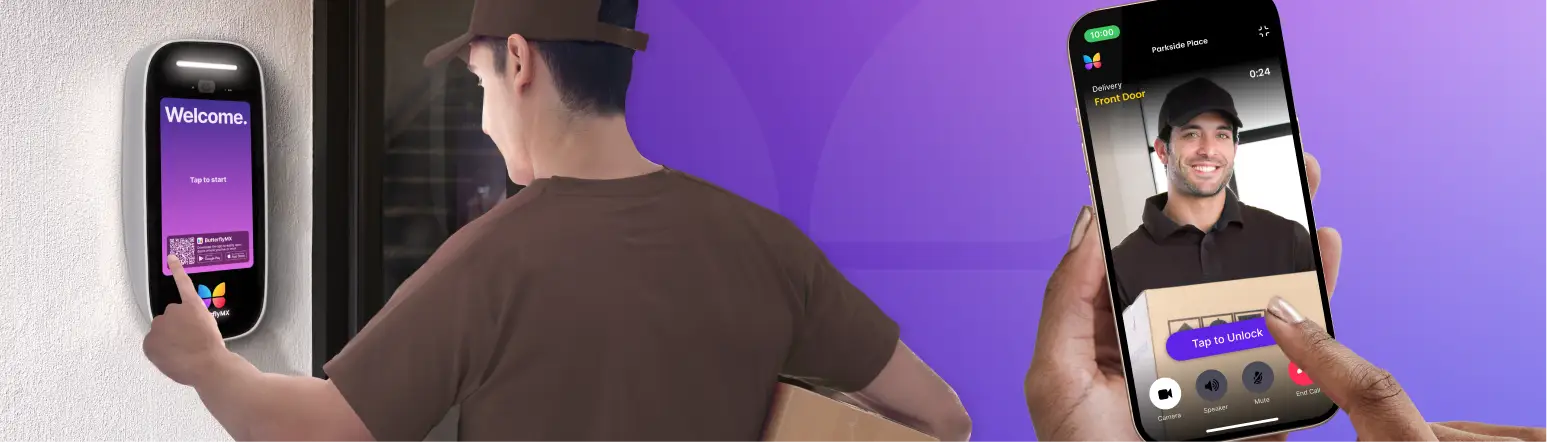
Video intercoms and mobile access can fit naturally into this kind of property when visitor entry is spread out. Instead of relying only on physical keys or widely shared gate codes, a community may use video intercoms to help residents identify visitors and mobile credentials to give residents or staff access to approved areas. Visitor management tools can also support communities that do not have a staffed lobby.
The right setup depends on the property. Student housing may need tighter visitor controls because guest traffic can be high. Senior living communities may put more emphasis on simple, easy-to-use entry methods. Family-oriented communities may care most about parking, outdoor areas, and predictable visitor access. Older properties and new developments may also approach access differently because their building layouts and existing hardware can vary.
Deliveries and packages need a plan, too
Packages can become frustrating in garden-style communities because there may not be one obvious drop-off point. Without a central lobby, deliveries may go to unit doors, building entrances, leasing offices, shared package areas, or package rooms. That can create confusion for residents and extra work for staff.
Clear delivery rules, controlled package areas, and package rooms can reduce some of that friction when they fit the property’s layout. The same idea applies to guests: a consistent process for granting visitor access can make daily life easier while reducing reliance on unmanaged doors or informal entry habits.
For property teams looking at this challenge, ButterflyMX offers video intercoms, access control, mobile access, and visitor entry features that can support low-rise, multi-building apartment communities. The value is not that every garden-style property needs the same system. It is that distributed entrances call for access tools that match how the property actually works.
Common features and amenities in garden-style communities
Garden-style communities often include features that match their lower-rise, outdoor-oriented layout. Surface parking, landscaped grounds, courtyards, shared lawns, and outdoor walkways are common because the property is usually organized around open space rather than one central tower.
Beyond those basics, amenities vary widely. One community may offer a pool, dog run, picnic area, fitness room, clubhouse, or outdoor gathering space. Another may focus on simple, functional housing with fewer shared features. Property age, local market expectations, ownership strategy, and renovation history all shape the amenity package.
That variation is important for renters and property professionals. Two garden-style communities can look similar from the street but feel very different once you compare parking, maintenance, outdoor lighting, package handling, common areas, and the distance between buildings and amenities.
Is a garden-style apartment right for you?
A garden-style apartment is often a strong fit if you value easy parking, direct outdoor access, pet-friendly routines, and a lower-density housing setting. It may also make sense if you prefer a suburban location or want a shorter path between your car, your building, and outdoor space.
You may prefer a mid-rise or high-rise if elevators, interior corridors, centralized amenities, or a more urban location matter more to you. A taller building may also feel easier if you want most daily movement to happen indoors or you prefer having a main lobby as the central point for visitors and packages.
Questions to ask before you choose a garden-style apartment
- How close is parking to the unit or building I would live in?
- How are visitors let in, especially after hours?
- Where do packages go if there is no central lobby?
- Are entrances controlled consistently across all buildings?
- How far is my unit from mail, trash areas, amenities, and the leasing office?
- Does the layout fit my needs for pets, commute, privacy, budget, and mobility?
For property managers, developers, and investors, the same question applies from the other side: does the site layout support the resident experience you want to deliver? In garden-style communities, convenience and security often depend on whether parking, outdoor areas, shared entries, visitor access, and delivery handling are managed as connected parts of the property.
Frequently asked questions
Are garden-style apartments cheaper than high-rise apartments?
Sometimes, but not always. Garden-style apartments may cost less in some markets, especially when they are older or farther from dense urban areas, but rent depends on location, unit size, building age, finishes, and amenities.
Do garden-style apartments have elevators?
Usually not. Many garden-style communities are low-rise walk-up buildings, though some newer or specialized properties may include elevators.
Are garden-style apartments good for pets?
Often, yes. Many garden-style communities offer easier outdoor access and nearby green space, but pet policies, fees, and on-site pet amenities still vary by property.
What should renters look for when evaluating safety in a garden-style community?
Start with lighting, parking-area visibility, entry controls, visitor access practices, and overall maintenance. In a spread-out community, consistent management of shared doors, gates, walkways, and common areas matters as much as the building type.
Garden-style apartments are best understood as a layout choice. They can be a great match for renters who want easier parking, more outdoor access, and a lower-rise setting, but the right fit depends on how the specific property handles privacy, amenities, maintenance, security, and daily convenience.
For property teams, that same layout creates a clear access challenge: entrances, visitors, deliveries, and shared spaces may be spread across several buildings. If you manage or plan multi-building apartment communities, explore how ButterflyMX can support visitor and access management for properties built around more than one front door.
Get your free quote!
Fill in the form below, and we'll email you right back.
Want a free quote?
Fill in the form below, and we'll email you right back.
You’ll be redirected shortly...