
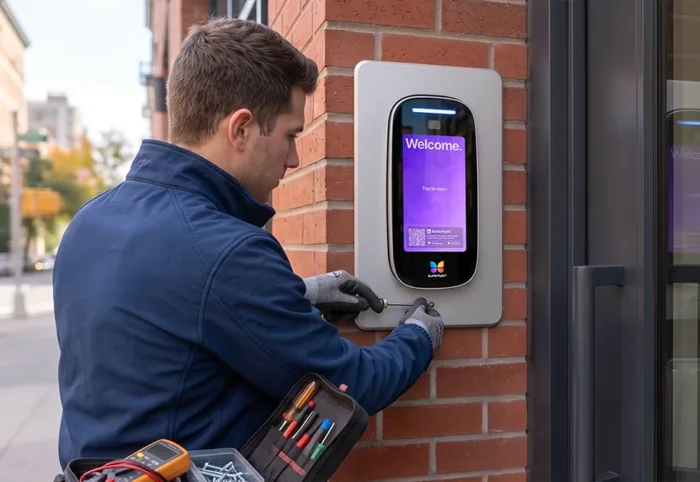





Key takeaways:
- A useful delivery audit trail identifies the time, entrance, credential or access method, result, and, where supported, related photo or video for an entry event.
- Delivery-specific credentials are easier to review than shared permanent codes because they help separate courier activity from resident access.
- Before choosing a system, verify log retention, export options, permissions, outage behavior, resident credential choices, retrofit scope, and recurring costs in writing.
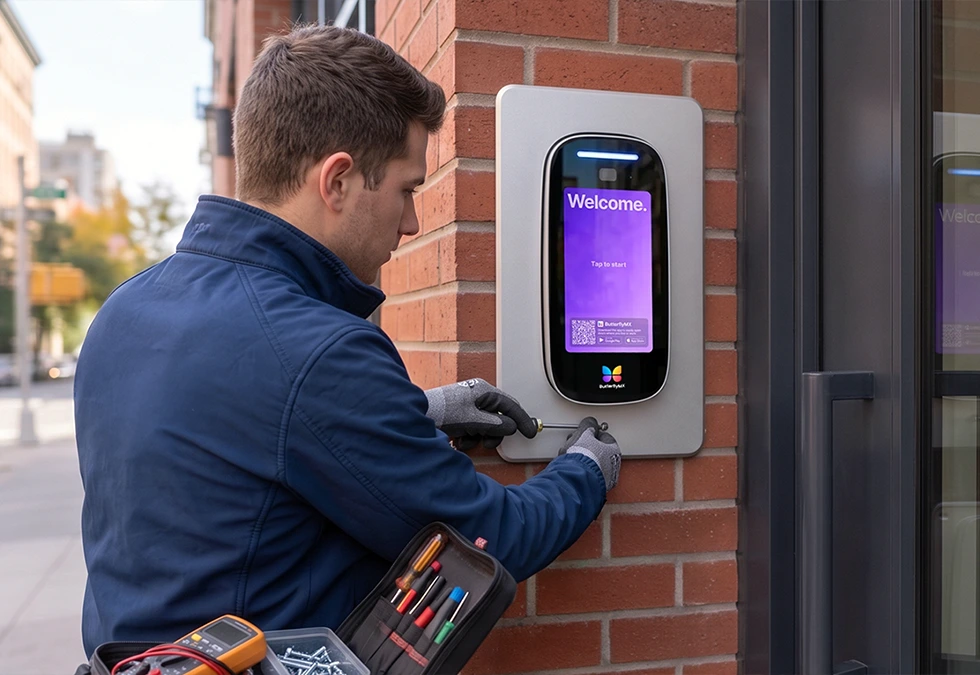
Small condo buildings have the same delivery headaches as larger properties, but usually without a full-time on-site team. A board may need to let couriers in, avoid handing out permanent codes, respond to package complaints, and keep the project affordable enough for a small association budget.
If your board is shopping for an intercom system for a small condo building with a delivery audit trail, look for more than a door release button and an activity log. The best fit is usually a system that creates separate, traceable delivery access; records useful event details; gives residents practical credential options; and can be installed without turning a simple retrofit into a major construction project.
A delivery audit trail is a chronological record of delivery-related access events. It should show when access happened, which entrance was used, what credential or method opened the door, whether access was granted or denied, and, where the system supports it, an associated photo or video. The sections below explain how to judge whether a system’s records are actually useful before the board approves a purchase.
This guide will answer:
- What a reliable delivery audit trail includes
- Why delivery-specific records matter in small condo buildings
- How delivery credentials create traceable access
- How small condo intercom options compare
- How to scope a low-disruption retrofit
- What drives cost and board approval
- How to govern and use access records
- Checklist for vendor demos and written proposals
- How ButterflyMX may fit the evaluation
- FAQs
Watch how ButterflyMX works:
What a reliable delivery audit trail includes
A delivery audit trail is useful only when it connects a delivery-related access event to enough context for the board to review it later. A basic door-open log may tell you that something happened. A stronger access-event log helps an authorized administrator understand when it happened, where it happened, which credential or access method was involved, and what the system recorded as the result.
When a vendor says the intercom includes audit logs, ask to see the actual event screen. The board should be able to verify whether the record includes:
- Timestamp
- Entrance, gate, or package-room door
- Credential type or identifier, such as a resident credential, delivery PIN, QR credential, mobile pass, or remote release
- Event result, such as granted access, denied access, expired credential, or canceled attempt
- Administrator activity, such as credential creation, revocation, permission changes, or remote door release
- Linked photo or video, if the system supports event-linked media
That last point matters. A video intercom does not automatically create a retrievable visual record for every access event. If images or video are part of the audit trail, confirm whether the media is tied to the event, how long it remains available, who can view it, and whether it can be exported with the event record.
Records also need to be usable after something goes wrong. Log retention, export, administrator permissions, integrity controls, and outage behavior determine whether the board can still find the relevant record when a resident asks about a missed delivery or a package-room entry. The NIST SP 800-53 Rev. 5 Audit and Accountability controls offer a helpful general model for thinking about which events to log, how to protect logs, and how to make retention decisions. They should not be treated as a mandatory residential-intercom standard.
Why delivery-specific records matter in small condo buildings
Delivery access sits at the intersection of convenience, resident trust, and board governance. In a small building, the same volunteers who approve the budget may also be the people residents contact when a courier says a package was delivered but the package is missing.
The concern is real, but the numbers need context. The USPS Office of Inspector General estimated that at least 58 million packages were stolen in the United States in 2024 in its report on package theft in the United States. Separate research has also reported higher package-theft exposure for apartment and condo residents than for residents of single-family homes. Those figures come from different methods, so they should not be blended into one universal total.
A delivery audit trail gives the board a practical way to narrow the review. For example, an authorized administrator may compare a courier’s delivery time with the recorded entrance, credential event, and any available event-linked media. That review might show that a delivery credential was used at the front entrance, that a package-room door was opened later, or that no relevant event appears in the expected window.
That kind of record can support a conversation and guide follow-up. It does not prevent theft by itself, identify a person with certainty, or prove fault or legal liability. For broader planning around cameras, locks, visitor management, and common-area access, boards can also review security systems for condos as a complementary resource.
How delivery credentials create traceable access
The cleanest delivery record usually starts with a separate delivery credential. A shared permanent code may be convenient, but it makes later review messy because many people can use the same code for many reasons. A delivery-specific credential gives the system a better chance to separate courier activity from resident access.
Depending on the product and configuration, the credential may be a delivery PIN, QR credential, mobile pass, or another method. The important point is not the label. The important point is whether the credential can be limited, tracked, and retired when it is no longer needed.
- An authorized resident or administrator creates a delivery credential for a specific delivery need.
- The credential is limited by time, number of uses, entrance, or destination when the selected system supports those controls.
- The courier uses that credential at the planned entrance instead of receiving a resident’s permanent credential.
- The intercom or connected access-control system records the access attempt and result.
- The credential expires or is revoked, reducing the risk of an old delivery code staying active indefinitely.
The same idea can extend beyond the main entrance. If the building has a package room, garage, or service entrance, the board should decide which doors belong in the delivery-access scope and which credentials should work at each door. A front-door credential should not automatically become a package-room credential unless the board intends that access.
During demos, test the entire sequence. Create a credential, use it, try it after expiration, revoke it, and review the event record. A resident credential, a shared building code, and a time-bound delivery credential should remain distinct in both policy and reporting.
How small condo intercom options compare
No single intercom category is automatically right for every small condo building. Choose based on the audit depth you need, the entrances you want to control, the condition of existing wiring and locks, resident credential needs, connectivity, outage tolerance, and total cost.
Audio versus video and wired versus IP or cloud-managed are overlapping design choices. A building might have a video intercom that is cloud-managed, a wired system with local management, or a hybrid design. The table below compares the practical questions a board should ask rather than treating each row as a separate product bucket.
The tradeoff is usually between record quality, retrofit complexity, credential flexibility, and dependence on network or cloud services. Richer records are valuable only if the building can retrieve and govern them. Easier installation is valuable only if the system still supports the entrances, residents, couriers, and outage plan the property actually needs.
For a broader look at system categories beyond the delivery-audit-trail question, see apartment intercom systems for multifamily buildings.
How to scope a low-disruption retrofit
A small condo retrofit starts with a walkthrough, not a product page. Before requesting proposals, identify every controlled opening in scope and decide what role each one plays in delivery access.
- Front entrance
- Garage or parking entrance
- Service entrance
- Package room
- Other common-area doors that couriers or vendors may use
Next, document what is already in place: intercom wiring, lock hardware, power, network availability, mounting locations, and any equipment the installer proposes to reuse. Existing wiring may lower disruption in some buildings, but it should not be assumed usable until an installer confirms compatibility.
Power over Ethernet, or PoE, is one option in some designs because it can carry power and network data to compatible entrance equipment through one cable. It is not a universal retrofit answer. The proposal should explain the chosen power path, network path, lock connection, mounting work, and any disruption residents should expect.
Resident access also belongs in the retrofit plan. If a system depends heavily on smartphones, the board should verify supported alternatives such as PINs, fobs, physical keys, unit devices, or other credentials available in the selected configuration. Accessibility, mounting location, biometric features, and privacy questions may require project-specific review rather than a general vendor answer.
Finally, require an outage plan. Ask what happens during an internet outage, cloud-service interruption, device failure, or power loss. The board needs to know which door functions, credentials, visitor calls, access records, and later log synchronization remain available for the proposed configuration.
What drives cost and board approval
A small-condo intercom quote depends on the number of entrances, entrance hardware, locks, wiring, network and power work, credential readers, installation labor, subscriptions, support, and integrations. A single hardware price or monthly fee rarely tells the full story.
Separate one-time costs from recurring obligations before comparing proposals. One-time costs may include entrance hardware, lock changes, cabling, mounting, and installation. Recurring costs may include software, connectivity, support, credentials, maintenance, or service renewals.
A board-ready proposal should also identify items that are easy to miss:
- Optional hardware or software features
- Excluded electrical, network, or lock work
- Renewal terms and subscription changes
- Support responsibilities after installation
- Costs to add another entrance later
- Any limits, fees, or timing rules for exporting data or changing systems
- Plans to develop a package room space if the condo doesn’t have a lobby or office area
Cost is not only a budget question. It affects approval because residents will ask how the installation disrupts daily access, who will administer the system, how visitors and couriers will be handled, and whether the building can expand later. Use those criteria to compare proposals instead of looking for a universal lowest-cost category.
How to govern and use access records
The board should set rules for access records before an incident occurs. Decide who may view delivery, visitor, resident, and media records; what approval is needed to review them; and how the review will be documented. Administrator permissions should match real operating roles, not simply board titles.
There is no universal retention period for condo intercom logs. A board should define its operational, privacy, dispute, and legal needs, then get written answers on retention, deletion, export format, log integrity, and permission controls. It should also ask what happens to stored records when the service agreement ends.
During an incident review, preserve the relevant event timeline and any permitted export promptly. Record who reviewed the information and avoid altering the original record. If the property also uses video, access-control audit trails with CCTV or NVR video can help explain how access events and visual evidence may be connected. Even then, the materials should be treated as investigative support, not automatic proof of theft, identity, fault, or liability.
Migration is part of governance, too. Before signing, ask what data can be exported, in what usable format, whether event-linked media is included, how long export takes, and what access the building retains after termination. A log that cannot leave the vendor dashboard may be less useful than it appears during a demo.
Checklist for vendor demos and written proposals
Feature names are not enough. A demo should show the proposed configuration, and the written proposal should confirm what the board will actually receive.
- Show the exact fields recorded for a successful entry, denied attempt, delivery credential, remote release, and administrator change.
- Confirm retention, deletion, export format, event-linked media, administrator permissions, and log-integrity protections in writing.
- Test resident, visitor, and courier credentials separately, including revocation, expiration, repeat-use rules, and options for residents without smartphones.
- Explain what happens during internet, power, device, and cloud-service failures, including how records are retrieved or synchronized afterward.
- Document every controlled entrance, installation task, support responsibility, recurring charge, renewal term, migration obligation, and post-termination data-access condition.
- Ask whether the vendor can demonstrate the exact product tier, hardware, credential setup, and management dashboard proposed for the building.
For every answer, distinguish between a capability included in the selected configuration and a capability that exists somewhere else in the vendor’s product line. That distinction can prevent the board from approving a system based on features it will not actually have.
How ButterflyMX may fit the evaluation
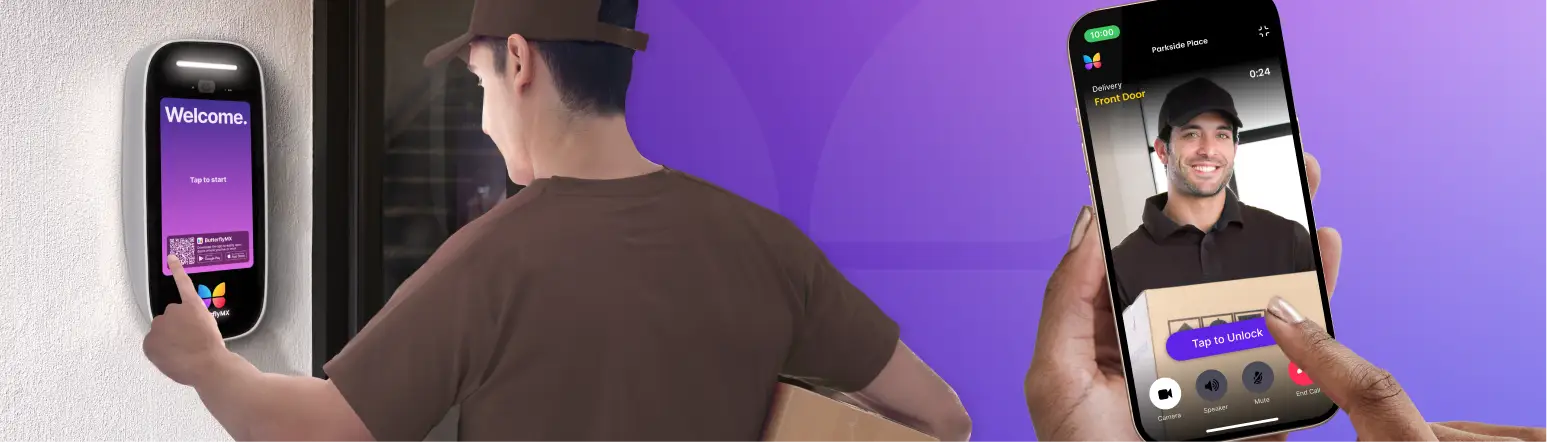
ButterflyMX may be a fit for condo buildings evaluating smartphone visitor calls, remote access management, and an alternative to legacy telephone-entry workflows that relied on POTS lines. It belongs in the conversation after the board has defined its entrances, delivery process, resident credential needs, and audit-trail requirements.
Use the same checklist for ButterflyMX that you would use for any other vendor. Ask which audit fields are available in the current configuration, how delivery credentials work, what retention and export options apply, who can access records, what works during an outage, which non-smartphone credentials are supported, what installation is required, and what the complete one-time and recurring costs will be.
That approach keeps the decision grounded. ButterflyMX should be evaluated against the building’s actual unit count, entrance scope, package-room plan, existing infrastructure, resident needs, and governance policy rather than treated as a one-size-fits-all answer.
Frequently asked questions
How long should condo intercom logs be retained?
Condo boards should set retention based on operational, privacy, dispute, and legal needs. Before signing, get written confirmation of retention, deletion, export format, log integrity, and administrator access controls.
What happens if the internet or power goes down?
Outage behavior depends on the system and configuration. Ask what happens to visitor calls, credential validation, door release, local fallback, event capture, and later log synchronization during internet, cloud-service, device, and power failures.
Can residents without smartphones use a modern intercom?
Some systems may support alternatives such as PINs, fobs, physical keys, unit devices, or other credentials. The board should test the actual resident onboarding process and confirm which options are included in the proposed configuration.
Can an audit trail prove package theft?
No. An audit trail can help reconstruct a timeline and identify an entrance, credential, or recorded event, but it should be treated as investigative support rather than automatic proof of theft, identity, fault, or liability.
A reliable delivery audit trail is not a feature label. It is a practical record the board can understand, protect, retrieve, and use when a delivery question comes up. The right intercom system is the one that creates traceable delivery access while fitting the building’s entrances, resident needs, retrofit conditions, outage plan, and total cost.
If your board is considering ButterflyMX, discuss your unit count, entrances, package-room workflow, existing infrastructure, resident credential needs, and audit-trail requirements so the proposed configuration can be evaluated against the same written checklist.
Get your free quote!
Fill in the form below, and we'll email you right back.
Want a free quote?
Fill in the form below, and we'll email you right back.
You’ll be redirected shortly...