





Key takeaways:
- Rear-plate LPR can work at a gated community, but performance depends on camera placement, vehicle path, speed, lighting, and gate layout.
- If front plates are inconsistent, many HOAs should compare rear-facing LPR with RFID or windshield tags for more predictable resident entry.
- Before choosing a system, review the driveway layout, connectivity at the gate, and how residents, visitors, vendors, and staff will actually enter the property.
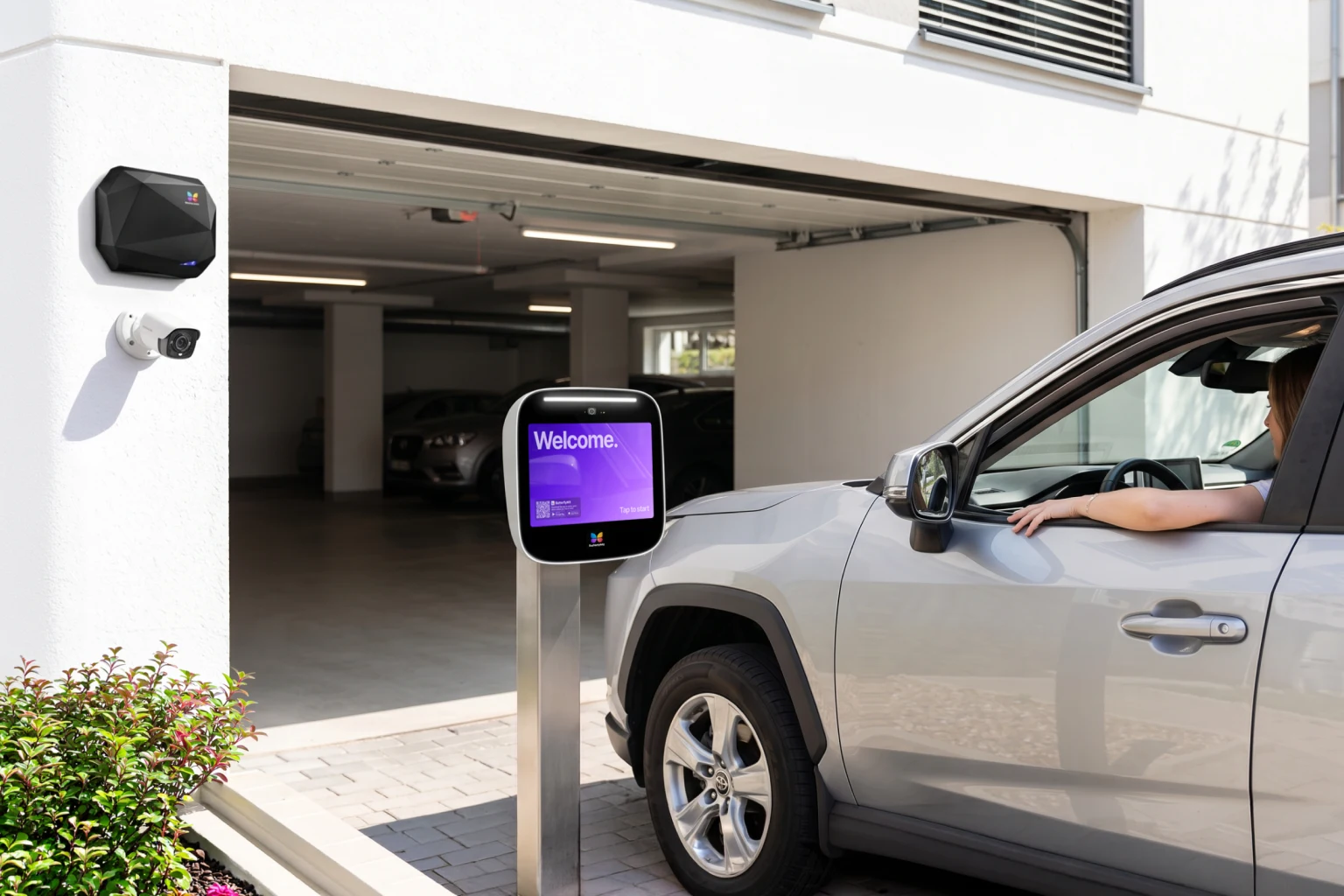
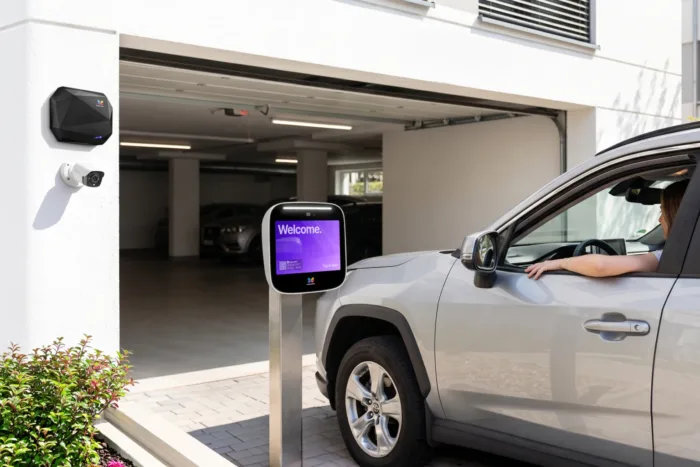
If your HOA wants to automate gate entry but many resident vehicles do not have front license plates, a standard front-facing setup may not be enough.
That creates a practical parking access control challenge. Your community needs a way to identify vehicles consistently without slowing down daily entry or creating more work for staff.
A license plate reader for a gated community without front license plates can still work if the system is designed to capture rear plates from the right angle and distance. In some communities, that means using a rear-facing LPR camera. In others, RFID or windshield tags may provide a more dependable workflow for routine resident access.
The right answer depends on your gate layout, how vehicles approach the entrance, what connectivity is available, and whether your HOA wants a plate-based workflow, a credential-based workflow, or a combination of both.
This guide covers:
- Can a license plate reader work without front license plates?
- Can you mount an LPR camera behind the vehicle at a gate?
- Rear-plate LPR vs RFID tags for gated communities
- Connectivity considerations for gate LPR systems
- How to choose the right vehicle access setup for an HOA without front plates
- FAQs
Can a license plate reader work without front license plates?
Yes, a license plate reader can work without front plates, but not every gated entrance is well suited for it.
For communities where many vehicles only have rear plates, the LPR system usually needs to be planned around rear-plate capture instead of the more common front-facing approach.
That may sound simple, but it changes the access workflow. Instead of reading a plate as the vehicle approaches the gate head-on, the system may need to capture the rear plate after the vehicle passes a certain point or from a position that looks back at the plate as the vehicle moves through the lane.
Whether that works well depends on the site.
Why front plates are a challenge for gated communities
At many gated communities, resident vehicles are mixed. Some have front plates. Some do not.
If your gate relies on a front-facing camera alone, the system may not have a consistent way to identify every authorized vehicle. That can create daily access issues.
Residents may have to stop and call from the gate more often. Guards or staff may need to handle avoidable entry requests. And boards may realize that what was supposed to be an automated vehicle access system still depends on manual intervention.
So, the question is not just whether an LPR system works.
The better question is whether your community can create a reliable workflow around the plates residents actually have.
How rear-plate reading changes the access workflow
Rear-plate reading usually means the camera position, trigger point, and gate timing need to match how vehicles move through the lane.
For example, if a resident pulls up to a visitor lane intercom, stops, and then advances slowly, the best capture point may be different than it is in a resident-only lane where vehicles move at a steady pace.
It also changes how your team should think about exceptions.
What happens if a rear plate is blocked by glare, dirt, a bike rack, or an unusual vehicle angle? Does the resident use an RFID credential instead? Can they open the gate from a mobile app? Is there a smart gate intercom available as a backup method?
The strongest access plans are not built around one perfect scenario. They account for what happens on a normal Tuesday, when traffic is uneven and not every vehicle approaches the gate the same way.
The practical takeaway: Rear-plate LPR can be a workable option, but it should be evaluated as part of the full gate-entry process, not as a camera-only decision.
Can you mount an LPR camera behind the vehicle at a gate?
In some communities, yes. A rear-facing setup, or a camera placement behind the vehicle path, may be possible.
But it depends on the driveway layout, where vehicles stop, how the gate opens, what mounting points are available, and whether the camera can maintain a clear line of sight to the rear plate.
This is one of the most common questions for HOAs dealing with rear-only plates. The honest answer is that placement has to follow the real conditions at the entrance.
A layout that works well at one property may be a poor fit at another.
What to consider before rear-facing LPR placement
Before deciding to mount an LPR camera behind the vehicle, review the conditions that affect the image the system will actually capture.
Consider the following:
- Vehicle stopping point. Does the vehicle pause in a consistent location, or do drivers stop at different distances from the gate?
- Angle and line of sight. Can the camera see the rear plate clearly without sharp angles, landscaping, gate hardware, or other obstructions in the way?
- Distance. Is the plate close enough for a practical read, or is the available mounting location too far from the lane?
- Lighting. Will glare, headlights, shadows, weather, or nighttime conditions make the plate harder to capture?
- Traffic flow. Do vehicles move one at a time, or does the entrance experience stacking, tailgating, or uneven pacing?
Consider a resident lane where drivers approach a swing gate, stop briefly, and then continue once access is granted. A rear-facing LPR camera may be easier to evaluate there than at a narrow entrance where cars turn sharply, stack tightly, or accelerate quickly after approval.
This is also where installer input matters. HOAs should avoid treating camera placement as a simple swap from front view to rear view.
Lane geometry, gate equipment, lighting, and the entry sequence all affect whether rear-plate capture can support a clean access workflow.
How long driveways can affect LPR camera placement
LPR camera placement for long driveways can create both opportunities and constraints.
A longer approach may give your team more flexibility to find a better mounting point, create a cleaner line of sight, or separate resident and visitor traffic before the actual gate.
But longer driveways can also make plate capture harder.
Vehicles may approach too quickly. They may crest a slope, drift across the lane, or remain too far from the camera for part of the approach. If the lane curves, narrows, or splits, the available view may be less predictable than it looks on a site map.
For HOAs with long approaches, the question is not only where the camera can go.
It is where vehicles are most readable and most consistent. A good planning conversation starts with actual vehicle movement, not just equipment location.
Rear-plate LPR vs RFID tags for gated communities
If many vehicles only have rear plates, HOAs often compare rear-plate LPR with RFID or windshield tags.
This is not a question of which technology is universally better. It is a question of which method creates the most dependable resident access workflow with the least friction.
When LPR is a good fit
LPR can be a good fit when your community wants plate-based vehicle identification instead of relying only on physical credentials.
Some boards like that the vehicle itself becomes part of the authorization process. If a resident updates their vehicle information, staff can manage that access record without distributing a new tag every time a car changes.
LPR can also support a more flexible mix of resident, visitor, and vendor access.
For example, a property may want resident vehicles recognized automatically while visitors use a gate intercom or another approved entry method. In that case, license plate recognition becomes one part of a broader gate access setup.
That said, LPR works best when lane conditions support consistent reads. If rear plates are often obstructed, vehicles approach at inconsistent angles, or the entrance layout is difficult, the day-to-day experience may be less predictable than expected.
When RFID or headlight tags may be preferable
RFID or windshield tags may be preferable when the HOA wants a more controlled and repeatable resident credential workflow.
If rear-plate placement is awkward, vehicles enter at inconsistent angles, or the community needs fast entry during busy periods, a credential-based method may be easier to manage.
For example, a high-volume resident lane may use RFID or windshield tags for residents because it creates a predictable access process. Guests and service providers can use a smart gate intercom, mobile credentials, virtual keys, or another approved visitor workflow.
Some communities may also combine methods. LPR can support plate-based entry where the lane is suitable, while RFID or windshield tags provide a dependable option for resident vehicles that are harder to read.
The tradeoff is administration. Tags need to be assigned, updated, and removed when residents move or change vehicles.
For some HOAs, that is a benefit because it creates a more deliberate enrollment process. Others prefer plate-based workflows because they reduce the need to distribute physical identifiers.
If your main goal is dependable resident entry in a no-front-plate environment, RFID and windshield tags deserve serious consideration alongside rear-facing LPR.
Connectivity considerations for gate LPR systems
Gate LPR systems do not always require hardwired internet. In some locations, cellular connectivity may be a practical option, especially when the gate is far from the main building or difficult to wire.
But the right choice depends on site conditions, equipment needs, and how much traffic the entrance handles.
Hardwired internet vs cellular backhaul
Hardwired internet may be easier to plan around when it is already available near the gate and the property wants a stable, permanent connection point for multiple devices.
That can be useful if your setup includes LPR cameras, RFID or windshield tag readers, smart gate intercoms, access controllers, or other equipment at the same entrance.
Cellular can be worth evaluating when trenching or extending wired service to the gate would be disruptive, expensive, or impractical. For a remote entrance, that flexibility may help a community move forward without a major infrastructure project.
Still, HOAs should review signal quality, coverage consistency, power availability, and operational expectations before choosing a cellular-only approach.
Connectivity should not be treated as an afterthought. Even a strong camera plan can create problems if the connection method does not match the property’s real gate conditions.
Questions to ask before choosing connectivity
Before selecting hardwired internet or cellular, HOAs should ask:
- Is reliable internet already available at the gate?
- What power is available for the access equipment?
- Does the property have consistent cellular coverage at the entrance?
- Will the gate support only LPR, or also RFID readers, windshield tags, and a smart gate intercom?
- How far is the gate from the main building or network source?
- Who will manage service, troubleshooting, and ongoing support?
These questions help the board and installer choose a setup that fits the property instead of forcing the property to fit the equipment.
Discover how ButterflyMX works:
How to choose the right vehicle access setup for an HOA without front plates
If your community is evaluating vehicle access control without front plates, start by mapping the real users and lanes.
Begin with residents. Then work outward to visitors, vendors, staff, deliveries, and after-hours access.
Create an access plan for residents, visitors, and vendors
Think through each user group separately.
Residents usually need fast, repeatable daily entry. Guests need a clear way to request access from the gate. Vendors may arrive on a schedule, but they still need controlled access if staff are not on site.
For example, an HOA might decide that residents should use rear-plate LPR or windshield tags in the primary resident lane, while guests use a smart gate intercom and approved visitor workflow.
A service vendor who comes every Tuesday may be handled differently than an unexpected delivery driver. These are access policy decisions, not just technology decisions.
This planning step also helps you identify weak points.
If the gate depends on rear-plate capture but many plates are blocked by bike racks or poor lighting, that may affect reliability. If the lane has room for a clean camera angle but no practical network connection, connectivity becomes part of the decision.
The goal is to choose the workflow that creates the most predictable access experience for the people who use the gate every day.
How ButterflyMX supports gated community vehicle access
ButterflyMX helps gated communities manage access across residents, visitors, vendors, and staff from one connected platform.
Depending on the property, that may include license plate recognition, windshield tags, vehicle readers, smart gate intercoms, mobile access, PINs, and cloud-based access management.
The value is not just the number of access methods. It is the ability to build a workflow around how your community actually operates.
Residents may need quick, hands-free entry for daily use. Visitors may need to see and speak with a resident from the gate. Property teams may want better visibility into who is authorized, when the gate was opened, and how access is being managed over time.
If rear-plate LPR looks workable, ButterflyMX can help support a plate-based entry experience. If the entrance is better suited to windshield tags for resident vehicles, that may be the smarter path. And if your community needs a layered approach, such as LPR for some lanes and tags or intercom-based access for others, ButterflyMX can help make that workflow easier to manage.
The goal is not to force every HOA into the same gate design.
It is to help your community choose a vehicle access workflow that fits the property layout, resident habits, and operational priorities.
FAQs
Can license plate readers reliably read rear-only plates?
Yes, license plate readers can read rear-only plates in the right conditions. Reliability depends on camera placement, angle, distance, lighting, vehicle speed, and how consistently vehicles move through the lane. Rear-only plates can work, but they should be evaluated against the actual gate layout before the HOA commits to a system.
Can an LPR camera be mounted behind vehicles at a gated entrance?
Yes, in some cases. A rear-facing or behind-vehicle placement may work if the camera has a clear view of the plate and the vehicle path supports a readable capture point. A qualified installer should review the entrance before the HOA assumes that layout will work.
Is LPR or RFID better when residents do not have front plates?
It depends on the property. LPR may be a good fit if the community wants plate-based identification and the lane supports rear-plate capture. RFID or windshield tags may be better for repeatable resident entry when plate visibility, camera placement, or vehicle movement is less predictable.
Can a gate LPR system use cellular connectivity?
In some cases, yes. Cellular connectivity may be useful when hardwired internet is difficult to extend to the gate. The HOA should still review signal quality, power, site conditions, traffic volume, and the full access setup before deciding on connectivity.
What should an HOA ask before choosing rear-plate LPR?
Ask how vehicles approach the gate, where they stop, whether rear plates are consistently visible, what connectivity is available, and what backup method residents will use if a plate is not captured. Those answers usually make the best path clearer.
Get your free quote!
Fill in the form below, and we'll email you right back.
Want a free quote?
Fill in the form below, and we'll email you right back.
You’ll be redirected shortly...