





Key takeaways:
- Parking access management helps gated communities control resident, guest, and vendor vehicle entry without creating daily bottlenecks.
- The strongest systems combine convenient entry methods with centralized permission updates and clear visitor workflows.
- Communities that rely on shared codes or manual gate handling often create more work for staff and less visibility into who is entering.
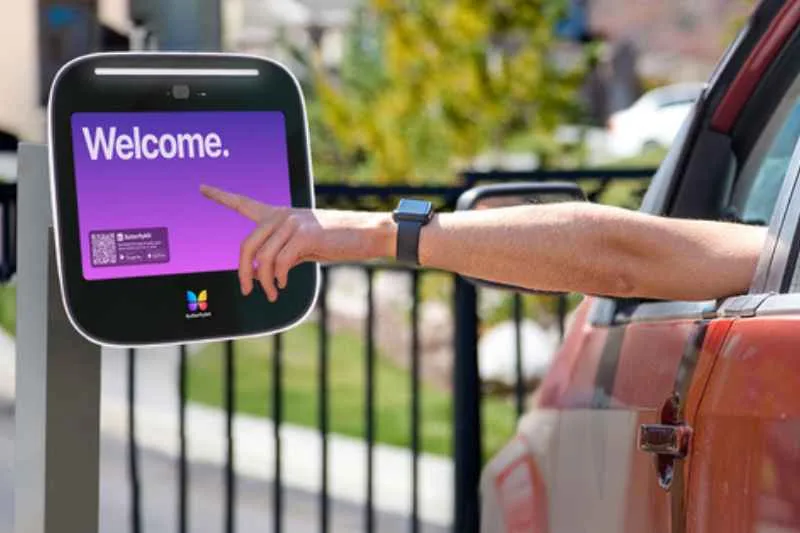
If your community is dealing with shared gate codes, visitor backups, or constant requests to open the gate for guests and vendors, parking access can quickly become a daily frustration. Residents want fast entry, but your HOA or property team also needs better control over who can drive into the community through parking access control.
Parking access management for gated communities is the process of controlling, monitoring, and simplifying vehicle entry at gates, parking areas, and shared vehicle access points. In practice, that means setting up clear ways for residents, guests, vendors, and service providers to enter without turning every gate event into a manual task.
The best approach balances convenience and control. It should help residents move through the gate easily while giving your team a more organized way to manage permissions, review access activity, and reduce unauthorized entry.
This guide covers:
- What is parking access management for gated communities?
- Common parking access challenges in gated communities
- What a gated community parking access system should include
- How to choose parking access management for gated communities
- How ButterflyMX supports gated community access management
- FAQs
What is parking access management for gated communities?
Parking access management for gated communities refers to the way a community controls vehicle entry at gates, resident parking areas, guest parking areas, and other shared access points. It includes the rules, tools, and day-to-day workflows used to decide who can enter, when they can enter, and how that access is approved or updated.
This is not just about opening and closing a gate. It is about managing repeated vehicle traffic in a way that supports resident convenience, visitor access, and community oversight.
How parking access management differs from general access control
General access control can cover many parts of a property, such as building doors, amenity spaces, package rooms, or staff-only areas. Parking access management is narrower and more specific. It focuses on vehicle access control, gate access, parking permissions, guest arrival workflows, and traffic flow at the places where cars line up and delays are most visible.
That distinction matters because vehicle access problems often happen faster and more often than other access issues. A resident may use the gate multiple times a day. A guest may arrive without much notice. A landscaper or service provider may need temporary entry for a scheduled job. Each of those moments requires a clear process.
Why gated communities need a dedicated vehicle access strategy
A gated community usually has a steady mix of residents, visitors, vendors, delivery drivers, and service providers moving through the same entrance. If access is handled informally, the result is predictable: shared codes, unnecessary calls to staff, and less visibility into who is entering.
A dedicated strategy helps communities decide how daily resident entry should work, how guests should be approved, and how temporary access should be granted and removed. It also helps reduce the small operational issues that add up over time, such as lines at the gate during peak hours or staff spending too much time handling routine access requests.
Common parking access challenges in gated communities
Most communities do not set out to create a messy gate-entry process. It usually happens gradually. A code gets shared. A visitor process changes from household to household. Managers start handling exceptions one by one. Before long, the entrance feels harder to control and more frustrating to use.
Unauthorized vehicle access and shared entry methods
One of the most common problems is overreliance on shared entry methods. If too many residents, guests, or vendors use the same code or unmanaged credentials, it becomes harder to limit access when a problem comes up. A code that was meant for convenience can end up circulating well beyond the people who should have it.
That does not mean every community needs the same access method. It means the community needs a way to issue access intentionally and update it when circumstances change. For example, when a resident moves out or a vendor relationship ends, your team should be able to adjust permissions without chasing down informal workarounds.
Resident convenience, visitor delays, and administrative burden
Access problems are not only security problems. They are workflow problems.
If residents wait at the gate because entry is inconsistent, they notice. If guests arrive and do not know how to request access, residents notice that too. And if staff or board members are constantly fielding gate complaints, the administrative burden grows fast.
Picture a Saturday afternoon at a gated community. Residents are returning home, guests are arriving for a gathering, and a vendor is scheduled for maintenance. Without a clear parking access process, one vehicle calls a resident, another waits for someone else to exit, and a third triggers a phone call to management. The gate may still function, but the workflow does not.
That is often the real issue communities are trying to solve. They want to keep entry controlled without making every arrival feel like an exception.
What a gated community parking access system should include
If you are evaluating options, focus less on feature lists by themselves and more on whether the system supports the people who use the gate every day. A strong setup should work for residents, guests, vendors, and the staff responsible for maintaining order behind the scenes.
Access methods for residents, guests, and vendors
Different users need different entry workflows. Residents need a quick and reliable way to enter daily. Guests need a simple approval process. Vendors and service providers may need temporary access during certain hours or for specific visits.
Common access methods can include credentials, keypads, gate intercoms, and visitor access tools. The best mix depends on the community, but the bigger question is whether those methods create a manageable process.
- Residents should have a consistent way to enter without depending on staff assistance for routine access.
- Guests should be able to reach the resident or use an approved visitor workflow instead of waiting at the gate with no clear next step.
- Vendors and service providers should have temporary access that fits the job without giving them ongoing entry they no longer need.
For example, a resident hosting family for the weekend may want to approve access in advance. A pool technician may need recurring daytime access on service days. Those are different use cases, and they should not be forced into the same process.
Centralized management and simple permission updates
Access management gets harder when permissions live in multiple places or depend on manual memory. Communities benefit from having one place to review who has access, update permissions, and remove access when needed.
This matters during normal property changes. Residents move in and move out. Household vehicles change. Vendors rotate. Temporary projects create short-term access needs. If updating the system is slow or confusing, staff may delay changes, and outdated access stays active longer than it should.
A centralized approach can also help with visibility. Property teams can review access activity, adjust permissions, and maintain clearer control over which users or groups can enter through specific gates or parking areas.
That kind of visibility does not solve every parking problem on its own, but it gives communities a more reliable operational foundation than scattered codes and informal approvals.
How to choose parking access management for gated communities
Choosing a system is partly about technology, but it is also about policy and day-to-day use. The right option for your community should fit how residents actually enter, how guests are handled, and how much administrative work your team can realistically support.
Questions to ask before choosing a system
Before evaluating products, map the real vehicle-entry workflow.
Ask yourself these questions:
- Who enters every day? Who needs occasional access?
- Where do delays happen now?
- Which tasks depend too heavily on staff or board members?
- How do residents currently enter the community, and where does that process break down?
- How often do guests, vendors, and service providers need vehicle access?
- How are permissions issued, updated, and revoked today?
- How many gates or entry points need to be managed?
- What kind of resident experience does the community want at busy entry times?
- Who on the property team will maintain access permissions over time?
Mistakes to avoid when managing gated community parking access
One common mistake is choosing a system based only on the gate itself. The hardware matters, but the daily workflow matters just as much. If residents still rely on inconsistent processes or staff still manage every exception manually, the community may not see much improvement.
Another mistake is ignoring temporary users. Guests, dog walkers, cleaning crews, maintenance vendors, and delivery-related visitors all affect gate traffic. If the system works only for full-time residents, your team will still spend time creating workarounds.
It is also worth avoiding tools that are difficult to update. A community may start with a manageable list of residents and vehicles, but that list changes. If access permissions are tedious to maintain, the process tends to drift out of date.
Finally, do not treat parking access as separate from the resident experience. Residents judge the community partly by how simple it is to get in, welcome guests, and handle routine arrivals. A controlled process should still feel practical to use.
Discover how ButterflyMX works:
How ButterflyMX supports gated community access management
ButterflyMX helps gated communities simplify access at gates, garages, and other controlled entrances. Its cloud-based platform can connect vehicle access control, video intercoms, access readers, and visitor management tools, depending on the community’s setup.
For gated communities, ButterflyMX is best positioned as an access solution rather than a complete parking management platform. It helps communities control how residents, guests, and service providers enter the property, while giving property teams a centralized way to manage credentials and review entry activity.
Simplifying gate entry for residents and authorized visitors
Residents can open compatible gates and garages through the ButterflyMX mobile app. Communities can also install the ButterflyMX Vehicle Reader, which automatically scans an authorized windshield tag as a vehicle approaches and opens the entrance without requiring the driver to use a remote or key fob.
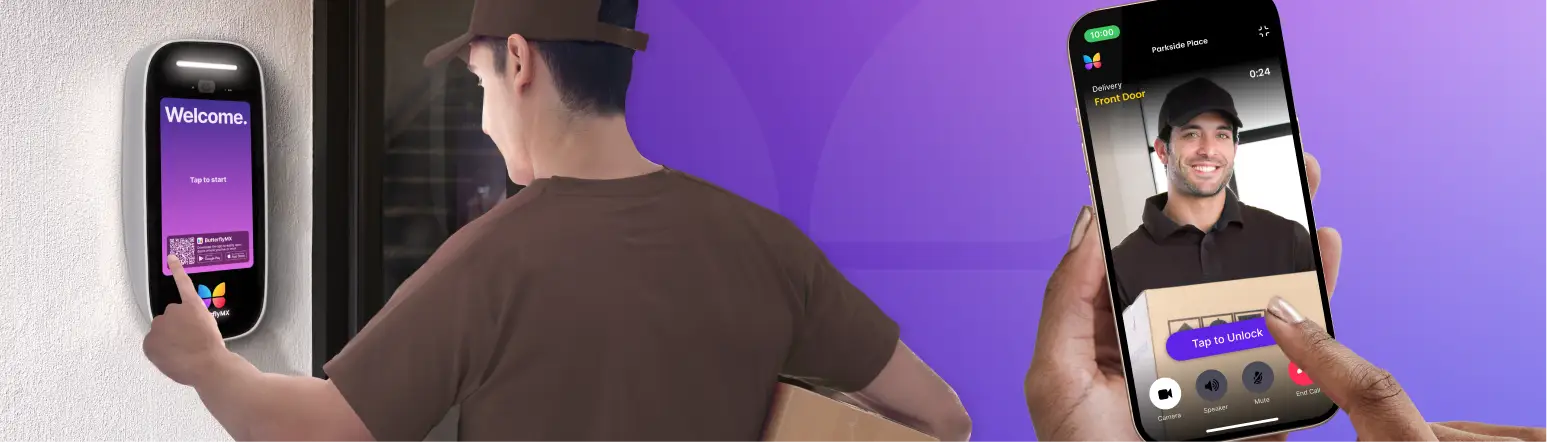
For visitors, communities can use a ButterflyMX Video Intercom to let guests contact residents or property staff at the entrance. Residents can see and speak with visitors through the mobile app before granting access remotely.
When enabled by the property, residents can also send Visitor Passes to approved guests and service providers. These passes use QR codes or PINs and can be configured for specific times, expiration dates, or recurring schedules. This gives guests a clearer entry process while reducing the need for staff to handle routine access requests.
Managing access from a centralized platform
Property managers and authorized HOA administrators can manage access credentials from a smartphone or computer. They can issue or revoke access, update permissions, grant remote entry, and review time- and date-stamped access logs.
This makes it easier to respond when a resident moves out, a windshield tag needs to be deactivated, or a vendor no longer requires access. It can also give property teams greater visibility across connected gates, garages, and other access points.
ButterflyMX is a strong option for communities that want to make authorized entry more convenient without relying on shared gate codes or adding unnecessary administrative work. By bringing vehicle access, visitor workflows, and permission management into one platform, it helps communities create a more organized experience at the entrance.
FAQs
What is parking access management for gated communities?
It is the process of controlling and simplifying vehicle entry at gated entrances and parking areas. That includes managing access for residents, guests, vendors, and service providers with clear entry methods and permission controls.
How can gated communities manage resident and visitor vehicle access?
Communities typically use a combination of gate access control tools, such as credentials, keypads, gate intercoms, and visitor access workflows. The most effective approach gives residents convenient daily entry while making guest and vendor access simple to approve and update.
What features should a gated community parking access system include?
Look for access methods that fit residents and visitors, simple guest entry workflows, temporary access options for vendors, and centralized permission management. Simple updates and better visibility into access activity are also important.
How can HOAs reduce unauthorized parking and gate access issues?
HOAs can reduce these issues by moving away from widely shared codes, tightening how access is issued, and using a system that makes it easier to update or revoke permissions. Clear visitor processes also help limit informal gate entry workarounds.
How does parking access management improve the resident experience?
It can make daily entry faster and more predictable while giving residents a clearer way to let in guests or service providers. That means fewer gate delays, fewer calls for help, and less frustration around routine arrivals.
Get your free quote!
Fill in the form below, and we'll email you right back.
Want a free quote?
Fill in the form below, and we'll email you right back.
You’ll be redirected shortly...