





Key takeaways:
- Visitor vehicle access works best when permissions are temporary, time-bounded, and easy to revoke instead of shared or permanent.
- The right credential mix depends on the visitor: one-time guests, recurring guests, vendors, and delivery drivers often need different entry paths.
- Access software can authorize entry, but lane design, fallback procedures, gate safety, and data governance still need separate planning.
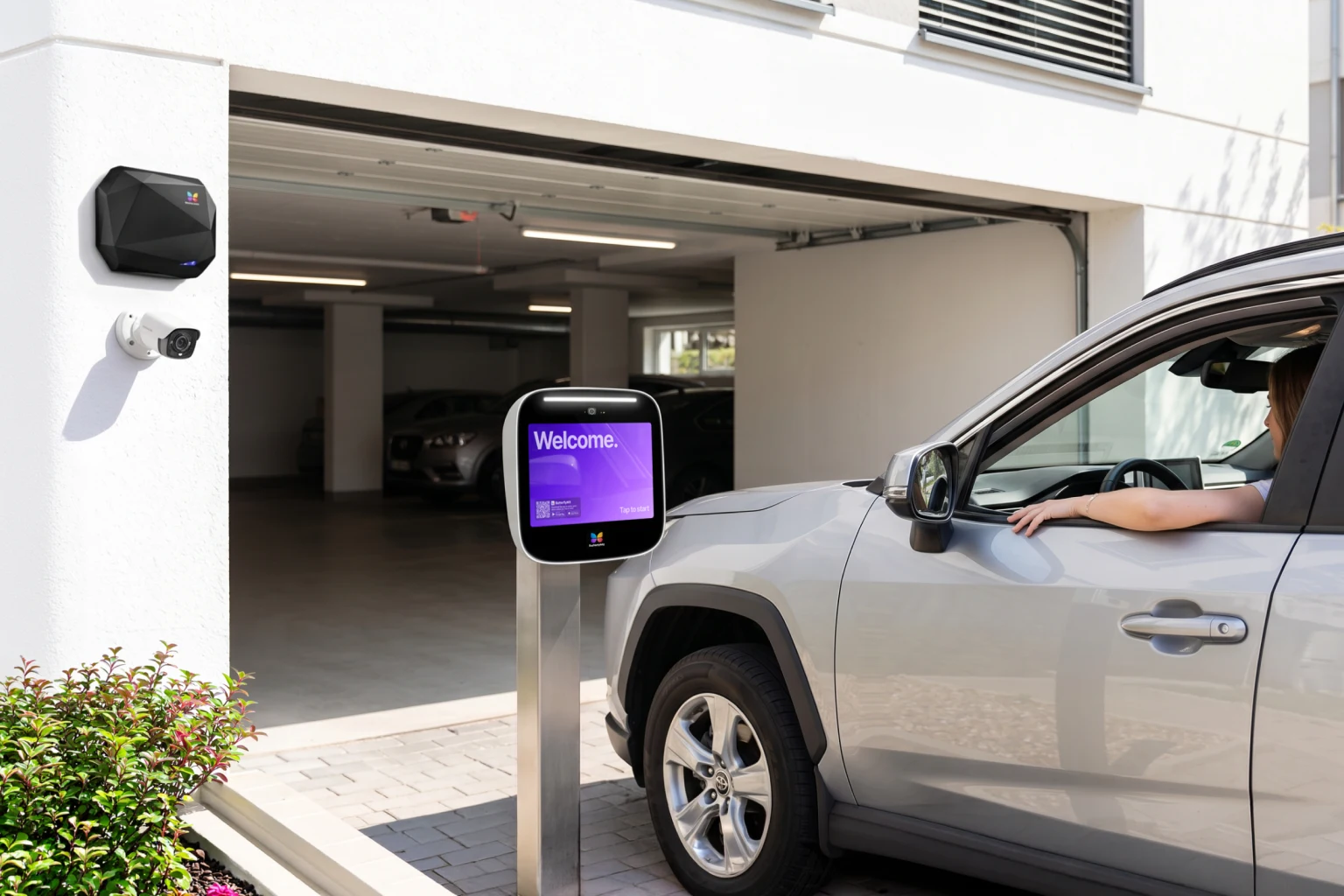
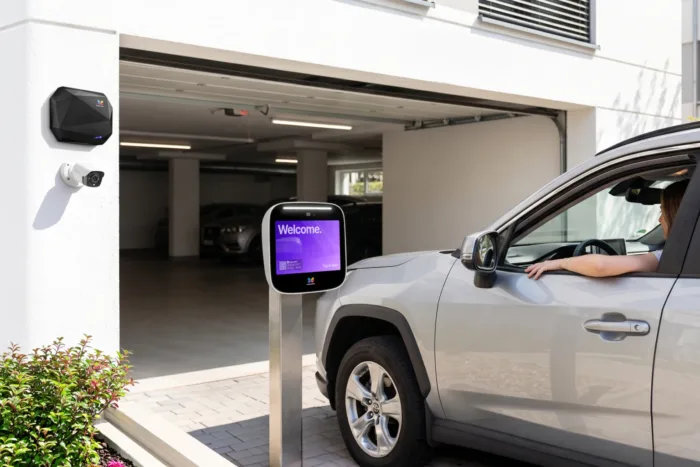
A visitor vehicle is not the same access-control problem as a resident vehicle. A resident may need daily, long-term access. A guest, vendor, or delivery driver usually needs limited permission that works for a specific visit, schedule, or vehicle.
Vehicle access control features for visitors commonly include video intercom or guard verification, temporary PINs, QR or app-based passes, temporary license plate recognition records, and enrolled credentials for recurring vehicles. The strongest plan is usually not one method for every arrival. It is a mix of temporary, revocable permissions matched to visitor type, traffic volume, staffing, and site conditions.
This guide explains how visitor vehicle credentials move from invitation to gate release, how common access control methods for vehicles compare, and what properties should plan for when it comes to lanes, tailgating, safety standards, access records, and cost.
This guide will answer:
- What visitor vehicle access includes
- How visitor credentials move from invitation to gate release
- Compare visitor vehicle access methods
- Match access to visitor types
- Design lanes for flow and control
- Apply gate safety and data governance
- Choose by property conditions and cost
- How ButterflyMX can fit
- FAQs
Watch how ButterflyMX works:
What visitor vehicle access includes
Visitor vehicle access control is the process of deciding whether a guest, vendor, delivery driver, or other non-resident vehicle should be admitted through a gate or barrier. At a basic level, the system follows a simple chain: the visitor presents a credential, a reader captures it, a controller or database checks permission, and the gate or barrier receives an authorization signal.
The visitor part is what changes the design. Resident and employee credentials are often long-term. Visitor credentials should usually be temporary, time-bounded, and revocable, so access does not outlive the visit, vendor schedule, or sponsoring resident.
- Video intercom or guard verification lets an authorized person review the arrival before releasing the gate.
- Temporary PINs give scheduled visitors a simple entry method, especially when each code has its own validity window.
- QR or app-based passes can work for preauthorized visits when the property has a clear delivery and fallback process.
- Temporary LPR or ANPR entries can reduce arrival friction for preregistered vehicles.
- RFID or windshield credentials are better suited to recurring guests or vendors because they require advance issuance and later removal.
It also helps to separate vehicle-level credentials from driver-level credentials. A license plate, RFID tag, or windshield credential is tied to the vehicle. A PIN, QR code, or mobile credential is presented by the driver. That distinction matters when a visitor changes cars, when several people share one vehicle, or when the property needs another entry path for an unreadable plate.
Finally, vehicle entry is only one part of the visitor journey. A guest may still need pedestrian access, building entry, or elevator access under separate rules. A good gate plan should connect to those steps without treating the vehicular gate as the entire visitor-management process.
How visitor credentials move from invitation to gate release
A temporary visitor pass is not just a code sent before arrival. It is a permission with a beginning, an approved use, and an endpoint. The exact steps vary by system, but a sound visitor vehicle process follows a lifecycle.
- Create the permission for a visitor, vehicle, vendor, delivery, or scheduled visit.
- Deliver or register the credential, such as a PIN, QR pass, mobile credential, plate record, or issued vehicle credential.
- Set the approved validity window so the permission works only for the intended visit or schedule.
- Authenticate the credential at the entrance through a keypad, scanner, camera, reader, or intercom call.
- Have the controller or database check whether the request is allowed at that time and location.
- Release the gate or barrier when the request is authorized, and record the access event.
- Expire or revoke the permission when the visit ends, the schedule changes, or the sponsor is no longer authorized.
This lifecycle is where many visitor programs succeed or fail. A property should decide who can issue visitor permissions, who can change them, who can revoke them early, and who reviews access records. Those rules matter when a resident moves out, a vendor contract ends, a host changes, or a visitor arrives outside the approved window.
Fallbacks belong in the plan from the start. A mobile device may be unavailable, a QR code may not scan, a plate may not read, connectivity may be interrupted, or an intercom call may go unanswered. In those cases, the property needs a clear alternate path that does not leave drivers guessing at the gate. Access logs are useful operational records, but they do not prove who occupied a vehicle or why the vehicle entered. For related product context, see parking access management for gated communities.
Compare visitor vehicle access methods
No single visitor vehicle access method is best for every property. A method that works well for scheduled guests may be a poor fit for unpredictable deliveries. A tool that speeds up recurring vendor entry may create too much setup work for one-time visitors. Use the table below as a neutral comparison, then pair the primary method with a documented fallback.
Video verification is useful when the property wants a person to review the request before the gate opens. A visitor starts a call or contacts a guard, and an authorized resident, staff member, or service decides whether to release the gate. That added review can be valuable, but it only works when someone is available to answer and follow a clear escalation process.
Temporary LPR can make a preregistered arrival easier because the vehicle itself becomes the credential. However, it should not be the only path for every visitor. Vehicle-access guidance on LPR notes that lighting, weather, plate condition, and plate presentation can affect reads. Similarly, a shared keypad code may be convenient, but it gives the property weaker individual attribution and can be redistributed. The goal is not to pick a universal winner; it is to match the method to the risk, traffic, staffing, and visitor type.
Match access to visitor types
One-time social guests often fit time-bounded PINs or QR passes. The guest receives a credential for a narrow window, uses it at the entrance, and loses access when the permission expires or is revoked. If the property needs stronger confirmation at arrival, video verification may be a better fit than fully automated entry.
Recurring guests and predictable vendors may justify more setup. A temporary LPR entry, RFID tag, or windshield credential can make sense when the same vehicle returns often enough to warrant enrollment. The tradeoff is administration: someone must issue the credential, track it, and remove access when the relationship ends.
Vendor gate access deserves its own policy. Instead of issuing one unrestricted shared credential, define approved dates, hours, entrances, and revocation responsibility. That keeps the permission closer to the actual service need and gives the property a clearer process when a schedule changes.
Delivery vehicle entry is often less predictable. Drivers, vehicles, and arrival times may vary, so a controlled intercom or remote-response path can be more practical than pre-enrolling every vehicle. Scheduled deliveries or recurring service visits may still fit preauthorization. These choices connect to the broader guest experience described in visitor management for gated communities: vehicle access should support the rest of the visitor journey, not replace it.
Before choosing a credential mix, list the visitor categories that actually arrive at the property. Note how often they arrive, when traffic peaks, how much attribution the property needs, and who handles exceptions. That exercise makes the tradeoff clearer: faster automated access usually reduces friction, while human-verified access can add review but requires coverage and response time.
Design lanes for flow and control
The credential is only part of the entrance. Lane layout, gate timing, signage, responder availability, and fallback procedures determine whether visitor entry feels controlled or chaotic. A shared resident-visitor lane can work when traffic is modest. A dual-lane pattern can separate automated enrolled-vehicle entry from visitor verification, but it is a site-specific design option, not a rule for every gated property.
To reduce tailgating risk and limit preventable backups, design the visitor lane around the actual decisions drivers need to make:
- Use controlled gate cycles and appropriate detection or video oversight as part of the site design.
- Post clear instructions before the visitor reaches the gate, so drivers know whether to call, scan, or enter a code.
- Document the path for failed passes, unreadable plates, unanswered intercom calls, after-hours arrivals, and emergency access.
- Match intercom or guard response coverage to peak demand, since unanswered calls can create queues.
- Have a qualified installer or operator validate lane layout, sensors, and site-specific recommendations.
These measures can help manage traffic and tailgating, but they do not guarantee that one vehicle will never follow another through a gate. A vehicle access control system design may use separate traffic patterns, while parking-access guidance highlights the operational value of visibility and controlled entry procedures. Access-control decisions should also stay separate from gate-safety functions, which require their own review.
Apply gate safety and data governance
Access-control software can help decide who is allowed to enter. It does not make the physical gate safe by itself. UL 325 addresses automated vehicular gate-operator safety and monitored entrapment protection, while ASTM F2200 addresses automated vehicular gate construction. The DASMA technical guidance on UL 325 distinguishes gate-operator safety from other parts of a gate installation, and gate safety documentation describes the related safety context.
Exact requirements depend on the current standard edition, gate type, installation, and local conditions. A vehicular gate should not be treated as a pedestrian entrance where pedestrian access is likely. Qualified gate and access-control professionals should confirm applicable requirements, entrapment protection, installation practices, inspections, and maintenance responsibilities.
Visitor LPR data and access logs raise a different set of questions. Properties should define why they collect the record, who can see it, how much data is necessary, how long it is kept, how it is deleted, and what happens after an incident. Notice, privacy, and retention expectations can vary by jurisdiction, so property teams should seek appropriate legal or compliance review instead of relying on a universal rule.
Choose by property conditions and cost
Visitor vehicle access cost depends on more than the credential at the gate. The number of entry points, existing gate and reader hardware, networking, software, integrations, installation, maintenance, and staffing all affect scope. A universal price range is not useful because site conditions can change the project quickly.
- Measure peak visitor volume and decide how long a wait is acceptable.
- Confirm whether guards, front-desk staff, residents, or remote responders can handle verification.
- Review property risk, visitor mix, and whether lanes are shared or separated.
- Check compatibility with existing gates, controllers, readers, networks, video systems, and building-access processes.
- For LPR, assess camera position, lighting, weather exposure, and the likelihood of dirty, damaged, obscured, or non-standard plates.
- Define the outage and failed-credential fallback before relying on an automated method.
Different property types will weigh these factors differently. A multifamily community may see daily resident guests, delivery drivers, and vendors. A commercial property may care more about scheduled contractors and employee visitors. An HOA or gated community may need to balance resident convenience with board-approved access rules. This multifamily vehicle access guide offers additional property-specific context.
The most useful buying question is not which credential sounds most advanced. It is which combination fits the gate infrastructure, staffing model, visitor mix, safety responsibilities, and fallback needs of the property. A site assessment and qualified installation review are more reliable than assuming software selection alone determines fit.
How ButterflyMX can fit
ButterflyMX can be evaluated as one integrated approach within a visitor vehicle access plan. ButterflyMX Visitor Passes may fit temporary guest permissions, ButterflyMX Video Intercom may fit human-verified arrival workflows, and vehicle credentials may fit enrolled recurring vehicles. Property teams can evaluate centralized credential and access management for issuing, revoking, and reviewing visitor permissions, while residents can use smartphone-based visitor calling and access release where the configuration supports it.
The right configuration still depends on the property. Before a product discussion, bring the practical questions forward: Which visitor types arrive each day? When does traffic peak? Who answers intercom calls? What existing gate equipment must work with the plan? What happens when a credential fails? Who owns gate-safety responsibilities?
Vehicle credentials and access management can support authorization decisions. They do not replace compliant gate operators, entrapment protection, qualified installation, inspections, maintenance, or other physical-gate requirements. After evaluating those conditions, explore how ButterflyMX Visitor Passes, Video Intercom, and vehicle credentials may support your visitor entry plan.
Frequently asked questions
How long should a visitor vehicle pass remain active?
A visitor vehicle pass should remain active for the narrowest practical window that covers the expected arrival and visit. Use separate rules for one-time guests, recurring visitors, and scheduled vendors, and include a process for early revocation or schedule changes.
What happens if a visitor shares a gate code?
Shared or reusable gate codes weaken individual attribution because they can be redistributed. Unique, time-bounded permissions and prompt revocation when misuse is suspected provide more control, but they still do not prove who entered.
What fallback is needed when LPR cannot read a visitor plate?
Use an alternate credential or a human-verification path when LPR cannot read a visitor plate. Clear instructions should keep the visitor from repeatedly approaching the gate, since LPR performance can vary with lighting, weather, camera placement, plate condition, and plate presentation.
Can a visitor vehicle gate also serve pedestrians?
A vehicular gate should not be treated as the pedestrian entrance where pedestrian access is likely. Confirm the current standard, site conditions, and applicable requirements with a qualified gate professional.
Effective visitor vehicle access starts with a simple idea: temporary visitors should not rely on permanent or loosely shared credentials. Match each arrival type to the right level of automation, verification, and support, then plan the lane, fallback path, access records, and gate-safety responsibilities around that choice. Discuss your gates, visitor workflows, and access goals with ButterflyMX to evaluate whether Visitor Passes, Video Intercom, and vehicle-access options fit your property.
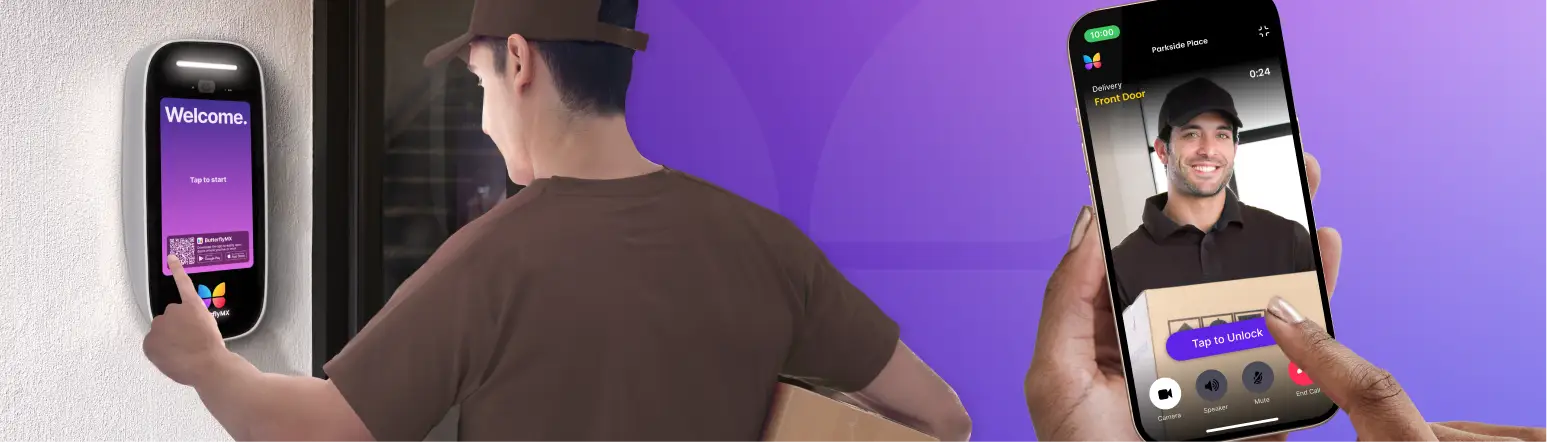
Get your free quote!
Fill in the form below, and we'll email you right back.
Want a free quote?
Fill in the form below, and we'll email you right back.
You’ll be redirected shortly...