





Key takeaways:
- Gated communities often lose vehicle access control when entry permissions, visitor approvals, and vendor access are managed in too many places.
- Tailgating, shared codes, outdated resident lists, and unclear vendor rules create operational gaps that staff and HOA boards struggle to track.
- A stronger gate access workflow gives managers centralized permissions, visitor visibility, and clearer records of who enters the property.
If your gated community has a controlled entrance but still struggles with unknown vehicles, shared gate codes, or vendors arriving without clear approval, the issue is usually not the gate itself. It is the access workflow behind the gate.
Gated communities lose control of vehicle access when residents, guests, vendors, delivery drivers, and staff all use different entry methods that are hard to manage or audit. Over time, old codes stay active, credentials are shared, and managers have limited visibility into who is entering and why.
The goal is not just to open and close a gate. It is to give the right people the right level of access, at the right time, with a system your team can actually manage. The gate intercom and access system should manage credentials, visitor approvals, delivery workflows, and access records.
This guide will answer:
- Why vehicle access control breaks down at gated communities
- Common access gaps that create risk and confusion
- What a better vehicle access workflow looks like
- What to consider before upgrading gate access
- How ButterflyMX supports gated community access
- FAQs

Why vehicle access control breaks down at gated communities
Most gated communities start with a simple goal: limit vehicle entry to residents, approved guests, staff, vendors, and service providers. But daily property operations are rarely simple. Residents move in and out, guests visit on weekends, landscapers need recurring access, delivery drivers arrive throughout the day, and emergency or maintenance teams may need access after hours.
Control breaks down when these access needs are handled manually or across disconnected systems. For example, a property manager may update resident records in one place, distribute gate codes by email, track vendor schedules in a spreadsheet, and rely on guards or staff to make judgment calls at the entrance.
That approach can work for a small community for a short time, but it becomes harder to manage as the property grows. The operational takeaway is clear: if permissions are not centralized and easy to update, the gate may still be controlled mechanically, but vehicle access is not fully controlled operationally.
Common access gaps that create risk and confusion
Several everyday access habits can slowly weaken control at a gated community. These issues are often familiar to property managers and HOA boards because they show up as resident complaints, gate backups, or uncertainty about who should be allowed in.
- Shared gate codes: A code given to one guest may be passed to friends, delivery drivers, or former residents. If the code is not changed often, it can continue circulating long after the original need has passed.
- Outdated resident or tenant lists: If move-outs are not reflected quickly in the access system, former residents may keep credentials longer than intended.
- Unclear vendor rules: Landscapers, cleaners, contractors, dog walkers, and maintenance providers may need different access schedules. Without time-based permissions, staff may overgrant access for convenience.
- Tailgating: A vehicle may follow another through the gate before it closes. This is partly a physical layout issue, but access records and entry workflows can help teams investigate patterns.
- Manual visitor approvals: If guests call staff, guards, or residents through inconsistent channels, there may be no reliable record of who approved entry.
These gaps do not mean a community is poorly managed. They usually mean the access process has outgrown the tools being used to support it.
What a better vehicle access workflow looks like
A better vehicle access workflow starts by separating access groups and giving each one a practical path through the gate. Residents may use credentials assigned to their household. Guests may request entry through a video intercom or receive a temporary Visitor Pass. Vendors may receive scheduled access that works only during approved service windows.
Consider a common scenario: a resident is expecting a family member for the weekend. Instead of texting a permanent gate code, the resident can grant temporary visitor access based on the property’s rules. The guest can enter without calling the office, and the property has a clearer record of the event.
For vendors, the workflow should reduce both overaccess and staff interruptions. A landscaping company may need access every Tuesday from 8 a.m. to 2 p.m., while an after-hours HVAC contractor may need one-time access for a specific repair. Those are different operational needs, and the access system should let managers treat them differently.
The best workflow is one your team can maintain. If updating permissions takes too long, staff may avoid making changes. If the process is simple, teams are more likely to remove outdated and old gate access, adjust schedules, and respond to resident concerns quickly.
What to consider before upgrading gate access
Before upgrading vehicle access control, clarify what problem you are trying to solve. Some communities need better visitor access. Others need vendor scheduling, resident credential management, video verification, or better reporting. Many need all of these, but prioritizing the top issues helps you evaluate solutions more clearly.
It is also helpful to distinguish the gate operator from the gate access control system. The gate operator is the mechanical equipment that physically opens and closes the gate. The access control system manages who can request entry and under what conditions. Upgrading access control may not mean replacing the gate operator, but compatibility should be reviewed by a qualified installer.
HOA boards and property teams should also consider how different users will interact with the system. Residents need a simple way to manage guest access. Staff need an efficient way to update permissions. Vendors need instructions that reduce confusion at the entrance. Delivery drivers need an approved workflow that does not create backups or repeated calls to the office.
Finally, think about accountability. Access activity can help property teams review events, troubleshoot complaints, and understand usage patterns. It does not replace good policies or physical security planning, but it gives managers more visibility than a shared code or handwritten log.
Discover how ButterflyMX works:
How ButterflyMX supports gated community access
ButterflyMX helps gated communities manage vehicle, resident, visitor, and vendor access from one connected property access platform.
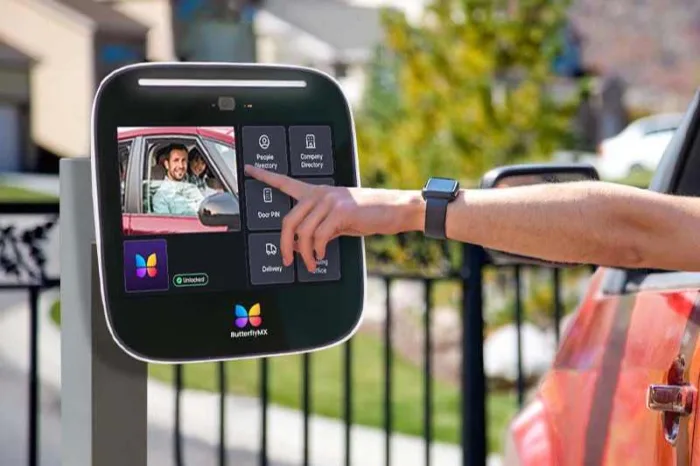
At gated entrances, communities can use ButterflyMX Vehicle Access Control to make gate and garage entry more convenient for residents while giving property teams better visibility into access activity. Residents can open approved gates from the ButterflyMX mobile app, and properties can also support hands-free vehicle access with Windshield Tags and Vehicle Readers.
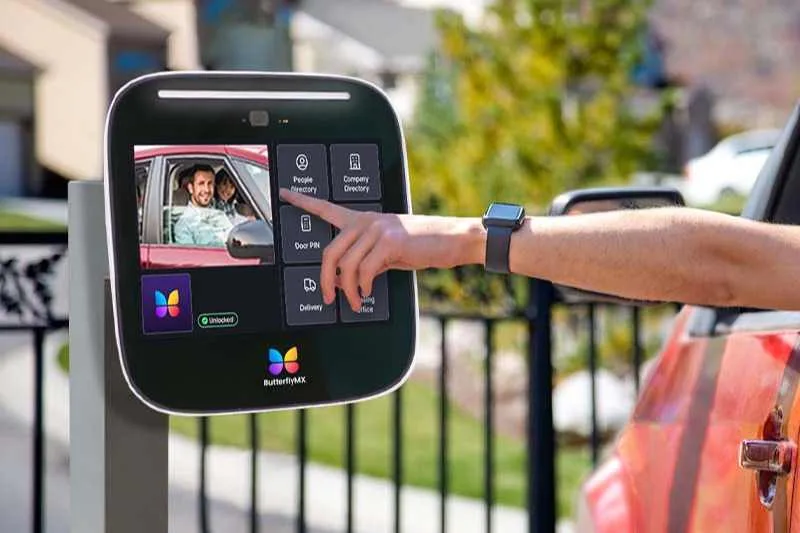
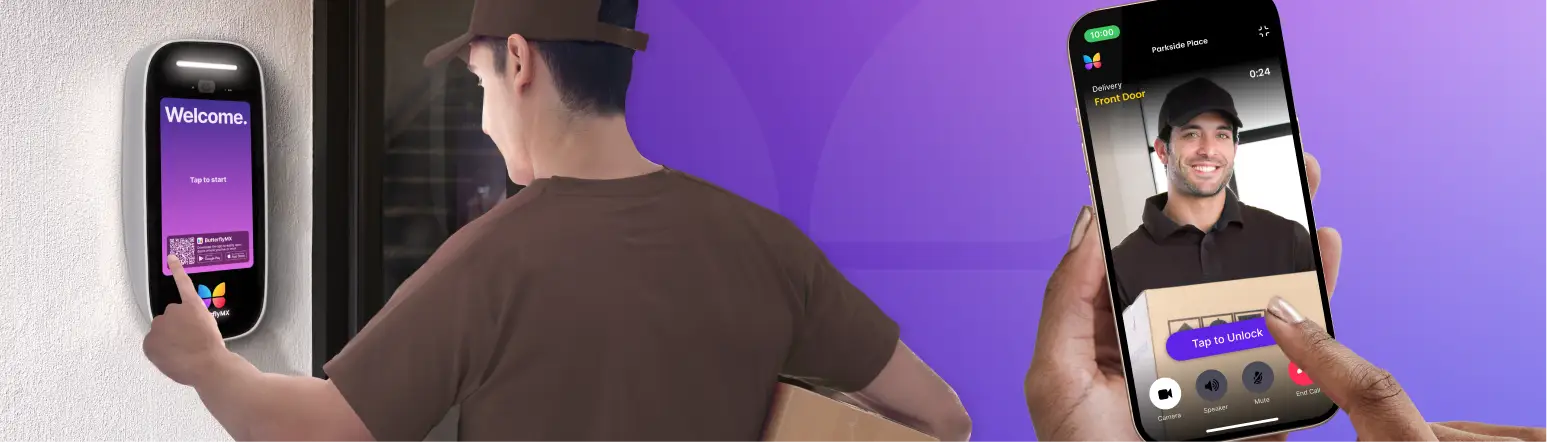
ButterflyMX also helps simplify guest access. With a ButterflyMX video intercom at the gate, residents can see and speak with visitors before granting access from their smartphone. This helps guests, service providers, and delivery drivers get where they need to go without requiring staff to handle every routine entry request.
For temporary access, residents can issue Visitor Passes to approved guests, such as family members, friends, dog walkers, or recurring service providers. Instead of sharing a permanent gate code, residents can send access that is limited by the property’s rules and can be revoked when it is no longer needed.
Property teams can manage access permissions from a centralized dashboard instead of tracking residents, vendors, and guests across disconnected lists, spreadsheets, or shared codes. That makes it easier to issue and revoke credentials, update access when someone moves out, review entry activity, and adjust permissions as the community’s needs change.
ButterflyMX does not replace the mechanical gate operator. Instead, it works with compatible gate and garage equipment to support the access workflow that determines who is allowed to enter and when. Communities evaluating an upgrade should review their existing gate equipment, access points, resident workflows, vendor access needs, wiring, network requirements, and installation plan with a qualified access control professional.
Frequently asked questions
Why do gated communities still have unauthorized vehicles?
Unauthorized or unexpected vehicles can enter because of shared codes, tailgating, outdated credentials, unclear visitor approvals, or vendor access that is too broad. A gate helps control entry, but the access workflow determines how well that control is maintained.
Are gate codes a good option for vehicle access?
Gate codes can be simple, but they are hard to control once shared. They may be appropriate for limited situations, but many communities benefit from access methods that can be assigned, scheduled, changed, and reviewed more easily.
How can an HOA improve visitor access at a gated entrance?
An HOA can improve visitor access by defining approval rules, using temporary guest access, keeping resident records current, and choosing a system that gives managers visibility into entry activity without requiring staff to approve every visitor manually.
Does better access control stop tailgating?
Access control alone may not stop tailgating because gate layout, closing speed, signage, and driver behavior all play a role. However, better access records and clearer entry workflows can help managers identify patterns and reduce unnecessary access.
Can ButterflyMX work with an existing gate?
Yes, ButterflyMX can often work with existing gated entrances, depending on the property’s current equipment and configuration. A qualified installer should review the gate operator, wiring, network connectivity, access points, and access goals to confirm the right setup.
Get your free quote!
Fill in the form below, and we'll email you right back.
Want a free quote?
Fill in the form below, and we'll email you right back.
You’ll be redirected shortly...