
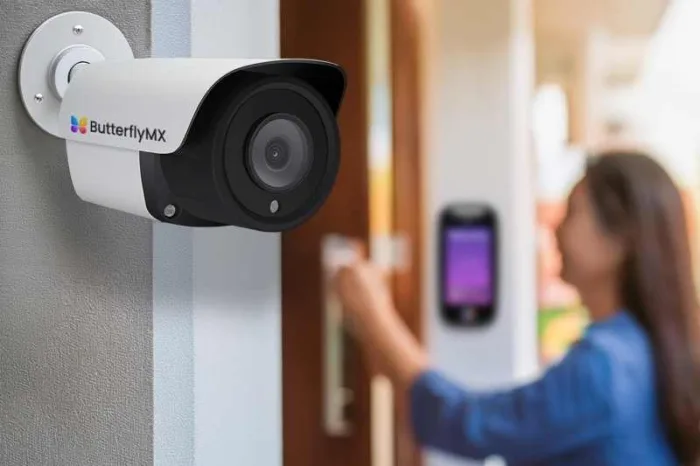





Key takeaways:
- A cyber doorman manages building entry remotely with video communication, cameras, and networked access control. Some systems add off-site operators, while others rely on residents, staff, or automation.
- Cyber doorman, remote doorman, and digital doorman are often used as category terms. VIRTUAL DOORMAN® refers to a specific branded service.
- The right entry model depends on staffing needs, package volume, retrofit conditions, resident access preferences, privacy rules, and fallback plans for outages.
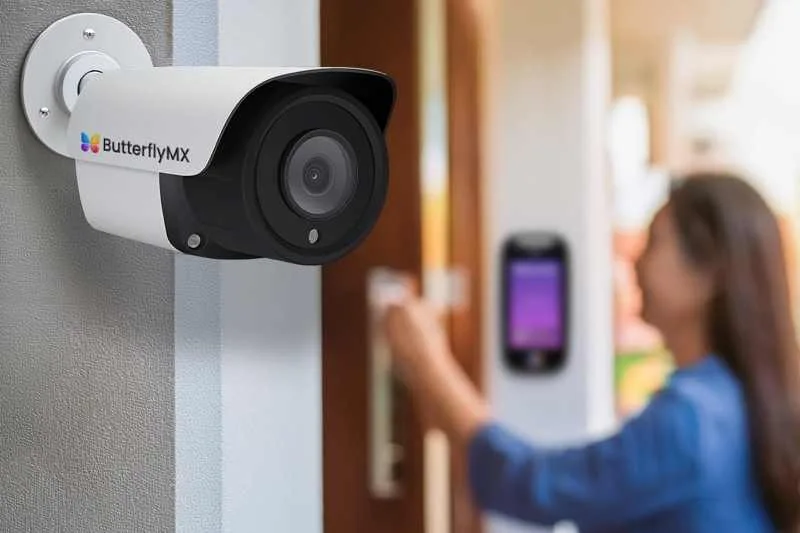
A cyber doorman sounds simple: someone, or something, helps manage the front door without standing in the lobby. In practice, the term can mean a few different things. Some buildings use off-site operators who answer visitor calls and release doors remotely. Others use video intercoms, mobile access, property staff, and automated rules to handle the same basic entry process without a remote attendant.
That distinction matters. A cyber doorman can help a property modernize visitor and delivery access, but it does not automatically replace the judgment, physical help, or hospitality of an on-site doorman. Before choosing a system, a building needs to know who will verify visitors, how packages will be handled, what happens during an outage, and which tasks still require people on-site.
This guide explains what a cyber doorman is, how the system works, what affects cost, and how to compare remote-staffed, automated, live, and hybrid entry models.
This guide will answer:
- What is a cyber doorman?
- How a cyber doorman system works
- What affects cyber doorman cost?
- Cyber doorman compared with other entry models
- How cyber doormen handle packages and deliveries
- Is a cyber doorman safe and private?
- Which buildings are a good fit?
- How to evaluate a cyber doorman system
- Cyber doorman alternatives and next steps
- FAQs
Watch how ButterflyMX works:
What is a cyber doorman?
A cyber doorman is a remote building-entry system that uses video communication or cameras, access-control software, and a networked door release to manage visitors and deliveries. In a staffed model, an off-site operator reviews a visitor request and grants access based on the property’s rules. In an unstaffed model, residents or property staff handle that decision through a video intercom and access-management tools.
The language around this category can be confusing. Cyber doorman, remote doorman, digital doorman, and generic virtual doorman are often used to describe similar remote-entry concepts. However, VIRTUAL DOORMAN® is a specific branded service, not the generic name for every system in the category.
A cyber doorman also differs from a basic audio buzzer. A legacy buzzer may only place an audio call and trigger a door release. A modern cyber doorman setup may include video, remotely managed permissions, mobile credentials, entry records, cameras, and rules for visitors or couriers. The important question is not just whether the door can open remotely. It’s who decides to open it, what information they use, and what happens after entry is granted.
How a cyber doorman system works
Most cyber doorman systems have three layers: a way to see or communicate with the visitor, a way to approve or deny entry, and a way to unlock the connected door. The staffing model changes who makes the decision, but the basic sequence is similar.
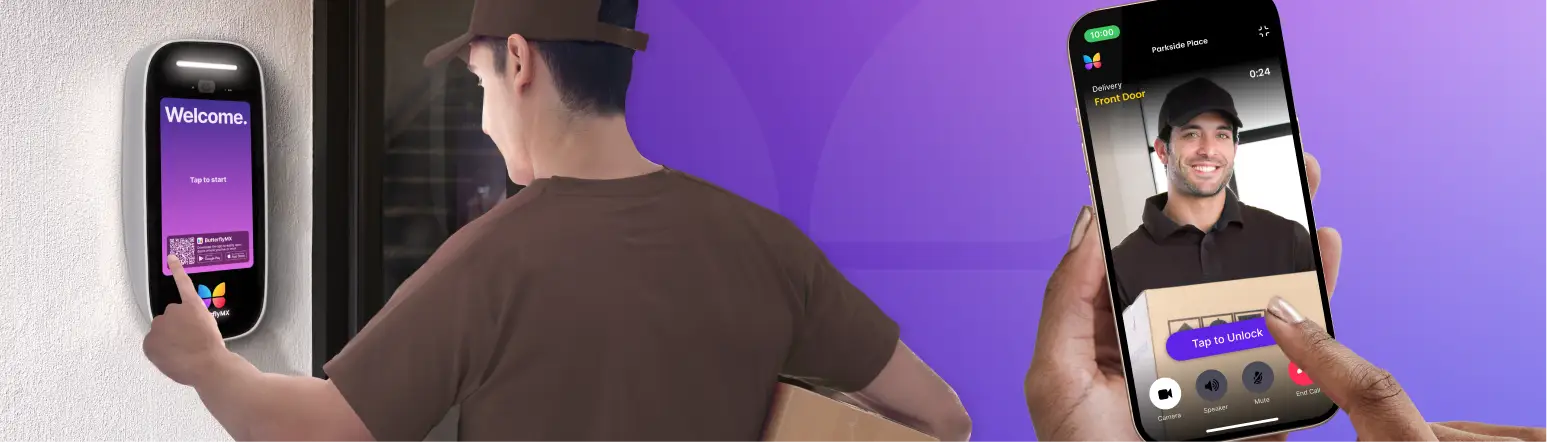
- A visitor or courier places a call from a video intercom, or the property observes the entrance through a camera.
- A resident, property team member, automated rule, front desk worker, or off-site operator reviews the request.
- If the visit is approved, the access-control system sends a signal to the door-release hardware and may create an event record or notification.
That simple sequence can become more complex in a real building. A multifamily property may need separate rules for residents, guests, delivery drivers, vendors, maintenance teams, and staff. A larger property may also need the entry system to work with cameras, elevators, package areas, interior doors, gates, and management procedures.
Entry records can help a property understand what happened at a door, but they are not a guarantee that every person was correctly identified or that every incident was prevented. The system is only one part of the building’s access plan. Clear rules, staff training, resident communication, and fallback access all matter.
ButterflyMX fits into this conversation as an automated or hybrid access option. Residents can receive visitor calls and grant access from their smartphones, while property teams can manage residents, visitors, credentials, and access remotely. That can support a cyber doorman-style entry process, but it should not be described as off-site doorman staffing unless that service is actually part of the property’s setup.
What affects cyber doorman cost?
There is no reliable universal price for a cyber doorman. Published figures vary by vendor and are often estimates, so buyers should treat them as directional rather than as market-wide benchmarks. A better approach is to separate one-time setup costs from recurring costs, then ask vendors to itemize both.
Installation cost drivers
- How many entrances, gates, package areas, and interior access points need equipment
- Whether the property needs video intercoms, cameras, door-release hardware, credentials, or added access-control devices
- The condition of existing wiring, door strikes, locks, connectivity, and entry hardware
- Retrofit complexity in older buildings or buildings with unusual door conditions
- Whether the system must coordinate with elevators, package rooms, front desk procedures, or property-management routines
Recurring cost drivers
- Software, cloud access management, connectivity, and support
- Monitoring fees or off-site operator coverage, if the property uses a staffed model
- Maintenance responsibilities and service-level terms
- Per-unit, per-door, annual, monthly, or optional-service charges
- Contract length, renewal terms, trials, and cancellation conditions
A proposal should make these costs easy to compare. Ask which charges are one-time, which repeat monthly or annually, and which only apply if the property adds staffing, monitoring, support, or extra access points. A cyber doorman may reduce the need for some on-site staffing in certain situations, but savings are not automatic. They depend on the property, coverage hours, service expectations, and the tasks that still require a person on-site.
Cyber doorman compared with other entry models
A cyber doorman sits between several familiar access models. A video intercom is the communication and access technology. A staffed cyber doorman adds off-site people and procedures. A live doorman adds physical presence. A hybrid model combines technology with staff involvement when needed.
The table shows why there is no single best option for every building. A staffed cyber doorman can help when a property wants a human to handle visitor questions, delivery exceptions, or after-hours access without keeping someone in the lobby. But that operator cannot carry packages, escort a visitor, check a mechanical issue, or provide the same hospitality as an on-site doorman.
An automated video intercom puts more responsibility on residents and property teams. That can work well when residents are comfortable receiving visitor calls, staff can manage permissions remotely, and the building has simple rules for deliveries and vendors. It works less well when the property needs frequent human judgment, hands-on package handling, or in-person service.
ButterflyMX video intercoms, mobile access, front desk tools, package-room support, and remote access management can serve as parts of an automated or hybrid entry model. The right configuration depends on the building’s doors, residents, package flow, staffing expectations, and fallback plan.
How cyber doormen handle packages and deliveries
Package handling is one of the biggest reasons buildings look at cyber doorman systems, but remote access and package security are not the same thing. The USPS Office of Inspector General reported that at least 58 million packages were stolen in the United States in 2024. A 2025 package-theft survey also found higher package-theft exposure among apartment and condo residents than among single-family homeowners.
A strong delivery process usually has five separate steps: verify the courier, authorize entry, direct the courier to the right delivery area, notify the resident, and make sure the resident can retrieve the item. A staffed remote service may help with the first two steps by answering a call and opening a door. It still cannot physically receive, move, or secure a package unless the property has an on-site handoff process or a controlled delivery area.
That is why package rooms and clear courier instructions often matter as much as the entry device itself. If a building removes an on-site doorman, residents may have fair questions about oversized items, signature-required deliveries, missed drop-offs, and packages left in shared areas. Those questions should be answered before the change, not after packages start piling up in the lobby.
For additional guidance on reducing delivery risk, see ButterflyMX’s article on package theft in apartment buildings.
Is a cyber doorman safe and private?
A cyber doorman can give a property more structure around building entry, but it does not make a building automatically safe or private. Security depends on how visitors are verified, who has permission to unlock doors, how cameras are used, and what the property does when normal procedures fail.
- Access rules: Decide who can release each door, how visitors and couriers are verified, and when a request should be escalated.
- Camera and data practices: Review camera placement, live-feed access, recording access, retention practices, and audit controls.
- Operator access: If off-site operators are involved, confirm what they can see, what actions they can take, and how their work is reviewed.
- Outage planning: Document what happens during internet outages, failed door release, resident lockouts, and emergency situations.
- Resident access: Provide alternatives for residents who cannot or do not want to rely entirely on a smartphone app.
- Local requirements: Have qualified local professionals review applicable egress, accessibility, fire, and building requirements before installation.
Monitoring practices vary by provider and property. Don’t assume operators watch residents continuously, that every event is recorded, or that footage is kept for a certain period unless the vendor documents those practices and the property adopts them as policy.
Which buildings are a good fit?
Cyber doorman fit depends less on the building’s size and more on the building’s day-to-day entry problems. A high-traffic apartment building with many guests and deliveries may need different tools than a small self-managed condo or a gated community with vehicle access.
- Urban multifamily and condo buildings may care most about visitor volume, package flow, multiple entrances, and the resident experience at the front door.
- Gated communities may need to think through vehicle entry, guardhouse procedures, gate access, and license plate recognition where those tools are part of the property’s plan.
- Small or self-managed buildings should compare the value of recurring remote staffing with a simpler resident-led video intercom model.
- Older or prewar buildings may need a closer look at door strikes, wiring, connectivity, and existing entry hardware before assuming an easy retrofit.
- Properties replacing on-site staff need a transition plan for packages, resident communication, visitor exceptions, and services technology won’t perform.
The practical decision often comes down to human help versus simplicity. Choose a staffed remote service when the building needs a person to handle exceptions but does not need full-time lobby coverage. Consider an automated or hybrid model when resident-led access, remote property administration, and flexible staffing are the higher priorities.
How to evaluate a cyber doorman system
A good vendor demo should test more than the lobby call button. Walk through the ordinary days and the messy ones: a resident’s guest arrives, a courier has five packages, a vendor needs access, the internet goes down, a resident gets locked out, or an operator cannot reach the person they expected to call.
- Ask for coverage schedules, escalation procedures, response-time records, uptime information, and customer references for any staffed service.
- Compare itemized pricing, contract length, renewal terms, maintenance, support, trials, and cancellation terms.
- Test visitor, delivery, resident, staff, emergency, outage, and accessibility scenarios before committing.
- Confirm compatibility with doors, cameras, elevators, package areas, credentials, and property-management procedures.
- Review privacy roles, data access, retention, cybersecurity responsibilities, and incident-response processes.
- Ask what backup credentials or access procedures are available if connectivity or the main entry method fails.
Use the same checklist for every provider, including ButterflyMX. A ButterflyMX access expert can discuss how video intercoms, mobile access, remote management, front desk tools, and package needs may fit a specific property. The final choice should still come from the building’s actual entrances, staffing expectations, resident needs, and delivery process.
Cyber doorman alternatives and next steps
A cyber doorman is one way to manage entry, not the only one. A property may choose an on-site live doorman, a staffed remote command-center service, an automated video intercom and access-control system, a hybrid front desk model, or a legacy telephone entry system. Each option changes who handles visitors, who handles exceptions, and what happens when technology or staffing is unavailable.
If you’re researching the branded service specifically, ButterflyMX has a separate guide to Virtual Doorman reviews and alternatives. If you’re evaluating the broader category, start with the operating plan: how people enter, where packages go, who answers exceptions, and how residents get in when the usual process breaks.
Frequently asked questions
Is VIRTUAL DOORMAN® the same as a cyber doorman?
No. Cyber doorman is often used as a category term for remote entry-management systems, while VIRTUAL DOORMAN® is a specific company and branded service.
What happens to a cyber doorman during an internet outage?
An outage can interrupt connected features. Before installing any system, ask about backup connectivity, alternative credentials, mechanical access, support procedures, and emergency protocols.
Can a small building use a cyber doorman?
Yes, a small building can use a cyber doorman, but it may not need remote staffing. Fit depends on entry count, retrofit scope, package volume, management capacity, resident preferences, and recurring cost.
Can a cyber doorman accept packages?
A cyber doorman may help admit a courier or direct a delivery, but it cannot physically receive or secure a package without an on-site handoff process or controlled delivery area.
A cyber doorman is most useful when it matches the way a building actually operates. If the main need is human exception handling, remote staffing may make sense. If the building mainly needs resident-led visitor access, remote property management, mobile credentials, and clearer delivery rules, an automated or hybrid model may be the better fit.
ButterflyMX can help properties evaluate video intercoms, mobile access, front desk tools, remote access management, and package needs as part of that decision. Get a personalized ButterflyMX quote for your property.
Get your free quote!
Fill in the form below, and we'll email you right back.
Want a free quote?
Fill in the form below, and we'll email you right back.
You’ll be redirected shortly...