





Key takeaways:
- Many older Victoria BC strata buildings can add electronic access control without replacing every door, but each opening needs a door, frame, fire-rating, wiring, power, and hardware review first.
- Access control upgrades in BC stratas are common-property projects as much as technical projects, so the approval path and funding method should be confirmed before installation.
- The strongest retrofit plans look beyond the lobby and account for resident credentials, visitor entry, secondary doors, parkade access, elevator-related access, phased rollout, and long-term administration.
Older Victoria BC strata buildings often reach the same access-control question from different starting points. One building may be trying to replace a tired telephone-entry panel. Another may be dealing with lost keys, inconsistent fobs, or side doors that no longer match the main entrance. In each case, the real question is not simply which device to buy. It is whether the building, the strata process, and the day-to-day access plan can support the upgrade.
To retrofit access control in an older Victoria BC strata building, start with a door-by-door feasibility review, identify every common-property access point that belongs in scope, confirm the right BC strata approval and funding path, and choose a system that residents and managers can actually use over time. Many buildings can modernize without replacing every door, but older frames, fire-rated openings, limited wiring, heritage concerns, and parkade or elevator access can change the plan quickly.
The best access control system retrofit projects connect the technical work to the governance work. A council-ready proposal should explain what will be installed, which doors are included, how residents and visitors will enter, how credentials will be issued and revoked, and how the project will be paid for. That wider view helps the strata avoid a patchwork of hardware that solves the front door while leaving the rest of the property harder to manage.
This guide will answer:
- What an access control retrofit means for a strata building
- BC strata approvals and governance for access control upgrades
- How to assess an older Victoria building for retrofit feasibility
- Access points to include in your strata retrofit plan
- Choosing access control systems for an older strata retrofit
- Funding the upgrade and planning phased implementation
- Common retrofit questions for Victoria BC strata readers
- FAQs
Watch how ButterflyMX works:
What an access control retrofit means for a strata building
An access control retrofit updates existing entrances and shared spaces with electronic access equipment instead of assuming every door must be replaced. In a strata building, that usually means working on common-property openings such as the main entrance, side doors, parkade entries, amenity rooms, service areas, and, in some buildings, elevator-related access.
Retrofit is different from full replacement. A retrofit starts by asking what can be reused, adapted, or upgraded. An older lobby door may be able to accept a video intercom, card or fob reader, mobile access, a controller, and electric locking hardware with limited changes to the door assembly. Another opening may need more work if the frame is damaged, the closer does not work, the wiring path is poor, or the opening has fire-rating or egress requirements that limit the hardware choices.
That distinction matters in older Victoria BC strata buildings because many properties have accumulated access hardware over time. Mechanical keys, legacy telephone-entry systems, older fob readers, and one-off devices at secondary doors can all exist in the same building. A retrofit can bring those pieces into a more manageable access plan, but only if the strata treats the project as a building-wide decision rather than a front-door purchase.
At a high level, a practical strata access control retrofit follows this order:
- Review the existing doors, frames, locks, wiring, power, and connectivity.
- Inventory the common-property access points residents, visitors, staff, trades, and vendors use.
- Confirm whether each opening is a good retrofit candidate or needs repair or replacement first.
- Clarify the BC strata approval path, funding method, and any bylaw or policy issues.
- Compare system types based on access points, credential needs, visitor entry, and administration.
- Plan installation, resident communication, credential distribution, training, and transition from existing keys or fobs.
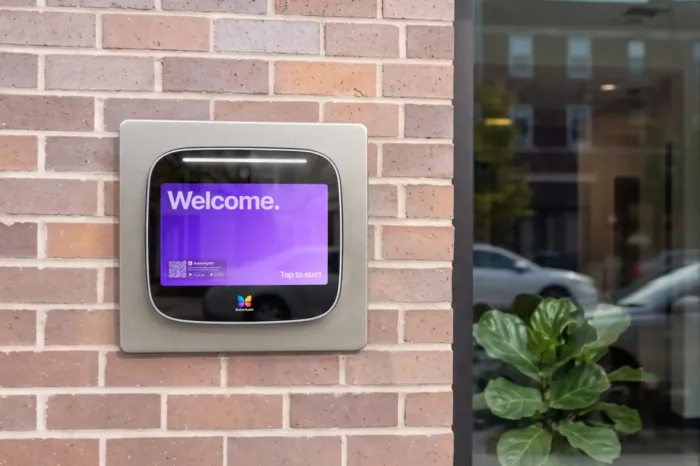
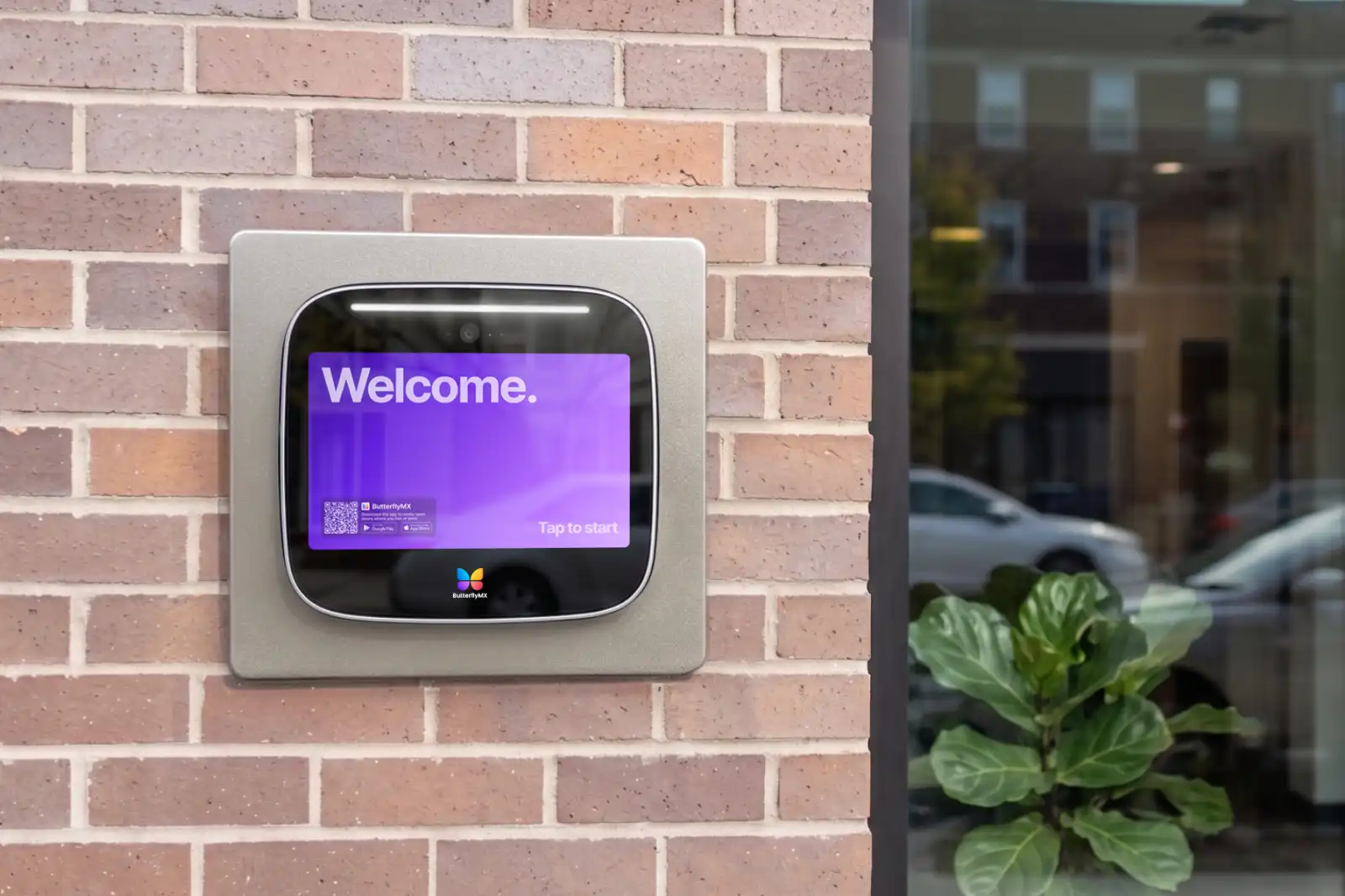
ButterflyMX fits this discussion most naturally at the main entrance and visitor-entry layer. If a strata is replacing a legacy telephone-entry system or wants residents to manage guest access from their phones, a video intercom with mobile access may be part of the retrofit strategy. Still, the product decision should come after the building and governance questions are understood.
BC strata approvals and governance for access control upgrades
Access control upgrades in BC stratas are common-property decisions, not just equipment purchases. The strata corporation governs shared property, the strata council helps administer that work, and the BC Strata Property Act, strata bylaws, past resolutions, and funding method can all affect how the project moves forward.
The exact approval path depends on the project. A limited repair or like-for-like replacement may be treated differently from a new capital improvement that changes how common-property access is controlled. Work that touches equipment connected to individual strata lots may also raise different questions than work limited to shared entrances. Because of that, councils and property managers should avoid assuming one vote threshold or approval rule applies to every access-control project.
Before requesting final proposals, answer these governance questions:
- Is the work limited to common property, or does it affect strata lot boundaries, resident devices, or equipment tied to individual units?
- Is the project being treated as maintenance, repair, replacement, or a new improvement?
- Will the strata pay from the operating budget, the contingency reserve fund, or a special levy?
- Do the bylaws require changes to credential use, visitor access, records, privacy practices, or resident responsibilities?
- Will the approval timeline need to line up with a council meeting, annual general meeting, special general meeting, owner notice period, or funding vote?
For legal and procedural details, strata councils should review the BC Strata Property Act, their own bylaws, and recognized BC strata education resources such as VISOA or CHOA materials. If a dispute or interpretation issue arises, the Civil Resolution Tribunal may also be relevant in the broader BC strata context. This article is not legal advice; it is a planning framework for asking the right questions before the project is too far along.
Governance affects timing. A technically simple retrofit can still take longer if the strata needs owner approval, reserve-fund authorization, or a special levy. A well-prepared proposal can make that process easier because it connects the access problem, the openings in scope, the expected resident impact, and the funding approach in one place.
What to include in a council-ready retrofit proposal
A useful proposal should give council and owners enough detail to judge the project without turning the meeting into a hardware lesson. Include:
- The access problem being solved, such as lost-key exposure, an aging intercom, unmanaged side doors, or inconsistent credentials.
- The common-property openings included in phase one and any likely future phases.
- The condition of each door, frame, closer, and existing lock or reader.
- The system type being considered and why it fits the building’s age, layout, and access patterns.
- How residents, guests, delivery drivers, trades, and managers will use the system.
- How credentials will be issued, replaced, revoked, and tracked over time.
- The proposed funding path and any approval steps the strata must confirm.
- Any policy questions, including visitor access rules, access logs, privacy expectations, and administrator permissions.
Keep this part of the discussion product-neutral. Governance and funding questions should be settled as strata decisions first. Once the strata knows what it is allowed and prepared to do, system selection becomes much more focused.
How to assess an older Victoria building for retrofit feasibility
Many older strata doors can be retrofitted without replacement, but the answer depends on each opening. Door condition, frame condition, fire rating, egress needs, power, wiring, connectivity, and hardware compatibility all shape what is practical.
A building-wide yes or no is rarely useful. A front lobby door may be a strong candidate for electronic access, while a side entrance, parkade pedestrian door, or service opening may need door repair, frame work, different locking hardware, or replacement before electronics make sense.
Door and frame condition
Start with the physical opening. Installers typically look at whether the door closes and latches reliably, whether the frame is sound, whether hinges and closers work, and whether the opening can support new access hardware. If the door already drags, sags, binds, or fails to latch, new electronics will not fix the underlying mechanical problem.
This is one of the clearest retrofit-versus-replacement decision points. If the opening is healthy, adding a reader, controller, electric strike, or other compatible hardware may be practical. If the door assembly is worn or misaligned, repairing or replacing it first may prevent ongoing service calls and resident frustration.
Hardware compatibility
Electronic access control is a set of connected parts. A reader, keypad, card, fob, or mobile credential identifies the person asking to enter. The access controller checks the permission rules for that door. Locking hardware, such as an electric strike or magnetic lock, releases or secures the opening. Depending on the door, the system may also need request-to-exit hardware, door-position monitoring, power supplies, and backup power.
Older openings do not all accept the same hardware. Some doors work well with an electric strike that pairs with existing lock hardware. Others need different preparation, a different lock configuration, or a more substantial frame change. That is why a site assessment should come before final system selection. The question is not only which access control system has the right features, but which hardware each door can safely and reliably support.
Wiring, power, and connectivity constraints
Infrastructure often determines how simple or difficult the retrofit will be. The strata should identify where power is available, whether low-voltage cable can reach each opening, how controllers will connect to management software or intercom equipment, and whether backup power is needed for critical doors.
These conditions vary across the property. A lobby entrance may be easier to wire than a remote exterior door, basement entrance, or parkade pedestrian door. Older buildings may also have finished walls, limited pathways, or legacy equipment locations that make a clean retrofit more involved than the council expected.
Fire-rated doors, egress, and local review
Fire-rated and egress-related openings need extra care. If a door or frame is part of a rated assembly, hardware changes should be reviewed by qualified professionals before the work begins. Access-controlled doors also need to preserve safe exit. In practical terms, the access control plan cannot create a door that is convenient to manage but difficult or unsafe to leave through.
Victoria’s older building stock can add more constraints. Some buildings have older-character or heritage features where visible hardware changes, drilling, or frame modifications require a more careful plan. Exterior exposure matters too. Coastal conditions can influence hardware durability choices, especially at busy outside doors. If the work could trigger local permit, inspection, or building-department questions, confirm that early with the appropriate local authority rather than assuming the installer can resolve it after approval.
Questions to ask during a feasibility review
- Does the door close, latch, and lock reliably today?
- Is the frame sound enough for the proposed hardware?
- Is the opening fire-rated or tied to an egress path?
- Where will power come from?
- Can wiring or network connectivity reach the opening without excessive disruption?
- Which credential types will residents, staff, and visitors need at this door?
- Would a retrofit create a dependable result, or would replacement be the cleaner long-term choice?
A retrofit is not automatically the cheaper or simpler path once a door is failing. Sometimes adapting a poor opening creates more trouble than replacing the opening and installing access control on a better foundation.
Access points to include in your strata retrofit plan
A good retrofit plan covers the common-property access points people actually use, not just the most visible entrance. Scope decisions affect budget, credential strategy, resident communication, vendor access, and long-term administration.
Before requesting final quotes, walk the property and list every entry point that residents, visitors, staff, contractors, and delivery providers use. This helps prevent a common problem: the lobby gets modernized, but side doors, parkade entrances, and shared rooms stay on unrelated keys, fobs, or codes.
Most older Victoria BC strata buildings should review these areas:
- Main entrance and lobby entry equipment.
- Secondary pedestrian entrances.
- Parkade or parking-related pedestrian access points.
- Amenity rooms, meeting rooms, gyms, or other shared spaces where applicable.
- Storage, utility, mechanical, or service areas that require controlled access.
- Elevator-related access points where floor restrictions, after-hours access, or visitor movement matter.
Main entrance and visitor entry
The main entrance often drives the project because it affects residents and guests every day. If the building still relies on legacy telephone-entry hardware, this is usually the most visible place to modernize. A video intercom can let residents see and speak with visitors before granting access, while mobile access can reduce the need to rely only on physical keys, cards, or fobs.
This is where ButterflyMX may be a good fit to evaluate. For a strata replacing an aging lobby entry system, improving visitor access, and giving managers remote administrative control, a ButterflyMX video intercom can support the main-entry part of the retrofit plan.
Secondary doors, parkade access, and shared spaces
After the main entrance, consistency becomes the issue. If residents still use unmanaged keys or unrelated fobs at side entrances or parkade doors, the property may keep many of the same access problems. Secondary doors are often where propped doors, lost credentials, or unclear permissions become harder to manage.
Shared spaces need the same kind of review. Some stratas want one credential to work across resident entrances and bookable amenity spaces. Others prefer to keep certain rooms separate. Either approach can be reasonable. The important point is to decide intentionally, not let separate devices pile up over time.
Elevator access and visitor movement
Elevator access can change the project scope in mid-rise strata buildings. Elevator controls do not replace the elevator system, but they can extend credential-based access rules to certain floors or access periods where appropriate. Because this work adds coordination and complexity, it should be discussed early if the strata may want it later.
Visitor movement also matters. A building may need one pattern for front-door guests, another for deliveries, and another for service providers. Thinking through those paths before choosing hardware makes it easier to select a system that fits the property instead of forcing residents and managers to work around the system.
Choosing access control systems for an older strata retrofit
No single access control system is right for every older strata building. The right fit depends on door compatibility, number of access points, visitor-entry needs, credential preferences, and how much centralized administration the strata wants.
It is often easier to compare options by use case than by feature list. A small walk-up may value simple administration and a limited number of controlled openings. A mid-rise with several entrances, visitor traffic, parking access, and manager turnover may need stronger central control and clearer credential processes.
The table narrows the choices, but the tradeoffs matter more than the labels. Standalone devices can make sense for a limited opening, yet they can become hard to manage if the strata later adds more controlled doors. A controller-based system usually requires more planning up front, but it can make onboarding, offboarding, and permission changes simpler when several shared areas are involved.
Credential choice has the same kind of tradeoff. Mobile access can be convenient for many residents, but older strata buildings may still need fobs, cards, or keypads for residents who prefer physical credentials, staff, trades, service providers, or fallback access. The right question is not which credential sounds most modern. It is which mix the building can support, explain, and manage reliably.
How the core components fit together
Readers and keypads identify the user. The access controller receives that information and decides whether the connected door should unlock based on the permission rules. Electric strikes or magnetic locks control the physical opening. Management software gives administrators a place to issue credentials, remove access, and review activity where the system supports it. Power supplies and UPS equipment can help keep important components operating during interruptions, depending on the design.
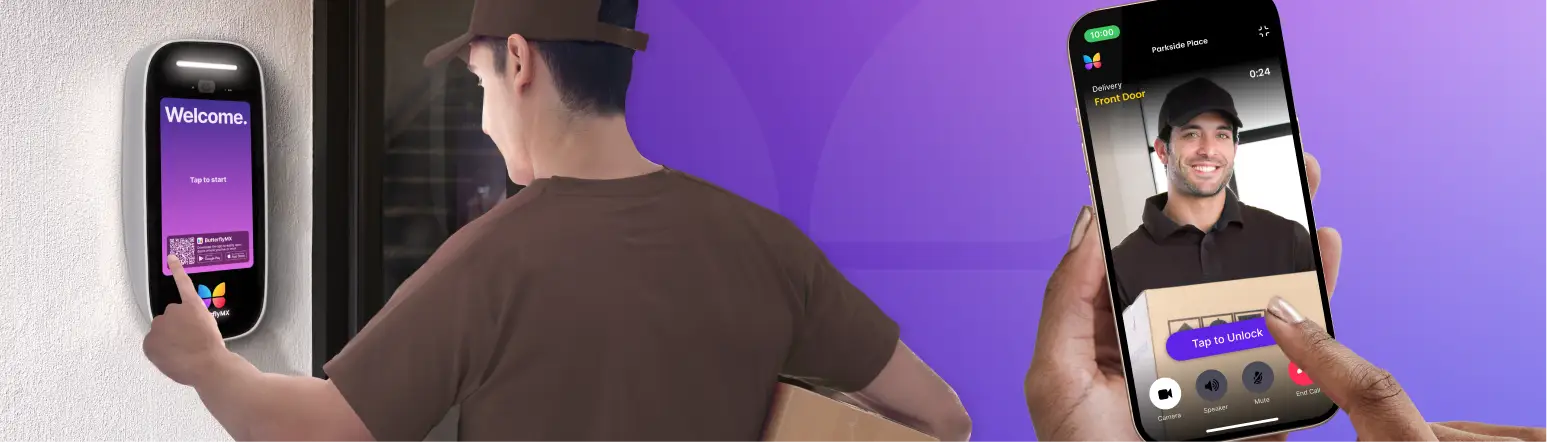
At the main entrance, intercom hardware adds the visitor layer. That matters when guest access is one of the building’s main problems. If the primary need is replacing a legacy telephone-entry system and giving residents a clearer way to handle guests, ButterflyMX is most relevant here because it combines video intercom, visitor access, mobile entry, and remote administration for front-door operations.
What to compare before choosing
- Compatibility with existing doors, frames, locks, and available wiring.
- Whether the building needs one managed system or can tolerate simpler isolated devices.
- How residents, visitors, staff, trades, and vendors will receive access.
- Whether the main entrance needs stronger video intercom or visitor-management features.
- How much training council members, property managers, or staff will need.
- Whether the system can support later phases without creating a permanent patchwork.
- Total cost of ownership, including administration effort and future expansion, not just first-phase hardware.
A phased mixed-system plan can work, especially in an older building. But it needs a clear end state. Without one, the strata may trade a smaller first phase for years of confusing credentials and avoidable administration.
Funding the upgrade and planning phased implementation
Funding and rollout should be planned together because the funding path can affect approvals, timing, and scope. A strata that wants to move quickly still needs to match the work to the proper budget source and decision process.
Most retrofit discussions involve three broad funding paths. The right choice depends on how the work is classified and what the strata is authorized to do, so councils and managers should confirm the details against BC strata guidance before approval.
Once the funding options are clear, the rollout plan becomes easier to shape. A common approach is to modernize the main entrance first, then add high-priority side doors, parkade access points, amenity rooms, or elevator-related controls later. This can be practical when the building has mixed door conditions, limited current funding, or an urgent need to replace aging visitor-entry equipment before expanding to a full-property system.
What phased implementation should cover
- Which doors are included in phase one and why.
- Which doors are likely to follow in later phases.
- How credentials will work while old and new systems overlap.
- When residents will be notified and what they need to do before cutover.
- How existing keys, fobs, cards, and codes will be handled.
- Who will issue credentials, revoke access, and manage exceptions.
- What training property managers, council members, or staff need after installation.
Resident communication is not a side task. If a building changes from keys or older fobs to mobile credentials, cards, or new visitor-entry tools, unclear instructions can create resistance even when the system itself is a good fit. The transition plan should explain what is changing, which doors are affected, when the change happens, and how residents get help.
During a phased rollout, many stratas operate in a mixed state. Existing keys may remain active on some doors while new credentials control others. That can be workable, but the rules need to be clear. Managers need a simple process for new residents, move-outs, lost devices, trades, temporary access, and visitor permissions.
ButterflyMX may be a strong fit when phased modernization starts at the main entrance. A strata can begin with video intercom, visitor access, mobile access, and remote administration at the front door, then plan additional common-property openings over time if the building’s long-term access architecture supports it.
Common retrofit questions for Victoria BC strata readers
Once a strata moves from early interest to planning, the same practical questions tend to come up. These answers can help frame the next discussion with council, the property manager, or an installer.
Can older doors usually be retrofitted?
Often, yes, but the answer is door specific. Many older doors can accept updated electronic hardware if the door, frame, closer, locking hardware, power, and wiring conditions support the upgrade. If an opening is worn, poorly aligned, fire-rated, or difficult to wire, repair, replacement, or a different hardware approach may be more practical.
Do all doors need to be upgraded at once?
No. Many strata retrofits are phased. The main entrance and highest-priority secondary doors are common phase-one targets, especially when the building needs to replace an aging intercom. The important part is to phase toward a manageable end state rather than create a permanent mix of unrelated systems.
What happens to existing keys?
Existing keys often remain in use during the transition. Some openings may keep mechanical access while others move to electronic credentials. Over time, the strata can decide whether keys stay as backup access, remain only on certain doors, or are reduced as more openings are modernized.
How long does a strata access control retrofit take?
The timeline varies by building complexity, approval cycles, funding decisions, door conditions, and whether the rollout is phased. A project with several doors, parkade access, elevator coordination, or owner approval needs more planning than a limited main-entry upgrade.
What about egress and fire safety?
Egress and fire-safety issues should be reviewed before hardware is finalized. Access-controlled doors still need to support safe exit, and fire-rated openings should be assessed carefully before modification. This is where qualified installers and code-aware professionals are especially important.
Frequently asked questions
Can older strata doors be retrofitted with electronic access control?
Yes, many older strata doors can be retrofitted, but only if the door, frame, closer, hardware condition, wiring, power, and any fire-rating requirements support the upgrade. A door-by-door assessment is the best way to decide whether retrofit or replacement makes more sense.
What vote is required for access control upgrades in BC stratas?
It depends on the project scope, whether the work affects common property, and how the upgrade is funded. Councils should compare the proposed work with the strata’s bylaws and applicable BC strata requirements instead of assuming one approval rule fits every retrofit.
Can a strata use contingency reserve funds for access control?
Possibly, but it depends on how the project is classified and how the strata is authorized to use those funds. The practical comparison is usually between operating-budget treatment, contingency reserve fund use, and a special levy, with the final choice confirmed through BC strata guidance.
Do all doors need to be upgraded at once?
No, many strata retrofits can be phased. A common approach is to start with the main entrance and the highest-priority secondary doors, then expand as budget, approvals, and infrastructure planning allow.
Retrofitting access control in an older Victoria BC strata building works best when the strata treats it as one connected decision: building feasibility, common-property governance, funding, system selection, and daily administration all have to line up. If one of those pieces is ignored, the project can become harder to approve, harder to install, or harder to manage after launch.
The strongest plan starts with the doors themselves, then expands to the full access picture: residents, visitors, parkade users, shared spaces, elevator-related access, existing keys, and future phases. From there, the strata can choose technology that fits the building instead of forcing the building to fit the technology.
If your strata is replacing legacy entry equipment, improving visitor access, or planning a phased access control upgrade across common-property entrances, ButterflyMX can support modern main-entry control, mobile access, visitor access, and remote administration. Book a strata access assessment consultation to evaluate your building’s retrofit options and plan the right upgrade path for your property.
Get your free quote!
Fill in the form below, and we'll email you right back.
Want a free quote?
Fill in the form below, and we'll email you right back.
You’ll be redirected shortly...