






Key takeaways:
- Affordable housing property management software is built for subsidized housing operations where compliance, certifications, subsidy tracking, and reporting are part of daily management.
- The best fit depends on the property’s programs, portfolio mix, reporting needs, staff capacity, budget model, and integration requirements.
- Buyers should verify support for HUD, LIHTC, TRACS, recertifications, waitlists, HAP reconciliation, mixed-payment rent, and resident-facing systems before choosing a vendor.

Choosing software for an affordable housing property is different from choosing software for a conventional apartment community. The system still has to manage leases, residents, rent, accounting, maintenance, and reporting. But it also has to support the program rules that affect eligibility, certifications, subsidies, audits, and deadlines.
Affordable housing property management software is specialized software for subsidized housing operations, compliance workflows, and reporting requirements. It helps teams manage tasks such as HUD-related reporting, LIHTC tracking, waitlists, recertifications, subsidy administration, and rent payments that may come from both residents and agencies.
The hard part is that no single feature list tells you whether a product fits your properties. A LIHTC-only community may need different tools than a HUD-assisted property. A mixed portfolio may need stronger separation between market-rate and affordable units. A multi-site operator may care as much about training, data migration, and integrations as it does about the software demo.
This guide explains what affordable housing software should do, which compliance concepts matter, how to compare software types, and how access control, visitor entry, and resident-facing systems fit into the larger technology stack.
This guide will answer:
- What affordable housing property management software is
- Why affordable housing properties need specialized software
- Which compliance programs and workflows matter most
- Essential features to look for in affordable housing software
- How to compare software types and choose the right fit
- Integration considerations for the broader affordable housing technology stack
- Implementation, rollout, and vendor questions
- FAQs
Watch how ButterflyMX works:
What affordable housing property management software is
Affordable housing property management software helps owners, operators, housing authorities, and property managers run subsidized housing while tracking the compliance duties tied to those programs. It usually includes many of the same basics as conventional property management software, such as resident records, rent ledgers, maintenance coordination, occupancy tracking, and reporting.
The difference is the affordable housing layer. These properties often need tools for income certifications, recertifications, subsidy tracking, waitlist controls, HAP reconciliation, set-aside monitoring, and program-specific reporting. For many teams, those tasks are not occasional exceptions. They are part of the operating model.
The category applies to several property types, including HUD-assisted communities, LIHTC properties, Section 8 housing, mixed portfolios with market-rate and affordable units, public housing operations, and other subsidized multifamily communities. Some portfolios also need support for HOME Investment Partnerships Program requirements, USDA Rural Development properties, or state-administered affordable housing programs.
That range is why buyers should start with program fit. A general property management system may work well for conventional leasing and accounting, but it may not be built to manage the compliance records, reporting steps, or subsidy workflows that affordable housing teams rely on.
Why affordable housing properties need specialized software
Affordable housing operations combine property management with program administration. Site teams still handle move-ins, renewals, maintenance, resident communication, and rent collection, but they also have to document eligibility, track file status, monitor deadlines, and prepare for reviews or audits.
That creates several practical differences from market-rate management:
- Different programs may use different rules for household eligibility, income documentation, certifications, and reporting.
- Rent may come from the resident, a housing agency, or both, which makes billing and reconciliation more complex.
- Annual and interim recertifications need clear tracking because missed or incomplete files can create compliance and financial risk.
- Waitlists may require more structure than a standard prospect list because applicant order, eligibility, communication, and unit matching may be tied to program rules.
- Mixed portfolios often need separate rules, reports, and accounting treatment for affordable and market-rate units inside one operating environment.
A basic leasing-and-accounting system may store residents and charges, but affordable housing teams often need software that guides the compliance side of the job. That can include preparing forms, tracking missing documents, flagging upcoming recertifications, separating resident and subsidy portions, and keeping records organized for review.
For a property management company entering affordable housing for the first time, the risk is assuming a familiar market-rate tool or proptech device can simply be adapted. Sometimes it can, especially with the right modules or integrations. In other cases, the compliance burden is heavy enough that a specialized affordable housing platform is the better fit.
Which compliance programs and workflows matter most
The smartest way to evaluate affordable housing software is to map each product to the programs your properties actually use. Broad claims about affordable housing support are not enough. Buyers need to know which tasks, forms, reports, files, and payment processes the system can support for each property type.
HUD-related workflows
HUD-assisted properties often need software support for tenant data, certifications, recertifications, subsidy administration, and reporting tied to HUD processes. Buyers will commonly see references to HUD 50059 forms, which are used in certain HUD housing contexts for tenant certification and recertification information. If a vendor says it supports HUD workflows, ask which programs, forms, and transaction types are included.
TRACS stands for Tenant Rental Assistance Certification System. It is a HUD system used for certain tenant and subsidy-related data. In software selection, TRACS matters because it affects how staff prepare, validate, and transmit required information. Support depth varies, so ask whether the software only stores TRACS-related data or also helps with submission-related tasks.
Some teams may also encounter MINC files in relevant reporting processes. The buying question is not whether the vendor can name the acronym. It is whether the system can help staff prepare the right data and outputs for the property’s required submissions.
LIHTC compliance
LIHTC, or Low-Income Housing Tax Credit, creates a different compliance profile from HUD assistance. LIHTC property management software often needs to support income certifications, household eligibility tracking, set-aside monitoring, file documentation, and reporting practices shaped by state administration.
State Housing Finance Agencies can influence how LIHTC compliance is administered, so buyers should ask whether the software can be configured for state-specific or portfolio-specific requirements. A product can be strong for HUD reporting and less complete for LIHTC needs, or strong for tax-credit compliance and lighter on broader property operations. The distinction matters.
Section 8, vouchers, and HAP reconciliation
Section 8 and voucher-related administration add another layer of detail. Staff may need to track resident rent portions, subsidy portions, payment changes, inspections or documentation, and agency communication over the life of a tenancy.
HAP stands for Housing Assistance Payment. HAP reconciliation means matching expected subsidy payments with what the property actually received and recorded. That matters because a simple rent ledger may not show the whole picture when rent is split between a household and an agency. Software that organizes charges, resident balances, and subsidy payments can make discrepancies easier to find.
HOTMA and changing requirements
HOTMA, the Housing Opportunity Through Modernization Act, affects how some affordable housing organizations think about household data, certifications, and compliance processes. The exact impact depends on the program and current guidance. Buyers should not treat a vendor’s HOTMA mention as proof that every related requirement is handled automatically.
A better demo question is specific: what does the system support today, what must be configured, and how are updates delivered when program rules or reporting practices change?
Other program requirements
Some portfolios also include HOME Investment Partnerships Program requirements, USDA Rural Development properties, public housing operations, or other state-administered programs. If those programs apply, confirm support at the program level. Affordable housing software is not interchangeable across every subsidy structure.
Essential features to look for in affordable housing software
The right feature set depends on your portfolio, but most buyers should evaluate the same core capabilities first. These features determine whether a system can support affordable housing administration in practice, not just in a sales presentation.
- Compliance reporting and certification tracking
- TRACS-related support when HUD reporting applies
- Voucher management and subsidy tracking
- Waitlist and applicant management
- Recertification workflows
- Mixed-payment rent handling
- Resident portals and owner reporting
- Integrations with accounting, resident systems, and access technology
Compliance reporting and certification tracking
This is the center of the category. The software should help staff manage certifications, recertifications, file status, deadlines, and required documentation. A document repository is useful, but it is not the same as a compliance tool. Teams also need to know what is due, what is missing, and which records need attention.
TRACS submission capability and related reporting support
If your properties need HUD-related submissions, ask how the software handles TRACS-related data preparation and reporting. Some products may support more of the submission process than others. A yes-or-no answer is not enough here because partial support may still leave staff doing important steps outside the system.
Voucher management and subsidy tracking
Voucher management software should help teams track payment sources, resident rent portions, subsidy portions, payment changes, and related balances. For properties with voucher responsibilities, ask how the system handles household changes, payment adjustments, supporting documentation, and the history attached to each resident record.
Waitlist and applicant management
Waitlist management in subsidized housing often needs more control than a standard guest card or prospect list. Teams may need to track applicant status, unit preferences, eligibility documents, communication history, and ordering rules. This becomes especially important when local rules, program limits, or audit expectations affect how applicants move through the list.
Recertification workflows
Recertifications are one of the most important pressure points for affordable housing teams. Software should help staff see upcoming deadlines, collect and track documents, record household changes, and keep a clear review history. If a vendor describes the process as automated, ask which steps are automated and which still require staff review.
Mixed-payment rent collection and accounting coordination
Affordable housing rent may not come from one payer. The system should be able to support resident charges, subsidy portions, adjustments, and reconciliation without hiding the details staff need to review. For mixed portfolios, buyers should also ask how the software reports across affordable and market-rate units without blending rules that should stay separate.
Resident portals and owner reporting dashboards
Resident portals can support payments, document sharing, and communication. Owner reporting dashboards can help operators monitor occupancy, receivables, subsidy exposure, and compliance status across properties. The useful question is not whether these tools exist. It is whether they reflect the actual work of your portfolio.
Integration readiness
Even strong affordable housing software may need to connect with accounting tools, document systems, resident communication tools, access control, visitor management, or front desk systems. Ask whether integrations are standard, limited, add-on, or custom. Also ask who supports the integration if data stops syncing correctly.
How to compare software types and choose the right fit
Once you understand your programs and must-have features, compare the type of system that fits your organization. The best affordable housing property management software is the one that matches your compliance obligations, subsidy workflows, reporting needs, portfolio mix, implementation capacity, and integration priorities.
The table below is a framework for narrowing the field. It is not a ranking, and it does not replace vendor-level due diligence.
Two products in the same category can differ a lot. One all-in-one system may have a deep affordable housing module, while another may only cover the basics. One compliance-focused product may handle reporting well but require separate tools for resident communication, maintenance, or building access. The category helps you shortlist, but the demo has to prove the fit.
Key tradeoffs to evaluate
The first tradeoff is compliance depth versus operational breadth. A specialized system may be excellent for certifications, reporting, and subsidy administration, but lighter in resident communication or broader portfolio tools. An all-in-one system may reduce the number of products your team manages, but its affordable housing support may not match your program needs.
The second tradeoff is ease of use versus configuration. A highly configurable system can support more property types and program combinations, but it may require more training and tighter process discipline. That matters for teams with limited compliance staff, multi-site operations, or frequent turnover.
Cloud-based versus on-premise deployment can also affect the decision. Cloud-based software may be easier to update and maintain. On-premise systems may appeal to organizations with specific IT control or procurement requirements. The right choice depends on your internal resources and how much control your organization needs over its systems.
How to build a better shortlist
- List every program each property participates in, such as HUD, LIHTC, Section 8, HOME, USDA Rural Development, or state-administered programs.
- Identify the tasks the software must support, including recertifications, TRACS-related reporting, waitlist rules, HAP reconciliation, set-aside tracking, or mixed-payment rent handling.
- Separate non-negotiable compliance features from helpful operating features such as resident self-service or expanded dashboards.
- Map your portfolio structure, especially if you manage both affordable and market-rate units.
- Ask vendors to demonstrate the exact tasks your staff perform instead of giving a general product tour.
- Evaluate training, onboarding, support, and escalation paths with the same seriousness as product features.
- Review integration needs before procurement, especially if your properties use separate accounting, access, visitor entry, or resident systems.
If you run a mixed portfolio, ask vendors to show how the system separates compliance rules, reporting, rent workflows, and accounting treatment across property types. Mixed portfolio management is not just the ability to store different unit types in one database. It is the ability to preserve different rules without confusing staff or reports.
Pricing needs the same caution. Affordable housing software pricing can vary by unit count, modules, support level, implementation scope, and program complexity. Treat any public pricing example as vendor-specific, not as a market average.
Integration considerations for the broader affordable housing technology stack
Property management software does not run the whole building by itself. Affordable housing teams also manage access, visitor entry, resident communication, front desk tasks, and site-level administration. When those systems are disconnected, staff may have to enter the same resident data in multiple places or update a building directory by hand after every move-in or move-out.
That is why integration planning belongs in the software decision. Buyers should ask whether the property management system can share relevant data with accounting systems, resident directories, access control systems, visitor management systems, and other site tools. The point is not to connect everything for its own sake. The point is to reduce duplicate administration and keep the operating record cleaner.
Why access control matters in affordable housing operations
Access control is not a replacement for affordable housing software. It is an adjacent system that affects daily operations. Properties still need a reliable way to manage who can enter the building, how visitors are granted entry, and how staff update access when residents move in, move out, or change units.
At properties with controlled entrances, staffed lobbies, package rooms, or shared amenity spaces, disconnected access systems can add extra work. A resident record may be correct in the property management system but outdated in the entry directory. A visitor process may depend on staff being available at the desk. A portfolio team may need a better way to manage access across sites without treating each building as a separate manual project.
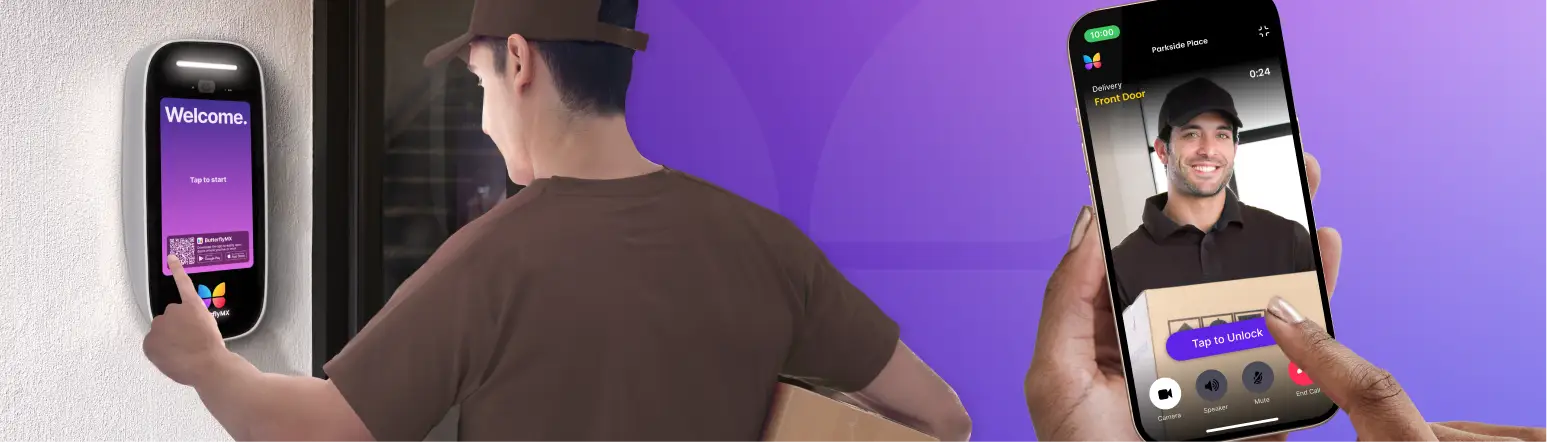
This is where ButterflyMX can fit as complementary infrastructure. ButterflyMX provides access control, video intercom, visitor entry, and remote property access tools for multifamily operations. For affordable housing communities, those capabilities can be relevant when a property wants resident records and building entry tools to work together more cleanly, support remote visitor access, or make directory management easier for staff. The value depends on the property’s setup and integrations, so buyers should evaluate access technology as part of the broader stack, not as a substitute for the core affordable housing system.
Questions to ask about integrations
- Can the software connect with the access control or visitor entry systems used at the property?
- How are resident records, unit data, and directory changes updated across systems?
- Are integrations standard, add-on, limited, or custom?
- Who supports the connection if data stops syncing correctly?
- Can the property maintain different rules for different buildings, programs, or portfolio types?
- Will staff still need to manage duplicate records after the integration is live?
For many buyers, integration flexibility becomes a deciding factor when the portfolio uses a layered technology stack instead of one all-in-one suite. That is not automatically a problem. A layered stack can work well when each system fits its job and the connections between systems are planned early.
If your properties need stronger coordination between resident records, building access, and visitor entry, consider access control and visitor management as part of the same planning conversation as your property management software.
Implementation, rollout, and vendor questions
Features matter, but implementation often decides whether the software works in real life. Affordable housing systems are configuration-heavy because they have to reflect program rules, property differences, reporting needs, staff roles, and existing records. A product can look strong in a demo and still create problems if onboarding is rushed or data migration is weak.
Data migration and setup
Start with the condition of your current data. If resident records, certification details, subsidy information, unit data, or historical files are incomplete in the old system, those problems can follow you into the new one. Ask how migration is handled, which fields are mapped, how data is validated, and how historical compliance records are treated.
Training and support
Training should match how your team actually works. Site staff, compliance staff, regional managers, and accounting teams may use different parts of the system. Ask what training is included, whether it is role-based, how live support works, how escalations are handled, and how the vendor communicates updates when program rules or reporting practices change.
Configuration by property and program
Properties in the same portfolio may not follow the same rules. One site may be LIHTC only. Another may have HUD-assisted units. Another may mix affordable and market-rate operations. State-specific or agency-specific requirements can also affect setup. Buyers should ask how property-level variation is configured and whether future changes require vendor involvement.
Rollout planning and timing
Implementation timelines vary with portfolio size, data quality, program complexity, integration needs, and staff availability. Be careful with generic timeline claims. A useful vendor should be able to explain the rollout based on your actual properties, records, reporting tasks, and training needs.
Multi-site rollouts often need a phased plan so teams can test processes before expanding across the portfolio. If you are also updating entry systems, resident directories, or other site tools, coordinate those projects early. Even separate systems can affect the same resident data, staff training plan, and launch schedule.
Vendor questions worth asking in demos
- Which affordable housing programs do you support at the property level, not just in general marketing materials?
- How do you handle TRACS-related tasks and reporting where applicable?
- What does mixed-portfolio management look like inside the system?
- How are recertification reminders, file completeness, and audit-ready documentation handled?
- What integrations are already available for accounting, resident systems, and building access tools?
- What training is included for site teams, compliance teams, accounting teams, and corporate users?
- How do you support changes in program rules, reporting requirements, or property-level configuration?
The strongest vendor conversations are specific. Ask vendors to show the tasks your team performs most often, the exceptions your staff struggles with, and the reports your properties actually need. That is where software fit becomes clearer.
Frequently asked questions
How much does affordable housing property management software cost?
Affordable housing property management software costs vary widely based on unit count, modules, compliance scope, implementation needs, and support level. Use current vendor pricing when it is available, but treat public examples as vendor-specific rather than market averages.
Can affordable housing software handle mixed portfolios?
Yes, many systems can handle mixed portfolios, but buyers should test that capability during demos. Verify how the software separates rules, reporting, accounting treatment, rent workflows, and compliance tasks for affordable and market-rate units.
What compliance reports should affordable housing software generate?
The right reports depend on the programs your properties participate in. Most buyers should look for support for certifications, recertifications, subsidy tracking, audit-ready documentation, and required HUD or tax-credit reporting processes where applicable.
How long does implementation typically take?
Implementation timing depends on portfolio size, data quality, compliance complexity, integrations, and training needs. Treat broad timeline claims carefully and ask vendors for a rollout plan based on your actual properties and program requirements.
The right affordable housing property management software is the system that fits your compliance obligations, subsidy administration, reporting needs, staff capacity, and portfolio structure. A long feature list is useful only if those features match the programs and daily tasks your properties actually manage.
As you compare software, look beyond the core platform. If your communities also need better coordination between resident records, building access, and visitor entry, evaluate that part of the stack at the same time. See how ButterflyMX supports modern access and visitor workflows for multifamily properties as you plan a more connected affordable housing operation.
Get your free quote!
Fill in the form below, and we'll email you right back.
Want a free quote?
Fill in the form below, and we'll email you right back.
You’ll be redirected shortly...