





Key takeaways:
- A condo property manager runs day-to-day association work under authority delegated by the board; the manager does not replace board governance or gain unlimited control over policy or money.
- The role often includes financial administration, maintenance coordination, vendor oversight, resident communication, rule-related processes, project support, and access or security administration.
- Boards should compare managers by local qualifications, contract scope, financial controls, communication standards, staffing, references, technology practices, and transition support.
A condo property manager is often the person residents call when a repair is needed, a vendor needs access, a notice must go out, or a board needs help turning a decision into action. That visibility can make the role seem more powerful than it is. In most associations, the manager administers the property under authority delegated by the condo board. The board still governs the association, approves major decisions, and sets the boundaries of the manager’s work.
That distinction matters when you’re hiring a manager, reviewing a property management contract, or deciding whether your association can self-manage. A good condo property manager can bring order to finances, maintenance, communications, vendors, projects, and building-access procedures. But the right fit depends on the property, the contract, local requirements, and the systems the manager is expected to run.
This guide will answer:
- What is a condo property manager?
- Core responsibilities of a condo property manager
- Condo manager versus board and apartment manager
- Licensing and certification requirements
- How much does condo property management cost?
- Technology and security responsibilities
- How to evaluate and hire a condo property manager
- FAQs
Watch how ButterflyMX works:
What is a condo property manager?
A condo property manager is an individual hired directly by a condominium association or assigned by a condo management company to administer association operations under authority delegated by the board. The manager may help carry out approved budgets, policies, contracts, maintenance plans, communications, and vendor work. The board remains responsible for governance and oversight.
In practice, that means the manager handles much of the movement behind the scenes. They may prepare a financial report, request bids, coordinate a repair, send a notice, or document a complaint. But the manager’s authority should come from the governing documents, the board’s decisions, and the management agreement. Approval limits, spending controls, reporting duties, and escalation steps should be written clearly before problems arise.
The Condominium Authority of Ontario description of condo manager responsibilities also separates management work from the board’s governing role. Exact duties vary by jurisdiction, staffing model, building size, amenities, and contract scope, so two managers with the same title may have very different day-to-day jobs.
It also helps to separate the person from the firm. A condo management company is the contracted business. A condo property manager is the individual professional, or lead professional, who performs and coordinates the assigned work. And if you see the phrase Fannie Mae Condo Project Manager, that’s something else entirely: it’s a lender tool for condo project eligibility work, not a human property management role.
Core responsibilities of a condo property manager
Most condo property manager responsibilities fall into a few connected areas. The exact list depends on the contract, but boards commonly ask managers to support:
- Financial administration and reporting
- Building operations, maintenance, and vendor coordination
- Resident, board, staff, and contractor communication
- Rule-related documentation, complaints, and escalation
- Meeting, records, and capital-project support
- Technology, access, and security administration
Financial administration
Financial work may include helping prepare budgets, collecting assessments, processing invoices, tracking reserves, producing reports, and coordinating with accountants. A reserve fund is money set aside for major future repairs or replacements. A special assessment is an extra owner charge that may be needed when approved funds do not cover a cost.
These tasks require strong controls. A manager can administer the process, but the board should define who approves payments, who reviews reports, how exceptions are handled, and when an issue must be escalated. That separation protects the association and prevents a practical administrative role from turning into unchecked financial authority.
Operations, maintenance, and vendors
Day-to-day operations often include inspections, preventive-maintenance schedules, work orders, emergency coordination, contractor sourcing, and vendor oversight. A manager might collect bids, schedule service, coordinate access, monitor work, and report progress to the board.
The board generally decides where approval is required for major spending, contracts, and capital work. That distinction matters when a roof project, elevator repair, lobby renovation, or major system replacement affects budget, timing, resident notices, and vendor access. The manager keeps the work moving, but the board should retain the approvals assigned to it by the governing documents and contract.
Communication, compliance, and records
A manager often becomes the practical link among residents, vendors, on-site staff, and the board. They may distribute notices, answer routine questions, support meetings, maintain records, document complaints, and communicate board-approved rules.
Rule-related work should be handled carefully. The manager may document a noise complaint or apply an approved process, but serious disputes, legal questions, or matters outside the manager’s authority should move through the association’s escalation process. Clear records, consistent communication, and defined approval paths help prevent small issues from becoming larger governance problems.
Projects and access coordination
Repairs, inspections, deliveries, and capital projects all create access questions. A manager may coordinate vendor entry, notify residents, track schedules, and confirm that access permissions match the approved work. This is where operations, communication, and security start to overlap.
For example, a contractor may need temporary access to a service entrance, elevator, storage area, or package room. The manager’s job is not simply to open a door. It’s to make sure the access request is authorized, limited to the right people and time period, documented where appropriate, and communicated to anyone affected.
Condo manager versus board and apartment manager
The core difference is authority. A condo association is member-governed, while a rental property is generally operated for an owner or landlord. That changes who the manager serves, what the manager can decide, and how accountability works.
This comparison is useful, but it is not a legal shortcut. Condo boards and HOA boards can have different governing documents and local requirements. Apartment managers work in a different ownership model, even though some maintenance and resident-service tasks look similar from the outside.
A building superintendent is different again. A superintendent is usually focused on hands-on maintenance, repairs, and building systems. Smaller properties may combine duties, but boards should still document who is responsible for administration, maintenance, approvals, communication, and after-hours response.
Licensing and certification requirements
Condo property manager licensing requirements vary by jurisdiction. Do not assume that every condo manager needs the same Community Association Manager, or CAM, license. A board should verify current requirements with the regulator where the property is located.
Ontario is one example of a formal regulatory structure. Under provincial condominium-management rules, condo managers and management companies are licensed and regulated through the Condominium Authority of Ontario. Florida is another example: the Florida Department of Business and Professional Regulation administers Community Association Manager licensing for compensated management that meets applicable statutory conditions.
CAM terminology can also cause confusion. In condo and HOA contexts, CAM may mean Community Association Manager. In the apartment sector, CAM can refer to the National Apartment Association’s Certified Apartment Manager credential, which is a separate qualification. The acronym alone does not tell you whether a person meets your association’s requirements.
When reviewing candidates, look at current local compliance, association-management experience, continuing education, references, insurance, property-type fit, and any relevant disciplinary or compliance history. Licensing is important where required, but it is only one part of a sound hiring decision.
How much does condo property management cost?
Condo property management cost is usually a contract and scope question, not a single market-wide number. Commercial and legal-industry guidance has cited illustrative ranges of roughly 5% to 10% of an association budget or common fees, and about $20 to $50 per unit per month in some arrangements. Treat those figures as examples, not universal benchmarks.
Actual pricing can change based on location, unit count, building complexity, amenities, staffing needs, after-hours coverage, meeting support, reporting needs, and how much work is included in the base fee. A small self-contained building and a large amenity-heavy condo tower may both need management, but they may not need the same service model.
Common fee structures include:
- Percentage-based fees tied to an approved budget or common-fee revenue
- Flat monthly or per-unit management fees
- Hourly charges for work outside the base scope
- Add-on charges for projects, transition work, after-hours coverage, extra meetings, or specialized services
When comparing proposals, look past the headline price. Review included services, exclusions, onboarding costs, project fees, emergency coverage, document and data handoff, termination terms, and rate changes. The discussion of condominium property management fees and property management cost guidance show why pricing methods and service scope need to be read together.
Self-management can work for some associations, especially when the property is less complex and the board has enough volunteer capacity. But direct savings are not the only measure. Boards should also weigh continuity, financial controls, maintenance coordination, recordkeeping, resident response time, and the risk of relying too heavily on a few volunteers.
Technology and security responsibilities
Technology is now part of condo management, not a separate side task. A manager may work with accounting software, reporting tools, work-order systems, resident communication tools, document storage, and building access systems. The board should know who administers each system, what permissions that person has, and how access changes when a manager, staff member, resident, or vendor leaves.
Access credential management is a good example. It means issuing, updating, revoking, and reviewing permissions for residents, staff, contractors, and vendors. A practical process should define who can approve access, how temporary access is handled, what records are kept, and what happens after a lost credential, move-out, vendor change, or urgent access request.
Visitor and vendor entry need the same kind of discipline. A board may approve the policy, but the manager often has to make it work day to day. That can include telling residents how visitor entry works, coordinating contractors, limiting access to the right areas, and keeping enough records to answer questions later. Package rooms and elevator access can add another layer because they may involve separate permissions, resident communication, and vendor coordination.
Video intercoms, mobile access, visitor access, and remote administration can reduce reliance on manual key, fob, and entry processes. They do not replace permission controls, staff training, privacy practices, continuity planning, or board-approved policies. For more context on the systems involved, see ButterflyMX’s guide to a building access control system.
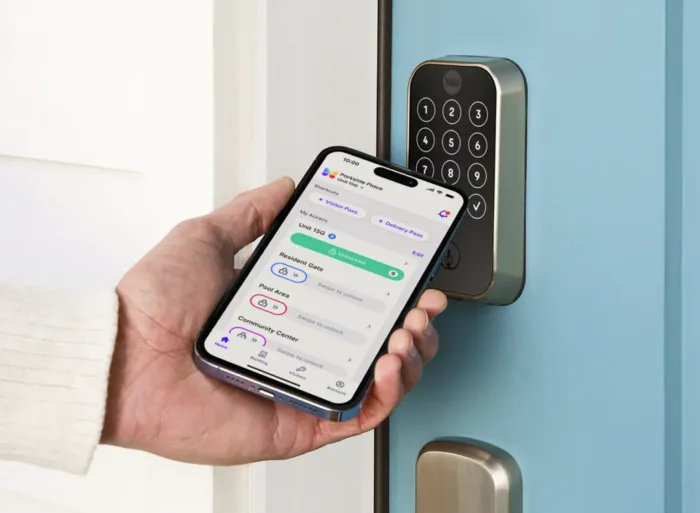
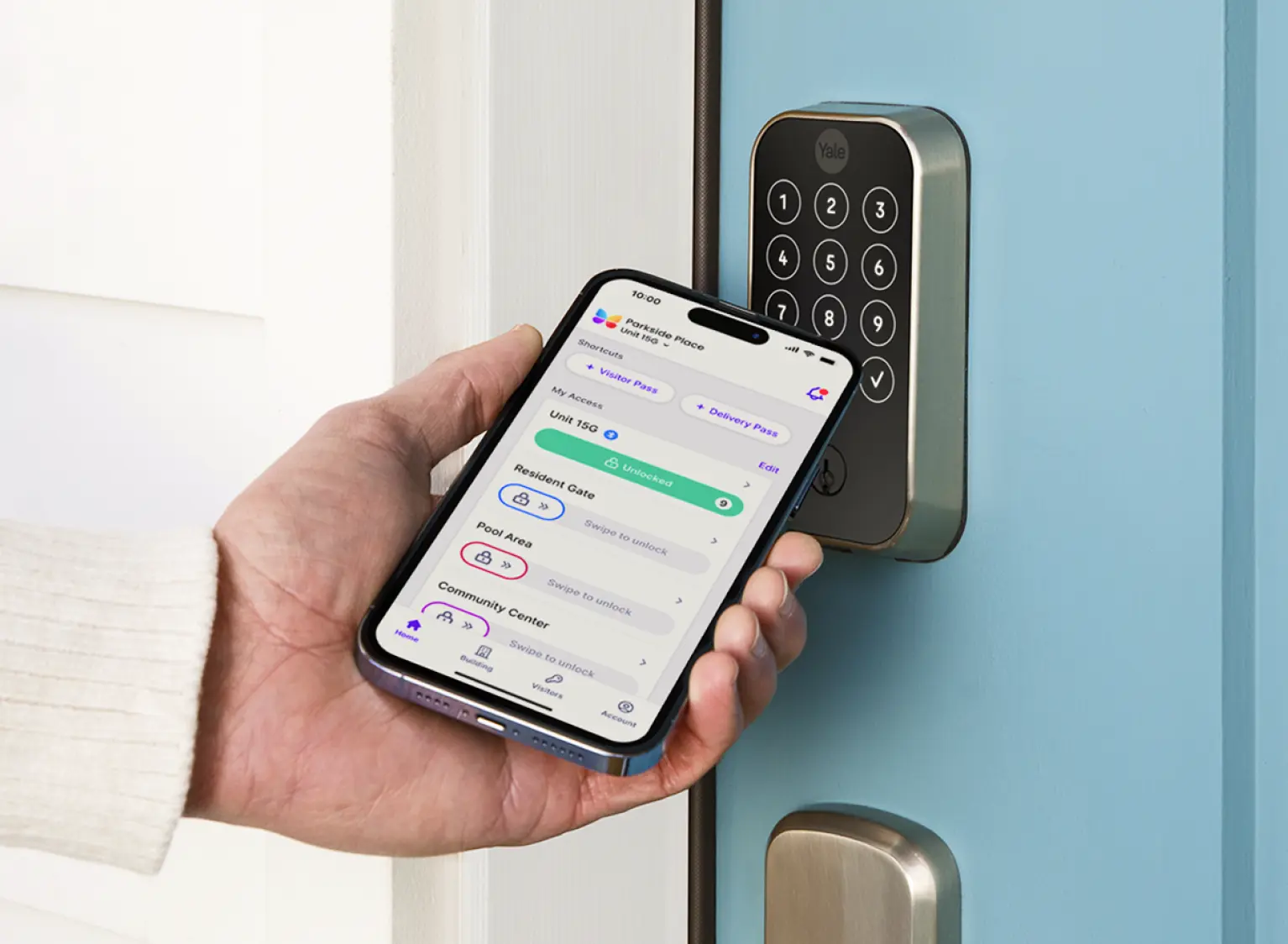
ButterflyMX supports video intercoms, mobile access, visitor access, and remote credential management for managed properties. Residents can receive visitor calls and grant access from their smartphones, while property teams can manage residents, visitors, credentials, and access remotely. Depending on the property, access planning may also involve areas beyond the main entrance, such as package rooms or elevator access. The point is not that technology replaces management. It’s that access tools should fit the association’s approved policies, security practices, and communication habits.
How to evaluate and hire a condo property manager
Hiring a condo property manager is partly about qualifications and partly about fit. The best proposal is not always the cheapest one, and the most polished presentation is not always the clearest operating model. Use the interview and contract review to find out how the manager will actually run the property.
- Confirm local licensing or registration requirements, association-management experience, property-type fit, portfolio workload, staffing model, and local vendor coverage.
- Ask how the manager follows board approval limits, documents decisions, and works within the association’s governing documents.
- Review financial controls, reporting cadence, invoice approvals, reserve and assessment processes, audit support, and fraud-escalation procedures.
- Set expectations for resident communication, board reports, response times, emergency coverage, complaint handling, and escalation paths.
- Compare maintenance processes, vendor selection practices, inspection routines, project oversight, and service-level commitments.
- Assess the technology stack for accounting, work orders, communications, documents, access control, visitor entry, vendor access, package access, elevator access, and credential administration.
- Request references and review the contract for scope, exclusions, extra fees, performance reviews, data ownership and handoff, termination terms, and transition support.
Technology questions should be concrete. Who can add or revoke access? How often are vendor and visitor permissions reviewed? What records are available after an incident or dispute? How are residents told when an entry process changes? Who owns the data if the association changes management companies?
Those answers can reveal whether a candidate has a mature operating process or is relying on informal habits. If your association is reviewing access procedures during a management change, consider how mobile access, video intercoms, visitor entry, package access, elevator access, and remote credential management fit into the broader plan. ButterflyMX can help property teams evaluate those access needs without treating technology as a substitute for good governance or professional judgment.
Frequently asked questions
Is a condo manager the same as an HOA manager?
Not always. The responsibilities can overlap, but condo associations and HOAs may have different governing documents, terminology, and local requirements. Boards should review their own documents and applicable rules instead of assuming the titles are interchangeable.
Can a condo association manage itself without a professional manager?
Yes, some condo associations can self-manage, depending on their governing documents and local requirements. The board should be realistic about volunteer time, financial controls, maintenance coordination, recordkeeping, continuity, and resident response needs.
Who regulates condo property managers?
Regulation depends on the jurisdiction. Ontario and Florida are examples of places with defined regulatory frameworks, but boards should check the current state, provincial, or local authority that applies to their property.
What happens if a condo manager mismanages association funds?
The board should follow its governing documents, management contract, financial-control procedures, insurance requirements, and audit process. Suspected misconduct or a major loss may require help from qualified legal, accounting, insurance, or regulatory professionals.
A strong condo property manager makes the association’s daily work more organized without blurring the board’s governing role. The right fit has clear authority limits, sound financial controls, reliable communication, enough staffing for the property, and a contract that makes responsibilities measurable.
Access and security deserve a place in that evaluation because they affect residents, visitors, vendors, packages, and on-site operations every day. If your association is reviewing those procedures, learn how ButterflyMX supports mobile access, video intercoms, visitor access, and remote credential management for managed properties.

Get your free quote!
Fill in the form below, and we'll email you right back.
Want a free quote?
Fill in the form below, and we'll email you right back.
You’ll be redirected shortly...