




Owning or managing a multifamily property means you’re responsible for maintaining your entire building’s infrastructure and keeping things running day after day. All those energy bills and maintenance costs add up, eroding your property’s NOI. But with the help of today’s technology, you can reduce energy usage, cut costs, and even streamline operations while you’re at it.
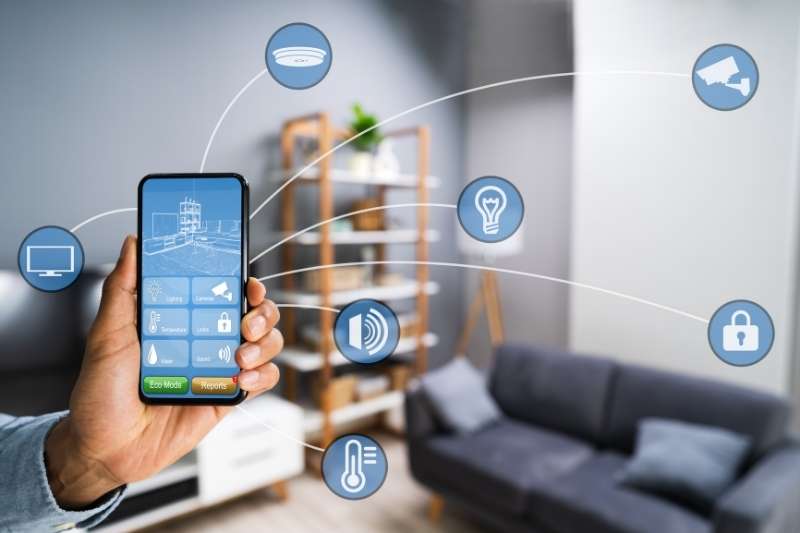
Smart apartment technology is the new wave transforming real estate. Today’s high-tech trends, including smart sensors and Internet of Things (IoT) devices, offer you many ways to create the ideal energy-efficient apartment.
Here are five ways to reduce energy usage and increase efficiency in your apartment building:
1. Vacant unit detection
Let’s cut right to the chase: Vacant units aren’t making you any money.
When a unit’s vacant, nobody’s using the power, heat, or lights. Seems simple enough to turn them off when a resident leaves, right? But when apartment turnover rates are as high as 33%, it’s not as simple as it sounds to keep track of heating and lighting for dozens (or potentially hundreds) of apartment units.
Consider investing in a vacant-unit detection system that automates turning off and back on heat, power, and lighting whenever residents move in or out.
Vacant unit detection systems are an interconnected web of smart building sensors that direct heating and lighting systems. Once these sensors automatically detect a vacancy, they can ensure that services like electricity aren’t delivered to a vacant apartment until it is occupied. With a system like this, vacant units won’t zap your time or bottom line as much as they used to.
2. Leak detection
Water damage is among the most expensive types of damage to address. If you’ve never had to deal with flood and water damage, count yourself lucky. But don’t count on luck to catch leaks or burst pipes before they ruin your property.
Thanks to technological advances, leak detection is as easy as installing a few sensors in your pipe system. Some detectors can even shut off water services automatically if they detect a catastrophic leak.
In addition to detecting leaks, a smart pipe sensor can also identify conditions that will lead to structural failure. So, managers of energy-efficient apartments will be able to fix these problems before they affect their residents.
3. Cloud-based access control system
Every apartment needs access control technology to manage access into and within the building. But some access control systems require physical onsite servers, which are expensive, difficult to maintain, and — worst of all — consume a lot of energy. For an energy-efficient apartment, upgrade to a cloud-based access control system.
Cloud-based access control systems store data on the cloud rather than onsite servers. Storing data on the cloud offers several benefits.
From an energy standpoint, you’ll reduce usage and slash energy bills. You also won’t have to dedicate time and resources to maintaining servers in your building.
Other benefits of a cloud-based access control system include:
- Data protection: The location where your data is stored and hosted never shuts down.
- Automatic upgrades: With cloud hosting, you’ll enjoy automatic system updates and maintenance.
- Reliability: You can manage the access control system from anywhere without worrying about it crashing.
- Convenience: You can grant remote property access, view door release audit trails, and update your rent roll from any device, anywhere. Plus, many systems integrate with property management software for automatic updates.
Watch how ButterflyMX works:
4. HVAC optimization
Heating, ventilation, and air conditioning are major factors in a building’s comfort and safety. They’re also one of the biggest contributors to a building’s energy bills. And even small HVAC optimizations can cut these costs almost in half.
HVAC optimization is similar to vacant-unit detection, but HVAC sensors are so finely tuned that they can optimize for current residents. Smart tech, like apartment HVAC systems, accounts for many variables, such as real-time weather data, temperature, and humidity. They use these variables to heat or cool apartments more efficiently. The most advanced models can even control the temperatures of individual rooms, or turn the A/C on and off for specific areas as a resident moves around the apartment.
5. Advanced lighting systems
You’ve already seen that IoT building automation extends to managing entire lighting systems. A concept called “daylighting” pairs your building’s lighting system with specialized, solar-powered smart windows, cutting down your lighting bill by as much as 40%.
Daylighting is when a building’s lighting system uses data from smart windows to create an optimal lighting environment with the least amount of energy. On a bright, sunny day, smart windows detect that and instruct the lights to dim. After all, there’s no need for 100% of a light’s capacity when the sun’s out. Conversely, smart windows that detect a dark or cloudy day instruct the lights to glow brighter.
A daylighting system is one of the most effective ways to create an energy-efficient building while enhancing your residents’ quality of life.
Benefits of an energy-efficient apartment
No matter what part of an apartment’s infrastructure you’re looking to improve, there’s a way to do it with an energy-efficient smart building management system.
Installing sensor-based upgrades focused on energy efficiency and damage detection may yield more benefits than you’d expect.
Some of the many benefits of an energy-efficient apartment are:
- Risk mitigation, leading to lower insurance and underwriting costs
- Complying with city laws that require buildings to cut down on their emissions
- Doing your part to combat climate change
Energy efficiency is a worthy goal in and of itself, but when you prioritize smart building efficiency, you enjoy plenty of other benefits as well. A smart building using IoT in areas such as thermostats, lighting, and intercoms can simplify life for property managers, staff, and tenants alike.