





Key takeaways:
- First, determine whether the failure affects one apartment, several apartments, or the whole building, and whether the problem involves calling, audio, or door release.
- For covered NYC buildings, the legal baseline centers on voice communication and apartment-controlled door release. Residents should report failures to the responsible property party before using NYC311.
- Compare an itemized repair with replacement based on recurrence, parts availability, wiring condition, and required features. Published prices are directional commercial estimates, not average NYC costs.
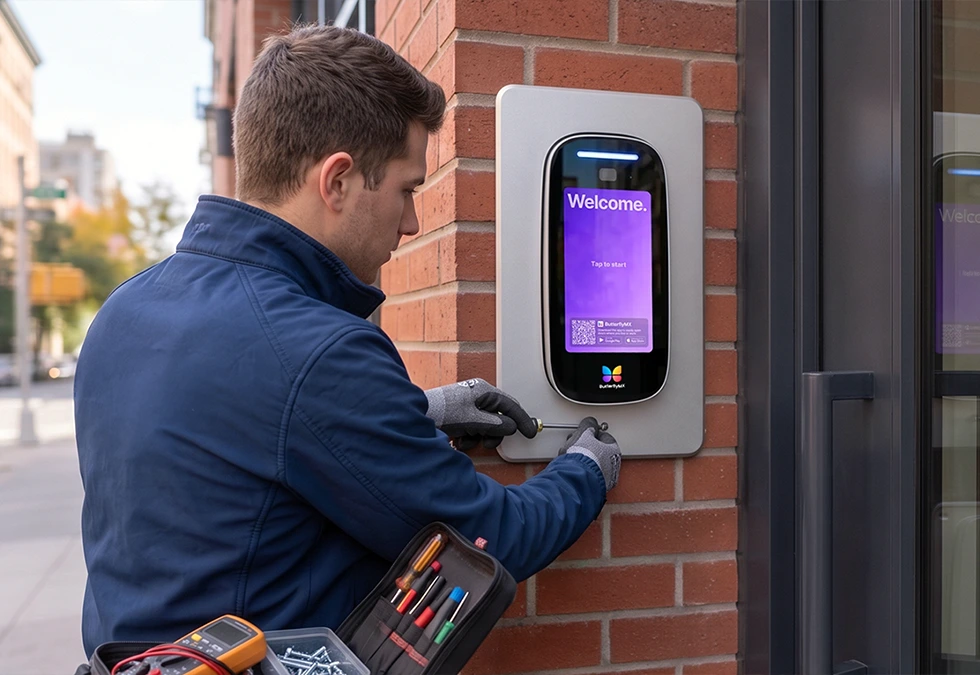
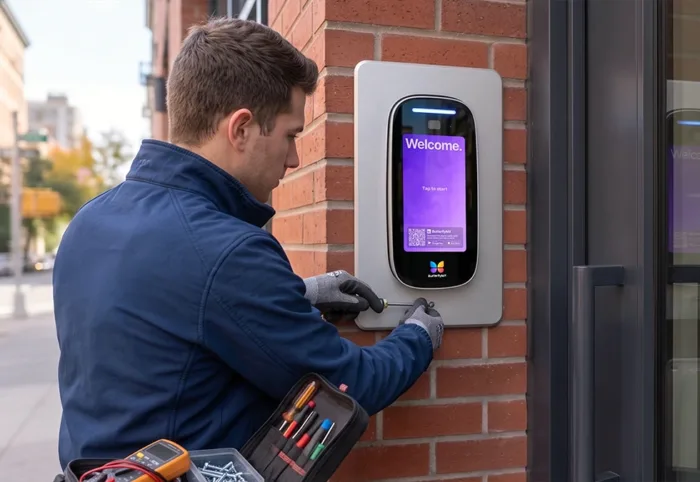
A broken apartment intercom is more than an inconvenience when visitors can’t reach an apartment or residents can’t release the entrance door. But the right response depends on what failed. A problem in one apartment may involve its station or local wiring, while an outage across several floors may point toward shared wiring, power, controls, or the entry panel.
For effective intercom repair in NYC, start by identifying the scope and failed function. Record which units are affected, whether calling and two-way audio work, and whether the door unlocks. Then notify the owner, manager, superintendent, board, or repair provider responsible for the system. Tenants can use NYC311 if the condition remains unresolved.
Owners and boards face an additional decision: repair an isolated, supportable fault or assess replacement when failures recur, parts are unavailable, wiring has deteriorated, or the existing system no longer supports the building’s needs. A clear diagnosis and itemized quote should come before that decision.
This guide will answer:
- Start here: identify the scope and symptom
- How the intercom and door-release chain can fail
- What NYC law requires from covered intercom systems
- Who is responsible and how residents can escalate
- What happens after an NYC311 or HPD complaint
- What intercom repair may cost in NYC
- When repair, replacement, or an upgrade makes sense
- How to evaluate a repair provider and written quote
- How to reduce repeat failures and plan an upgrade
More than 100K, 5-star ratings!
Video Intercoms
Open doors, gates & garages from anywhere.

QR Code Intercom
Smartphone-based visitor access.
Access Control
Fob, key cards, PINs, and mobile apps.
Security Cameras
Visibility throughout your property.

Vehicle Access
Hands-free access for gates & garages.
Package Room
Receive, store, and manage deliveries.
Smart Locks
Connect to all major brands and models.
Elevator Controls
Unlock key-fobbed elevators for anyone.
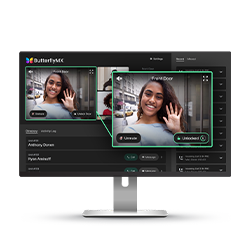
Front Desk Station
See all your doors and cameras in one place.
Start here: identify the scope and symptom
The quickest way to narrow an intercom problem is to separate its scope from its symptoms. Is one apartment affected, a group of apartments, or the entire building? Can a visitor place a call? Can the resident and visitor hear each other? Does the door-release control unlock the entrance?
The pattern narrows the search, but it doesn’t prove which component failed. A one-unit issue can involve a local station or wire, while a building-wide outage can involve shared equipment. Testing still matters. Avoid improvised electrical or locking-hardware work because the entrance and door-release circuit affect building access.
Before requesting service, record the affected units, failed functions, dates, intermittent behavior, prior repair attempts, and any photos or video that safely capture the problem. That record gives a technician a useful starting point and can support later follow-up with management or NYC311. For broader symptom guidance, see this intercom not working troubleshooting guide.
How the intercom and door-release chain can fail
An apartment intercom is a chain of connected components, not a single device. The entry panel starts a call, the controller or amplifier processes it, and riser wiring carries communication to the apartment station. A separate release command passes through controls, a relay, wiring, and power to an electric strike or maglock at the entrance. Similar symptoms can arise at different points in that chain.
- The entry panel is the visitor-facing equipment used to find and call an apartment.
- The apartment station is the in-unit device used to communicate with a visitor and activate the door release.
- Riser wiring is shared wiring that connects apartments with common intercom equipment.
- The power supply supports the intercom, door-release equipment, or both, depending on the system design.
- A relay carries the release command to the connected entrance hardware.
- An electric strike releases a compatible door latch. A maglock uses a different locking arrangement but still depends on power and the release circuit.
This is why calling, audio, and door-release faults should be diagnosed separately. If a resident can speak with a visitor but can’t unlock the entrance, the calling path may be working while the release circuit or door hardware is not. If the entry panel is dark or unresponsive, shared power, controls, programming, or the panel itself may need attention.
The system’s age and category also shape the repair. Legacy analog equipment may depend on compatible replacement parts and technicians who understand the installed wiring. IP or cloud-connected systems introduce different controls and programming questions. Neither category is automatically repairable or obsolete; the practical questions are whether parts remain available, the wiring is serviceable, and the provider can competently diagnose the installed equipment.
Watch how ButterflyMX works:
What NYC law requires from covered intercom systems
New York Multiple Dwelling Law Section 50-a establishes the intercom baseline for certain Class A multiple dwellings. Under the cited provision, qualifying buildings built or converted after January 1, 1968 and containing eight or more apartments must provide voice communication between apartments and the entrance, along with apartment-controlled release of the self-locking lobby-access door. The current Multiple Dwelling Law Section 50-a contains the controlling language.
Pre-1968 buildings require separate treatment. The statute provides that qualifying Class A buildings can become subject to the same requirement after written request or consent from tenants occupying a majority of the apartments. Because coverage depends on the legal building classification, apartment count, construction or conversion date, and property-specific facts, those details should be confirmed before drawing a legal conclusion.
The statutory baseline described here is functional: voice communication and apartment-controlled door release. It does not, by itself, require video, mobile access, or remote management. An audio-only intercom isn’t automatically noncompliant merely because it lacks newer features; the question is whether the applicable requirements cover the building and whether the required functions work.
Don’t assume that the presence of a doorman automatically creates an exemption. Property-specific legal questions should be reviewed against the current statute and other applicable requirements. This discussion is general information, not legal advice. For more context, read what the NYC intercom law requires.
Who is responsible and how residents can escalate
The right first contact depends on the property. Renters should generally notify the owner, managing agent, or superintendent. Co-op and condo residents may need to contact the unit owner, managing agent, building staff, or board. In commercial and mixed-use properties, the lease or management arrangement may determine who maintains the entrance system.
NYC311 lists broken or missing doorbells, buzzers, and intercoms as reportable apartment or public-area maintenance conditions. It directs residents to contact the responsible property party first. If the condition remains unresolved, the NYC311 apartment maintenance complaint process can route a complaint for follow-up by the New York City Department of Housing Preservation and Development, commonly known as HPD.
- Document the location, date, affected units, and failed functions.
- Notify the owner, agent, superintendent, manager, or board through the established channel.
- Follow up in writing and retain copies of notices, responses, and service attempts.
- If the condition remains unresolved, submit an NYC311 complaint with accurate location and condition details.
- Keep the complaint number, inspection information, repair records, and later correspondence.
Residents should report the failed function to the responsible property party and keep a written record of the response. This process does not replace individualized legal advice. Rent withholding and Housing Court strategy can carry serious consequences and should not be based on a general article.
What happens after an NYC311 or HPD complaint
An unresolved maintenance complaint can lead to HPD follow-up. If HPD inspects the condition and issues a violation, the violation class determines the applicable correction and enforcement process. A broken intercom should not be assumed to fall into the same class in every case.
- NYC311 records and routes the maintenance complaint using the details supplied by the resident.
- HPD may follow up on the reported condition and determine whether a violation should be issued.
- If a violation is issued, its class and stated terms control the correction period.
- The owner or manager should complete the repair, test the affected functions, retain supporting records, and follow the applicable correction process.
HPD’s cited guidance lists general correction periods of 90 days for Class A violations, 30 days for Class B violations, and 24 hours for most Class C violations, subject to exceptions and the terms of the issued violation. Because agency guidance can change, owners and managers should consult HPD’s current penalty and correction information rather than relying on an old schedule.
A 2022 Bronx Housing Part decision recorded a Class B violation for an inoperable bell and return-buzzer system. That is one documented case, not a rule that every buzzer or intercom defect is a Class B violation. Classification depends on the violation actually issued.
Owners and managers should retain inspection notices, access logs, repair invoices, resident communications, system-testing records, and any certification-of-correction documents required by the applicable process. The stated correction window also shouldn’t be treated as permission to delay a problem affecting entry or access.
What intercom repair may cost in NYC
There is no neutral average for intercom repair cost in NYC in the supplied evidence. The available prices come from commercial sources with different markets and scopes, so they should be treated as directional planning figures rather than quotes or guaranteed local rates.
One NYC integrator publishes estimates of $100 to $300 for diagnostics, $500 to $1,500 for component replacement, and $1,000 to $3,000 for limited wiring repairs in its NYC intercom repair and replacement guidance. A separate commercial source lists $150 to $400 for minor repairs as a national planning estimate and treats wiring and panel work separately.
The final quote can change with the failed component, parts availability, condition of shared and in-unit wiring, entrance hardware, building access, number of affected apartments, and whether the work is an isolated repair or broader system remediation. The national figures appear in a separate apartment intercom repair and replacement cost guide.
An itemized written quote is more useful than a headline price. It should separate the diagnostic fee, parts, labor, wiring, exclusions, work schedule, testing, warranty terms, and change-order process. If replacement is proposed, ask the provider to explain why repair isn’t practical and which site conditions could change the replacement scope. Current local quotes remain the best basis for a project decision.
When repair, replacement, or an upgrade makes sense
Repair usually deserves consideration when the problem is isolated, compatible parts remain available, the wiring is serviceable, and the existing system still provides the functions the building needs. A replacement assessment becomes more useful when failures recur, several components are deteriorating, parts are unavailable, wiring is compromised, or the system can’t support documented access and management needs.
The table is a decision aid, not a formula. A qualified provider should first identify the fault, assess the wiring, and determine the status of relevant parts.
These factors should be considered together. No evidence-supported age cutoff or repair-cost percentage decides the answer for every building. An older system may remain repairable when parts and qualified support are available. A newer system can still justify broader work if wiring or several connected components are failing.
Existing intercom wiring may be reusable during a retrofit, but that can’t be promised in advance. Reuse depends on cable type, condition, layout, compatibility, and the selected system. A site assessment should determine whether the wiring can remain, requires partial replacement, or needs broader remediation.
Required restoration and an optional upgrade are also different decisions. A covered building may need to restore voice communication and apartment-controlled door release without being required to add video or mobile access. If recurring faults, unsupported parts, or documented capability gaps already point toward replacement, the building can then evaluate video intercoms, mobile access, visitor access, and remote access management.
ButterflyMX is one option for buildings assessing those capabilities. Its video intercom and mobile-access functions can support visitor calls, resident entry, and remote access management. Those features should be evaluated against the property’s needs and implementation constraints. They aren’t a substitute for diagnosing a third-party system, and ButterflyMX should not be presented as a repair provider for that equipment.
Replacement in an occupied building also requires practical planning. The project scope should address resident notice, access to apartments, work phasing where appropriate, interim entry arrangements, and final testing of every affected unit. If recurring failures or unsupported parts justify a replacement assessment, evaluate whether a ButterflyMX video intercom fits the building’s requirements.
How to evaluate a repair provider and written quote
A useful intercom repair provider should explain more than the proposed price. The written diagnosis should separate observed symptoms from suspected causes, identify the tests performed, describe the likely failure area, and state whether the recommendation is a repair, replacement, or optional upgrade.
- Ask about experience with the installed system type, legacy equipment, entry hardware, shared riser wiring, and the reported scope of the outage.
- Request a diagnostic report listing the affected functions, tests performed, observed results, suspected failure area, and condition of relevant parts and wiring.
- Ask whether compatible parts are available and what alternatives exist if they aren’t.
- Require the provider to separate immediate restoration work from recommended modernization.
- Compare the written scope, parts, labor, exclusions, schedule, unit testing, warranty, and change-order terms instead of relying on a verbal total.
- Confirm who will test calling, two-way audio, and door release after the work and how the results will be documented.
A vague recommendation to replace everything isn’t the same as a diagnosis. If repair is ruled out, the provider should explain whether the issue is unavailable parts, compromised wiring, repeated component failures, compatibility, or another documented condition. That explanation lets owners and boards compare proposals on scope rather than price alone.
Permits, credentials, electrical work, locking hardware, fire-safety coordination, and landmark review can depend on the project and property. Don’t assume that every intercom job has the same requirements. Verify the applicable rules and provider qualifications with the relevant authorities for the specific scope before authorizing work.
If the diagnosis supports replacement rather than repair, evaluate the building requirements with a ButterflyMX specialist.
How to reduce repeat failures and plan an upgrade
After service is restored, good records make the next decision easier. Keep a history organized by date, affected area, symptom, component, repair performed, test result, and outcome. Over time, that record can show whether the building is dealing with isolated faults or a recurring system problem.
- Test visitor calling, two-way communication, and door release across representative units as part of routine system checks.
- After major work, test every affected apartment rather than assuming one successful call proves the entire system works.
- Track repeat failures by component and location so cumulative repair patterns remain visible.
- Compare per-incident service with a maintenance arrangement based on response expectations, system complexity, and reporting needs.
- Keep current contact and escalation information for building staff, management, and service providers.
If the building begins planning an intercom retrofit, assess the existing wiring, entry hardware, resident needs, visitor-access process, management requirements, and constraints of working in an occupied property. Those findings should guide the system choice and implementation plan.
Video, mobile access, visitor access, and remote management are worthwhile only when they address documented needs. The aim isn’t to replace a system simply because it’s old. It’s to restore required functions and, when replacement is justified, select a supportable system that fits how the property is managed.
Frequently asked questions
Can one apartment intercom station be repaired without replacing the whole system?
Yes, an isolated apartment station or local-wiring fault may be repairable on its own. A provider should first test the unit and its connection to the shared system because a one-apartment symptom doesn’t prove that the station itself has failed.
Does an audio-only intercom satisfy NYC law?
For covered buildings, the cited statutory baseline focuses on voice communication and apartment-controlled door release rather than video. Compliance depends on the building’s classification, apartment count, construction or conversion date, and whether all required functions work, so property-specific questions need legal review.
Can existing intercom wiring be reused during replacement?
It may be reusable, but that depends on the cable type, condition, layout, compatibility, and selected system. A site assessment should determine whether full or partial reuse is practical; reuse and related savings shouldn’t be promised in advance.
Can a tenant withhold rent because an intercom is broken?
Tenants shouldn’t make a rent-related decision based on general guidance alone. Report the failed function to the owner, agent, or superintendent, document the problem, use NYC311 if it remains unresolved, and obtain individualized legal advice before taking rent-related action.
A broken intercom calls for a diagnosis, not a guess. Identify the scope and failed function, document the condition, follow the correct reporting path, and obtain an itemized written quote. Repair is often the practical choice for an isolated, supportable fault; replacement deserves closer consideration when failures recur, parts disappear, wiring is compromised, or the building needs capabilities the current system can’t provide.
When those conditions support replacement, evaluate the property rather than choosing from a feature list. Owners and managers can speak with a ButterflyMX specialist to assess whether a video intercom, mobile access, visitor access, and remote management fit the building’s needs.
Get your free quote!
Fill in the form below, and we'll email you right back.
Want a free quote?
Fill in the form below, and we'll email you right back.
You’ll be redirected shortly...