






Key takeaways:
- The strongest HOA gate setup usually combines several access methods, with a practical fallback for people without a usable smartphone.
- Access authorization, gate movement, physical gate safety, and emergency operation are separate layers that boards must evaluate together.
- Compare itemized installation and ownership costs, credential policies, and outage plans instead of relying on one universal price range.
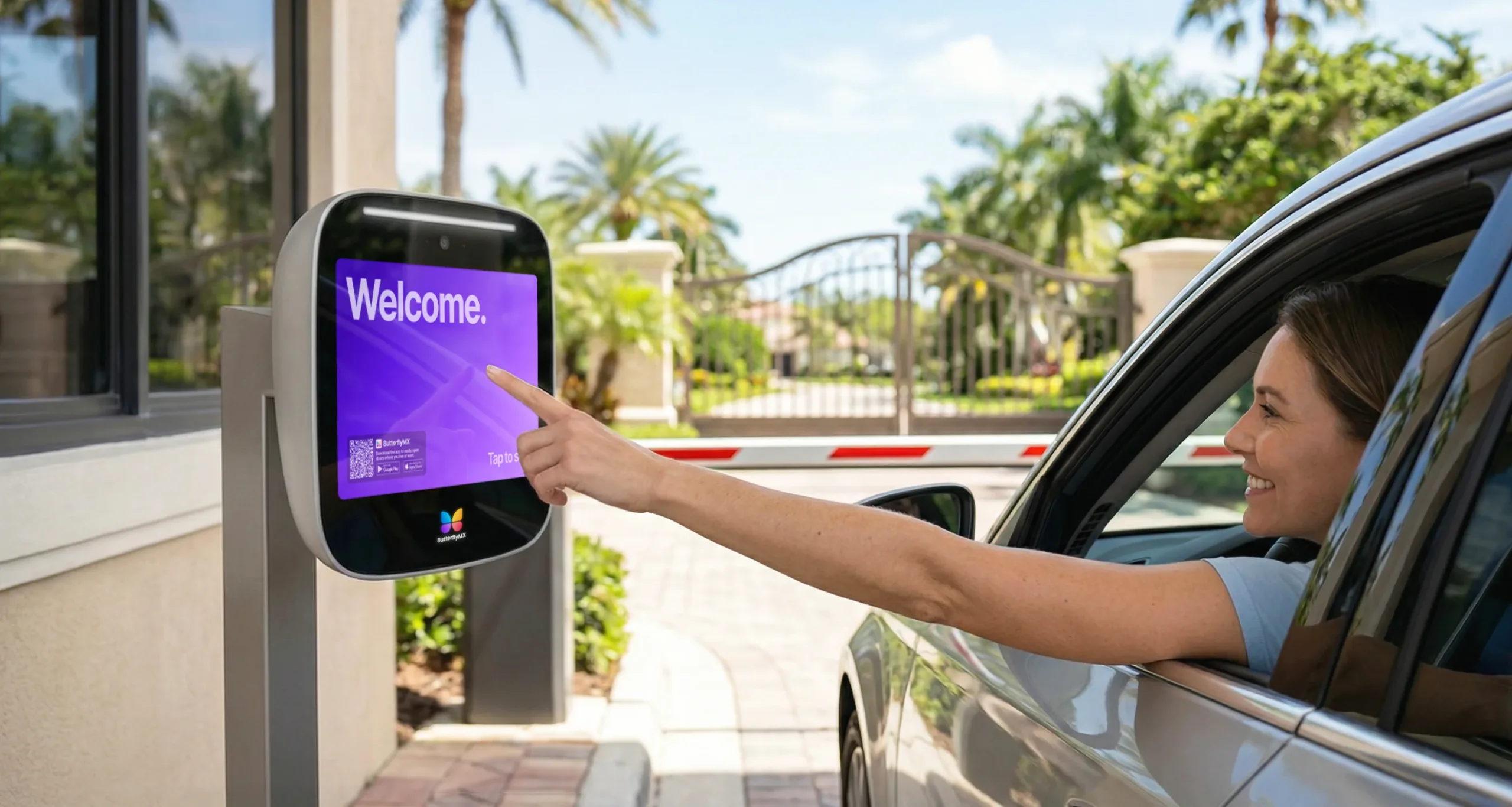
An HOA gate is only as effective as the day-to-day access plan behind it. Residents need a reliable way in, guests and delivery drivers need clear instructions, managers need to revoke access when circumstances change, and emergency responders need an approved path through the entrance.
The best HOA gate access control and gate intercom system is usually a layered system, not a single device. It matches credentials and entry workflows to each user, includes fallbacks for exceptions and outages, and is reviewed for safety, emergency access, privacy, and full lifecycle cost before the board signs a contract.
This guide explains how HOA boards can compare gate entry systems, build requirements, and evaluate proposals without confusing access control with the gate operator or the physical gate itself.
This guide will answer:
- What HOA gate access control does
- Map every user and entry workflow
- Compare HOA gate entry methods
- Plan guest vendor and delivery access
- Verify gate safety and emergency access
- Plan for outages connectivity and aging phone lines
- Set credential governance and privacy rules
- Compare full lifecycle costs
- Choose and implement a system with a board checklist
- FAQs
Watch how ButterflyMX works:
What HOA gate access control does
HOA gate access control is the authorization layer at an entrance. It checks a credential or entry request, such as a fob, PIN, vehicle tag, mobile credential, license plate record, or visitor call, and sends an authorized command to the gate operator. It is not the vehicular gate operator, the moving gate, or the safety equipment that protects people near the gate.
Keeping those layers separate helps boards ask better questions. A gate access controller decides whether a request is authorized. The vehicular gate operator moves the gate after receiving the signal. The physical gate, its construction, and its entrapment-protection devices must be evaluated as their own safety system. An access platform does not certify the operator, the gate, emergency opening, or code compliance.
- A resident presents a credential, a vehicle is recognized, or a visitor makes an entry request.
- The access controller checks that request against the current authorization rules.
- If approved, the controller signals the gate operator to open.
- The operator moves the gate while its required safety devices monitor the relevant areas.
- The system may record the credential or event, while the property follows its own operating and incident procedures.
A free-exit loop is a vehicle-detection device that can trigger exit from the property. Tailgating is different: it happens when an unauthorized vehicle follows an authorized vehicle through the gate. Access logs can show a credential event, but they do not prove who held the credential and do not, by themselves, stop tailgating.
Map every user and entry workflow
Before comparing hardware, map who enters, how they arrive, and what should happen when the normal process fails. A system that works well for a resident driving home may be a poor fit for a caregiver on foot, a contractor with changing work hours, or a delivery driver arriving after a resident has stopped answering calls.
Start with a written workflow map for these groups:
- Residents in vehicles: Consider regular vehicles, replacement cars, rentals, borrowed cars, and a process for updating vehicle records.
- Residents on foot: Plan a separate pedestrian route and an accessible credential method where appropriate. Pedestrians should not be expected to use a vehicular gate as their normal entrance.
- Household members, caregivers, and staff: Give recurring users an individually managed credential and a clear process for issuance, replacement, and revocation.
- Guests and unplanned visitors: Decide whether entry depends on resident approval through an intercom, a preauthorized visitor pass, a staffed guardhouse, or a combination.
- Deliveries, vendors, and contractors: Set rules for temporary access, recurring schedules, sponsor approval, expiration, and failed deliveries.
- Emergency responders: Confirm the approved emergency-opening process with the relevant fire official or authority having jurisdiction where applicable.
The physical site belongs in this map too. Record vehicle lanes, pedestrian entrances, vehicle stacking space, free-exit loops, gate location, power, network availability, cellular coverage, and guardhouse procedures. A staffed, hybrid, or unmanned entrance can each work, but the operating model must be able to handle the propertys real exceptions.
Mobile credentials can be convenient, but they should not be the only path. A 2026 Pew Research Center survey found smartphone ownership among U.S. adults was 91%, including 79% of adults age 65 and older and 80% of adults in households earning under $30,000. Those figures do not describe a particular HOA, and owning a phone does not establish that every resident can use an app. Keep a workable alternative, such as a fob, card, individual PIN, intercom path, or staffed exception process.
Compare HOA gate entry methods
No entry method is the overall winner for every community. The useful comparison is whether a method fits a particular user, creates manageable administrative work, supports accountability at the credential level, and has a clear fallback when it fails. Many communities combine several methods.
Individual credentials generally provide more control than a community-wide shared code because they can be revoked one at a time. As a community gate access buying guide explains, that distinction improves credential-level accountability, not certainty about a persons identity. A fob can be loaned, a code can be shared, and a vehicle can follow another vehicle through an open gate.
RFID and license plate recognition are vehicle-identifying methods, while fobs, cards, PINs, and mobile credentials are held or used by people. That distinction matters when an HOA needs to handle a new car, a borrowed car, a caregiver, or a resident who rides with someone else. Guards and remotes can also be part of the plan, but neither replaces the need for clear exception handling.
Plan guest vendor and delivery access
An unmanned gate needs a workflow for people who do not have a standing credential. The board should define those workflows before selecting a product, including who can approve entry, when access expires, and what the visitor does if the regular process breaks down.
- For invited guests, offer a resident-approved video intercom workflow, a preauthorized Visitor Pass, a temporary credential, or another documented method. The process should tell guests where to go and what to do if the resident is unavailable.
- For recurring vendors and contractors, assign access to a named business or person where practical. Set an owner, permitted days or hours, an expiration date, and a revocation process when the work ends.
- For deliveries, choose whether the resident can approve entry, issue a delivery pass or PIN, or direct the driver to a designated handoff process. Include an exception path for a missing resident, an outdated directory, or an unexpected delivery.
- For temporary vehicles, define how residents, guests, and vendors request a short-term alternative to RFID or plate-based entry.
- Review temporary and recurring access on a schedule. Access should not remain active indefinitely simply because no one was assigned to remove it.
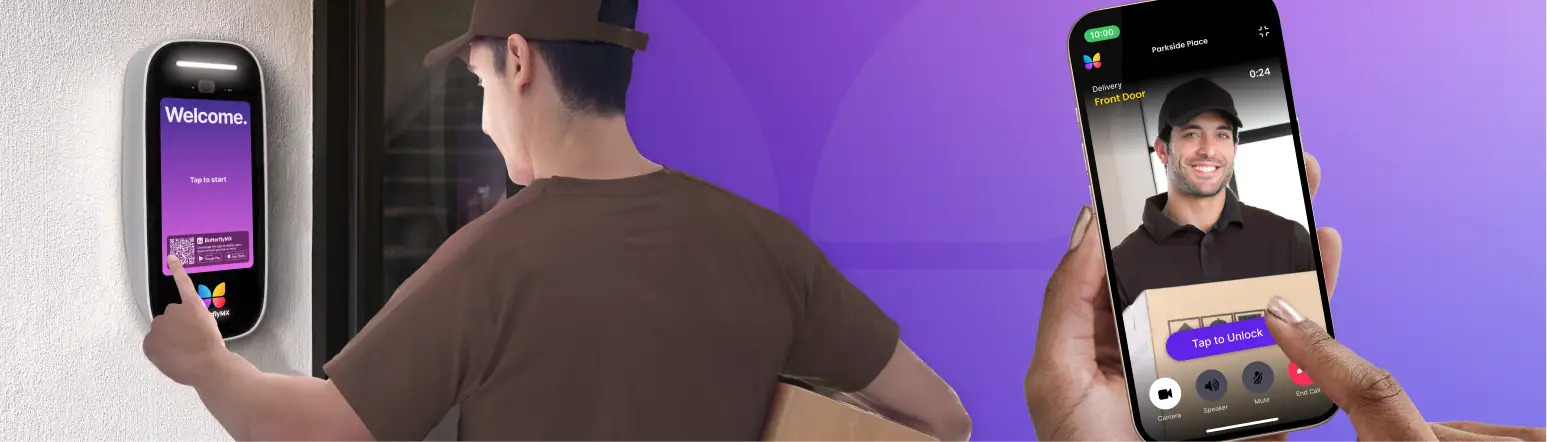
ButterflyMX is one option for communities that need resident-approved video intercom entry, visitor and delivery passes, RFID credentials, vehicle access, and remote administration. The point is not to standardize every person on one method. It is to give each entry type an appropriate, manageable path. A board evaluating broader design choices can also use this gated community access control planning guide for additional technical context.
Verify gate safety and emergency access
Access features do not make a gate safe. Before an upgrade, the board should require a qualified installer and the applicable authority to review the operator, physical gate, emergency access arrangement, pedestrian route, and safety devices.
Under 2024 International Fire Code Section 503.6, where that model-code provision has been adopted and applies to a fire apparatus access road, a security gate requires fire-code-official approval, an approved means of emergency operation, continued operability, a UL 325-listed electric operator, and an automatically operated gate that complies with ASTM F2200. Adoption, edition, applicability, and local amendments vary, so this is a board-level verification point, not a universal conclusion about every HOA gate.
The DASMA summary of the UL 325 standard says that each entrapment zone requires at least two independent means of entrapment protection and that external protection devices must be monitored. Entrapment protection refers to the equipment and design measures intended to detect or prevent hazardous contact or trapping during gate movement. Have a qualified installer or authority confirm the current operator classification and protection requirements for the specific site rather than assuming one class fits all HOA entrances.
- Confirm who approves and tests the emergency-opening method, and how that process remains operable.
- Review the operator listing, gate condition, entrapment-protection devices, warning signs, and placement of activation controls.
- Provide separate pedestrian access where pedestrian use is likely. Vehicular gate operators are not intended to serve as pedestrian gates.
- Ask whether the existing operator is compatible with the proposed controller and whether safety remediation is required before reuse.
- Document the installer, manager, board, and emergency-service responsibilities for acceptance testing and future maintenance.
Keeping an existing operator may be possible, but compatibility alone is not enough. Its condition, safety protections, emergency operation, and site design still need review.
Plan for outages connectivity and aging phone lines
A gate system should be evaluated by what it does during a failure, not only by its normal operating features. Ask each vendor to document the expected behavior of the controller, readers, credentials, intercom path, and gate operation when power, internet service, cellular service, or a device fails.
Cloud and local management, plus wired and cellular connectivity, are architecture choices rather than automatic guarantees of resilience. The right design depends on the property and the vendors documented failure behavior. Require a named recovery owner for each scenario, as well as a plan for resident communication and emergency access.
Legacy telephone-entry equipment deserves special attention. The Federal Communications Commission guidance on network modernization says copper-retirement notices generally must reach affected retail customers at least 180 days in advance for non-residential service and 90 days in advance for residential service. The FCC also notes that copper landlines typically work during power outages, while modern replacement services usually require backup power. There is no single national POTS retirement date for every property, so confirm carrier plans, service type, and backup-power needs directly with the provider.
ButterflyMX video intercoms do not rely on traditional POTS telephone lines, which can make them relevant to a property planning a telephone-entry migration. That does not remove the need to verify property-specific connectivity, backup behavior, gate operation, and outage procedures.
Set credential governance and privacy rules
Gate access control is an operating program, not a one-time installation. Before launch, assign named responsibility for approvals, resident onboarding, credential issuance, revocation, audits, support escalation, vendor coordination, and policy updates. A clear role map prevents access decisions from being delayed or left untracked when a manager, board member, or contractor changes.
The policy should cover move-ins, move-outs, resales, tenants, household members, caregivers, staff, lost fobs, changed vehicles, and vendors whose work is complete. It should also state who reviews dormant credentials and how often. Individual credentials make it easier to remove access without changing a community-wide code, but an audit log still records a credential event rather than proving who carried that credential.
License plate recognition and video systems add data-governance questions. Before deployment, define why the HOA collects data, who may access it, where it is secured, how long it is retained, how it is deleted, and who responds to an incident or records request. A 2026 California legal alert about ALPR litigation illustrates why a privacy policy, security controls, and access records may matter. It is a California-specific example, not a rule that automatically applies to every HOA. Requirements depend on jurisdiction, facts, and legal review.
Compare full lifecycle costs
HOA gate access control cost depends on site conditions and project scope. A single market price range is not a reliable buying tool because published figures can refer to a door, a gate, an entrance, or an entire system with very different installation assumptions. Instead, compare proposals using the same itemized worksheet.
- Access hardware by entrance, including readers, keypads, intercoms, controllers, vehicle-identification equipment, and credentials.
- Installation labor, trenching, conduit, power, networking or cellular service, site restoration, and traffic-control needs during work.
- Operator compatibility, operator remediation, safety devices, physical-gate work, and pedestrian-access improvements.
- Software, licensing, connectivity, support, maintenance, replacement allowances, and credential inventory.
- One-time versus recurring charges, warranty terms, exclusions, response expectations, and the party responsible for each task.
Ask every bidder to identify whether its amounts are per door, per gate, per entrance, or for the complete system. Compare what is included and excluded before choosing the lowest initial number. A low hardware quote can leave the HOA responsible for power work, safety remediation, connectivity, ongoing support, or a required fallback process that another proposal included.
Choose and implement a system with a board checklist
A useful board decision is one that can be explained in writing: these are the users, these are their normal and exception paths, these are the safety checks, and this is who operates the system after installation.
- Approve a workflow map that covers residents, pedestrians, guests, deliveries, recurring vendors, temporary vehicles, staff, and emergency responders.
- Require at least one practical fallback for every main access method, especially mobile, vehicle-based, and resident-approval workflows.
- Complete a site survey covering lanes, stacking, pedestrian access, power, connectivity, the existing operator, and the physical gate.
- Have qualified parties verify emergency access, operator compatibility, entrapment protection, applicable code adoption, and local requirements.
- Assign ownership for credential issuance, revocation, audits, resident support, vendor access, privacy policy, and escalation.
- Obtain documented behavior for power, network, cellular, controller, reader, and credential failures.
- Compare itemized quotes, recurring obligations, warranties, implementation support, and acceptance responsibilities on the same scope.
- Communicate the final policies to residents before rollout, including how to get help, replace a credential, register a vehicle, and request guest access.
After the HOA defines these requirements, it can evaluate whether ButterflyMX fits the project. ButterflyMX may be a fit for communities seeking video intercom entry, mobile or wallet credentials, Visitor Passes, delivery access, RFID credentials, vehicle access, guardhouse tools, or cloud-based remote administration. Product selection remains only one part of the decision. It does not replace the review of gate safety, emergency operation, installation, carrier service, privacy obligations, or local requirements.
Frequently asked questions
Can an HOA keep its existing gate operator during an access-control upgrade?
Possibly, but only after a qualified installer reviews compatibility, condition, operator classification, entrapment protection, emergency operation, and site safety. A compatible controller does not guarantee that the existing operator or physical gate needs no remediation or replacement.
Is RFID or LPR better for resident vehicles?
Neither is universally better. RFID requires tag issuance and updates, while LPR can provide hands-free plate-based entry but needs procedures for misreads, changed plates, rental cars, borrowed vehicles, and privacy governance. Neither method identifies the driver or prevents tailgating by itself.
How should residents without smartphones enter a mobile-enabled gate?
Give them a practical alternative, such as a fob, access card, individual PIN, intercom workflow, or staffed exception path. The HOA should also define how that alternative is issued, replaced, revoked, and supported.
Can automated access replace a gate guard?
It depends on visitor volume, identity checks, traffic control, exception handling, incident procedures, and the service level the HOA expects. A guarded, hybrid, or unmanned model can each be appropriate, but the board should not assume automatic access will provide the same handling for every exception.
Who should manage HOA gate credentials?
The board should assign named responsibility among the manager, board, vendor, and installer for approval, issuance, revocation, audits, resident support, and escalation. The exact division of work varies by property and should be documented before launch.
Does a smartphone gate system need internet service at the entrance?
Ask for a property-specific explanation of wired or cellular service, controller behavior, backup power, supported local functions, manual procedures, and recovery. Offline behavior should not be assumed across products or installations.
A sound HOA gate access decision starts with people and workflows, then tests the selected system against safety, emergency access, outages, privacy, administration, and total cost. The goal is not to buy the most features. It is to build a reliable process for everyone who needs to enter the community, including the people who do not fit the normal path.
If your HOA has completed that requirements map, see whether ButterflyMX fits your gate access needs for resident entry, visitors, deliveries, and remote access management.
Get your free quote!
Fill in the form below, and we'll email you right back.
Want a free quote?
Fill in the form below, and we'll email you right back.
You’ll be redirected shortly...