Katie joined the team at ButterflyMX in 2022, where she started as a Content Writer before working her way up to Director of Content. With an educational background in English and a love for SEO, Katie is passionate about writing content that educates people while being easy to digest.
Prior to joining ButterflyMX, Katie worked as a political marketing copywriter, where she wrote for political candidates and officeholders, including Federal and State Representatives, Federal and State Senators, a former Vice President, two former Speakers of the House, and several federal committees. Her work has been featured in American Camp Association, Meniscus Literary Journal, and 45th Parallel Literary Magazine.
Katie graduated from the University of Texas in 2017 and Texas State University’s Creative Writing MFA in 2020. She lives in Dallas, Texas with her dog, Ziggy, where you can catch her walking on the Katy Trail, rooting for the Longhorns during college football season, and hunting local bookstores for her next read.
Key takeaways: A visitor management system can automate routine check-in, host notifications, screening steps, temporary credentials, and visitor records. A VMS can replace a receptionist only when visitor traffic is predictable, access rules are clear, and people can... Read More
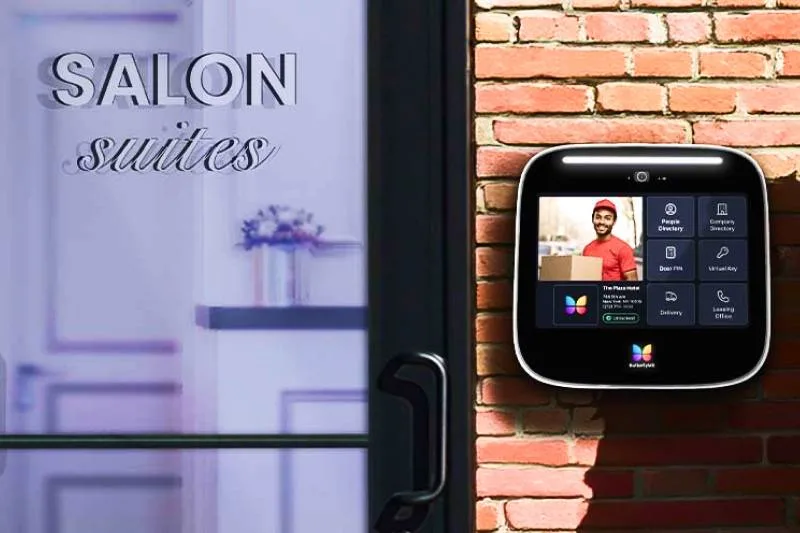
Key takeaways: A QR code entry system for salon suites works best when QR codes are treated as time-bound visitor credentials, not as the only way everyone enters the property. Salon suite operators should match each credential type to the user: QR codes for... Read More
Key takeaways: Cold weather can disrupt apartment intercoms by stressing electrical components, shifting metal hardware, weakening batteries, and letting moisture or ice interfere with exposed equipment. When the buzzer or call function works but the door will not... Read More
Key takeaways: A video intercom system combines visual visitor verification, two-way audio, and controlled door release in one entry process. Toronto properties can choose from wired, wireless, IP, and cloud-based systems, but the best fit depends on building layout,... Read More
Key takeaways: Verkada combines 30–365 days of onboard recording with cloud management and AI tools, so most deployments don’t need a local NVR or DVR. Camera hardware costs $699–$5,299+ per unit, plus a mandatory camera license of $249 for one year to $2,199 for 10... Read More