





Key takeaways:
- Luxury apartment amenities are market-relative, so the label does not guarantee a specific property class, service level, or quality standard.
- Large renter surveys point to practical needs first: in-unit laundry, air conditioning, safety, clean common areas, and reliable daily convenience.
- The strongest amenity plans match the property, residents, climate, operating burden, and actual use instead of chasing novelty features.
The word luxury gets attached to a lot of apartment buildings. Sometimes it means high-end finishes, resort-style shared spaces, and attentive service. Other times, it mostly means the rent is higher than nearby options. That gap is why the actual apartment amenities matter.
Luxury apartment amenities are the in-unit features, shared spaces, services, and technology that rise above local market expectations. The best ones are not always the flashiest. They make daily life easier, safer, cleaner, more comfortable, or more convenient, and they are operated well enough for residents to rely on them.
For renters, that means looking past the brochure and checking what is included, available, maintained, and worth the cost. For owners and operators, it means choosing amenities that fit real resident demand while accounting for space, staffing, maintenance, access control, and long-term operating costs.
This guide will answer:
- What makes an apartment luxury
- What renters prioritize before the extras
- Core luxury apartment amenity categories
- Smart security and access as modern luxury
- Wellness, pet, and remote-work amenities
- How amenities affect rent, fees, and NOI
- How amenity priorities change by property type
- How to evaluate and prioritize amenities
- FAQs
Watch how ButterflyMX works:
What makes an apartment luxury
A luxury apartment is usually a property that exceeds local expectations for location, condition, finishes, services, technology, and amenities. The important phrase is local expectations. A feature that feels premium in one market may be standard in another, and the word luxury is not a legal certification.
Property classes work the same way. Class A often describes the upper tier of a local market, but Class A, Class B, and Class C are industry conventions rather than universal rules. There is no single age, rent, finish, or amenity cutoff that applies to every city or property type.
It also helps to separate amenities from finishes. An amenity is a feature or service that supports resident life, such as a fitness room, package room, coworking lounge, concierge desk, or controlled building entry. A finish is part of the apartment itself, such as flooring, cabinetry, countertops, or fixtures. Smart technology can improve either category, but technology alone does not make a property luxurious.
So, the better question is not whether a property calls itself luxury. The better question is whether the building delivers the comfort, convenience, access, service, and upkeep that residents expect at that price point.
What renters prioritize before the extras
Renter data points to a simple truth: practical amenities carry a lot of weight. A rooftop pool may photograph well, but daily conveniences often shape whether residents feel they are getting real value.
In an approximately 2023 to 2024 NMHC and Grace Hill renter-preferences survey of 172,703 verified renters, in-unit washer and dryer access and air conditioning were each identified as important by 93% of respondents, as reported by Multifamily Dive. A separate RentCafe renter amenities survey of 5,471 respondents, fielded from November 8 through December 9, 2024 and updated in June 2025, found that 63% called in-unit laundry a must-have, 62% said the same about feeling safe and secure, and 53% selected clean common areas.
Those national findings should not be treated as a promise for every property. Preferences vary by market, climate, age group, lifestyle, and building type. Still, the direction is useful: luxury works best when the foundation is strong before the property adds more specialized features.
Start with the foundation
- In-unit laundry, or a convenient and reliable laundry option
- Effective air conditioning where climate and local expectations make it important
- Clean, well-maintained common areas
- Responsive maintenance and clear resident communication
- Reliable connectivity, practical storage, and good sound control
- Simple, dependable access for residents, visitors, deliveries, and packages
Once those basics are handled, higher-end extras can help a property stand out. Pools, lounges, concierge-style services, pet spas, roof decks, private dining rooms, golf simulators, and specialty recreation spaces can be valuable when residents use them. They become expensive decoration when they are poorly maintained, hard to reserve, too small for the building, or mismatched with the resident profile.
That distinction is the heart of a smart amenity plan. Baseline features help residents feel the property works. Differentiators help a property feel special. Both matter, but they do different jobs.
Core luxury apartment amenity categories
A useful luxury amenity package is not just a long list. It usually combines in-unit convenience, shared spaces, resident services, outdoor or mobility features, and a technology layer that makes the property easier to use.
In-unit comfort and convenience
In-unit amenities matter because residents use them every day. Laundry, air conditioning, practical storage, sound control, reliable internet service, smart thermostats, and smart-lock integrations can all affect how comfortable the apartment feels after move-in.
Finishes still count. Flooring, cabinetry, countertops, lighting, fixtures, and appliances shape the look and feel of the unit. But finishes should not distract from basic function. A beautiful apartment loses its luxury feel quickly if the air conditioning is weak, the laundry setup is inconvenient, or residents can hear every footstep upstairs.
Shared spaces and resident services
Shared spaces can make apartment living feel larger than the unit itself. Common examples include fitness rooms, yoga or wellness studios, pools, resident lounges, coworking areas, entertainment rooms, outdoor gathering spaces, and roof decks. Services may include front desk support, concierge-style help, package handling, resident programming, maintenance convenience, and amenity reservations.
Execution matters more than the label. A smaller fitness room with working equipment, useful hours, and enough capacity may serve residents better than a large gym that is often crowded or neglected. A coworking room needs power, reliable internet, acoustics, seating, privacy, and clear booking rules. Without those details, it is just another lounge.
Mobility, pets, and outdoor living
Parking, EV charging, bike storage, dog parks, pet-wash stations, gardens, courtyards, and roof decks can be strong differentiators when they fit the property and neighborhood. A dense urban building may get more value from secure bike storage and delivery management. A suburban community may see more daily use from parking, pet areas, and outdoor recreation.
These amenities also carry operating tradeoffs. EV charging requires equipment and management decisions. Pet facilities require cleaning, rules, and access control. Outdoor amenities depend on climate, maintenance, capacity, and the amount of usable space. Luxury is not just having the feature; it is keeping it usable.
Smart security and access as modern luxury
Smart technology has become part of the modern luxury conversation because it changes how residents move through a property. The clearest value is often at the moments that create friction: entering the building, admitting a guest, receiving a delivery, opening an amenity space, or managing access after a resident moves out.
Commercial industry coverage often includes keyless entry, smart thermostats, resident apps, and connected access as part of luxury positioning, including guides from VTS and FirstService Residential. That does not mean technology automatically outranks pools, gyms, or physical spaces. It means smart access has become one important layer in a property that wants to feel current, convenient, and well managed.
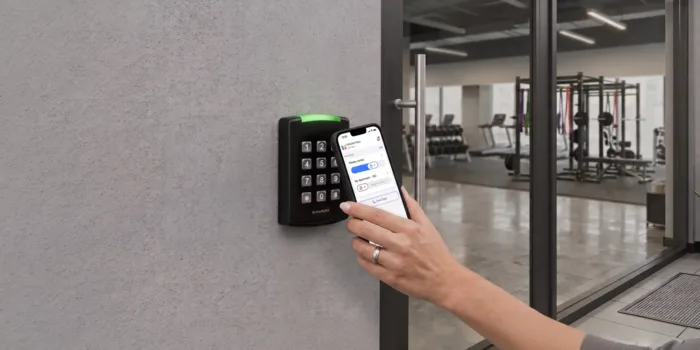
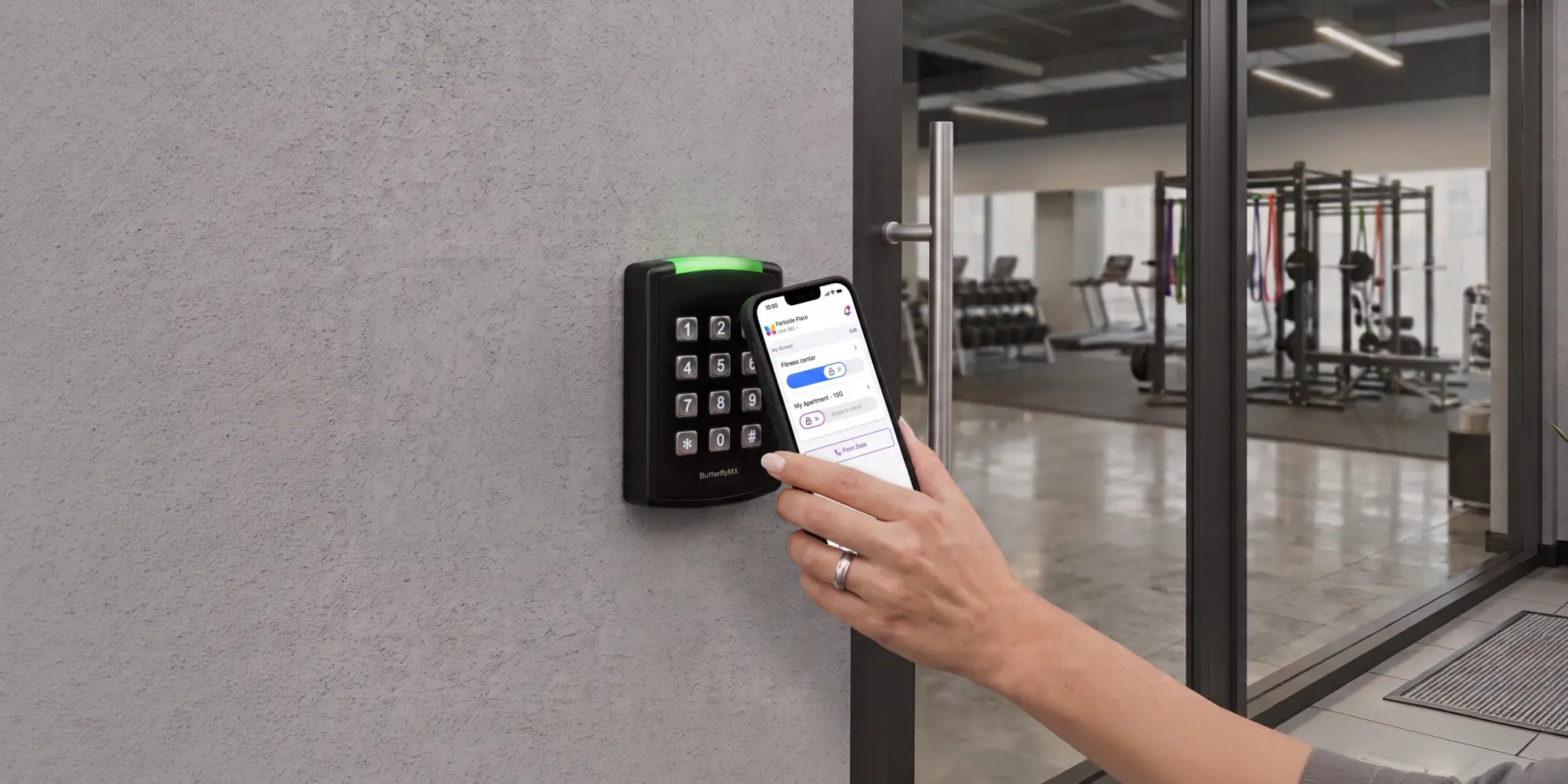
Luxury access features can include video intercoms, mobile or wallet-based credentials, keypads, smart-lock integrations, visitor access, controlled package rooms, cameras, elevator controls, and permissions for amenity areas or parking. Access control manages who can enter a space and when. Surveillance cameras may support visibility, but they do not replace credentialed entry or guarantee complete property security.
Before a property selects an access system, the team should map how access actually works. Who issues credentials? How are lost credentials revoked? How do visitors request entry? Which doors, elevators, package areas, parking gates, or amenity spaces need permissions? What records should staff be able to review? What happens during a connectivity or power interruption?
Those questions also protect against common misunderstandings. Elevator controls govern access to elevator destinations or floors; they do not replace the elevator system. Gate access technology manages authorization and communication at a vehicle or pedestrian entry point; it does not replace the mechanical gate operator. Access control is an important part of a property’s security plan, but it is not the same thing as complete security.
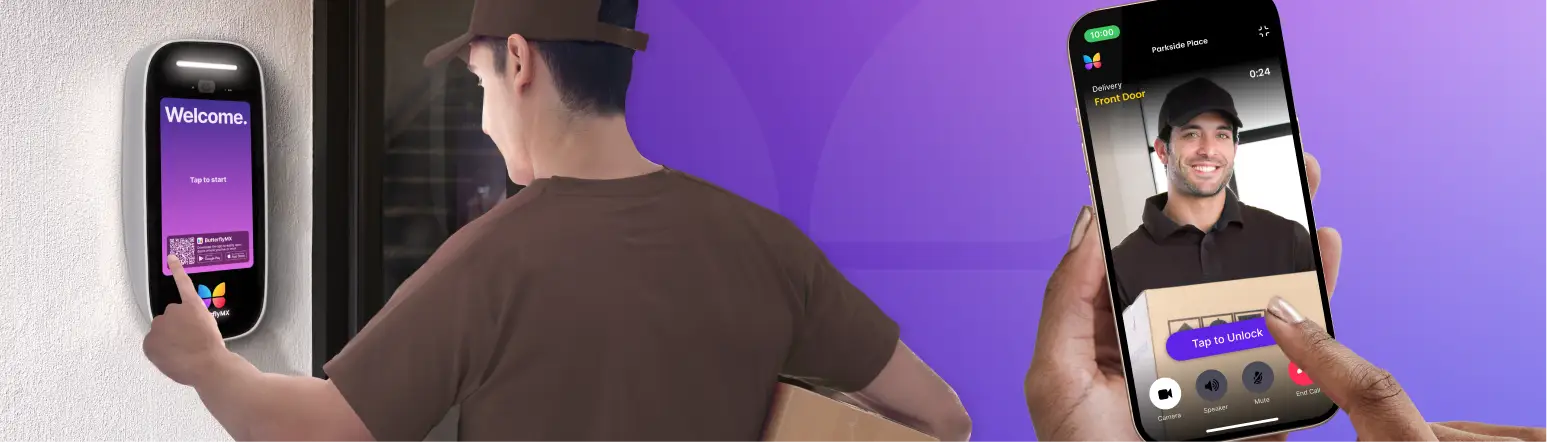
ButterflyMX fits this category for properties that want video intercoms and managed access across a modern resident experience. Residents can receive visitor calls and grant access from their smartphones, while property teams can remotely manage residents, visitors, credentials, and access beyond the main entrance. ButterflyMX video intercoms do not rely on traditional POTS telephone lines, which may eliminate the legacy POTS-line expense tied to the intercom being replaced. That does not eliminate every connectivity, hardware, software, or operating cost.
For operators comparing amenity investments, the smart access layer is most compelling when it solves a real daily problem: visitor entry, package access, amenity permissions, resident turnover, or access across multiple entrances. That is where technology moves from a nice feature to a practical part of the luxury experience.
Wellness, pet, and remote-work amenities
Lifestyle amenities can help a property stand out, but they are especially dependent on resident fit. A feature that is valuable for one community may sit unused in another.
Wellness amenities
Wellness does not have to mean an oversized gym. It can include practical fitness equipment, flexible studios, outdoor areas, recovery or spa spaces, and resident programming. The useful test is whether the amenity matches how residents are likely to use it.
Renters should look at equipment condition, hours, cleanliness, accessibility, capacity, and rules. Operators should ask whether the space needs reservations, credentialed entry, extra cleaning, or staff oversight. A wellness room that is easy to use and maintain often feels more luxurious than a larger space that is difficult to access or poorly kept.
Pet amenities
Pet-friendly marketing needs detail. Renters should ask which animals are allowed, what fees apply, whether size or breed rules exist, where relief areas are located, whether wash stations are available, and whether pets are restricted from certain shared spaces.
For operators, pet amenities work best when the rules are clear and the maintenance plan is realistic. A dog run or wash station can be a real advantage in the right market, but only if residents can use it conveniently and the property can keep it clean.
Remote-work amenities
Remote-work amenities are strongest when they support actual work, not just the appearance of work. Reliable internet, power, acoustics, privacy, comfortable seating, suitable lighting, and transparent reservation rules matter more than decorative desks in an open lounge.
The resident profile should guide the investment. A building with many residents who take video calls may need reservable quiet rooms. A property where most residents work outside the home may get more value from flexible lounge seating and strong in-unit connectivity. Either way, the amenity should solve a real use case.
How amenities affect rent, fees, and NOI
Luxury amenities affect cost in two main ways. An amenity fee is a separate charge for access to designated services or spaces. A rent premium is built into the lease price. Renters should ask which amenities are included, which fees are mandatory, what guests can use, and whether hours, closures, capacity limits, or reservations reduce the real value.
For owners and operators, amenity economics are just as nuanced. The NMHC and Grace Hill findings include stated willingness to pay for selected premium amenities, but stated preference is not proof of a universal rent premium at every property. Amenities may influence occupancy, retention, ancillary revenue, and net operating income, or NOI, but only when demand, pricing, utilization, maintenance, staffing, software, utilities, and space tradeoffs make sense together.
That is why the financial question should start with purpose. Is the amenity meant to support leasing, reduce resident frustration, improve retention, create ancillary revenue, or make staff work easier? Each goal requires a different way to measure success. A costly amenity with low use can hurt the operating picture. A simpler feature that residents use every week may be more valuable than a dramatic one they rarely touch.
Renters should compare the total monthly cost with likely use and nearby alternatives. Operators should estimate both installation and ongoing burden before approving an upgrade. In luxury housing, the extra cost is easiest to justify when the amenity is visible, usable, maintained, and clearly tied to resident demand.
How amenity priorities change by property type
No single luxury checklist works for every community. The right mix depends on the property type, resident needs, local market, climate, building layout, staffing model, and available space. The following examples are planning considerations, not survey-backed rankings.
Access needs also change by property type. A high-rise may focus on the front entrance, elevators, package rooms, and amenity floors. A garden-style community may need access across several buildings or gates. Student housing may need fast credential changes when residents move in and out. Senior living requires careful attention to accessibility, ease of use, and staff support. Gated communities often need a clear process for residents, visitors, vendors, and vehicles.
The common thread is fit. A luxury amenity should match how residents actually live at that property, not just how the feature looks in a leasing deck.
How to evaluate and prioritize amenities
The best way to judge luxury apartment amenities is to move from the name of the feature to the reality of using it. Renters and property teams can use many of the same questions, even though they are making different decisions.
Questions renters should ask on a tour
- Is the amenity available when you are likely to use it?
- Is it clean, maintained, and large enough for the building?
- What are the hours, capacity limits, reservation rules, guest policies, fees, and accessibility features?
- How are residents, visitors, delivery personnel, and service providers admitted?
- How are lost credentials handled?
- How are packages protected and retrieved?
- What happens if a relevant access system loses connectivity or power?
- How quickly does the property respond to maintenance issues or amenity closures?
A practical operator prioritization framework
- Identify resident demand using local feedback, leasing insights, resident requests, and likely utilization.
- Check fit with the property type, market, climate, resident profile, building layout, and available space.
- Prioritize features that residents use often or that solve a clear resident or staff problem.
- Assess installation or retrofit feasibility, accessibility, security, liability, staffing, maintenance, utilities, and software needs.
- Estimate the total ongoing burden, not only the initial cost.
- Define the intended result, such as improved leasing appeal, higher utilization, fewer access issues, or better package handling.
- Measure performance after launch and adjust as resident needs, technology, and local competition change.
Frequently used, well-operated amenities usually make a stronger case than novelty features added mainly for marketing. That does not mean every practical feature is worth the investment or every dramatic feature is wasteful. It means the decision should start with demand, daily usefulness, and operating reality.
This checklist is a starting point, not a substitute for technical, legal, accessibility, insurance, or financial review. Luxury properties still need property-specific advice before making major investments.
Frequently asked questions
Are luxury apartment amenities worth a higher monthly rent?
They can be worth a higher rent if you will use them often and they are well maintained. Compare the rent difference, required fees, hours, restrictions, and nearby alternatives before deciding whether the added cost fits your lifestyle.
Do luxury apartments charge separate amenity fees?
Some luxury apartments charge separate amenity fees, while others include amenity costs in the rent. Ask which charges are mandatory, what they cover, whether guests are allowed, and whether reservations or closures affect access.
What should renters ask about security and building access?
Renters should ask how residents, visitors, delivery personnel, and service providers enter the property. They should also ask how lost credentials are revoked, how packages are handled, what role cameras play, who provides after-hours support, and what happens during an outage.
Do smart amenities replace pools, gyms, and shared spaces?
No, smart amenities do not automatically replace physical amenities such as pools, gyms, and lounges. They add convenience and access control, but the right balance depends on resident demand, property type, available space, and actual use.
Luxury apartment amenities are most valuable when they make everyday life work better. The strongest properties get the basics right, choose differentiators that fit their residents, and keep every amenity usable after the first tour.
For properties evaluating the smart access layer, ButterflyMX can help connect video intercoms, mobile access, visitor entry, and remote access management to a more convenient resident experience. Request a ButterflyMX demo to explore what fits your property.
Get your free quote!
Fill in the form below, and we'll email you right back.
Want a free quote?
Fill in the form below, and we'll email you right back.
You’ll be redirected shortly...